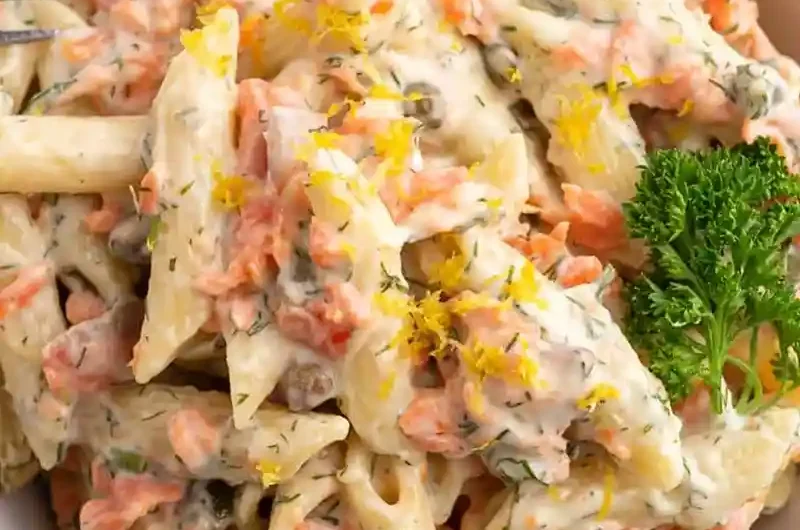
This creamy smoked salmon pasta is a sophisticated yet simple meal that brings together bright citrus notes and savory seafood in one quick skillet. Perfect for busy weeknights or an elegant dinner, this dish balances a rich, velvety sauce with the delicate depth of smoked salmon and fresh herbs. Whether served steaming hot or chilled as a refined pasta salad, it delivers consistent quality in every single bite.
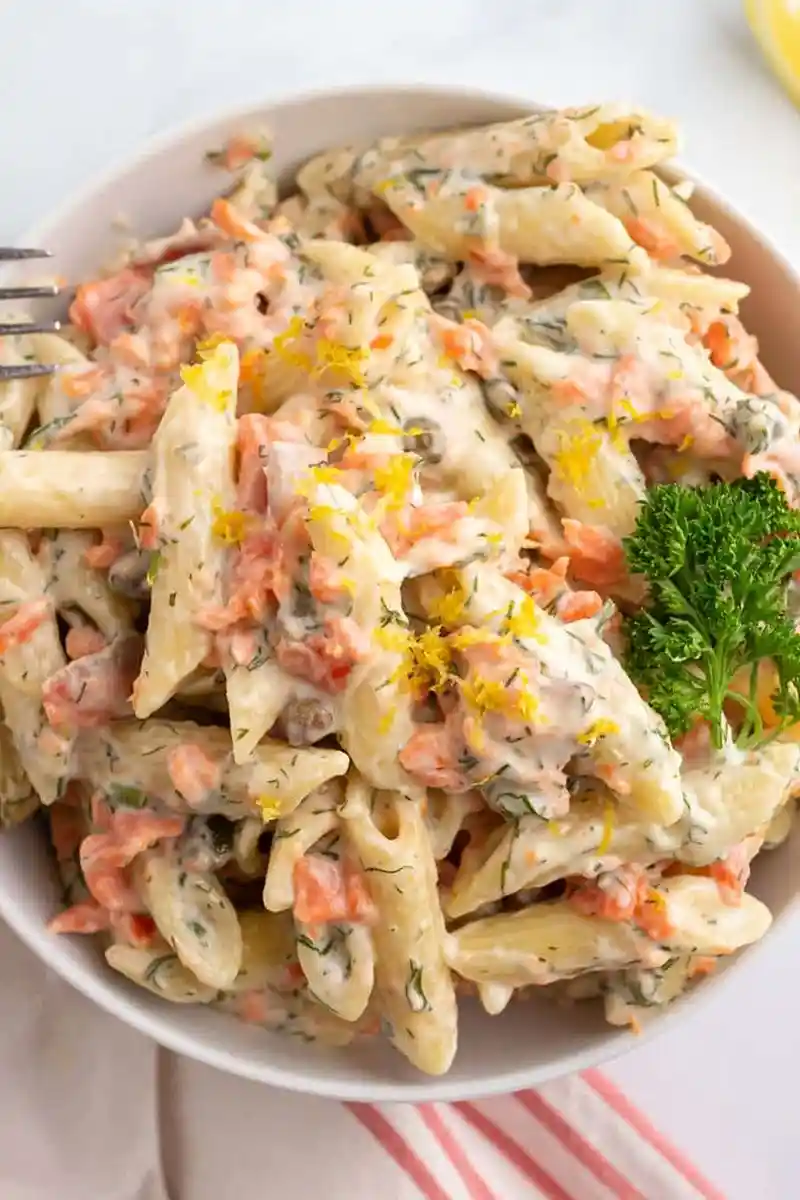
List of ingredients
- 2 Tablespoons olive oil
- 1 large garlic clove, crushed
- 1/4 cup chives, chopped
- 1/2 cup fresh dill, chopped
- 2 Tablespoons capers (optional)
- 1 Tablespoon lemon zest
- 2 Tablespoons all purpose flour (divided)
- 1 ½ cups heavy whipping cream
- 1/2 pound pasta (8oz), cooked
- 6 oz smoked salmon, cut into small pieces
- 1 Tablespoon lemon juice
- Salt (to taste)
- Pepper (to taste)
- 1/4 cup water (or more depending on your liking)
step-by-step instructions
- Step: In a medium bowl, combine salmon and lemon juice.
- Step: In a deep skillet, over medium heat, add oil, then garlic, dill, chives, capers, lemon zest and sauté for 1 minute.
- Step: Sprinkle in 1 Tablespoon flour over and cook for another minute.
- Step: Pour the cream over and stir well for a couple of more minutes.
- Step: Mix in cooked pasta and turn heat off.
- Step: Add in salmon and mix well.
- Step: Add salt and pepper to your liking.
- Step: Garnish with some grated Parmesan, chopped chives, or more lemon zest if desired.
Refining the Preparation
Maintaining Sauce Consistency
To ensure your pasta sauce remains smooth and creamy, always keep the heat at a low or moderate level. Since this recipe relies on heavy cream, boiling it too rapidly can lead to a broken or greasy sauce. By turning off the heat before adding the salmon, you preserve the delicate texture of the fish rather than cooking it until it becomes tough or dry.
Selecting the Best Pasta Shapes
While any pasta shape works, this sauce clings best to structures like penne, fusilli, or farfalle. These shapes have ridges or nooks that capture the creamy herb mixture, ensuring that every forkful is perfectly coated. Avoid very thin angel hair pasta, which may become clumpy when mixed with a thickened cream sauce.
Substitutions and Flavor Adaptations
Choosing Fresh Herb Alternatives
Fresh dill is the traditional pairing for salmon, but if you find the flavor too intense, flat-leaf parsley offers a cleaner, more neutral profile. For an extra layer of complexity, you can add a small amount of fresh tarragon, which pairs beautifully with both the cream and the smoky elements of the fish. Always aim to use fresh rather than dried herbs for this specific recipe to maintain the vibrant color and scent.
Adapting the Flour for Thickening
If you prefer to avoid all-purpose flour, you can substitute it with cornstarch mixed into a small amount of cold water before adding it to the cream. This creates a slightly more translucent and glossy finish for your sauce. Be mindful that cornstarch sets more firmly once cooled, so you may need a little extra water if you are planning to serve this dish later as a chilled salad.
Creative Serving Suggestions
Elevating the Presentation
For an impressive plated look, finish the dish with a light dusting of high-quality freshly grated Parmesan cheese. A small amount of freshly ground black pepper on top of the final plate adds both visual contrast and a necessary spicy note to cut through the richness of the cream. Consider serving this alongside a simple green salad with a sharp vinaigrette to provide a refreshing balance.
Serving as a Chilled Pasta Salad
This dish is exceptionally versatile and can transition from a warm dinner to a cold lunch option. If you are preparing it as a chilled salad, let the pasta reach room temperature before placing it in the refrigerator. Before serving cold, loosen the mixture with a splash of fresh cream or olive oil, as the sauce will naturally thicken while stored in the fridge.
Managing Storage and Quality
Proper Refrigeration Techniques
Store any leftover salmon pasta in a tightly sealed container to prevent the absorption of other odors from your refrigerator. Consume the leftovers within two days to ensure the best texture and safety of the smoked salmon. Keep the container in the coldest part of your fridge rather than the door to maintain a consistent temperature.
Best Practices for Reheating
Reheating cream-based sauces can sometimes result in separation, so caution is required. If you choose to warm it up, do so over very low heat on the stovetop, adding a tablespoon of water or broth to help re-emulsify the sauce. Avoid the microwave if possible, as it often heats unevenly and can cause the cream to separate and the salmon to become rubbery.
Common Kitchen Queries
Can I use different types of salmon?
You can certainly use leftover grilled or baked salmon if you do not have smoked salmon on hand. However, the final profile will be significantly milder, so you may want to increase the amount of capers or lemon zest to compensate for the loss of the smoky flavor. The texture will change from the silky, cured bite of smoked salmon to a flakier, heartier consistency.
Is the lemon juice necessary for the sauce?
The lemon juice is a critical component for both flavor and chemistry. It cuts through the heavy fat content of the cream, which prevents the dish from feeling overly heavy on the palate. Furthermore, adding the juice to the salmon before combining it with the sauce helps protect the protein and ensures the cream does not curdle when it hits the heat.
How do I know if the pasta is cooked perfectly?
Aim for a true al dente texture, which means the pasta should have a slight resistance when bitten. Because the pasta will sit in the warm sauce for a few moments, cooking it slightly less than the package instructions suggest will prevent it from becoming mushy. Taste-test a piece right before draining to ensure it has reached the ideal firmness for your preference.
Print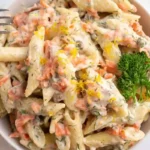
Creamy Smoked Salmon Pasta
- Total Time: PT15M
- Yield: 4 servings 1x
- Diet: Pescatarian
Description
Creamy pasta with smoked salmon and a touch of citrus, an easy dish to impress. Enjoy it warm or cold as a pasta salad.
Ingredients
- 2 Tablespoons olive oil
- 1 large garlic clove, crushed
- 1/4 cup chives, chopped
- 1/2 cup fresh dill, chopped
- 2 Tablespoons capers (optional)
- 1 Tablespoon lemon zest
- 2 Tablespoons all purpose flour (divided)
- 1 ½ cups heavy whipping cream
- 1/2 pound pasta (8oz), cooked
- 6 oz smoked salmon, cut into small pieces
- 1 Tablespoon lemon juice
- Salt (to taste)
- Pepper (to taste)
- 1/4 cup water (or more depending on your liking)
Instructions
- Step: In a medium bowl, combine salmon and lemon juice.
- Step: In a deep skillet, over medium heat, add oil, then garlic, dill, chives, capers, lemon zest and sauté for 1 minute.
- Step: Sprinkle in 1 Tablespoon flour over and cook for another minute.
- Step: Pour the cream over and stir well for a couple of more minutes.
- Step: Mix in cooked pasta and turn heat off.
- Step: Add in salmon and mix well.
- Step: Add salt and pepper to your liking.
- Step: Garnish with some grated Parmesan, chopped chives, or more lemon zest if desired.
Notes
Mixing salmon with lemon juice in another bowl makes it better so the cream will not curdle. Capers are optional but highly desirable. Use any pasta of choice like gluten-free. If the sauce is thicker than your liking add 1/4 cup water or more until you reach your desired consistency.
- Prep Time: PT5M
- Cook Time: PT10M
- Category: Appetizer, Salad, Side Dish
- Method: Stovetop
- Cuisine: American, Mediterranean
Nutrition
- Serving Size: 1 serving
- Calories: 454 kcal
- Sugar: 5 g
- Sodium: 742 mg
- Fat: 42 g
- Saturated Fat: 22 g
- Unsaturated Fat: 17 g
- Trans Fat: 0 g
- Carbohydrates: 10 g
- Fiber: 1 g
- Protein: 12 g
- Cholesterol: 112 mg
Keywords: smoked salmon, pasta, creamy pasta, salmon pasta salad