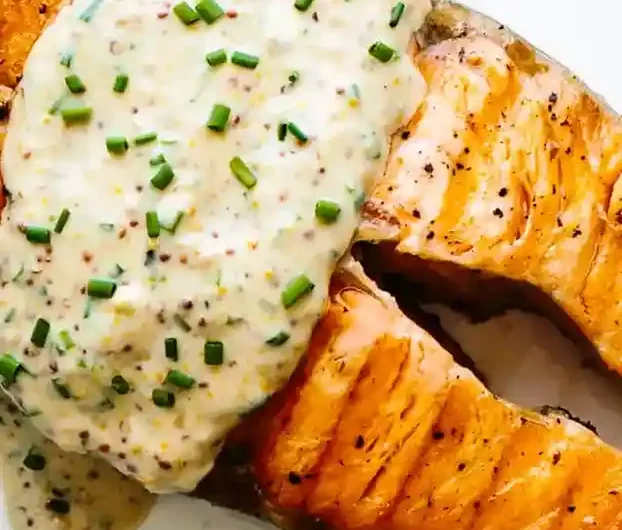
Grilled salmon steaks provide a fantastic, hearty alternative to traditional fillets, offering a distinct texture and deeper flavor thanks to the central bone. This recipe focuses on achieving the perfect sear while maintaining a moist, tender interior, finished with a bright, tangy sauce that balances the richness of the fish. It is an ideal, straightforward method for an impressive weeknight dinner that relies on simple, high-quality ingredients.
List of ingredients
- 2 salmon steaks
- 1 tablespoon avocado oil
- salt and pepper to taste
- 3 tablespoons stone-ground mustard
- 3 tablespoons Greek yogurt (dairy or dairy-free)
- 2 tablespoons finely chopped chives
- 1 tablespoon honey
- 2 teaspoons fresh lemon juice
- salt and pepper to taste
step-by-step instructions
- Step: Heat an outdoor grill or grill pan on the stove over medium-high heat.
- Step: Brush both sides of the salmon steaks with avocado oil, then season with salt and pepper.
- Step: Grill the salmon for 5-7 minutes each side, depending on thickness. To flip, use a spatula underneath rather than grabbing from the side with tongs (as it may cause the salmon to fall apart).
- Step: Meanwhile, in a small bowl, stir together the mustard, yogurt, chives, honey, lemon juice, salt and pepper.
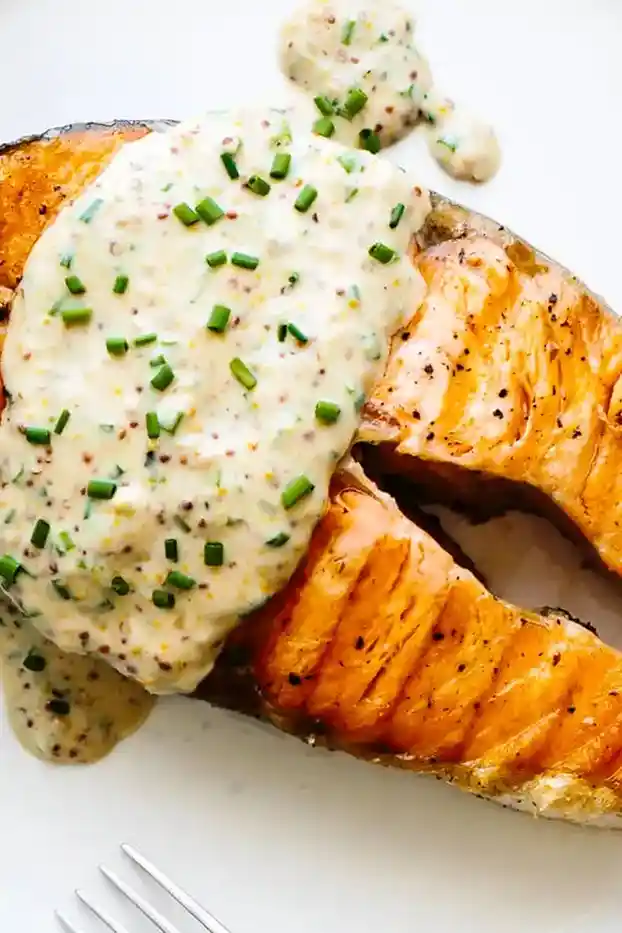
- Step: To serve, plate the salmon and drizzle a generous amount of the creamy mustard chive sauce on top.
Techniques for grilling success
Mastering the flip
The primary challenge when grilling bone-in salmon is avoiding breakage, especially when the meat is delicate. To maintain the structural integrity, slide your spatula entirely underneath the center of the steak rather than grabbing it from the sides or edges. This keeps the weight of the bone-in center balanced as you lift, preventing the tender edges from crumbling into the coals or heating elements.
The role of surface moisture
When salmon is damp, it steams against the grill grates instead of searing, which creates a messy, sticking issue. Always take the extra thirty seconds to blot the fish thoroughly with absorbent paper until the flesh looks matte. This allows the oil and seasoning to adhere directly to the protein, creating a beautiful, darkened char that adds significant depth to the flavor profile.
Managing internal temperatures
Salmon is a lean protein that can quickly become dry if overcooked, even with the added moisture of the central bone. Using an instant-read meat thermometer is the most reliable strategy, aiming for an internal temperature of 145 degrees Fahrenheit at the thickest part near the bone. If you prefer your fish slightly translucent in the center, removing it at 135 degrees and letting it rest for three minutes under loose foil allows for carry-over cooking to finish the job perfectly.
Refining the sauce composition
Selecting the right mustard
Stone-ground mustard is the secret ingredient here because the visible grains provide a pleasing texture and a complex, earthy flavor profile that standard yellow or smooth Dijon mustard lacks. If you find the stone-ground variety too intense, you can blend it with an equal part of milder grainy mustard or a splash of extra yogurt to smooth out the profile while retaining those vital mustard seeds.
Balancing sweetness and acidity
The relationship between the honey and the lemon juice determines how the sauce interacts with the salmon’s natural oils. If your lemons are particularly acidic, you may need a slight increase in honey to maintain the balance; conversely, if the sauce tastes too heavy or cloying, an extra squeeze of fresh lemon juice will instantly lift the flavors and refresh the palate. Always taste your sauce in a small amount before applying it to the fish so you can adjust these foundational elements to your specific preference.
Serving ideas and menu planning
Pairing with fresh garden sides
Because the salmon and the creamy sauce provide significant richness, you should balance the meal with sides that offer a crunchy, acidic, or herbaceous profile. A vibrant cucumber salad tossed with rice vinegar and dill is an excellent choice, as the cooling nature of the cucumbers provides a clean contrast to the hot, grilled protein. Alternatively, shaved fennel salad with orange segments offers a Mediterranean flair that complements the mustard and chive notes perfectly.
Incorporating seasonal roasted vegetables
If you prefer a warm side dish, grilled asparagus or blistered snap peas prepared on the same grill grates work beautifully as they absorb some of the same smoky notes as the salmon. Toss the vegetables in a light coating of olive oil and sea salt just before the fish is finished to ensure they are tender-crisp. This creates a cohesive meal where every component benefits from the high-heat cooking method.
FAQ
How can I safely store leftover salmon?
Store any remaining salmon in an airtight container in the coldest part of your refrigerator for up to three days. It is best to remove the meat from the bone before storing if you intend to repurpose it in cold salads or wraps the following day.
Can I prepare this recipe using a standard oven?
Yes, you can replicate this dish in the oven by placing the seasoned steaks on a baking sheet lined with parchment paper and broiling them on high for about 8-10 minutes. While you will miss the specific smoky char of the grill, the high-heat exposure of the broiler will still provide a nice, flavorful crust.
What is the best way to reheat salmon without drying it out?
Avoid the microwave, which can cause the proteins to seize and dry out instantly. Instead, place the salmon in a small oven-safe dish with a tablespoon of water, cover it tightly with foil, and heat at 275 degrees Fahrenheit until the center is just warmed through.
Are there any dairy-free alternatives for the sauce?
You can easily substitute the Greek yogurt with a high-quality, unsweetened coconut cream or a plant-based plain yogurt made from almonds. These alternatives maintain the essential creamy texture required for the sauce and provide a neutral background that allows the fresh chives and lemon juice to shine.
What should I do if my salmon steaks are uneven in thickness?
If one end of the salmon steak is significantly thicker than the other, gently press the thinner side down with your spatula as it cooks to ensure it stays in contact with the heat. You can also fold a piece of heavy-duty foil into a small square and place it under the thinner end during the last few minutes of cooking to slow down the process and ensure even doneness.
Practical storage and preparation
Thawing frozen salmon
If your salmon steaks were previously frozen, the thawing process is crucial for preventing a mushy texture. Always thaw the fish slowly in the refrigerator over the course of 24 hours rather than using a warm water bath. Once thawed, pat it extremely dry, as frozen fish tends to hold onto more surface moisture than fresh fish, which can inhibit the searing process on the grill.
Preparing in advance
While the salmon is best cooked immediately before serving, you can prepare the mustard chive sauce up to 48 hours in advance. Keeping the sauce in the refrigerator allows the flavors of the fresh chives and lemon to marry thoroughly with the mustard and yogurt. Bring the sauce to room temperature for ten minutes before serving so that it does not cool down the hot, freshly grilled salmon too quickly when applied.
Print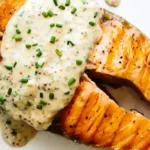
Grilled Salmon Steaks with Creamy Mustard Chive Sauce
- Total Time: PT20M
- Yield: 2 servings 1x
- Diet: Pescatarian
Description
These grilled salmon steaks are super moist and tender with a hint of char, and drizzled with a creamy mustard chive sauce. The perfect summertime dinner!
Ingredients
- 2 salmon steaks
- 1 tablespoon avocado oil
- salt and pepper to taste
- 3 tablespoons stone-ground mustard
- 3 tablespoons Greek yogurt (dairy or dairy-free)
- 2 tablespoons finely chopped chives
- 1 tablespoon honey
- 2 teaspoons fresh lemon juice
- salt and pepper to taste
Instructions
- Step: Heat an outdoor grill or grill pan on the stove over medium-high heat.
- Step: Brush both sides of the salmon steaks with avocado oil, then season with salt and pepper.
- Step: Grill the salmon for 5-7 minutes each side, depending on thickness. To flip, use a spatula underneath rather than grabbing from the side with tongs (as it may cause the salmon to fall apart).
- Step: Meanwhile, in a small bowl, stir together the mustard, yogurt, chives, honey, lemon juice, salt and pepper.
- Step: To serve, plate the salmon and drizzle a generous amount of the creamy mustard chive sauce on top.
Notes
Ensure salmon is patted dry before grilling to prevent sticking. Reheat leftovers low and slow to maintain moisture.
- Prep Time: PT5M
- Cook Time: PT15M
- Category: Dinner
- Method: Grilling
- Cuisine: American
Nutrition
- Serving Size: 1 steak with sauce
- Calories: 366 kcal
- Sugar: 10 g
- Sodium: 339 mg
- Fat: 19 g
- Saturated Fat: 3 g
- Unsaturated Fat: 15 g
- Trans Fat: 0 g
- Carbohydrates: 11 g
- Fiber: 1 g
- Protein: 37 g
- Cholesterol: 95 mg
Keywords: grilled salmon, salmon steaks, mustard sauce, healthy dinner, summer recipe