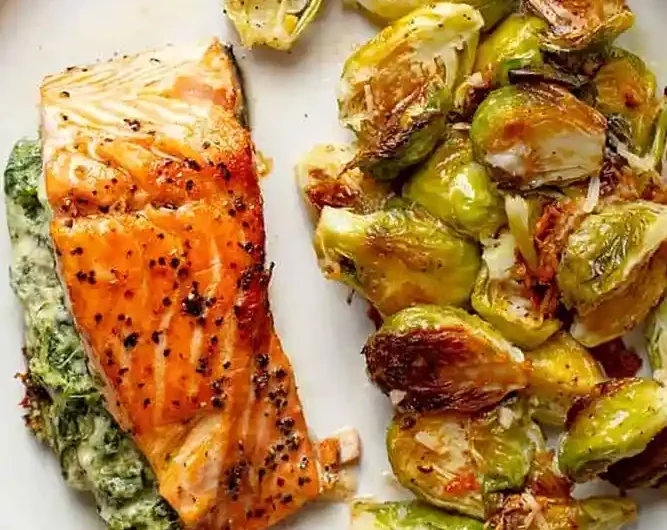
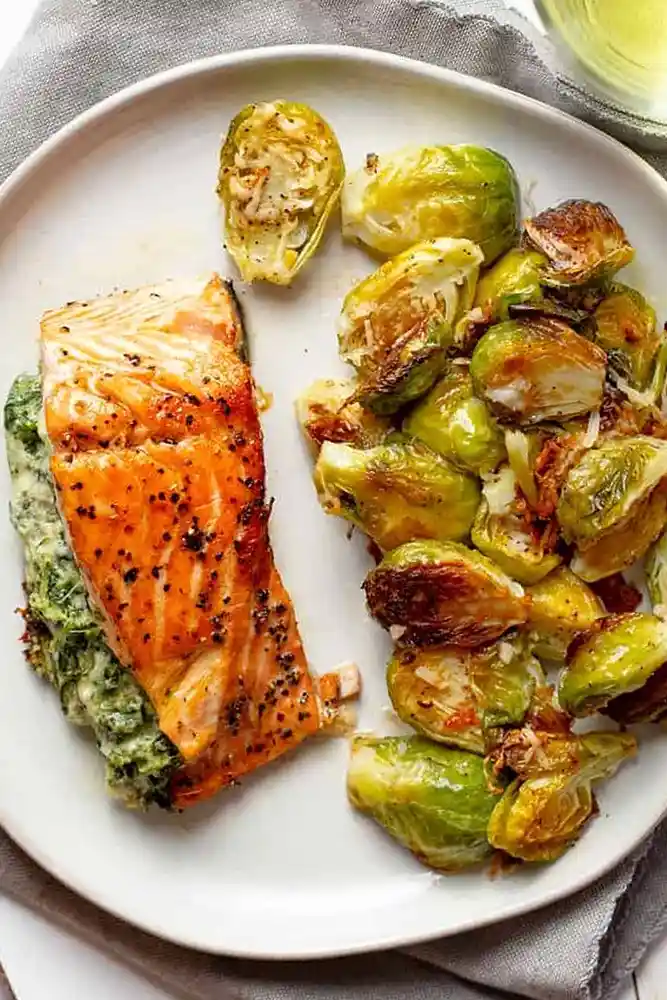
This elegant dish combines succulent salmon fillets with a rich, savory spinach and cheese filling. It is a sophisticated meal that is simple to execute, making it ideal for both weeknight dinners and special occasions.
List of ingredients
- 4 ounces (113g) cream cheese, softened – provides a creamy base for the filling.
- 1/2 cup (57g) mozzarella, shredded – adds stretch and richness.
- 1/3 cup (33g) parmesan cheese, grated – contributes a salty, sharp depth.
- 1/2 cup (15g) frozen spinach, thawed and drained of water – the primary vegetable component.
- 1/4 teaspoon garlic powder – adds a subtle aromatic flavor.
- 1/8 teaspoon red pepper flakes – introduces a mild heat to the filling.
- 4 (6-ounce) salmon fillets, skin on – ensures the fish stays moist during cooking.
- 3 tablespoons olive oil, divided – used for seasoning and pan-frying.
- 1 teaspoon Kosher salt – enhances the natural flavor of the salmon.
- 1/2 teaspoon freshly ground black pepper – adds a classic spicy note.
- 2 tablespoons butter – used for basting and adding a rich finish.
- Juice of 1/2 lemon – cuts through the richness of the cheese and salmon.
step-by-step instructions
- Combine the filling: In a large bowl, mix the softened cream cheese, shredded mozzarella, grated parmesan, drained spinach, garlic powder, and red pepper flakes. Keep this mixture at room temperature to ensure the filling heats through evenly during the cooking process.
- Prepare the fish: Lay the salmon fillets on a cutting board with the skin side facing down. Drizzle with 1 tablespoon of olive oil and sprinkle evenly with salt and pepper, rubbing the seasonings into the meat for maximum adhesion.
- Create the stuffing pocket: Using a sharp knife, carefully slice a large pocket into the thickest part of each fillet. Be careful not to cut completely through to the skin side.
- Stuff the fillets: Spoon approximately one-quarter of the spinach cheese mixture into each pocket, filling them generously.
- Heat the skillet: Place a large skillet over medium heat. Add the remaining olive oil, butter, and lemon juice, heating until the mixture begins to sizzle.
- Sear the skin: Place the salmon fillets in the pan skin side down. Cook undisturbed for about 6 minutes until the skin is well-seared and crispy.
- Baste and finish: Flip the fillets over. Use a spoon to baste the top of the salmon with the lemon-butter juices from the pan. Cook for another 6 minutes until the fish is cooked to your desired doneness.
Optimizing Salmon Selection
Prioritize Fillets Over Steaks
For this recipe, center-cut fillets are superior to steaks or sides. Fillets provide a consistent thickness that allows for an even pocket and uniform cooking times. Avoid tail pieces, as they cook too quickly and may overcook before the stuffing is heated.
The Importance of Keeping the Skin
Cooking salmon with the skin on is highly recommended for pan-searing. The skin acts as a protective barrier, preventing the delicate flesh from overcooking and drying out. Additionally, it creates a crisp texture that contrasts beautifully with the creamy filling.
Fresh Versus Frozen Options
Fresh salmon is ideal, but high-quality frozen fillets work well if thawed properly. Always thaw frozen salmon slowly in the refrigerator for 24 hours to maintain the cellular structure of the fish. Avoid thawing at room temperature, as this can affect the texture and safety of the protein.
Filling Enhancement and Variations
Using Fresh Spinach Instead of Frozen
If you prefer fresh spinach, sauté it in a pan with a tiny amount of olive oil until fully wilted. Once cooled, you must squeeze the spinach firmly in a clean kitchen towel to remove all excess liquid. Failure to drain fresh spinach will result in a watery filling that leaks out of the fish.
Alternative Cheese Combinations
For a tangier flavor, replace the mozzarella with crumbled feta cheese or a mild goat cheese. Ricotta can be substituted for cream cheese for a lighter, more airy texture. Always ensure the cheese is at room temperature before mixing to avoid lumps in the filling.
Adding Fresh Herb Accents
Incorporate one tablespoon of finely chopped fresh dill or parsley into the spinach mixture for a brighter, more garden-fresh taste. Chives are also an excellent addition, providing a mild onion flavor that complements the salmon. Stir these in at the very end of the filling preparation.
Advanced Pan-Searing Techniques
Achieving Maximum Skin Crispiness
To ensure the skin is perfectly crisp, pat the salmon fillets completely dry with paper towels before adding oil and seasoning. Any surface moisture will cause the fish to steam rather than sear. Press the fillet down gently with a spatula for the first 30 seconds of cooking to ensure full skin contact with the pan.
Mastering the Butter Basting Method
Basting involves spooning hot fat over the fish during the final stages of cooking. This process ensures the top of the fillet stays moist and absorbs the lemony butter flavor. Tilt the pan slightly so the butter pools at one end, then quickly scoop and pour it over the salmon.
Maintaining Ideal Pan Temperature
Ensure the oil is shimmering and the butter is foaming before adding the fish. If the pan is too cold, the salmon will stick and the skin will become soggy. If the oil is smoking, reduce the heat slightly to avoid burning the butter and lemon juice.
Serving and Pairing Suggestions
Roasted Vegetable Accompaniments
Garlic roasted asparagus or parmesan roasted Brussels sprouts provide an earthy balance to the rich cheese filling. Roast these at 400°F (200°C) with olive oil and salt until the edges are caramelized. These vegetables offer a snap and freshness that cuts through the creaminess of the dish.
Complementary Grain Bases
Serve the stuffed salmon over a bed of wild rice or quinoa for a complete, nutrient-dense meal. A light lemon-herb couscous is another excellent option that mirrors the citrus notes in the pan sauce. Grains help absorb the excess lemon-butter sauce from the plate.
Fresh Salad Pairings
A simple arugula salad with a light lemon vinaigrette and shaved parmesan is a refreshing side. The peppery notes of the arugula balance the richness of the cream cheese and salmon. Add sliced cucumbers or cherry tomatoes for extra color and crunch.
Storage and Maintenance
Refrigerating Leftovers
Store leftover stuffed salmon in an airtight container in the refrigerator for up to two days. To prevent the fish from drying out, place a damp paper towel over the fillets before sealing the lid. Ensure the fish is completely cooled before refrigerating to prevent condensation.
Gentle Reheating Methods
Avoid using a microwave, as it often overcooks the salmon and makes the cheese filling rubbery. Instead, heat the fillets in an oven at 300°F (150°C) for about 10-15 minutes. This slower process warms the filling without toughening the fish.
Freezing Instructions
While this dish is best fresh, you can freeze the stuffed (but uncooked) fillets. Wrap each fillet tightly in plastic wrap and place them in a freezer-safe bag. Thaw completely in the refrigerator before searing as described in the instructions.
Proactive Troubleshooting
Preventing Filling Leakage
If the filling leaks out during cooking, it is usually because the pocket was cut too deep or the fillet was overfilled. Leave a small margin of space at the top of the pocket to allow the cheese to expand without pushing the meat apart. You can also use a toothpick to secure the opening if the pocket is very large.
Managing Watery Filling
Watery filling is almost always caused by insufficiently drained spinach. Use a fine-mesh strainer or a kitchen towel to squeeze out every possible drop of liquid from the thawed spinach. If the mixture seems too loose, add an extra tablespoon of grated parmesan to help bind the ingredients.
Identifying Perfect Doneness
Salmon is done when the internal temperature reaches 145°F (63°C) or when the meat flakes easily with a fork. The center should be a solid, opaque pink rather than translucent. Remember that the fish continues to cook for a few minutes after removal from the pan due to carry-over heat.
Frequently Asked Questions
Can I use a different type of fish?
While salmon is recommended for its fat content, you can use thick trout fillets. Arctic char is another suitable alternative that has a similar texture and flavor profile. Avoid lean white fish, as they may dry out during the searing and basting process.
What if I don’t have a skillet?
A cast-iron pan is the best choice for heat retention, but a stainless steel frying pan works well too. Avoid non-stick pans if you want a professional sear, as they often cannot handle the high heat required for truly crispy skin.
Is it possible to bake this instead of pan-frying?
Yes, you can bake the stuffed fillets at 400°F (200°C) for 12-15 minutes. However, you will lose the crispy skin and the concentrated flavor of the lemon-butter baste. For the best results, sear the skin in a pan first and then finish them in the oven.
How do I soften cream cheese quickly?
If you forgot to take the cream cheese out of the fridge, you can microwave it in 10-second intervals. Use a low power setting and stir between each interval to avoid melting the cheese. Alternatively, place the unopened block in a bowl of warm water for 10 minutes.
Can I make this recipe dairy-free?
You can substitute the cream cheese with a plant-based cream cheese alternative and use vegan mozzarella and parmesan. Use a plant-based butter substitute for the basting liquid. The flavor will remain similar, though the melting point of vegan cheeses may vary.
Print
Creamy Spinach Stuffed Salmon Fillets
- Total Time: 22 minutes
- Yield: 4 servings 1x
- Diet: Gluten-Free
Description
Spinach Stuffed Salmon is a simple dish that looks complex. Perfectly seasoned, flaky salmon fillets, stuffed to the brim with a creamy and delicious spinach filling.
Ingredients
- 4 ounces (113g) cream cheese (softened)
- ½ cup (57g) mozzarella, shredded
- ⅓ cup (33g) parmesan cheese, grated
- ½ cup (15g) frozen spinach, thawed and drained of water
- ¼ teaspoon garlic powder
- ⅛ teaspoon red pepper flakes
- 4 (6-ounce) salmon fillets, skin on
- 3 tablespoons olive oil, divided
- 1 teaspoon Kosher salt
- ½ teaspoon freshly ground black pepper
- 2 tablespoons butter
- Juice of ½ lemon
Instructions
- Mix filling: In a large bowl, mix together cream cheese, mozzarella, parmesan, spinach, garlic powder, and red pepper flakes. Set aside. (Leave at room temperature.)
- Prepare salmon: Lay the salmon filets out on a cutting board, skin side down. Drizzle salmon with 1 tablespoon olive oil and then sprinkle with salt and pepper. Use your hands to rub the seasonings into the surface of the fish.
- Stuff: Using a sharp knife, cut a pocket into each fillet. Spoon ¼ of the spinach mixture into the salmon filet.
- Sear: In a large skillet over medium heat, heat remaining oil, butter, and lemon juice. Once the liquid begins to sizzle, add the salmon skin side down and cook until seared, about 6 minutes.
- Finish: Flip salmon and use the liquids in the pan to baste the top of the salmon. Cook until skin is crispy, about another 6 minutes. Serve warm.
Notes
For the best results, keep the cream cheese mixture at room temperature so it doesn’t lower the internal temperature of the fish during cooking. Use a sharp knife when creating the pocket to avoid cutting through the fillet.
- Prep Time: 10 minutes
- Cook Time: 12 minutes
- Category: Main Course
- Method: Pan Frying
- Cuisine: American
Nutrition
- Serving Size: 1 fillet
- Calories: 631 kcal
- Sugar: 5 g
- Sodium: 880 mg
- Fat: 44 g
- Saturated Fat: 18 g
- Unsaturated Fat: 24 g
- Trans Fat: 0 g
- Carbohydrates: 11 g
- Fiber: 2 g
- Protein: 46 g
- Cholesterol: 125 mg
Keywords: Spinach Stuffed Salmon, creamy spinach salmon, pan-seared salmon