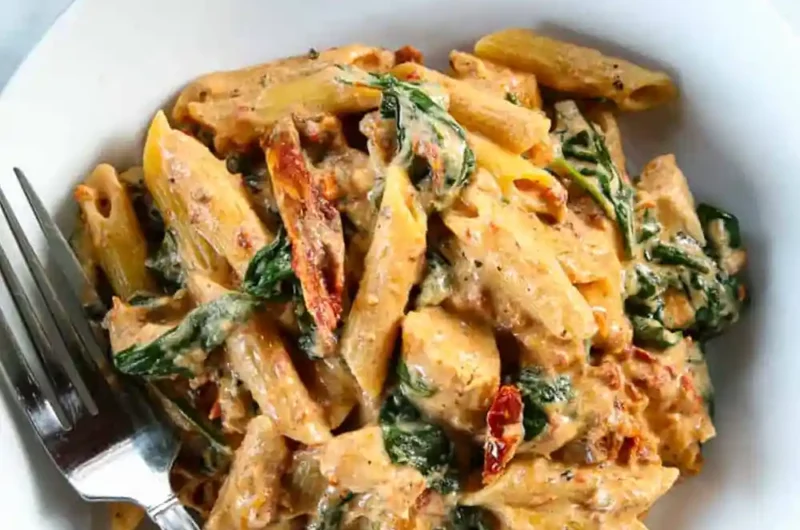
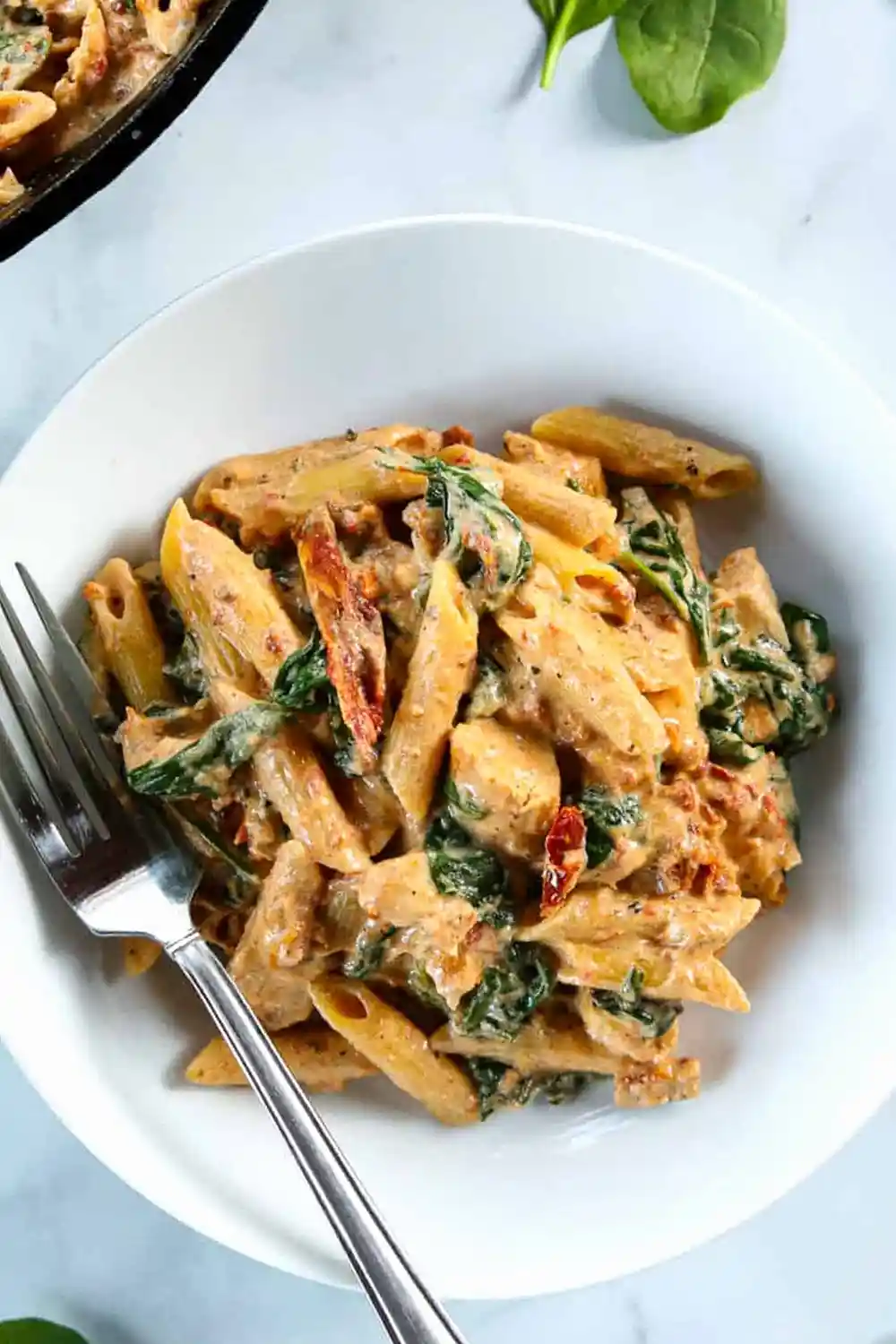
This garlicky, cheesy pasta dish combines tender chicken with a rich cream sauce, spinach, and sun-dried tomatoes. It is a practical one-pan meal that can be prepared in just 30 minutes.
List of ingredients
- 2 Tbsp olive oil – used for searing the chicken.
- 2 tbsp unsalted butter – provides a rich base for the sauce.
- 2 lb boneless skinless chicken breast – the main protein source.
- 1/2 tsp Salt – for seasoning the meat and sauce.
- 1/8 tsp black pepper – adds a mild spice.
- 1 tsp Italian seasoning – a blend of herbs for authentic flavor.
- 2 garlic cloves – minced for aromatic depth.
- 3 cups baby spinach – adds color and nutrients.
- 8 oz sun-dried tomatoes in oil (drained) – provides a sweet and tart contrast.
- 3 cups heavy cream – creates the thick, creamy texture.
- 1/2 cup Parmesan cheese – adds saltiness and thickness.
- 1/2 lb penne pasta – the ideal shape for holding the sauce.
step-by-step instructions
- Season the meat: Sprinkle salt and pepper on both sides of the chicken tenders.
- Sear the chicken: Heat olive oil in a large cast-iron skillet over medium-high heat and cook both sides of the seasoned tenders until golden brown.
- Prepare the chicken: Remove the chicken from the pan to cool slightly, then dice it into uniform cubes.
- Sauté aromatics: In the same pan over medium heat, sauté the butter, minced garlic, drained sun-dried tomatoes, and baby spinach.
- Simmer the cream: Once the spinach has wilted, pour in the heavy cream and bring the mixture to a gentle simmer.
- Finish the sauce: Remove the skillet from the heat and stir in the salt, pepper, Italian seasoning, and grated Parmesan cheese until melted.
- Combine and serve: Fold the cooked hot penne pasta and diced chicken cubes back into the sauce, stir quickly, and serve immediately.
Optimal Cooking Equipment
Selecting the Right Skillet
A large cast-iron skillet is recommended for this recipe because it retains heat exceptionally well. This ensures the chicken develops a deep golden-brown crust through the Maillard reaction. If cast iron is unavailable, a heavy-bottomed stainless steel pan is a suitable alternative.
Pasta Pot Requirements
Use a large stockpot to boil the penne pasta to prevent the noodles from sticking together. Providing enough water allows the starch to dilute, resulting in a better texture. A pot with a wide base helps distribute heat evenly for a consistent boil.
Utensils for Emulsifying
A silicone spatula or wooden spoon is ideal for stirring the cream sauce. These tools allow you to scrape the brown bits, known as fond, from the bottom of the pan. This incorporates the concentrated chicken flavor back into the sauce.
Ingredient Selection Tips
Choosing the Best Chicken Cut
While chicken breast is the standard, slicing them into thin cutlets before searing increases the surface area. This allows for more browning and ensures the meat cooks quickly and evenly. Avoid overcooking the breast to prevent the meat from becoming dry.
Selecting Sun-Dried Tomatoes
Use sun-dried tomatoes packed in oil rather than dry-packed versions for a more tender texture. Ensure you drain the oil thoroughly before adding them to the pan to avoid an overly greasy sauce. The oil from the jar can be saved for other sautéing needs.
Parmesan Cheese Quality
Freshly grated Parmesan cheese melts more smoothly into the cream than pre-shredded varieties. Pre-shredded cheeses often contain anti-caking agents like cellulose, which can make the sauce slightly grainy. A wedge of Parmesan Reggiano provides the most authentic flavor.
Spinach Variety
Baby spinach is preferred because it has thinner leaves that wilt quickly without becoming tough. If using mature spinach, chop the leaves into smaller pieces to ensure they integrate well with the penne. Add the spinach last in the sauté process to maintain its bright green color.
Pasta Preparation Guide
Cooking to Al Dente
Boil the penne pasta for one minute less than the package instructions suggest. Since the pasta is added to a simmering cream sauce at the end, it will continue to cook slightly. This prevents the noodles from becoming mushy or overcooked.
Salting the Pasta Water
Add a generous amount of salt to the boiling water to season the pasta from the inside out. This is the only opportunity to flavor the interior of the noodle. Do not add oil to the water, as it can prevent the sauce from adhering to the pasta.
Draining and Timing
Drain the pasta immediately before adding it to the sauce to keep it hot. If you prepare the pasta too early, the starch on the surface will dry, making it harder for the sauce to cling. Reserve a small cup of pasta water in case you need to thin the sauce later.
Sauce Consistency and Management
Temperature Control
Keep the heat at a medium level when sautéing the garlic and butter to avoid burning the garlic. Burnt garlic creates a bitter taste that can overpower the cream and cheese. Move the garlic to the side of the pan if it begins to brown too quickly.
Preventing Sauce Separation
Avoid boiling the cream sauce aggressively once the Parmesan is added. Excessive heat can cause the cheese to separate or the cream to break, leading to an oily appearance. Removing the pan from the heat before stirring in the cheese ensures a stable emulsion.
Managing Sauce Thickness
The sauce will thicken naturally as the Parmesan melts and the cream reduces. If the sauce becomes too thick, stir in a tablespoon of reserved pasta water. This adjusts the consistency while adding savory starch to the mixture.
Ingredient Substitutions
Lighter Cream Options
Substitute half-and-half for heavy cream to reduce the richness and calorie count. While the sauce will be slightly thinner, it remains creamy and flavorful. You may need to simmer the half-and-half slightly longer to achieve a similar thickness.
Vegetable Alternatives
If you prefer not to use spinach, broccoli florets or asparagus tips are excellent substitutes. Sauté these vegetables for a few minutes longer than spinach to ensure they are tender. Zucchini slices also work well for a summer-inspired variation.
Different Pasta Shapes
While penne is traditional, rigatoni or fusilli are great alternatives because they have ridges and holes. These shapes capture the thick cream sauce more effectively than smooth noodles. Avoid using very thin pasta like spaghetti, as it can get lost in the heavy sauce.
Cheese Alternatives
Pecorino Romano can be used instead of Parmesan for a saltier, sharper flavor profile. A blend of Parmesan and Mozzarella can create a stretchier, more indulgent sauce. Always use a hard, aged cheese to ensure the sauce thickens properly.
Storage and Make-Ahead Advice
Refrigeration Guidelines
Store leftovers in an airtight container in the refrigerator for up to three to four days. Keep the chicken and sauce together, but if possible, store the pasta separately to prevent it from absorbing all the moisture. This keeps the texture of the noodles intact.
Freezing Instructions
This dish freezes well for up to three months when stored in freezer-safe bags or containers. Ensure the pasta is fully cooled before freezing to avoid ice crystal formation. Remove as much air as possible from the bag to prevent freezer burn.
Thawing Process
Thaw the pasta overnight in the refrigerator for the safest and most consistent results. Alternatively, place the sealed container in a bowl of cold water for 20 minutes for a quicker thaw. Do not thaw the dish in the microwave, as this can cause the cream to separate.
Prepping Components
You can prepare the diced chicken and the cream sauce base a day in advance. Store them in separate containers and combine them with freshly boiled pasta when ready to serve. This significantly reduces the active cooking time on the day of the meal.
Reheating Best Practices
Stovetop Reheating
Reheat the pasta in a skillet over low to medium heat. Add a splash of milk or water to loosen the sauce and restore its creamy consistency. Stir gently to avoid breaking the pasta noodles.
Microwave Instructions
Place the pasta in a microwave-safe dish and cover it with a damp paper towel. Heat in 30-second intervals, stirring between each session to distribute the heat. This prevents the edges from drying out while the center remains cold.
Avoiding Overheating
Stop heating the dish as soon as it is steaming; do not let the sauce come to a hard boil. Overheating can cause the fats in the cream and cheese to separate. A gentle warmth is sufficient to bring back the original flavor.
Serving Suggestions
Complementary Breads
Serve this pasta with toasted garlic bread or a warm focaccia. The porous texture of these breads is perfect for soaking up the remaining cream sauce on the plate. Brushing the bread with olive oil and parsley adds a fresh touch.
Side Salad Pairings
A crisp arugula salad with a lemon vinaigrette provides a bright contrast to the rich pasta. The acidity of the lemon cuts through the heaviness of the cream and Parmesan. A simple garden salad with balsamic dressing is also a practical choice.
Garnish Ideas
Top the finished dish with freshly chopped parsley or basil for a pop of color and freshness. An extra sprinkle of grated Parmesan adds a professional finish and a burst of salty flavor. Red pepper flakes can be added for those who prefer a hint of heat.
Troubleshooting Common Issues
Dealing with Grainy Sauce
If the sauce appears grainy, it is usually due to the cheese being added to boiling cream. To fix this, stir in a small amount of warm milk or cream and whisk vigorously over very low heat. This helps re-incorporate the fats and proteins.
Correcting Over-Salted Dishes
If the sauce is too salty, add a squeeze of fresh lemon juice or a pinch of sugar. The acidity or sweetness helps balance the sodium levels without altering the flavor profile too much. Adding more unsalted cream can also dilute the saltiness.
Preventing Mushy Pasta
If the pasta becomes mushy, it was likely overcooked during the boiling phase or overheated during the mixing phase. To prevent this, always use a timer and remove the pasta from the water while it still has a slight bite. Avoid stirring too vigorously once the pasta is in the sauce.
Fixing a Thin Sauce
If the sauce is too runny, simmer it for an additional two to three minutes before adding the pasta. You can also stir in an extra tablespoon of Parmesan cheese to increase the thickness. Let the dish sit for two minutes before serving, as the sauce thickens as it cools slightly.
Frequently Asked Questions
Can I use chicken thighs instead of breasts?
Yes, boneless skinless chicken thighs can be used and will provide a juicier result. Thighs are more forgiving and less likely to dry out during the searing process. Use the same seasoning and cooking method as specified for the breast.
Do I need to drain the sun-dried tomatoes?
Yes, draining the oil is important to control the fat content of the sauce. Too much oil from the jar can prevent the cream and cheese from emulsifying, leading to a greasy texture. Use the drained tomatoes to maintain the intended creamy consistency.
Can I use a different type of cheese?
Pecorino Romano or Asiago are suitable replacements for Parmesan. Both are hard, salty cheeses that will melt into the sauce and provide a similar thickening effect. Avoid using soft cheeses like mozzarella if you want the sauce to remain thick.
How do I prevent the spinach from becoming slimy?
Sauté the spinach quickly over medium heat just until it begins to wilt. Adding it too early or cooking it for too long breaks down the cell walls excessively, leading to a slimy texture. Incorporate the cream immediately after the spinach wilts to stop the cooking process.
Print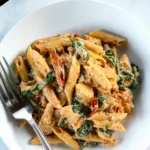
Creamy Tuscan Chicken Pasta
- Total Time: 30 minutes
- Yield: 4 servings 1x
- Diet: General
Description
This Creamy Tuscan Chicken Pasta is garlicky, cheesy, and delicious. And the best part is that it only takes 30 minutes to make!
Ingredients
- 2 Tbsp olive oil
- 2 tbsp unsalted butter
- 2 lb boneless skinless chicken breast
- 1/2 tsp Salt
- 1/8 tsp black pepper
- 1 tsp Italian seasoning
- 2 garlic cloves
- 3 cups baby spinach
- 8 oz sun-dried tomatoes in oil (drained)
- 3 cups heavy cream
- 1/2 cup microbial-rennet Parmesan cheese
- 1/2 lb penne pasta
Instructions
- Step: Season the chicken tenders with salt and pepper on both sides.
- Step: Fill a large cast-iron skillet with the olive oil and cook both sides of the seasoned tenders over medium-high heat.
- Step: Now set them aside to cool, then dice them up into cubes.
- Step: Now make the sauce by sautéing the butter, minced garlic, sun-dried tomatoes (oil drained) and spinach over medium heat.
- Step: Once the spinach has wilted, add the cream and let it come to a simmer.
- Step: Now remove from heat and add the salt, pepper, Italian seasoning, and grated Parmesan cheese.
- Step: Then add your cooked hot penne pasta and cubes chicken back in. Give it a quick stir and serve.
Notes
You can leave out the spinach or substitute it with other veggies, such as broccoli or asparagus. To make the sauce lighter, you can substitute Half & Half for the heavy cream.
- Prep Time: 10 minutes
- Cook Time: 20 minutes
- Category: Main Course
- Method: Sautéing
- Cuisine: Italian
Nutrition
- Serving Size: 1 serving
- Calories: 1367 kcal
- Sugar: 7 g
- Sodium: 976 mg
- Fat: 95 g
- Saturated Fat: 50 g
- Unsaturated Fat: 37 g
- Trans Fat: 0.3 g
- Carbohydrates: 63 g
- Fiber: 6 g
- Protein: 69 g
- Cholesterol: 370 mg
Keywords: Creamy Tuscan Chicken Pasta, 30-minute dinner, Italian pasta, garlicky chicken pasta