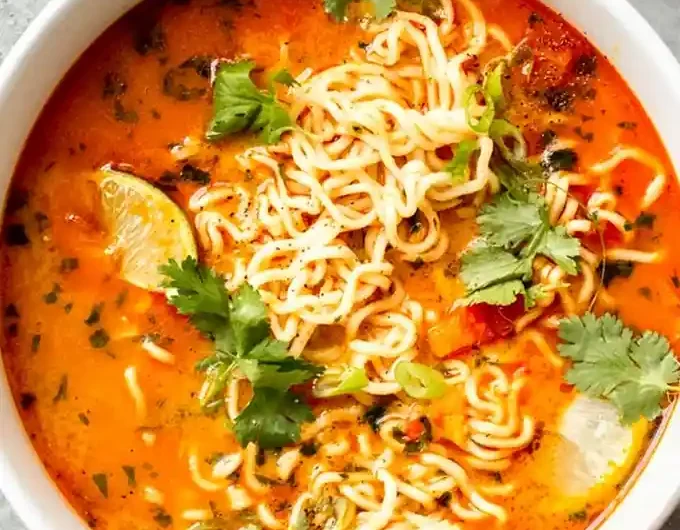
This creamy Thai red curry soup is a fast, one-pot meal that balances spicy heat with rich coconut milk. It is an ideal option for busy weeknights when you want a comforting, aromatic dinner in under 40 minutes.
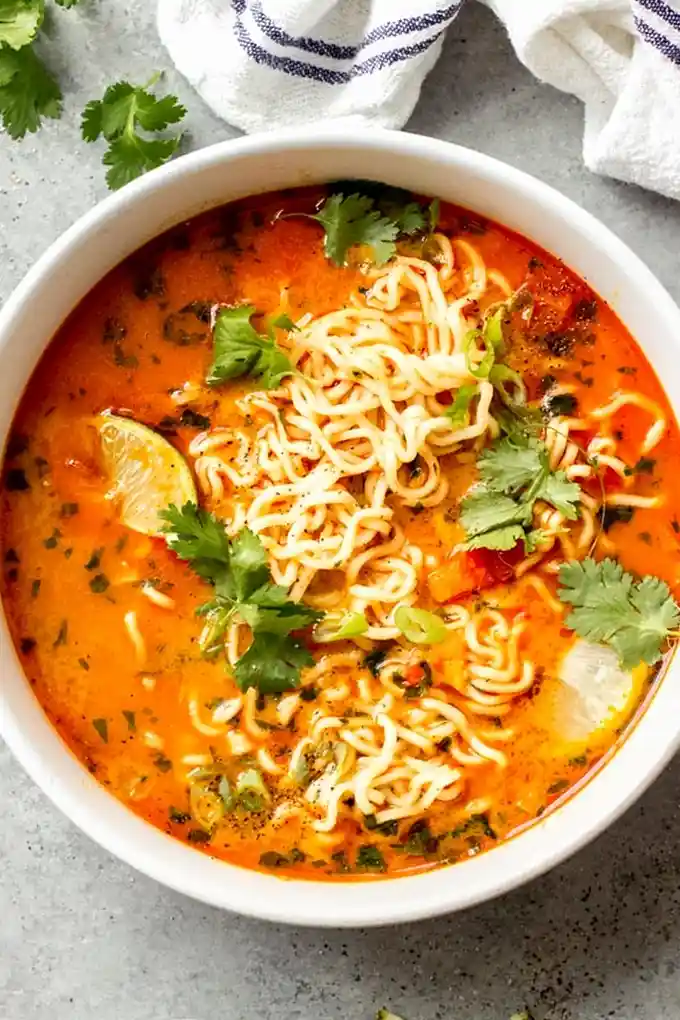
List of ingredients
- 2 Tbsp. avocado oil or olive oil – used for sautéing the aromatics.
- 1/2 cup diced yellow onion – provides a sweet, savory base.
- 1/2 cup diced red bell pepper – adds color and mild sweetness.
- 1/2 cup diced carrots – contributes texture and natural sweetness.
- 3 garlic cloves, minced – essential for deep aromatic flavor.
- 1 Tbsp. freshly grated ginger – adds a zesty, warm note.
- 1/4 cup red curry paste – the primary source of spice and Thai flavor.
- 6 cups chicken broth or vegetable stock – the liquid base for the broth.
- 1 (14 oz.) can full-fat coconut milk – creates a creamy, rich consistency.
- 3 Tbsp. fish sauce – provides the salty, umami depth.
- 4-5 oz. ramen or rice noodles – the hearty filling for the soup.
- 1 Tbsp. fresh lime juice, plus more to taste – cuts through the richness with acidity.
- 1/2 cup fresh chopped cilantro, plus more for serving – adds a fresh, herbal finish.
- Lime wedges, for serving – allows for customized acidity.
step-by-step instructions
- Sauté Vegetables: Heat oil over medium heat in a dutch-oven. Add onions, red bell pepper, and carrots. Cook until tender, about 5-7 minutes.
- Bloom Aromatics: Stir in garlic, ginger, and red curry paste. Cook until fragrant for about 1 minute, stirring frequently to prevent the paste from burning.
- Simmer Broth: Add chicken broth, coconut milk, and fish sauce. Season with salt and pepper to taste. Let the mixture come to a simmer and cook uncovered for 5 minutes.
- Cook Noodles: Stir in noodles and simmer until tender. Follow the specific package directions as cook times vary between ramen and rice noodles.
- Final Touch: Stir in fresh lime juice and chopped cilantro just before serving to preserve the brightness of the flavors.
Optimizing Your Noodle Choice
Selecting Ramen Noodles for Texture
Ramen noodles are wheat-based egg noodles that provide a chewy, bouncy texture. If using store-bought ramen packets, discard the seasoning powder to control the sodium levels and allow the curry paste to dominate.
Using Rice Noodles for a Gluten-Free Option
Rice stick or pad thai style noodles are excellent for this soup and are naturally gluten-free. These noodles absorb the broth more readily than wheat noodles, so they should be added carefully to avoid overcooking.
Avoiding Ultra-Thin Vermicelli
Thin rice vermicelli are generally too delicate for a simmering curry broth. They tend to break apart or become mushy very quickly, which can thicken the soup unintentionally and ruin the texture.
Protein Enhancements for More Substance
Adding Sliced Chicken Breast
To include chicken, sauté bite-sized pieces in the oil before adding the vegetables. Ensure the chicken is cooked through or simmer it in the broth for about 5-8 minutes before adding the noodles.
Incorporating Fresh Shrimp
Shrimp cook very quickly and should be added during the last 3 minutes of simmering. This prevents them from becoming rubbery and ensures they remain tender and juicy.
Using Firm Tofu for a Plant-Based Protein
Pressed firm tofu cubes can be pan-seared for a golden crust before being added to the pot. Tofu is an excellent choice as it absorbs the red curry flavors better than almost any other protein.
Adding Tempeh for Nutty Flavor
Cubed tempeh provides a fermented, nutty taste and a hearty texture. Sauté it with the onions and carrots to ensure the edges are slightly browned for maximum flavor.
Expanding the Vegetable Variety
Adding Baby Bok Choy for Crunch
Baby bok choy adds a fresh, crisp element to the soup. Add the chopped stalks early in the simmering process and the leaves in the final minute of cooking.
Incorporating Sliced Mushrooms
Shiitake or button mushrooms add an earthy, umami quality that complements the fish sauce. Sauté them with the initial vegetable mix to release their moisture and brown the edges.
Adding Fresh Spinach or Kale
Leafy greens like spinach or kale should be stirred in at the very end. The residual heat of the soup is enough to wilt the greens without overcooking them.
Using Zucchini for Volume
Diced zucchini adds bulk and a mild flavor that blends well with coconut milk. Add zucchini during the broth simmering stage so it softens but maintains its shape.
Understanding Red Curry Paste
Managing Heat Levels
The spiciness of red curry paste varies significantly between brands. Start with the recommended amount and taste the broth before adding more to avoid overwhelming the other flavors.
The Importance of Blooming the Paste
Cooking the curry paste in oil for one minute before adding liquids is called blooming. This process releases fat-soluble flavors and aromas that would otherwise remain muted if the paste were simply boiled.
Checking for Common Additives
Some curry pastes contain shrimp paste; ensure you check labels if you have specific dietary restrictions. Most high-quality Thai brands use a blend of red chilies, lemongrass, and galangal.
Balancing the Soup’s Flavor Profile
Using Lime Juice to Cut Richness
The acidity of fresh lime juice is critical for balancing the heavy fats in the full-fat coconut milk. Adding the lime at the end ensures the citrus notes remain bright and sharp.
Adjusting Umami with Fish Sauce
Fish sauce provides a salty, fermented depth that is characteristic of Thai cuisine. If the soup tastes flat, a small extra splash of fish sauce can enhance the overall savoriness.
Adding a Hint of Sweetness
If the curry paste is too spicy, a teaspoon of brown sugar or coconut sugar can be added. This creates a sweet-and-spicy balance that is common in traditional Thai red curries.
Serving and Presentation Ideas
Fresh Herb Garnishes
While cilantro is standard, fresh Thai basil or mint leaves add a complex aromatic layer. Adding these as a fresh garnish on top of the bowl prevents them from wilting too much.
Adding Sliced Green Onions
Thinly sliced scallions provide a mild onion bite and a pop of green color. They add a layer of freshness that contrasts well with the rich, cooked broth.
Pairing with Side Dishes
Serve this soup alongside vegetable rice paper rolls or a crisp cucumber salad. These sides provide a refreshing contrast to the warm, spicy nature of the curry.
Storage and Reheating Guide
Preventing Noodle Sogginess
To keep the soup fresh, store the cooked noodles in a separate container from the broth. This prevents the noodles from absorbing all the liquid and becoming overly soft over time.
Refrigeration Limits
Stored in airtight containers, the broth can be kept in the refrigerator for 3 to 4 days. Ensure the containers are sealed tightly to prevent the soup from absorbing other fridge odors.
Freezing the Curry Base
The broth can be frozen for up to two months, but the noodles cannot be frozen. Thaw the base overnight in the fridge and then simmer it on the stove before adding fresh noodles.
The Best Reheating Method
Reheat the broth on the stovetop over medium heat until it reaches a simmer. Avoid boiling the coconut milk too vigorously, as this can cause the emulsion to break and separate.
Common Questions and Troubleshooting
Why did my coconut milk separate?
Coconut milk can separate if it is boiled too rapidly or if it is a low-fat version. Keep the heat at a gentle simmer and use full-fat coconut milk for a more stable emulsion.
What can I use if I don’t have fish sauce?
A mixture of soy sauce and a pinch of salt can work as a substitute. For a closer match in umami, a small amount of vegan fish sauce or light soy sauce is recommended.
How do I make the soup thicker?
If you prefer a thicker consistency, you can simmer the broth for longer without a lid to reduce the liquid. Alternatively, using rice noodles that release more starch will naturally thicken the base.
Can I use a different type of curry paste?
Green or yellow curry pastes can be used, though they will change the flavor profile. Green is typically spicier and more herbal, while yellow is milder and more turmeric-forward.
How do I stop the noodles from sticking?
Stir the noodles frequently while they simmer in the broth. If you are storing them separately, toss them in a tiny bit of oil to keep them from clumping together.
Print
Thai Red Curry Noodle Soup
- Total Time: 35 minutes
- Yield: 6 servings 1x
- Diet: Dairy Free
Description
Easy Thai noodle soup with sweet and spicy broth, ramen noodles, and fresh lime juice.
Ingredients
- 2 Tbsp. avocado oil or olive oil
- 1/2 cup diced yellow onion
- 1/2 cup diced red bell pepper
- 1/2 cup diced carrots
- 3 garlic cloves, minced
- 1 Tbsp. freshly grated ginger
- 1/4 cup red curry paste
- 6 cups chicken broth or vegetable stock
- 1 (14 oz.) can full-fat coconut milk
- 3 Tbsp. fish sauce
- 4–5 oz. ramen or rice noodles
- 1 Tbsp. fresh lime juice, plus more to taste
- 1/2 cup fresh chopped cilantro, plus more for serving
- Lime wedges, for serving
Instructions
- Step: In a dutch-oven, heat oil over medium heat. Add onions, red bell pepper, and carrots. Cook until tender, about 5-7 minutes.
- Step: Stir in garlic, ginger, and red curry paste. Cook until fragrant for about 1 minute, stirring frequently.
- Step: Add chicken broth, coconut milk, and fish sauce. Season with salt and pepper, to taste. Let the mixture come to a simmer. Cook, uncovered, for 5 minutes. Stir in noodles and simmer until tender.
- Step: Stir in lime juice and cilantro.
Notes
Curry Paste: The strength of curry paste varies from brand to brand. Noodles: Ramen or rice noodles work the best in this soup. For ramen noodles, make sure to toss the seasoning if included.
- Prep Time: 15 minutes
- Cook Time: 20 minutes
- Category: Soup
- Method: Simmer
- Cuisine: Thai
Nutrition
- Serving Size: 1 serving
- Calories: 307 kcal
- Sugar: 4.2 g
- Sodium: 1883.1 mg
- Fat: 21.7 g
- Saturated Fat: 16 g
- Unsaturated Fat: 5.7 g
- Trans Fat: 0 g
- Carbohydrates: 25.1 g
- Fiber: 3 g
- Protein: 4.8 g
- Cholesterol: 5 mg
Keywords: Thai Red Curry Soup, noodle soup, coconut milk soup, easy Thai recipes