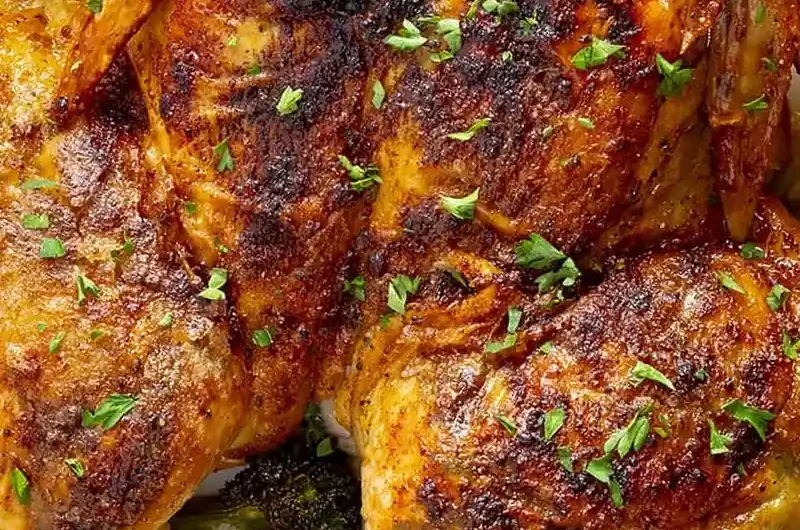
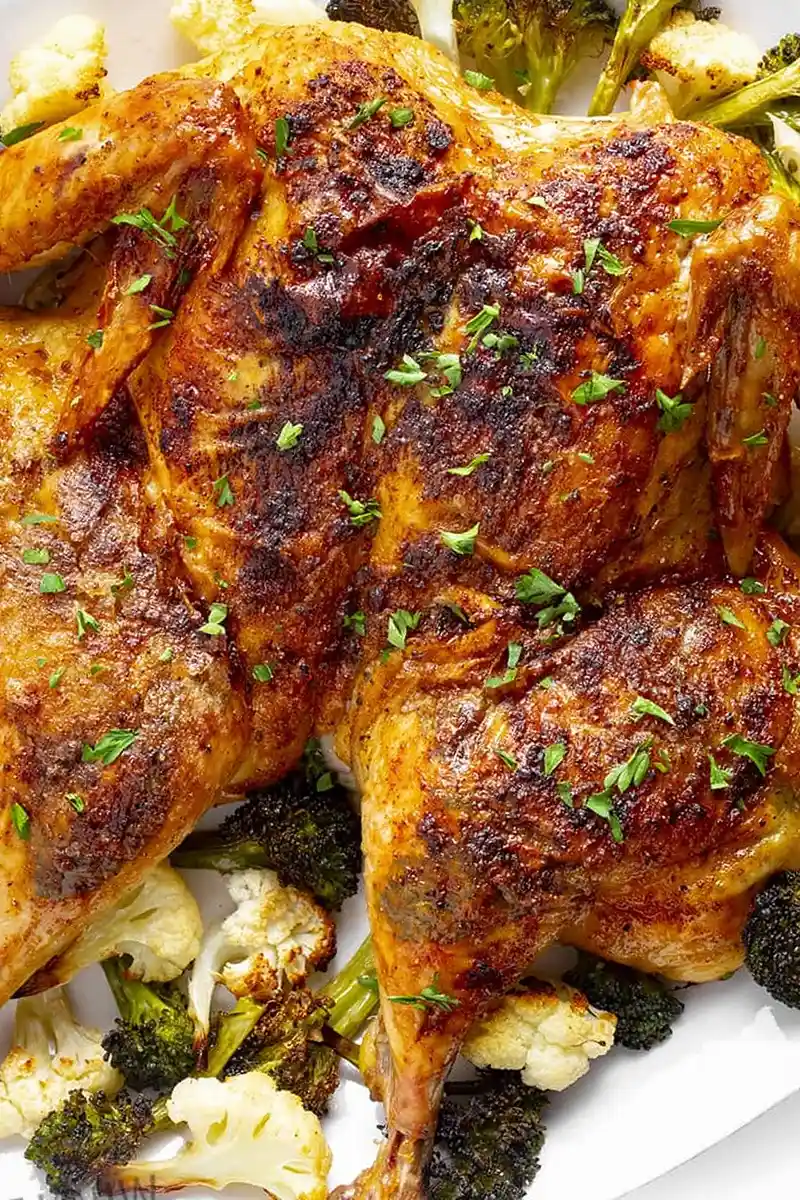
This spatchcock method is the most efficient way to roast a whole chicken while ensuring the skin becomes ultra-crispy. By flattening the bird, you achieve even cooking across both white and dark meat in significantly less time.
List of ingredients
- 5 lb whole chicken – ensures a standard size for roasting.
- 6 tbsp unsalted butter – softened for the compound butter mixture.
- 2 tbsp fresh parsley – finely chopped for flavor.
- 1 tsp Italian seasoning – adds a classic herb profile.
- 3 cloves garlic – crushed to release aromatic oils.
- 2 tbsp olive oil – used for the outer skin crisping.
- 1/2 tbsp sea salt – essential for seasoning and skin texture.
- 1 tsp paprika – provides color and a mild sweetness.
- 1/4 tsp black pepper – adds a subtle heat.
step-by-step instructions
- Prep: Preheat your oven to 450 degrees F (232 degrees C). Set up an oven-safe wire rack over a rimmed baking sheet. If time permits, let the chicken sit at room temperature for 30 minutes to promote even heat penetration.
- Spatchcock: Place the chicken breast side down on a cutting board. Use kitchen shears to cut along both sides of the backbone to remove it completely. Open the chicken like a book and flip it over so the skin side is up. Press down firmly on the breastbone with the heel of your hand until it cracks and the chicken lays flat. Transfer the bird to the roasting rack.
- Make Compound Butter: In a small bowl, mash together the softened unsalted butter, chopped fresh parsley, Italian seasoning, and crushed garlic until fully combined.
- Season: Gently slide your hand under the skin of the breasts and legs to create a pocket. Place dollops of the compound butter in these pockets and spread it around by pressing on top of the skin. Drizzle olive oil over the entire exterior. Sprinkle the sea salt, paprika, and black pepper evenly across the skin.
- Roast: Roast in the oven for 40-50 minutes. Use a meat thermometer to check the thickest part of the breast; remove the chicken when it reaches 160 degrees F (71 degrees C).
- Rest: Transfer the chicken to a carving board and let it rest for 10-15 minutes. This allows the internal temperature to rise to 165 degrees F and the juices to redistribute.
Ingredient Selection and Alternatives
Using Different Fats for Moisture
While unsalted butter provides the best flavor and moisture under the skin, you can use a plant-based butter substitute if needed. Ensure the substitute has a similar melting point to prevent it from leaking out too quickly during the high-heat roasting process.
Herb Variations for the Butter
Fresh parsley and Italian seasoning create a balanced profile, but you can swap these for fresh rosemary or thyme. These woody herbs pair exceptionally well with poultry and stand up to the high roasting temperature without burning.
Garlic Preparation Methods
Crushing the garlic cloves provides a robust flavor that disperses well throughout the butter. If you prefer a milder taste, you can use minced garlic from a jar, although fresh garlic offers a more pungent and authentic aroma.
Choosing the Right Cooking Oil
Olive oil is ideal for the skin because it handles the heat of a 450-degree oven well. Avocado oil is another excellent choice due to its very high smoke point, which ensures the skin browns without smoking in the kitchen.
Adjusting the Spice Rub
Standard paprika gives the chicken a golden-red hue. For a deeper, woodier flavor, replace it with smoked paprika. If you want more heat, a pinch of cayenne pepper can be added to the salt and pepper mixture.
Mastering the Spatchcock Technique
Selecting the Correct Tools
Heavy-duty kitchen shears are the safest and most efficient tool for removing the backbone. If you do not have shears, a sharp chef’s knife can work, but it requires more effort and precision to cut through the bone and cartilage.
The Process of Backbone Removal
When cutting the spine, ensure the chicken is stable on the cutting board to avoid slips. Cut closely to the bone on both sides, removing the center strip entirely. You can save this backbone in the freezer for making a homemade chicken stock later.
Effective Flattening of the Bird
The most important part of spatchcocking is the press. Applying firm pressure to the breastbone allows the chicken to lie completely flat on the rack. This ensures the breasts and thighs are equidistant from the heat source, preventing the edges from burning while the center remains raw.
Pro Tips for Perfect Roasting
The Benefit of Room Temperature Meat
Letting the chicken sit out for 30 minutes reduces the temperature gradient between the outside and inside of the meat. This prevents the exterior from overcooking before the center reaches the safe internal temperature.
The Role of the Roasting Rack
Using a wire rack is non-negotiable for maximum crispiness. It allows hot air to circulate 360 degrees around the chicken, including the bottom. Without a rack, the bottom of the chicken would steam in its own juices, resulting in soggy skin.
Precision Temperature Monitoring
Relying on a timer can be risky because oven temperatures vary. An instant-read or probe thermometer is the only way to guarantee the chicken is juicy. Pulling the meat at 160 degrees F avoids the dryness that occurs when chicken is overcooked beyond 165 degrees F.
Preventing Over-Browning with Foil
If the skin reaches a dark brown color before the internal temperature is met, loosely tent the chicken with aluminum foil. This shields the skin from direct heat while allowing the interior to continue cooking through.
The Science of Resting Meat
Resting the chicken for 10-15 minutes is essential for juice retention. During roasting, the muscle fibers tighten and push juices toward the center. Resting allows those juices to move back to the edges, ensuring every slice is moist.
Serving and Side Dish Ideas
One-Pan Roasted Vegetables
You can turn this into a complete meal by adding vegetables to the pan. Chop broccoli, cauliflower, or brussels sprouts and toss them in oil and salt. Add them around the chicken during the last 25 minutes of roasting.
Festive Holiday Accompaniments
For a more formal presentation, pair the chicken with creamed spinach or honey-glazed carrots. These richer sides complement the savory garlic-butter flavors of the roasted poultry.
Classic Potato Pairings
Roasted diced potatoes can be added to the same baking sheet 35-40 minutes before the chicken is finished. Alternatively, mashed cauliflower or sweet potato puree offers a softer texture contrast to the crispy skin.
Bright and Fresh Salad Options
Balance the richness of the butter-roasted chicken with a Greek salad or an arugula salad. A simple lemon-vinaigrette dressing provides the acidity needed to cut through the fat of the chicken skin.
Storage and Reheating Guidelines
Refrigeration and Shelf Life
Leftover roasted chicken should be stored in an airtight container in the refrigerator. It remains safe to eat for 3 to 5 days. To keep the meat from drying out, store it with a small amount of chicken broth in the container.
Freezing for Long-Term Use
Carve the chicken into pieces before freezing to make reheating easier. Place the pieces in heavy-duty freezer bags with as much air removed as possible. Frozen roasted chicken lasts up to 3 months before quality begins to decline.
Advanced Meal Prep Steps
You can prepare the chicken a day in advance by spatchcocking it and applying the compound butter. Keep the seasoned bird covered in the refrigerator. This allows the salt and herbs to penetrate deeper into the meat.
Best Practices for Reheating
To maintain texture, reheat carved pieces in a 350 degree F oven for 10-15 minutes. For a whole bird, increase the time to 20-25 minutes. To prevent drying, place the meat in a dish with a splash of broth and cover with foil, then broil for 2 minutes at the end to crisp the skin.
Frequently Asked Questions
Can I use a frozen chicken for this recipe?
No, the chicken must be completely thawed before spatchcocking. Attempting to cut the spine of a frozen bird is dangerous and will lead to uneven cooking and potential food safety issues.
Why is my chicken skin not getting crispy?
The most common causes are a lack of a roasting rack or using too much butter on the outside. Ensure you use oil for the exterior and that air can flow freely underneath the chicken.
What should I do with the removed backbone?
Do not discard the backbone. Simmer it with carrots, celery, and onion in water for several hours to create a rich, natural chicken stock for soups or gravies.
How do I know when the chicken is fully cooked?
The only reliable method is using a meat thermometer. The breast should reach 160 degrees F (before resting) and the thighs should reach 165 degrees F to ensure safety and quality.
Can I substitute the butter with oil inside the skin?
While you can use oil, butter is preferred under the skin because it provides a creamy texture and better flavor. Oil tends to run off more quickly, which may result in less juicy meat.
Print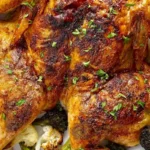
Crispy and Juicy Spatchcock Chicken
- Total Time: 60 minutes
- Yield: 6 servings 1x
- Diet: Keto
Description
This spatchcock chicken recipe is the best way to cook a whole chicken, and so easy! It makes juicy, flavorful meat with perfect crispy skin.
Ingredients
- 5 lb whole chicken
- 6 tbsp unsalted butter
- 2 tbsp fresh parsley
- 1 tsp Italian seasoning
- 3 cloves garlic, crushed
- 2 tbsp olive oil
- 1/2 tbsp sea salt
- 1 tsp paprika
- 1/4 tsp black pepper
Instructions
- Prep: Preheat the oven to 450 degrees F (232 degrees C). Place an oven safe rack over a baking sheet. If possible, let the chicken rest at room temperature for 30 minutes before roasting.
- Spatchcock: Place the chicken onto a cutting board, breast side down. Use kitchen shears to cut away the spine. Open up the chicken like a book, flip it over, and use the heel of your hand to push down on the chicken breast to allow the chicken to lay flat. Transfer the chicken to the rack.
- Make Compound Butter: Mash together butter, parsley, Italian seasoning, and crushed garlic.
- Season: Separate the skin from the breast and legs. Place dollops of compound butter underneath the skin and press down to spread. Drizzle olive oil over the skin and sprinkle with sea salt, paprika, and black pepper.
- Roast: Roast in the oven for 40-50 minutes, until a thermometer in the thickest part of the breast reaches 160 degrees F (71 degrees C). Let the chicken rest for 10-15 minutes before cutting.
Notes
Roast on a rack to increase air flow for crispier skin. Use a meat thermometer to ensure the chicken is juicy and not overcooked. Tent with foil if skin browns too quickly.
- Prep Time: 20 minutes
- Cook Time: 40 minutes
- Category: Main Course
- Method: Roasting
- Cuisine: American
Nutrition
- Serving Size: 1/6 chicken
- Calories: 343 kcal
- Sugar: 0.1 g
- Sodium: 550 mg
- Fat: 27.2 g
- Saturated Fat: 14 g
- Unsaturated Fat: 13.2 g
- Trans Fat: 0 g
- Carbohydrates: 1.1 g
- Fiber: 0.4 g
- Protein: 23 g
- Cholesterol: 135 mg
Keywords: spatchcock chicken, roasted whole chicken, crispy chicken skin, butterflied chicken