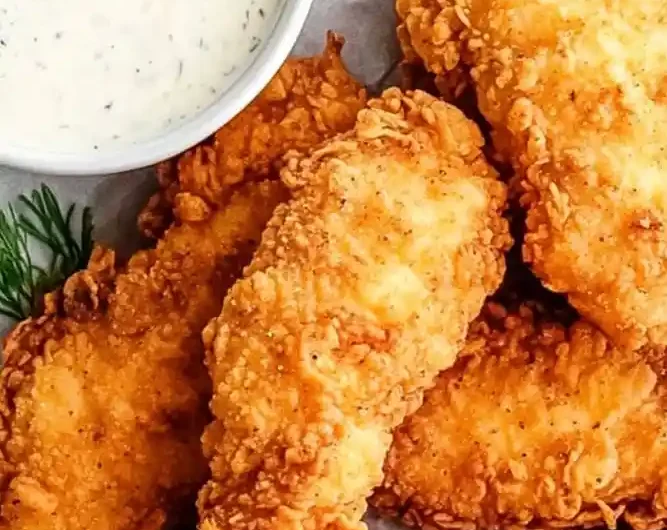
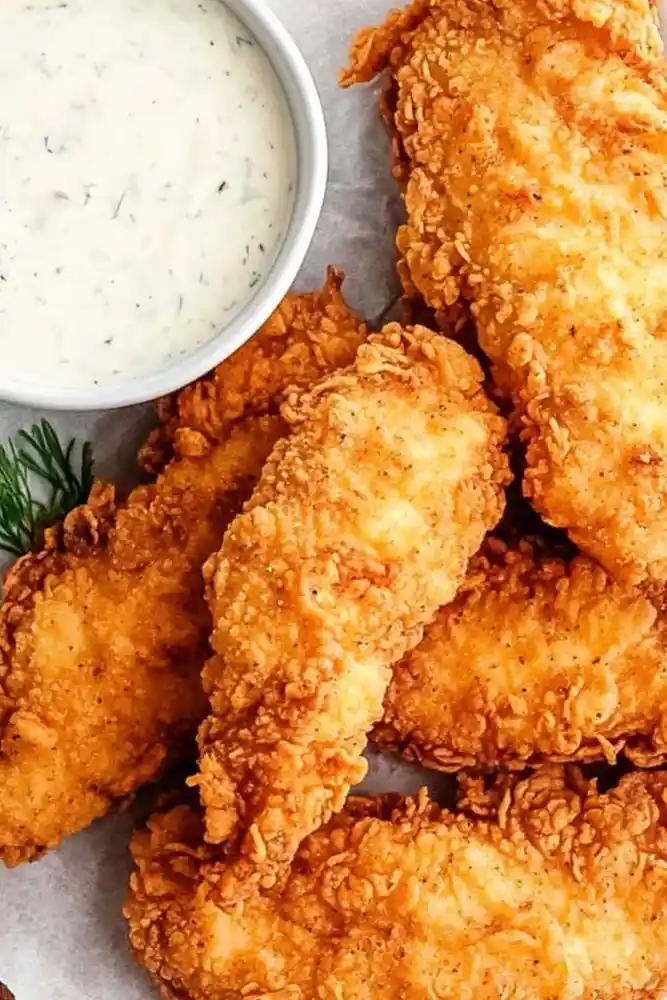
These buttermilk fried chicken tenders are marinated for maximum tenderness and fried to a golden, shatteringly crisp finish. This method ensures a juicy interior and a seasoned crust that stays attached during frying.
List of ingredients
- 2 cups buttermilk – tenderizes the meat with lactic acid.
- 1 tablespoon hot sauce (optional) – adds a subtle tang and mild heat.
- 1 teaspoon garlic powder – provides a savory base for the marinade.
- 1 teaspoon onion powder – complements the garlic for depth.
- 1 teaspoon smoked paprika – adds a hint of wood-fired flavor.
- 1 teaspoon salt – enhances all other seasonings.
- 1/2 teaspoon black pepper – provides a mild, earthy spice.
- 1 1/2 pounds chicken tenders – the primary protein for the dish.
- 2 cups all-purpose flour – the main structural component of the breading.
- 1/2 cup cornstarch – increases crispiness by reducing gluten development.
- 1 tablespoon smoked paprika – colors and flavors the outer crust.
- 1 teaspoon garlic powder – ensures the crust is well-seasoned.
- 1 teaspoon onion powder – adds savory notes to the breading.
- 1 teaspoon cayenne pepper (optional) – increases the spice level of the coating.
- 1 teaspoon salt – balances the flour and cornstarch.
- 1/2 teaspoon black pepper – adds a slight pungent heat.
- 1 teaspoon baking powder – creates tiny air bubbles for a lighter, crispier texture.
- vegetable oil – used for deep frying due to its neutral flavor and high smoke point.
step-by-step instructions
- Prepare the marinade: In a large bowl, combine the buttermilk, hot sauce (if using), garlic powder, onion powder, smoked paprika, salt, and pepper. Add the chicken tenders, ensuring they are fully submerged in the buttermilk mixture. Tip: Use a fork to push the tenders down so they are completely covered.
- Chill the chicken: Cover the bowl and refrigerate for at least 2 hours. For the best results, leave them overnight to allow the lactic acid to fully tenderize the meat. Tip: Keep the bowl tightly sealed to prevent the marinade from absorbing fridge odors.
- Mix the dredging flour: In another large bowl or shallow dish, whisk together the flour, cornstarch, smoked paprika, garlic powder, onion powder, cayenne (if using), salt, black pepper, and baking powder. Tip: Use a whisk to ensure the baking powder and spices are evenly distributed.
- Heat the frying oil: Pour vegetable oil into a large, heavy skillet or Dutch oven until it is 2-3 inches deep. Heat the oil over medium-high heat until it reaches 350 degrees Fahrenheit. Tip: Always use a candy or instant-read thermometer to maintain a steady temperature.
- Coat the tenders: Remove the chicken from the marinade and let the excess liquid drip off. Dredge each piece in the flour mixture, pressing the flour onto the chicken to ensure a thick, even coating. Let the coated chicken rest on a baking sheet for about 10 minutes before frying. Tip: This resting period allows the coating to hydrate and adhere better to the meat.
- Fry in batches: Carefully place the chicken tenders into the hot oil in batches. Fry each batch for about 4-5 minutes per side until the chicken is golden brown and the internal temperature reaches 165 degrees Fahrenheit. Tip: Do not overcrowd the pan, as this will drop the oil temperature and result in greasy chicken.
- Drain and cool: Use a slotted spoon or tongs to remove the tenders. Place them on a wire rack set over a baking sheet to drain any excess oil. Tip: Avoiding paper towels prevents the bottom of the chicken from steaming and becoming soggy.
- Serve: Serve the tenders hot with dipping sauces like honey mustard, ranch, or spicy ketchup. Tip: Serve immediately for the most satisfying crunch.
Advanced Techniques for Maximum Crunch
Integrating the Marinade Drip
To create a craggier, more textured crust, drizzle a few tablespoons of the buttermilk marinade directly into the dry flour mixture. Stir it in with a fork to create small clumps of dough. When you dredge the chicken, these clumps adhere to the meat and fry into extra-crispy ridges.
Implementing the Double-Dredge Method
For those who prefer a very thick, restaurant-style coating, use the double-dredge technique. Coat the chicken in flour, dip it back into the buttermilk marinade, and then dredge it in the flour a second time. This adds a second layer of breading that provides a substantial crunch.
The Role of Cornstarch and Baking Powder
Cornstarch interferes with gluten formation in the flour, resulting in a crispier, more brittle crust than flour alone. Baking powder introduces small amounts of carbon dioxide when it hits the hot oil, creating tiny air pockets. This prevents the crust from becoming too hard or dense.
Maintaining Precise Oil Temperature
If the oil temperature drops below 325 degrees, the breading will absorb too much fat, making the tenders greasy. If the oil exceeds 375 degrees, the outside will burn before the inside reaches 165 degrees. Use a clip-on thermometer to monitor the heat constantly during batch frying.
Ingredient Substitutions and Variations
Using Chicken Breasts Instead of Tenders
If you cannot find chicken tenderloins, purchase boneless, skinless chicken breasts. Slice the breasts lengthwise into 1-inch wide strips to mimic the shape of tenders. Try to keep the strips uniform in size so they cook evenly in the oil.
Buttermilk Alternatives for Marinades
If you lack buttermilk, create a substitute by adding one tablespoon of lemon juice or white vinegar to one cup of whole milk. Let the mixture sit for 10 minutes before using it. This provides the necessary acidity to break down the proteins in the chicken.
Adjusting the Heat Levels
To make these tenders kid-friendly, omit the hot sauce from the marinade and the cayenne pepper from the dredge. To increase the spice, add a pinch of chipotle powder to the flour for a smoky heat or increase the cayenne amount. You can also add a dash of paprika to the oil for a deeper color.
Gluten-Free Breading Options
Replace the all-purpose flour with a 1:1 gluten-free flour blend that contains xanthan gum. Ensure the blend is compatible with frying. You may need to increase the cornstarch ratio slightly to maintain the same level of crispiness found in the wheat version.
Serving and Pairing Suggestions
Custom Dipping Sauce Recipes
Create a honey mustard sauce by mixing equal parts honey, mayonnaise, and Dijon mustard with a squeeze of lemon. For a zesty ranch, combine mayonnaise, sour cream, dried dill, garlic powder, and a splash of buttermilk. A spicy ketchup can be made by adding Sriracha and smoked paprika to standard ketchup.
Balanced Side Dish Pairings
Serve these rich tenders with acidic or fresh sides to balance the fried coating. A creamy coleslaw with apple cider vinegar or a crisp garden salad works well. Alternatively, pair them with corn on the cob or honey-glazed carrots for a classic Southern meal.
Platter Presentation Tips
Arrange the tenders on a wooden board or platter, overlapping them slightly for height. Place the dipping sauces in small ramekins in the center of the platter. Garnish the dish with fresh parsley or sliced green onions for a pop of color.
Storage and Reheating Guidelines
Refrigerating Leftover Tenders
Allow the chicken to cool completely before storing to prevent steam from making the crust soggy. Place the tenders in an air-tight container lined with paper towels to absorb excess moisture. They will remain safe to eat for up to 4 days in the refrigerator.
Freezing for Long-Term Storage
Flash-freeze the cooked tenders by placing them on a baking sheet in the freezer for one hour. Once frozen solid, transfer them to a heavy-duty freezer bag, removing as much air as possible. They can be stored in the freezer for up to 3 months.
Restoring Crispiness in the Oven
Preheat your oven to 375 degrees Fahrenheit. Place the tenders on a wire rack set over a baking sheet to allow air to circulate around the entire piece of chicken. Bake for 10 to 15 minutes until the exterior is crisp and the center is hot.
Using an Air Fryer for Reheating
Air fryers are the most effective way to reheat fried chicken. Place the tenders in the basket at 350 degrees Fahrenheit for 3 to 5 minutes. This removes excess oil and restores the original crunch without adding additional fats.
Common Troubleshooting and FAQs
Why is the breading falling off the chicken?
This usually happens if the chicken is too wet when it enters the oil or if it wasn’t rested after dredging. Ensure you let the excess marinade drip off and allow the coated chicken to sit for 10 minutes. This allows the flour to bond with the protein.
Why is my fried chicken greasy?
Greasiness occurs when the oil temperature is too low or the pan is overcrowded. When too many pieces are added at once, the oil temperature plummets, and the chicken absorbs oil instead of searing. Fry in smaller batches and keep the oil at 350 degrees.
How do I know the chicken is cooked through?
The only reliable way to ensure safety is using a meat thermometer. Insert the probe into the thickest part of the tender; it must read 165 degrees Fahrenheit. Relying on color alone can be misleading, as the crust can brown before the interior is done.
Can I bake these instead of frying?
While you can bake them at 400 degrees Fahrenheit on a wire rack, they will not have the same crunch as fried chicken. To improve the oven version, spray the breaded tenders generously with cooking oil before baking. Expect a longer cook time of 15 to 20 minutes.
What oil is best for frying chicken?
Use oils with high smoke points and neutral flavors, such as vegetable, canola, or peanut oil. Avoid extra virgin olive oil or butter, as these will burn at the temperatures required for deep frying. Peanut oil is often preferred for its stability at high heat.
Print
Crispy Buttermilk Fried Chicken Tenders
- Total Time: 30 minutes
- Yield: 4 servings 1x
- Diet: General
Description
These buttermilk fried chicken tenders are crispy, juicy, and out of this world! They’re so good, they’d even make grandma proud.
Ingredients
- 2 cups buttermilk
- 1 tablespoon hot sauce (optional)
- 1 teaspoon garlic powder
- 1 teaspoon onion powder
- 1 teaspoon smoked paprika
- 1 teaspoon salt
- 1/2 teaspoon black pepper
- 1 1/2 pounds chicken tenders
- 2 cups all-purpose flour
- 1/2 cup cornstarch
- 1 tablespoon smoked paprika
- 1 teaspoon garlic powder
- 1 teaspoon onion powder
- 1 teaspoon cayenne pepper (optional)
- 1 teaspoon salt
- 1/2 teaspoon black pepper
- 1 teaspoon baking powder
- vegetable oil
Instructions
- Marinate: In a large bowl, combine the buttermilk, hot sauce (if using), garlic powder, onion powder, smoked paprika, salt, and pepper. Add the chicken tenders, ensuring they’re fully submerged in the buttermilk mixture.
- Chill: Cover and refrigerate for at least 2 hours or overnight for the best results.
- Dredge Mixture: In another large bowl or shallow dish, whisk together the flour, cornstarch, smoked paprika, garlic powder, onion powder, cayenne (if using), salt, black pepper, and baking powder.
- Heat Oil: Pour vegetable oil into a large, heavy skillet or Dutch oven until it’s about 2-3 inches deep. Heat the oil over medium-high heat to 350 degrees Fahrenheit. Use a thermometer to keep the temperature steady while frying.
- Coat: Remove the chicken from the marinade, allowing the excess liquid to drip off. Dredge each piece of chicken in the flour mixture. Press the flour onto the chicken to ensure a thick, even coating. Let the coated chicken rest on a baking sheet for about 10 minutes before frying.
- Fry: Carefully place the chicken tenders into the hot oil in batches, ensuring not to overcrowd the pan. Fry each batch for about 4-5 minutes per side or until the chicken is golden brown and cooked through. (Internal temperature should reach 165 degrees Fahrenheit.)
- Drain: Use a slotted spoon or tongs to remove the tenders. Place them on a wire rack set over a baking sheet to drain any excess oil.
- Serve: Serve hot with dipping sauces like honey mustard, ranch, or spicy ketchup.
Notes
If you don’t have chicken tenderloins, cut boneless, skinless breasts into 1-inch strips. Ensure each tender is fully submerged in the marinade. Marinate overnight for best results. Drip a little of the marinade into the dredge to help it clump for a crispier coating. Double-dredge each tender for optimal crunch.
- Prep Time: 20 minutes
- Cook Time: 10 minutes
- Category: Main Course, Appetizer
- Method: Frying
- Cuisine: American
Nutrition
- Serving Size: 1 serving
- Calories: 981 kcal
- Sugar: 7 g
- Sodium: 1750 mg
- Fat: 58 g
- Saturated Fat: 14 g
- Unsaturated Fat: 44 g
- Trans Fat: 0 g
- Carbohydrates: 42 g
- Fiber: 2 g
- Protein: 45 g
- Cholesterol: 165 mg
Keywords: buttermilk fried chicken, chicken tenders, crispy chicken, Southern comfort food