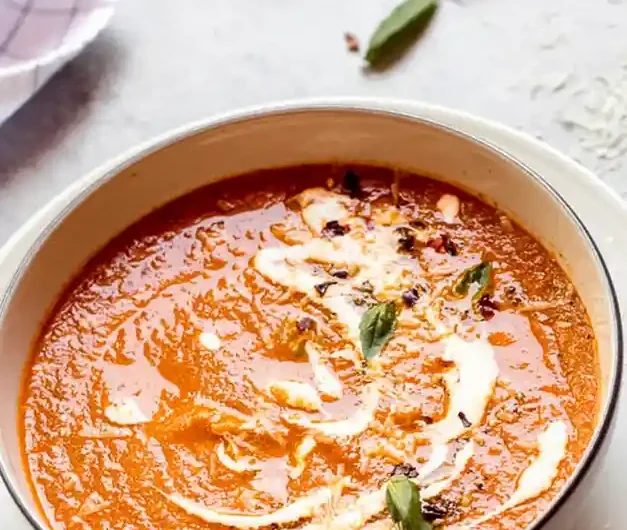
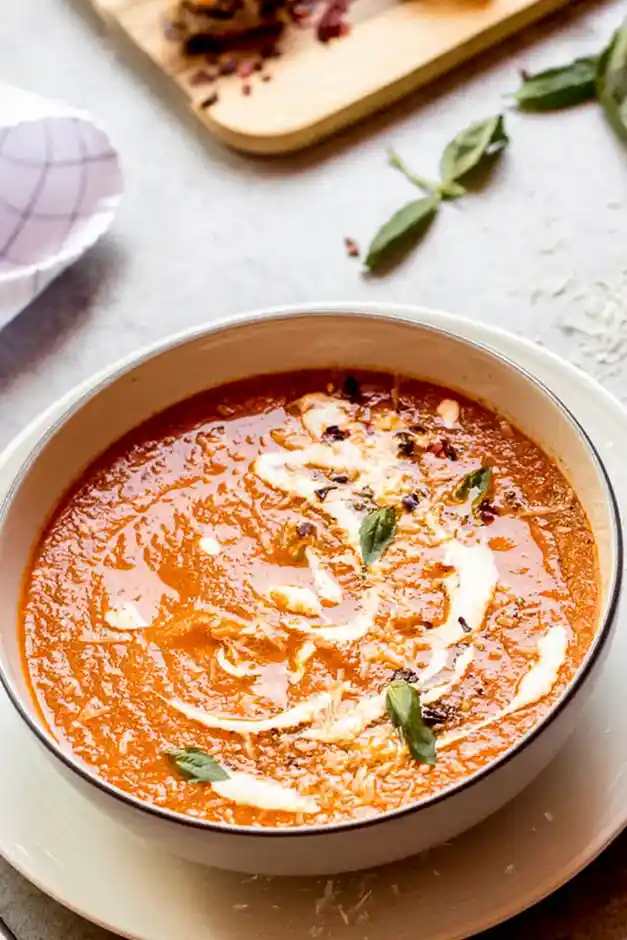
This roasted tomato basil soup features caramelized fresh tomatoes for a deep, rich flavor. It is a hearty, comforting soup that relies on fresh herbs rather than heavy cream for its thickness.
List of ingredients
- 3 lbs. ripe plum tomatoes, cut in half lengthwise – provides the primary base and sweetness.
- 1/4 cup + 2 Tbsp. olive oil – divided for roasting and sautéing.
- 2 cups chopped yellow onions – adds a savory, aromatic sweetness.
- 6 garlic cloves, minced – provides a sharp, pungent depth.
- 2 Tbsp. unsalted butter – adds richness to the aromatic base.
- 1/4 tsp. crushed red pepper flakes – adds a subtle warmth and kick.
- 1 (28 oz) can whole plum tomatoes, with juice – increases volume and intensifies tomato flavor.
- 4 cups fresh basil leaves, packed – the primary herb for a fresh, peppery finish.
- 1 tsp. fresh thyme leaves (or 1/2 tsp. dried) – adds an earthy, woody note.
- 4 cups chicken stock (homemade or store bought) – provides the liquid base for simmering.
- Kosher salt and fresh ground black pepper – used for seasoning to taste.
step-by-step instructions
- Prepare for Roasting: Preheat the oven to 400F. Line a baking sheet with parchment paper and set it aside.
- Roast the Tomatoes: Gently toss the halved plum tomatoes with 1/4 cup olive oil on the prepared baking sheet in a single layer. Sprinkle with salt and pepper, then roast for 45 minutes until caramelized.
- Sauté the Aromatics: Heat the remaining olive oil and butter in a large dutch-oven over medium heat. Add the chopped onions, minced garlic, red pepper flakes, and a pinch of salt, sautéing for about 10 minutes until translucent and lightly browned.
- Simmer the Soup: Stir in the canned tomatoes with their juice, fresh basil, thyme, the roasted tomatoes (including all pan juices), and chicken stock. Season with salt and pepper, bring to a simmer, and cook uncovered for 40 minutes.
- Puree and Serve: Transfer the mixture to a blender and puree until smooth. Taste for final salt and pepper adjustments. Serve with a drizzle of cream or sour cream, fresh parmesan cheese, and grilled cheese sandwiches.
Tomato Selection and Preparation
Prioritize Plum Tomatoes for Texture
Plum tomatoes, such as Roma varieties, are ideal for this soup because they have a higher flesh-to-seed ratio. This produces a thicker, meatier consistency in the final puree without needing additional thickeners.
Identifying Ripe Produce
Look for tomatoes that are a deep, consistent red color with no green shoulders. Firm tomatoes that give slightly to pressure are best, as overly soft tomatoes may collapse too quickly during the roasting process.
Consistency in Cutting
Cutting the tomatoes into uniform halves ensures they roast at the same rate. This prevents some pieces from burning while others remain undercooked, resulting in a balanced sweetness throughout the batch.
Advanced Cooking Techniques
Maximize Caramelization During Roasting
Ensure the tomatoes are in a single layer on the baking sheet with enough space between them. Overcrowding the pan causes the tomatoes to steam instead of roast, which reduces the depth of flavor.
Developing the Aromatic Base
Sauté the onions slowly until they reach a golden brown color. This process, known as caramelization, transforms the harsh raw flavor of the onions into a mellow sweetness that complements the acidity of the tomatoes.
Managing the Simmer
Keeping the pot uncovered during the 40-minute simmer allows some of the liquid to evaporate. This concentrates the flavors and creates a more robust broth before the blending process begins.
Pureeing and Texture Control
Safe Blending of Hot Liquids
When using a standard blender, never fill it more than halfway with hot soup. Remove the center piece of the lid and cover it with a folded kitchen towel to allow steam to escape, preventing the lid from popping off.
Using an Immersion Blender
For a more convenient process, use an immersion blender directly in the dutch-oven. Move the blender in a slow, circular motion to ensure all chunks of onion and tomato are fully incorporated.
Achieving a Silky Finish
If you prefer a completely smooth, restaurant-style texture, pass the pureed soup through a fine-mesh sieve. This removes any remaining small seeds or herb fragments, resulting in a velvet-like consistency.
Customizing Flavor Profiles
Balancing High Acidity
Depending on the variety of tomatoes used, the soup may be very acidic. If the taste is too sharp, stir in a small pinch of granulated sugar or honey to neutralize the acid without making the soup sweet.
Adjusting the Heat Level
The crushed red pepper flakes provide a subtle glow. For a spicier version, increase the flakes to 1/2 teaspoon or stir in a pinch of cayenne pepper during the sautéing phase.
Incorporating Creamy Elements
While the soup is naturally rich, adding a tablespoon of heavy cream or a dollop of Greek yogurt per bowl adds a luxurious mouthfeel. This also helps to mellow out the intensity of the roasted garlic.
Adding Umami Depth
For an extra layer of savory flavor, stir in one teaspoon of soy sauce or a small amount of nutritional yeast during the simmering stage. These ingredients enhance the natural glutamates in the tomatoes.
Serving and Pairing Ideas
The Classic Grilled Cheese Pairing
Serve the soup with a sourdough grilled cheese sandwich using sharp cheddar or gruyere cheese. The crunch of the toasted bread and the saltiness of the melted cheese contrast perfectly with the smooth soup.
Homemade Crouton Toppings
Toss cubed sourdough bread with olive oil and garlic powder, then bake at 375F for 10 minutes. Adding these to the bowl just before serving provides a necessary textural contrast.
Fresh Herb Garnishes
Finish each bowl with a chiffonade of fresh basil or a sprig of thyme. This adds a pop of bright green color and a hit of fresh aroma that lifts the deep, roasted flavors of the soup.
Light Side Dish Options
Pair the rich soup with a crisp arugula salad dressed in lemon vinaigrette. The bitterness of the greens and the acidity of the lemon cleanse the palate between spoonfuls of the creamy soup.
Storage and Preservation
Refrigerator Storage Guidelines
Store the cooled soup in airtight glass containers in the refrigerator for up to five days. Ensure the soup has reached room temperature before sealing the container to prevent condensation and spoilage.
Freezing for Long Term Use
Ladle the cooled soup into quart-sized freezer bags, filling them only two-thirds full to allow for expansion. Squeeze out as much air as possible and lay the bags flat to save space in the freezer.
Proper Thawing Procedures
Thaw frozen soup overnight in the refrigerator for the safest results. If you need it faster, place the sealed bag in a bowl of cold water, changing the water every 30 minutes until thawed.
Reheating Instructions
Stovetop Reheating Method
Pour the soup into a pot over medium-low heat, stirring occasionally. Add a splash of chicken stock or water if the soup has thickened too much during storage to return it to the desired consistency.
Microwave Reheating Tips
Heat the soup in a microwave-safe bowl in 1-minute intervals, stirring between each session. This ensures the heat is distributed evenly and prevents hot spots from splashing.
Handling Dairy During Reheating
If you added cream or sour cream before storing, the dairy may separate when reheated. Stir vigorously after heating or whisk in a teaspoon of warm water to re-emulsify the fats.
Troubleshooting Common Issues
Fixing a Too-Thin Consistency
If the soup is too watery after blending, return it to the stove and simmer on medium heat for another 10 to 15 minutes. This further reduces the liquid and thickens the base.
Correcting Over-Salted Soup
If the soup tastes too salty, stir in a small amount of unsalted chicken stock or a tablespoon of heavy cream. The fat in the cream helps mask the saltiness and balances the flavor.
Managing Bitter Basil Tastes
To avoid bitterness, add the bulk of the basil toward the end of the simmering process. Overcooking fresh basil for too long can sometimes result in a muted or slightly metallic taste.
Frequently Asked Questions
Can I use vegetable broth instead of chicken stock?
Yes, vegetable broth is an excellent substitute that maintains the flavor profile while making the recipe suitable for those who avoid meat-based stocks.
What can I use if I don’t have fresh basil?
You can use dried basil, but use only one-third of the amount specified. For the best results, stir in a small amount of fresh parsley or spinach to mimic the green herbal notes.
How long do roasted tomatoes stay fresh?
Roasted tomatoes can be stored in the refrigerator for up to three days. This allows you to roast them in advance and assemble the soup on a different day.
Can I roast the tomatoes in advance?
Yes, roasting the tomatoes ahead of time is a great make-ahead strategy. Simply store them with their juices in a sealed container and add them to the pot when you are ready to simmer.
Do I have to peel the tomatoes?
No, the roasting process softens the skins, and the high-speed blending process purees them completely. There is no need to spend time peeling the tomatoes before roasting.
Can I use a different type of onion?
While yellow onions are recommended for their balance of sweetness and savoriness, white onions work well for a sharper taste, and red onions provide a slightly sweeter profile.
Is this soup suitable for a slow cooker?
The roasting must still happen in the oven for the flavor, but you can combine all ingredients in a crockpot on low for 6-8 hours before pureeing.
Print
Roasted Tomato Basil Soup Recipe
- Total Time: 1 hour 50 minutes
- Yield: 8 servings 1x
- Diet: Gluten Free
Description
The best roasted tomato basil soup recipe on the internet! This recipe relies on fresh tomatoes and herbs rather than cream or milk. It’s rich and full of flavor.
Ingredients
- 3 lbs. ripe plum tomatoes, cut in half lengthwise
- 1/4 cup + 2 Tbsp. olive oil
- 2 cups chopped yellow onions
- 6 garlic cloves, minced
- 2 Tbsp. unsalted butter
- 1/4 tsp. crushed red pepper flakes
- 1 (28 oz) can whole plum tomatoes, with juice
- 4 cups fresh basil leaves, packed
- 1 tsp. fresh thyme leaves (or 1/2 tsp. dried)
- 4 cups chicken stock (homemade or store bought)
- Kosher salt and fresh ground black pepper
Instructions
- Preheat: Preheat the oven to 400F. Line a baking sheet with parchment paper and set aside.
- Roast: Gently toss the tomatoes with 1/4 cup olive oil and layer on the prepared baking sheet in a single layer. Sprinkle with salt and pepper, to taste. Roast for 45 minutes.
- Sauté: In a large dutch-oven, heat olive oil and butter over medium heat. Add the onions, garlic, red pepper flakes, and a pinch of salt. Sauté until onions are translucent and start to brown, about 10 minutes.
- Simmer: Add the canned tomatoes, basil, thyme, roasted tomatoes, including the juices, and chicken stock. Season with salt and pepper, to taste. Bring the soup back to a simmer and cook for 40 minutes, uncovered.
- Puree: Transfer the soup to a blender and puree until smooth. Taste for salt and pepper. Serve with drizzle of cream or dollop of sour cream, fresh parmesan, and side of grilled cheese.
Notes
Adapted from the Food Network by Ina Garten.
- Prep Time: 15 minutes
- Cook Time: 1 hour 40 minutes
- Category: Soup
- Method: Stovetop, Oven
- Cuisine: Italian
Nutrition
- Serving Size: 1 serving
- Calories: 228 kcal
- Sugar: 7 g
- Sodium: 186.4 mg
- Fat: 17.7 g
- Saturated Fat: 5 g
- Unsaturated Fat: 12.7 g
- Trans Fat: 0 g
- Carbohydrates: 14.5 g
- Fiber: 3 g
- Protein: 5.5 g
- Cholesterol: 11.2 mg
Keywords: roasted tomato soup, tomato basil soup, Ina Garten, comfort food, Italian soup