These crispy salmon croquettes are a satisfying and quick meal option. They feature a light, golden exterior paired with a zesty homemade tartar sauce for a balanced flavor profile.
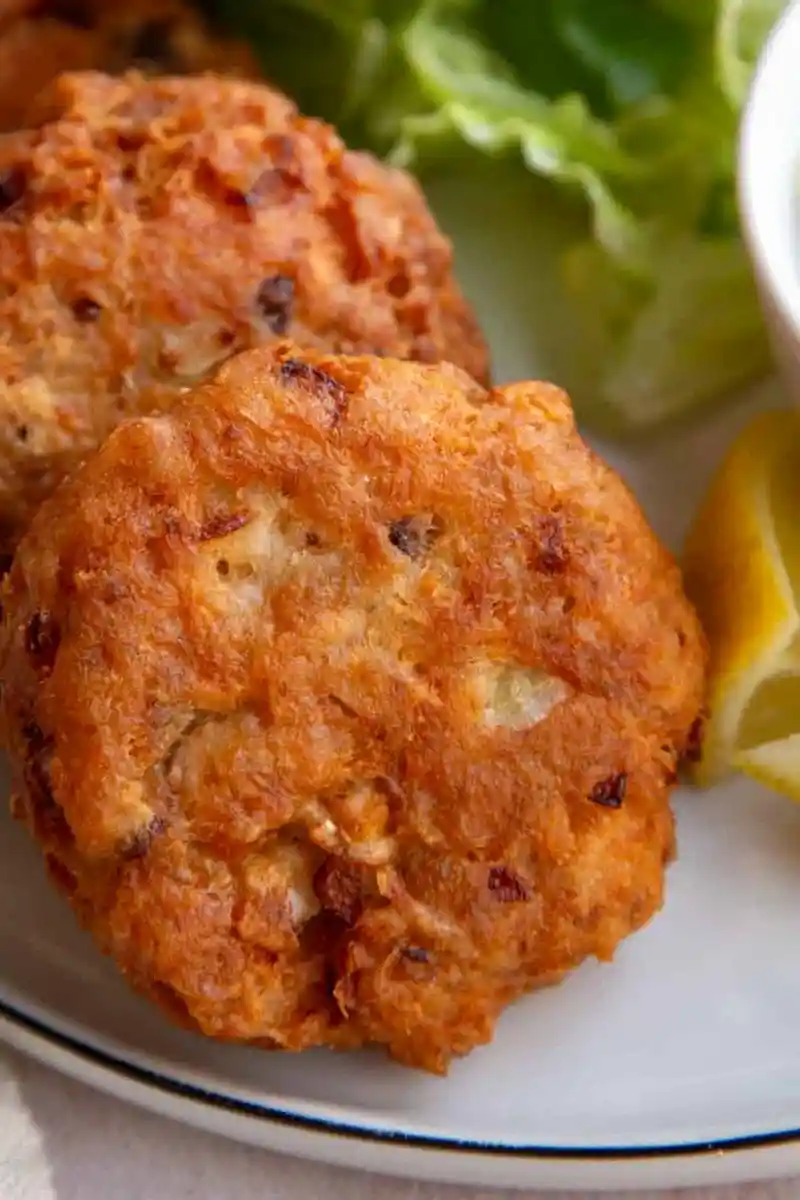
List of ingredients
- 1 can (14.75 oz) pink salmon – drained with juice reserved.
- 1 large egg – acts as a binder for the patties.
- 1/3 cup onion, finely chopped – provides a mild aromatic base.
- 1/2 cup all-purpose flour – helps the patties hold their shape.
- 1 1/2 teaspoons salt – enhances the natural flavor of the salmon.
- 1 1/2 teaspoons baking powder – creates a lighter, crispier texture.
- 1 1/2 cups vegetable oil – or any neutral oil such as canola or corn.
- 1 cup mayonnaise – the creamy base for the tartar sauce.
- 1/2 cup onion, finely chopped – adds crunch to the sauce.
- 3 large pimento stuffed green olives – finely chopped for saltiness.
- 1 tablespoon finely chopped pickles – use dill or sweet based on preference.
- 1 tablespoon fresh parsley, chopped – adds a fresh herbal note.
- 1 tablespoon capers, rinsed and drained – adds a briny tang.
step-by-step instructions
- Heat the oil: Pour the oil into a large, heavy-bottomed skillet, such as a cast iron pan. Heat over medium heat until it reaches 350°F to 375°F, ensuring the skillet is not more than half full to prevent overflow.
- Prepare salmon juice: Drain the canned salmon into a strainer, but reserve 2 tablespoons of the liquid in a small bowl. Whisk the baking powder directly into this reserved juice until it bubbles.
- Clean the fish: Carefully pick out any remaining bones from the drained salmon meat to ensure a smooth texture.
- Combine base ingredients: Whisk the egg in a large mixing bowl. Stir in the salmon, 1/3 cup of finely chopped onion, 1/2 cup of flour, and 1 1/2 teaspoons of salt.
- Incorporate aeration: Pour the bubbling baking powder and juice mixture into the salmon mixture and stir gently until combined.
- Form the patties: Shape the mixture into patties approximately 2 inches in diameter. Pack them firmly but avoid over-compressing to prevent them from becoming too dense.
- Fry the croquettes: Place patties in the hot oil and fry for 2 to 3 minutes until the bottom is golden brown. Flip and cook for another 2 minutes on the other side.
- Drain and rest: Remove the patties from the oil and place them on a plate lined with paper towels to remove excess grease.
- Mix the tartar sauce: In a medium bowl, combine the mayonnaise, 1/2 cup chopped onion, chopped olives, chopped pickles, parsley, and capers. Mix until well combined.
- Serve: Serve the warm salmon patties immediately with the tartar sauce and fresh lemon wedges on the side.
Optimization for Texture and Taste
Use Baking Powder for Aeration
Baking powder reacts with the moisture and acids found in the canned salmon juice to create carbon dioxide bubbles. These small air pockets expand during the frying process, which prevents the patty from becoming too dense. This chemical reaction results in a lighter internal structure and a crispier, more porous outer crust.
Maintain Precise Oil Temperature
Keeping the oil between 350°F and 375°F is critical for the perfect fry. If the oil is too cool, the patties will absorb excess fat and become greasy. If the oil is too hot, the outside will burn before the interior is heated through.
Select a Heavy-Bottomed Skillet
A cast iron or heavy stainless steel skillet provides superior heat retention. This ensures that the temperature does not drop significantly when the cold patties are added to the pan. Consistent heat leads to a more uniform golden-brown color across all croquettes.
Properly Drain the Salmon
While reserving a small amount of juice is necessary for the baking powder, the rest of the salmon should be well-drained. Excess moisture in the main mixture can lead to a mushy interior and may cause the patties to splatter more when hitting the hot oil.
Ingredient Substitutions and Modifications
Alternative Flour Options
For a gluten-free version, you can substitute all-purpose flour with a 1:1 gluten-free flour blend or almond flour. If using almond flour, you may need to pack the patties more firmly as the binding properties differ. Cornstarch can also be used for an even crispier exterior.
Different Salmon Varieties
While canned pink salmon is traditional, you can use canned sockeye salmon for a richer, bolder flavor. If using fresh cooked salmon, omit the reserved juice step and add a teaspoon of lemon juice to the baking powder to trigger the aeration reaction.
Adjusting the Onion Texture
Finely chopping the onions ensures they distribute evenly and soften during cooking. For those who prefer a more integrated flavor, grating the onion provides a more consistent moisture and a subtler onion taste throughout the patty.
Customizing the Binder
If you prefer a different binder, a tablespoon of mashed potato or breadcrumbs can be added alongside the flour. This can change the density of the patty, making it slightly heartier and more filling.
Enhancing the Homemade Tartar Sauce
Varying the Pickle Profile
Dill pickles provide a sharp, vinegary tang that cuts through the richness of the fried salmon. Sweet pickles offer a contrast of flavors that can make the sauce taste more like a relish. You can use a mix of both for a complex flavor profile.
Adding Fresh Citrus
Squeezing fresh lemon juice into the tartar sauce increases the acidity and brightens the overall taste. This is particularly helpful if you are using a mayonnaise brand that is less tangy. It also helps to neutralize any strong fishy odors.
Incorporating Different Herbs
Fresh dill is a classic pairing for salmon and can be added to the sauce for a more traditional taste. Chives or scallions can also replace some of the onion to provide a milder, grassier flavor note.
Adjusting the Creaminess
For a lighter sauce, you can replace half of the mayonnaise with Greek yogurt or sour cream. This reduces the calorie count and adds a sharp, creamy tang that complements the fried exterior of the croquettes.
Serving and Pairing Suggestions
Recommended Vegetable Side Dishes
A crisp garden salad with a light vinaigrette balances the fried nature of the patties. Steamed broccoli or sautéed spinach provides a nutrient-dense accompaniment that adds color to the plate. Roasted asparagus is another excellent choice due to its earthy flavor.
Starch Pairings for a Complete Meal
Creamy mashed potatoes or scalloped potatoes provide a hearty base for the croquettes. For a lighter option, a side of wild rice or quinoa can add a nutty texture. French fries or potato wedges are a classic choice for a casual dinner.
Fresh Garnish Options
Fresh lemon wedges are essential as the citrus juice cuts through the oil of the fried salmon. A sprinkle of chopped fresh parsley or a dash of paprika on top of the patties adds visual appeal. Sliced cucumbers can also be served as a refreshing palate cleanser.
Suggested Beverage Pairings
Sparkling water with a twist of lime is a refreshing choice that cleanses the palate. An iced tea with lemon or a chilled sparkling apple cider also pairs well with the savory and briny flavors of the salmon and tartar sauce.
Storage and Food Safety
Refrigeration Guidelines
Cooked salmon patties can be stored in an airtight container in the refrigerator for 4 to 5 days. Ensure they are completely cooled before sealing the container to prevent steam from making them soggy. Store the tartar sauce in a separate sealed jar.
Freezing for Long-Term Use
Uncooked or cooked patties can be frozen for up to one month. Place them on a baking sheet to freeze individually before transferring them to a freezer bag to prevent them from sticking together. Label the bag with the date of preparation.
Proper Container Selection
Glass containers are preferable for storing the tartar sauce as they do not absorb odors and are easier to clean. For the patties, use a container with a tight seal to keep moisture out and maintain the quality of the fish.
Thawing Process
To thaw frozen patties, place them in the refrigerator overnight. Avoid thawing them at room temperature to maintain food safety standards and prevent the fish from spoiling. Pat them dry with a paper towel before reheating.
Reheating and Refreshing the Crispiness
Shallow Frying for Best Results
To restore the original crunch, reheat the patties in a skillet with a small amount of oil over medium heat. Fry for 1 to 2 minutes per side until the edges are crisp again. This is the most effective way to avoid a rubbery texture.
Oven Reheating Method
Preheat the oven to 350°F and place the patties on a wire rack over a baking sheet. Heat for 5 to 7 minutes, turning once halfway through. The wire rack allows air to circulate, preventing the bottoms from becoming soggy.
Air Fryer Option
Place the patties in an air fryer at 375°F for 3 to 5 minutes. This method is faster than the oven and provides a very crisp exterior without needing additional oil. Monitor them closely to prevent overcooking the interior.
Avoiding the Microwave
Microwaving salmon patties is generally discouraged as it makes the exterior soft and the interior rubbery. If a microwave must be used, heat on medium power in short bursts and serve immediately.
Advanced Preparation Strategy
Prepping Patties in Advance
You can form the patties up to 2 hours before cooking. Place them on a parchment-lined tray, cover them with plastic wrap, and keep them refrigerated. This allows the flour and egg to set, which can make the patties easier to handle.
Preparing Sauce Ahead of Time
The tartar sauce actually improves in flavor if made a day in advance. This gives the chopped onions, capers, and pickles time to infuse into the mayonnaise. Keep it refrigerated until the moment of serving.
Batch Cooking and Planning
If making a large batch, fry the patties in several smaller loads rather than crowding the pan. Crowding the skillet lowers the oil temperature and can lead to the patties sticking together or becoming greasy.
Troubleshooting Common Cooking Errors
Preventing Patties from Falling Apart
If your patties are crumbly, ensure you are packing the mixture firmly during the shaping process. If the mixture still feels too loose, stir in an extra tablespoon of flour. Chilling the shaped patties for 30 minutes before frying also helps them hold their shape.
Reducing Excess Oil Absorption
If the patties are too oily, check your oil temperature with a thermometer. Ensure the oil is at least 350°F before adding the fish. Always drain the patties on paper towels immediately after removing them from the pan.
Handling Overcooked Salmon
Salmon can become dry if fried for too long. Stick to the 2-3 minute window per side. If the patties are browning too quickly, lower the heat slightly to ensure the middle is hot without burning the outside.
Managing Strong Fishy Taste
To mellow out a very strong salmon flavor, add a pinch of lemon zest to the patty mixture. Ensuring the salmon is well-drained and using fresh parsley in the sauce also helps balance the flavor profile.
Frequently Asked Questions
Can I bake these instead of frying?
Yes, you can bake the patties at 400°F for about 12-15 minutes, flipping once. While they will be cooked through, they will not have the same tempura-like crispness as the fried version.
How do I remove bones from canned salmon?
After draining the salmon, spread it out on a flat plate. Use your fingers or a fork to feel for small, soft bones and remove them manually before mixing with other ingredients.
What is the best oil for frying?
Any oil with a high smoke point is ideal, such as vegetable, canola, corn, or peanut oil. Avoid using extra virgin olive oil as it may smoke at the temperatures required for a crisp fry.
Can I use fresh salmon instead of canned?
Yes, but you must poach or steam the fresh salmon first. Once cooked and flaked, follow the recipe, but substitute the reserved canned juice with a teaspoon of lemon juice to activate the baking powder.
What can I use if I don’t have capers?
Finely chopped green olives or an extra tablespoon of minced pickles can replace the capers. These provide a similar briny and salty element to the tartar sauce.
} Print
Crispy Old Fashioned Salmon Croquettes
- Total Time: 25 minutes
- Yield: 8 patties 1x
- Diet: General
Description
These easy salmon patties are just like grandma used to make (or maybe even better!).
Ingredients
- 1 can (14.75 oz) pink salmon
- 1 large egg
- ⅓ cup onion, finely chopped
- ½ cup all-purpose flour
- 1½ teaspoons salt
- 1½ teaspoons baking powder
- 1½ cups vegetable oil
- 1 cup mayonnaise
- ½ cup onion, finely chopped
- 3 large pimento stuffed green olives
- 1 tablespoon finely chopped pickles
- 1 tablespoon fresh parsley, chopped
- 1 tablespoon capers, rinsed and drained
Instructions
- Heat Oil: Heat vegetable oil in a large heavy-bottomed skillet over medium heat until it reaches 350°F–375°F.
- Prepare Salmon: Drain the can of salmon, reserving 2 tablespoons of the juice, and remove any bones.
- Mix Ingredients: Whisk the egg in a large bowl, then add the salmon, ⅓ cup chopped onion, flour, and salt.
- Activate Leavening: Whisk the baking powder into the reserved salmon juice and stir gently into the salmon mixture.
- Shape: Form the mixture into patties roughly 2 inches in diameter, packing them firmly.
- Fry: Fry the patties in hot oil for 2–3 minutes per side until golden brown.
- Drain: Place the patties on a paper towel lined plate to drain.
- Make Tartar Sauce: Mix mayonnaise, ½ cup chopped onion, chopped green olives, chopped pickles, chopped parsley, and capers in a medium bowl.
Notes
Salmon patties can be made up to 2 hours in advance and refrigerated. Tartar sauce can be made several days in advance. Store finished patties for 4–5 days in the refrigerator or up to 1 month in the freezer.
- Prep Time: 15 minutes
- Cook Time: 10 minutes
- Category: Entree
- Method: Frying
- Cuisine: American
Nutrition
- Serving Size: 1 patty
- Calories: 142 kcal
- Sugar: 2 g
- Sodium: 888 mg
- Fat: 8 g
- Saturated Fat: 1 g
- Unsaturated Fat: 6 g
- Trans Fat: 0.03 g
- Carbohydrates: 10 g
- Fiber: 1 g
- Protein: 7 g
- Cholesterol: 43 mg
Keywords: canned salmon patties, old fashioned salmon patties recipe