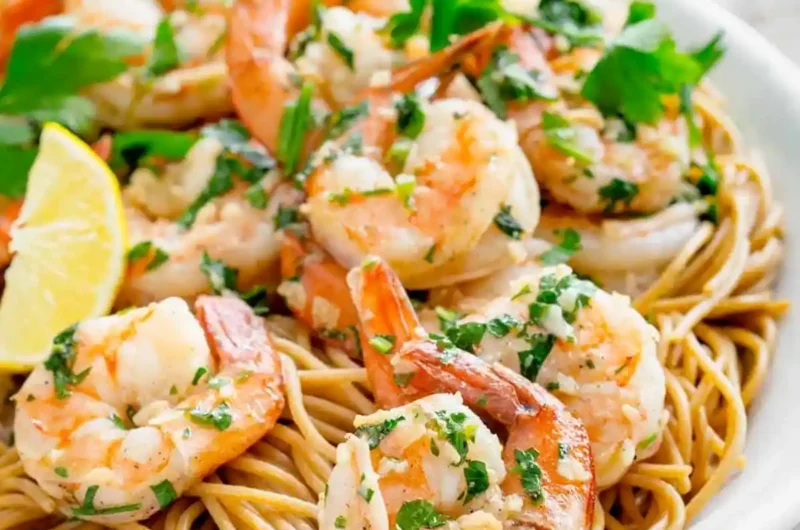
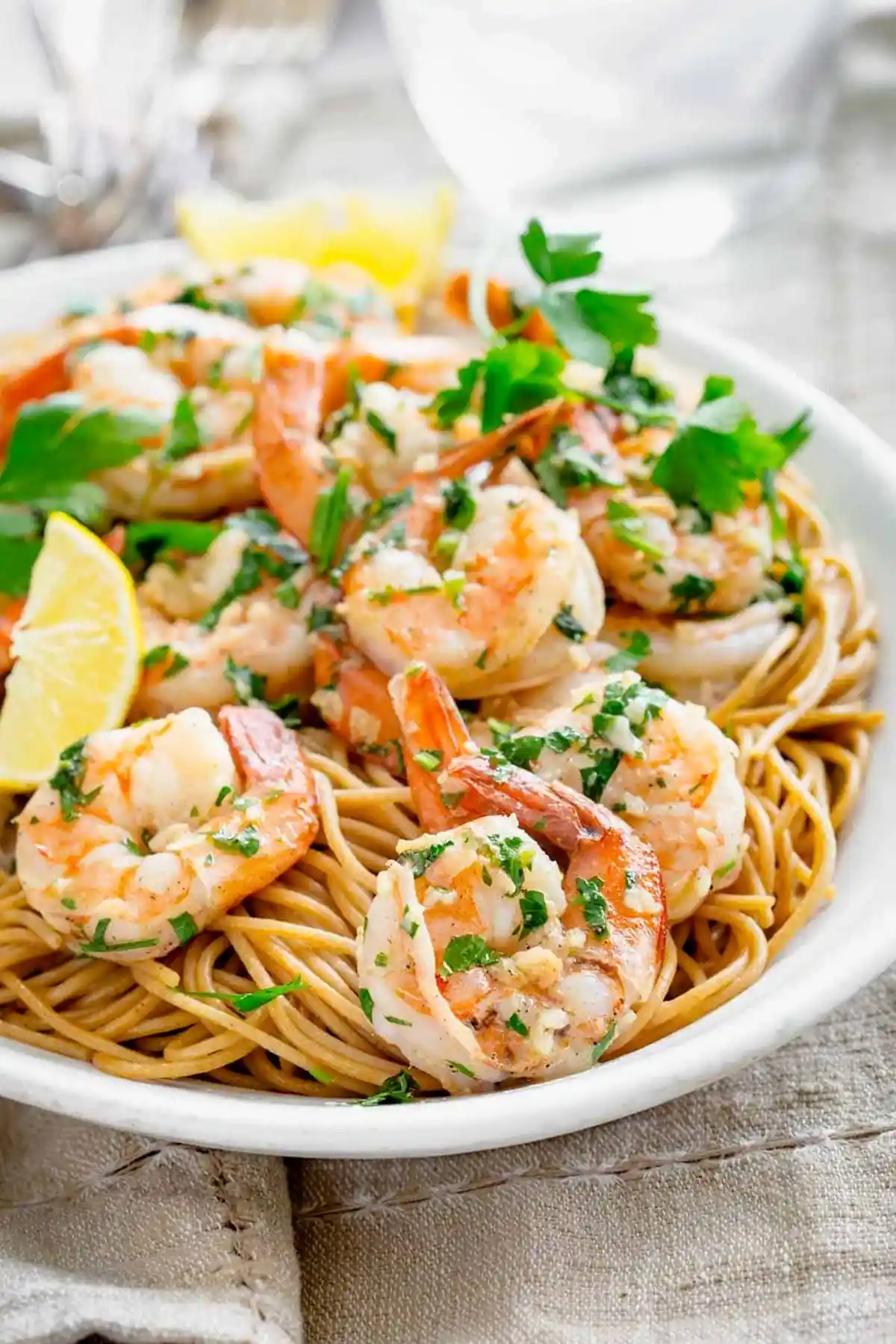
This fast garlic shrimp recipe takes only 20 minutes from start to finish. It delivers a restaurant-quality seafood dish that is perfect for busy weeknights or special occasions.
List of ingredients
- 2 lbs frozen 16-20 ct. peeled and deveined shrimp, defrosted (tails left on)
- 2 tablespoons extra-virgin olive oil – used for searing the shrimp.
- ½ teaspoon salt – to enhance the natural seafood flavor.
- 3 cloves garlic, minced – provides the primary aromatic base.
- 2 tablespoons lemon juice – adds a bright, acidic finish.
- ½ cup roughly chopped Italian Parsley – adds freshness and color.
- Freshly ground pepper to taste – for a subtle spicy kick.
step-by-step instructions
- Dry the shrimp: Pat the shrimp completely dry using paper towels to ensure a proper sear.
- Sear the seafood: Heat oil in a large cast-iron skillet over high heat until it shimmers but does not smoke. Add the shrimp, sprinkle with salt, and cook for about 2 minutes until they are bright pink and browning on the bottom.
- Sauté the garlic: Push the shrimp to one side of the skillet and tilt the pan to pool the oil. Add the minced garlic and stir until it is fragrant and just starting to brown, then stir the garlic back into the shrimp to coat.
- Finish with lemon: Redistribute the shrimp across the skillet and drizzle with lemon juice. Continue cooking for another 40 seconds to 2 minutes until the shrimp are just cooked through.
- Add final seasoning: Stir in the chopped parsley and black pepper, then remove the pan from the heat immediately and serve hot.
Expert Tips for Searing Shrimp
Remove Surface Moisture Completely
Always pat your shrimp dry with paper towels before they hit the pan. Any remaining water creates steam, which prevents the shrimp from browning and results in a boiled texture rather than a sear. This step is crucial for achieving that restaurant-style golden crust.
Maintain High Pan Temperature
Use a cast-iron skillet to maintain a consistent, high heat. The oil should be shimmering but not smoking before you add the seafood. If the pan is too cool, the shrimp will release their juices and simmer in liquid instead of searing.
Prevent Pan Overcrowding
Ensure there is plenty of space between each shrimp in the pan. Overcrowding drops the temperature of the skillet and causes the shrimp to steam. If your pan is too small, cook the shrimp in two separate batches to maintain high heat.
Test the Oil Heat
Before adding the full batch, drop one single shrimp into the oil. It should sizzle immediately and vigorously. If it does not, wait another minute for the oil to reach the correct temperature to avoid sticking.
Ingredient Modifications and Substitutions
Alternative Cooking Oils
While extra-virgin olive oil is excellent for flavor, you can use avocado oil or grapeseed oil. These oils have higher smoke points, which is beneficial when cooking over very high heat. This prevents the oil from burning and adding a bitter taste to the sauce.
Swapping Fresh Garlic
If you prefer a milder flavor, you can substitute the garlic with finely minced shallots or onions. For a different aromatic profile, try using sliced scallions added at the same time as the parsley. Avoid using garlic powder, as it does not provide the same richness when sautéed in oil.
Herb Alternatives to Parsley
Fresh cilantro or Thai basil can be used instead of Italian parsley for a more global flavor. Fresh tarragon is another excellent choice that pairs naturally with seafood. Always add fresh herbs at the very end of cooking to preserve their color and delicate oils.
Non-Alcoholic Acid Replacements
If you want a flavor profile similar to white wine without using alcohol, try a combination of white grape juice and a splash of white wine vinegar. This provides the necessary sweetness and acidity to balance the garlic. Alternatively, increasing the amount of lemon juice will keep the dish bright and fresh.
Ideal Side Dish Pairings
Classic Pasta Options
Serve the garlic shrimp over linguine, spaghetti, or angel hair pasta. The pasta absorbs the lemon-garlic oil, creating a cohesive meal. Toss the cooked pasta directly into the skillet with the shrimp to ensure every strand is coated in sauce.
Grains and Rice
Jasmine rice or basmati rice are excellent neutral bases that highlight the boldness of the garlic. For a more textured option, try quinoa or brown rice. These grains provide a hearty contrast to the tender texture of the shrimp.
Low-Carbohydrate Bases
For a low-carb version, serve the shrimp over zoodles or cauliflower rice. Spaghetti squash is another great alternative that mimics the shape of pasta. These options allow the flavor of the garlic sauce to shine without adding heavy starches.
Complementary Green Vegetables
Pair this dish with steamed broccoli, sautéed spinach, or roasted asparagus. A fresh garden salad with a light vinaigrette also works well to balance the richness of the olive oil. These vegetables add essential nutrients and a crunch to the meal.
Advanced Preparation Strategies
Proper Thawing Techniques
Thaw frozen shrimp in the refrigerator overnight for the best texture. If you are in a rush, place them in a colander and run cool water over them. Avoid using hot water, as this can begin to cook the exterior and ruin the shrimp’s consistency.
Pre-Chopping Your Aromatics
Mince the garlic and chop the parsley before you begin heating the pan. Because the cooking process happens very quickly, you will not have time to chop ingredients while the shrimp are searing. Having everything ready prevents the garlic from burning.
Organizing Your Mise en Place
Arrange your lemon juice, salt, and pepper within arm’s reach of the stove. Organize your tools, such as a sturdy spatula and a serving platter, beforehand. This efficiency ensures the shrimp are served immediately while they are still tender.
Long-Term Storage and Reheating
Refrigeration Guidelines
Store leftover shrimp in an airtight glass container in the refrigerator for up to 24 hours. Ensure the shrimp have cooled down slightly before sealing the lid to prevent excess condensation. This helps maintain the texture of the seafood.
Gentle Reheating Methods
Avoid the microwave, as it often overcooks shrimp and makes them rubbery. Instead, place the shrimp in a non-stick skillet over medium heat. Warm them gently until they are steaming hot, then remove them from the heat immediately.
Managing Fresh Herb Quality
Fresh parsley will lose its vibrant green color and flavor after being refrigerated. If you are reheating the dish, consider stirring in a small handful of fresh parsley just before serving. This restores the visual appeal and the fresh taste of the original meal.
Solving Common Cooking Issues
Reducing Excess Liquid in the Pan
Liquid release often happens if the shrimp were treated with sodium tripolyphosphate (STPP). To avoid this, look for labels that state ‘STP-free’ or ‘no preservatives.’ Additionally, ensuring the pan is shimmering hot before adding the shrimp helps lock in juices.
Preventing Rubberiness
Shrimp cook very quickly and can become tough if left on the heat too long. Remove them from the pan as soon as they turn opaque and form a ‘C’ shape. If they curl into a tight ‘O’ shape, they are likely overcooked and will be chewy.
Avoiding Burnt Garlic
Garlic burns quickly at high temperatures and becomes bitter. Always push the shrimp aside and add the garlic to the oil only for a short period. As soon as the garlic becomes fragrant and turns a light golden brown, stir it into the shrimp to stop the cooking process.
Frequently Asked Questions
Can I use frozen shrimp directly?
It is not recommended to cook shrimp straight from frozen. This results in uneven cooking where the outside becomes rubbery while the inside remains raw. Always thaw and pat the shrimp dry first for a high-quality sear.
How do I tell when shrimp are done?
Shrimp are finished when they change from translucent to an opaque white and pink color. They should form a gentle curve. Avoid overcooking them to keep the meat tender and juicy.
Can I use a different type of skillet?
While a cast-iron skillet is preferred for heat retention, a heavy stainless steel pan also works. Avoid non-stick pans if you want a deep brown sear, as they often cannot handle the highest heat settings required for this method.
Should I leave the tails on?
Leaving the tails on is primarily for presentation and makes the dish look more professional. It also provides a convenient handle if you are serving the shrimp as an appetizer with toothpicks.
Print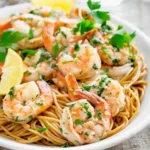
Quick Garlic Shrimp with Lemon and Parsley
- Total Time: 20 minutes
- Yield: 5 cups 1x
- Diet: Paleo, Gluten-Free, Dairy-Free
Description
This shrimp in garlic sauce is an easy weeknight meal that takes only 20 minutes. It’s fast, delicious, healthy, and just as delicious as any restaurant seafood meal!
Ingredients
- 2 lbs frozen 16-20 ct. peeled and deveined shrimp, defrosted (tails left on)
- 2 tablespoons extra-virgin olive oil
- ½ teaspoon salt
- 3 cloves garlic, minced
- 2 tablespoons lemon juice
- ½ cup roughly chopped Italian Parsley
- Freshly ground pepper to taste
Instructions
- Dry: Pat shrimp dry.
- Sear: Heat oil in a large cast-iron skillet over high heat until shimmering but not smoking. Add shrimp and sprinkle with salt. Let cook, until bright pink and starting to brown on the bottom, about 2 minutes.
- Sauté Garlic: Push shrimp to one side of the skillet, and tilt skillet to allow oil to pool on the open surface of the skillet. Add garlic to the oil and stir. Cook, stirring the garlic only until the it is fragrant and just starting to brown. Stir the garlic into the shrimp and stir to coat the shrimp with the garlic.
- Deglaze: Redistribute the shrimp mixture onto the surface of the skillet. Drizzle lemon over the shrimp and stir to coat. Continue cooking until the shrimp is just cooked through, 40 seconds to 2 minutes.
- Finish: Add parsley and black pepper, stir to coat and remove from the heat. Serve hot.
Notes
To brown the shrimp and keep them from releasing all their juice, ensure the pan is hot before adding the shrimp and avoid overcrowding the pan.
- Prep Time: 15 minutes
- Cook Time: 5 minutes
- Category: main course
- Method: Stovetop
- Cuisine: American
Nutrition
- Serving Size: 1 1/4 cups
- Calories: 291 kcal
- Sugar: 0 g
- Sodium: 370 mg
- Fat: 8 g
- Saturated Fat: 1 g
- Unsaturated Fat: 7 g
- Trans Fat: 0 g
- Carbohydrates: 1 g
- Fiber: 0 g
- Protein: 55 g
- Cholesterol: 200 mg
Keywords: shrimp, garlic sauce, healthy seafood, 20-minute meal, low carb, paleo, gluten-free