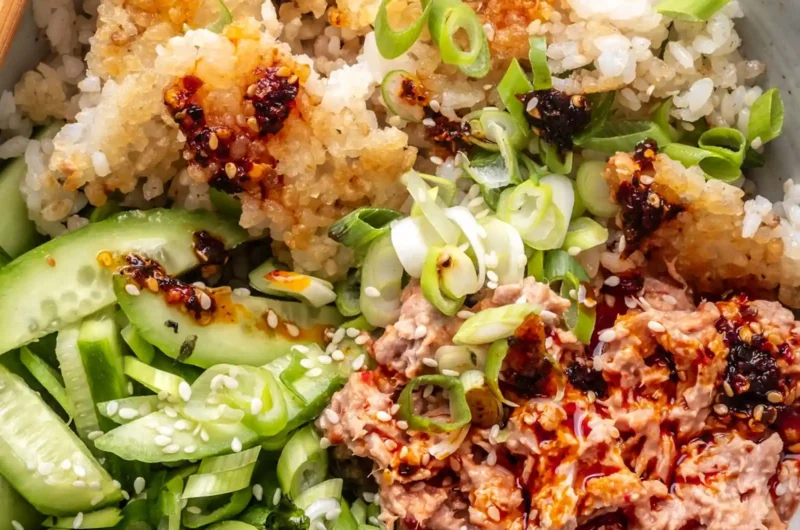
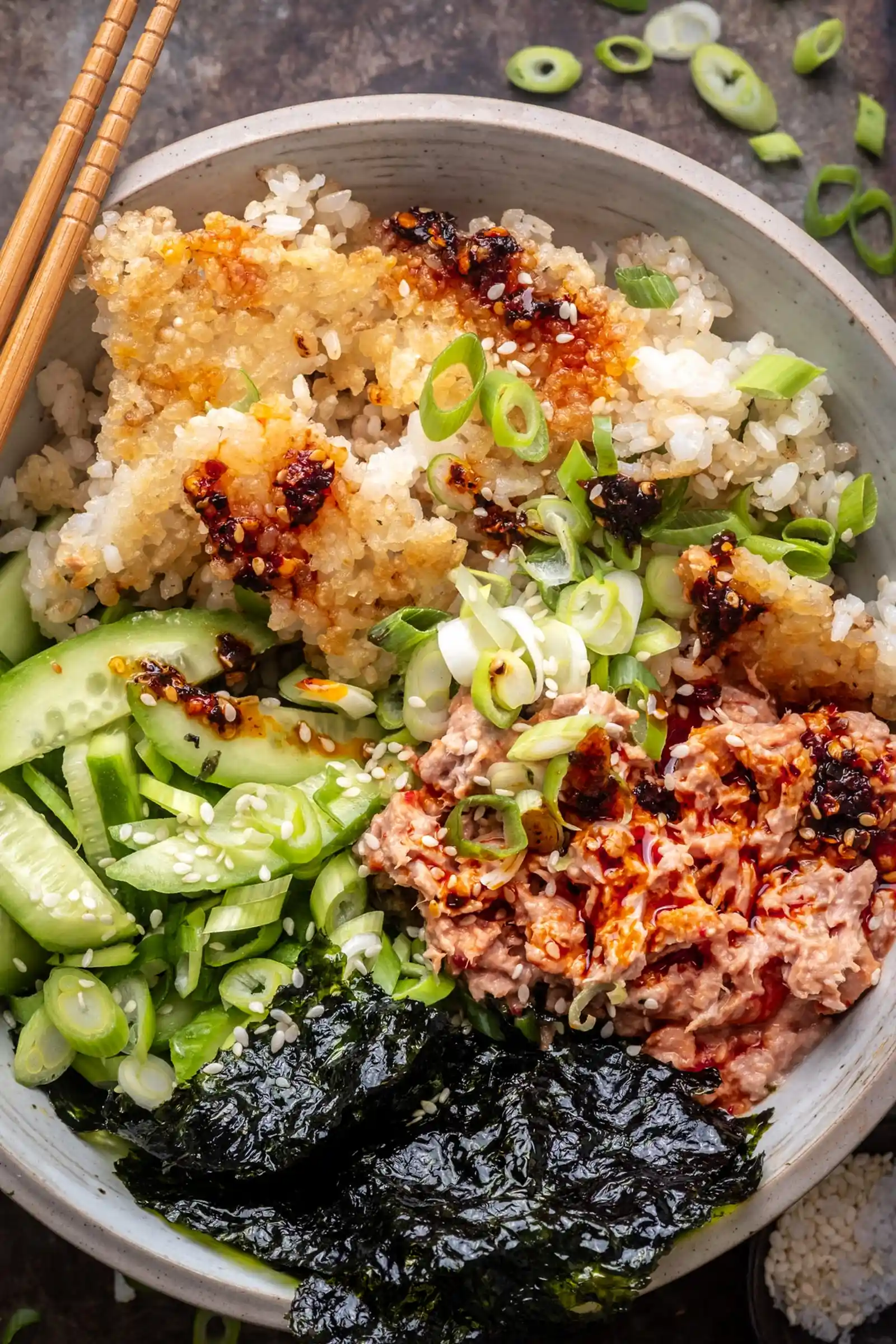
This Spicy Tuna Sushi Bowl is a fast and nutritious meal option that brings the flavors of a sushi restaurant into your home. By combining pantry-stable canned tuna with pan-seared rice, you get a satisfying contrast of textures and bold flavors.
List of ingredients
- 1 5 oz can tuna (preferably oil-packed), drained – provides the main protein base.
- 2 tbsp mayonnaise – adds creaminess to the tuna.
- 1 tbsp sriracha – provides a spicy kick.
- 2 tsp soy sauce – adds salty umami depth.
- 1/2 tsp rice wine vinegar – balances the flavors with acidity.
- 1/2 tsp toasted sesame oil – adds a distinct nutty aroma.
- 1 cup cooked sushi rice, chilled – essential for achieving a crispy texture.
- 1 tbsp avocado oil or another heat-tolerant oil – used for pan-frying the rice.
- 1/4 cup scallions, chopped – adds a fresh, mild onion flavor.
- 1 mini cucumber, sliced – provides a cool, crisp contrast.
- Sesame seeds, chili crisp and nori sheets – optional garnishes for extra texture and taste.
step-by-step instructions
- Prepare the tuna: Combine the canned tuna, mayonnaise, sriracha, soy sauce, vinegar, and toasted sesame oil in a bowl. Mix well and refrigerate until you are ready to assemble the bowls.
- Heat the pan: Place a large skillet over medium-high heat for a few minutes. Add the avocado oil and wait until it begins to shimmer.
- Fry the rice: Add the chilled sushi rice to the pan in large clumps. Use a spatula to press down firmly on the rice and cook for 3-5 minutes until the bottom is golden brown and crispy.
- Assemble the bowl: Place a scoop of the chilled spicy tuna in a bowl. Add the pieces of crispy rice and sliced cucumber. Garnish with chopped scallions, sesame seeds, and a drizzle of chili crisp.
Master the Art of Crispy Sushi Rice
Importance of Chilled Rice
Using rice that has been refrigerated for at least four hours is critical. Cold rice contains retrograded starch, which allows it to hold its shape and crisp up without becoming mushy.
Selecting the Right Oil
Avocado oil is recommended because it has a high smoke point. This prevents the oil from burning or smoking at the medium-high temperatures needed to brown the rice.
Achieving the Perfect Golden Crust
Avoid lifting or moving the rice clumps too frequently. Letting them sit undisturbed for several minutes allows a consistent, golden-brown sear to develop on the surface.
Managing Pan Temperature
Ensure the pan is fully preheated before adding the rice. If the oil is not shimmering, the rice will absorb the fat rather than searing, leading to a greasy texture.
Preventing Rice from Sticking
A non-stick skillet is the best tool for this recipe. It allows you to flip the rice clumps easily without breaking the delicate crust.
Using a Rubber Spatula for Pressing
Use a flat rubber or silicone spatula to press the rice firmly against the pan. This maximizes the surface area in contact with the heat for a better crunch.
Customizing Your Tuna Mixture
Adjusting the Spice Level
If the mixture is too spicy, stir in an extra tablespoon of mayonnaise to mellow the heat. For more spice, add a few drops of extra sriracha or a pinch of cayenne pepper.
Enhancing the Nutty Aroma
Increase the toasted sesame oil by a quarter teaspoon for a more pronounced nuttiness. This oil is very potent, so add it in small increments.
Adding Acidity for Balance
If the tuna feels too heavy, add a small squeeze of fresh lime juice. This complements the rice wine vinegar and brightens the overall flavor profile.
Using Canned Salmon as a Substitute
Canned salmon is an excellent alternative to tuna. It has a similar texture and pairs perfectly with the spicy mayo and crispy rice base.
Creamy Vegan Alternatives
Replace the traditional mayonnaise with a plant-based mayo. This maintains the creamy consistency while making the bowl suitable for dairy-free diets.
Incorporating Extra Umami
A small amount of miso paste stirred into the tuna mixture adds a deep, salty richness. This enhances the savory notes of the soy sauce.
Fresh Topping and Garnish Ideas
Fresh Cucumber for Crunch
Thinly slicing a mini cucumber provides a refreshing contrast to the rich tuna. It cleanses the palate between bites of the fried rice.
Scallions for a Mild Onion Bite
Chopping scallions thinly adds a bright, peppery flavor. Use both the white and green parts for a more complex taste.
Toasted Sesame Seeds for Texture
Sprinkling toasted sesame seeds on top adds a subtle crunch. You can use white, black, or a mix of both for visual contrast.
Chili Crisp for Added Heat
A drizzle of chili crisp adds both heat and a savory, garlic-infused depth. It complements the sriracha in the tuna mixture.
Nori Sheets for an Authentic Feel
Serving the bowl with small pieces of seasoned nori allows you to wrap the ingredients like a mini taco. This mimics the experience of eating a traditional sushi roll.
Sliced Avocado for Richness
Adding fresh avocado slices provides a creamy texture that balances the spice. It also adds healthy fats to the meal.
Edamame for Extra Protein
Steamed edamame beans add a pop of color and extra plant-based protein. They provide a firm texture that contrasts with the soft tuna.
Shredded Carrots for Color
Finely shredded carrots add a natural sweetness and a vibrant orange hue. They can be added raw for crunch or lightly pickled for tang.
Sliced Radishes for Peppery Notes
Thinly sliced radishes add a sharp, peppery flavor. This helps cut through the richness of the mayonnaise and oil.
Roasted Sweet Potato for Sweetness
Small cubes of roasted Japanese sweet potato add heartiness. The sweetness of the potato pairs well with the salty soy sauce.
Assembly and Presentation Tips
Creating a Balanced Bowl Layout
Place the crispy rice on one side and the tuna on the other. Arrange the vegetables in the remaining space to create a visually appealing, colorful bowl.
Making Mini Sushi Wraps
Cut nori sheets into small rectangles. Spoon a bit of tuna and a piece of crispy rice onto the nori and fold it for a hand-held snack.
Drizzling Sauces Effectively
Use a squeeze bottle to apply the chili crisp in a zig-zag pattern across the top. This ensures every bite has a bit of sauce without overwhelming the dish.
Choosing the Right Bowl Size
Use a wide, shallow bowl rather than a deep one. This keeps the crispy rice from steaming and losing its crunch under the other ingredients.
Storage and Freshness Guide
Refrigerating the Tuna Salad
Store the spicy tuna mixture in an airtight glass container. It will stay fresh in the refrigerator for up to three to four days.
Storing Cooked Sushi Rice
Keep cooked sushi rice in a sealed container in the fridge. If the rice dries out, a tiny sprinkle of water before reheating can help restore moisture.
Keeping Vegetables Crisp
Slice the cucumber and scallions just before serving. If you must prep them early, store the cucumber slices in a cold water bath in the fridge.
Maximizing Ingredient Shelf Life
Store the nori sheets in a dry, airtight bag to prevent them from absorbing moisture. Once exposed to air, nori loses its crispness quickly.
Reheating and Refreshing the Bowl
Restoring the Crunch to Rice
Do not microwave the crispy rice, as this will make it soft. Instead, use a dry skillet or an air fryer to bring back the golden crust.
Reheating the Rice in an Air Fryer
Place the rice clumps in the air fryer at 375°F (190°C) for 3-5 minutes. This is the fastest way to restore the original crunch.
Warming the Rice in a Skillet
Add a tiny drop of oil to a pan over medium heat. Sear the rice for 2 minutes per side until the exterior is crisp again.
Why Tuna Should Stay Cold
Keep the spicy tuna mixture chilled even if you are reheating the rice. The temperature contrast between the hot rice and cold tuna is a key part of the dish.
Meal Prep Strategies
Batch Cooking the Sushi Rice
Cook a large pot of sushi rice at the start of the week. Portion it into containers and chill them immediately to save time on weekdays.
Preparing the Tuna Mix in Advance
Mix the tuna and seasonings in a large batch. Portion the mixture into individual servings to make assembly during lunch breaks effortless.
Vegetable Prepping for the Week
Wash and chop your scallions and carrots in advance. Keep them in separate containers to maintain their individual textures and flavors.
Proper Container Selection
Use glass containers to keep the tuna mixture tasting fresh. Glass does not absorb odors and keeps the ingredients colder than plastic.
Troubleshooting and Common Mistakes
Rice Falling Apart in the Pan
This usually happens if the rice is too warm or not sticky enough. Ensure you use authentic sushi rice and that it has been thoroughly chilled.
Tuna Mixture Being Too Runny
If the tuna is too wet, you may not have drained the can sufficiently. Stir in a small amount of extra mayonnaise or a teaspoon of mashed avocado to thicken it.
Oil Smoking Too Quickly
If the oil smokes, your heat is too high or you are using an oil with a low smoke point. Lower the heat and switch to avocado or grapeseed oil.
Rice Staying Soft Instead of Crispy
This occurs if the pan is overcrowded or the heat is too low. Fry the rice in smaller batches to ensure each clump has enough room to sear.
Frequently Asked Questions
Can I use brown rice?
Yes, you can use brown rice, but it has a firmer texture and may take slightly longer to brown in the pan. Ensure it is chilled just like the white sushi rice.
Is oil-packed tuna better than water-packed?
Oil-packed tuna generally has a richer flavor and a smoother texture. If using water-packed tuna, ensure it is drained very well to prevent a watery sauce.
How do I make the bowl less spicy?
Reduce the amount of sriracha to a teaspoon or replace it with a mild chili sauce. You can also add extra cucumber to cool down the heat.
Can I use a different vinegar?
Apple cider vinegar can work as a substitute for rice wine vinegar. However, it has a stronger taste, so use slightly less than the recipe calls for.
What is the best way to slice cucumbers?
Use a mandoline or a very sharp knife to create paper-thin rounds. This allows the cucumber to curve around the other ingredients in the bowl.
Can I make this without a non-stick pan?
You can use a stainless steel or cast iron pan, but you will need a bit more oil. Be careful when flipping, as the rice is more likely to stick to these surfaces.
Print
Crispy Rice Spicy Tuna Sushi Bowls
- Total Time: 20 minutes
- Yield: 2 servings 1x
- Diet: Dairy-free
Description
These quick and easy Spicy Tuna Sushi Bowls are made with canned tuna and served with crispy rice for a healthy protein-packed meal.
Ingredients
- 1 5 oz can tuna (preferably oil-packed), drained
- 2 tbsp mayonnaise
- 1 tbsp sriracha
- 2 tsp soy sauce
- 1/2 tsp rice wine vinegar
- 1/2 tsp toasted sesame oil
- 1 cup cooked sushi rice, chilled
- 1 tbsp avocado oil
- 1/4 cup scallions, chopped
- 1 mini cucumber, sliced
- Sesame seeds, chili crisp and nori sheets for serving (optional)
Instructions
- Prepare Tuna: Combine the canned tuna, mayonnaise, sriracha, soy sauce, vinegar and toasted sesame oil. Refrigerate until ready to use.
- Crisp Rice: Heat a large skillet over medium-high heat for a couple minutes before adding the avocado oil. When the oil is shimmering, add the rice in large clumps and use a spatula to firmly press down. Cook for 3-5 minutes or until crispy and golden brown.
- Assemble: Add a scoop of spicy tuna, pieces of crispy rice, cucumber and garnish with scallions, sesame seeds and a drizzle of chili crisp.
Notes
Sushi rice is easiest to handle and pan-fry when chilled. Cook the rice according to package instructions and refrigerate for at least 4 hours, ideally overnight.
- Prep Time: 10 minutes
- Cook Time: 10 minutes
- Category: Bowls
- Method: Pan-frying
- Cuisine: Japanese-inspired
Nutrition
- Serving Size: 1 serving
- Calories: 437 kcal
- Sugar: 8 g
- Sodium: 809 mg
- Fat: 16 g
- Saturated Fat: 10 g
- Unsaturated Fat: 8 g
- Trans Fat: 0 g
- Carbohydrates: 35 g
- Fiber: 4 g
- Protein: 37 g
- Cholesterol: 16 mg
Keywords: spicy tuna, sushi bowl, crispy rice, canned tuna, healthy lunch