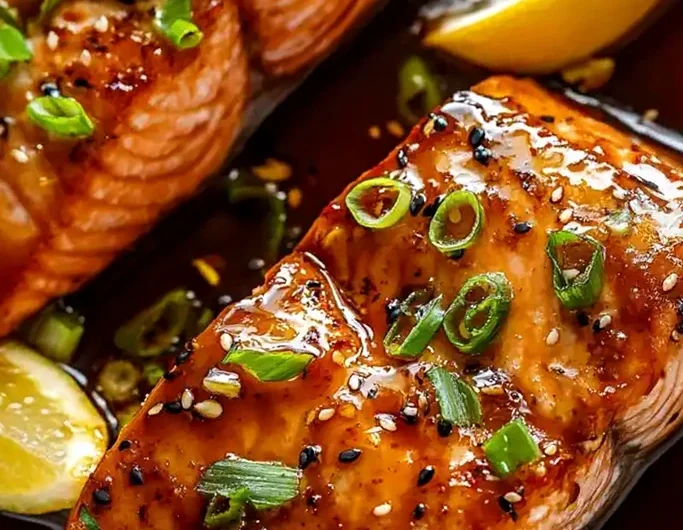
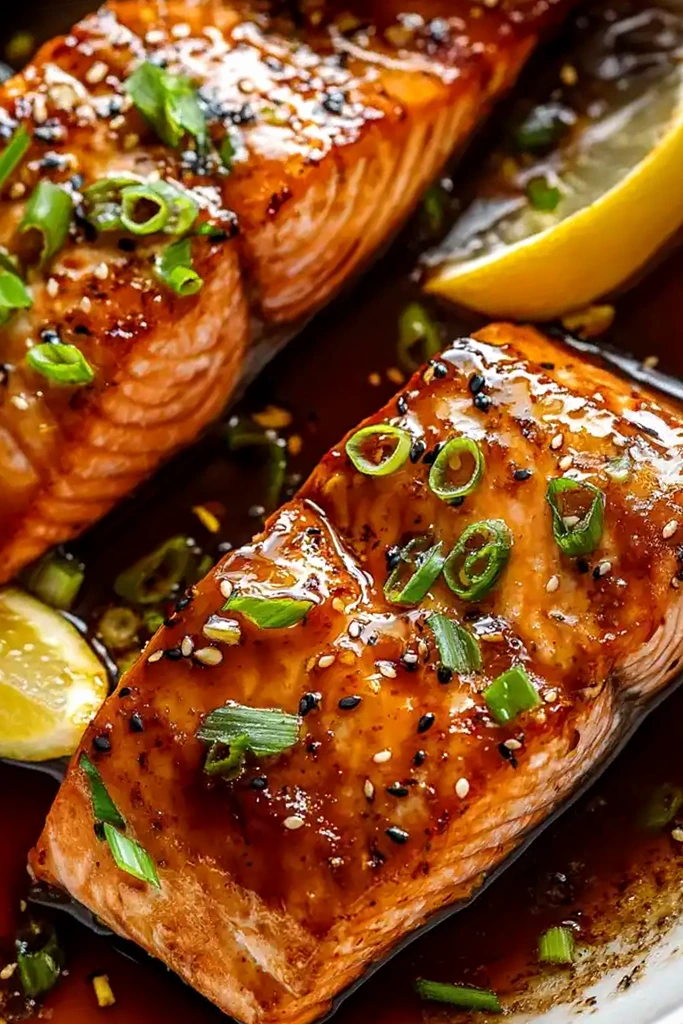
Enjoy a fast and flavorful meal with this baked teriyaki salmon. It combines sweet and salty notes for a restaurant-quality dinner in just 30 minutes.
List of ingredients
- 4 fresh salmon fillets (6 oz each) – use skin-on for better moisture retention.
- 1/2 cup teriyaki sauce – store-bought or a homemade blend.
- 2 cloves garlic, minced – provides a pungent, aromatic base.
- 1 tsp fresh ginger, grated – adds a zesty, warm spice.
- 2 tbsp brown sugar or honey – creates a sticky, caramelized crust.
- 1 tsp sesame oil – introduces a deep, nutty aroma.
- 2 green onions, thinly sliced – used for a fresh, sharp garnish.
- 1 tbsp sesame seeds – adds a light crunch and visual appeal.
step-by-step instructions
- Create the marinade: In a mixing bowl, whisk together the teriyaki sauce, minced garlic, grated ginger, brown sugar or honey, and sesame oil until smooth.
- Marinate the fish: Place the salmon fillets in a shallow dish, pour the marinade over them to ensure they are well-coated, cover, and refrigerate for 30 minutes to 2 hours.
- Prepare the oven: Preheat your oven to 400°F (200°C) and line a baking sheet with parchment paper or lightly grease a baking dish.
- Arrange salmon: Remove the salmon from the marinade, let the excess liquid drip off, and place the fillets skin-side down on the prepared baking sheet.
- Reduce the sauce: Pour the remaining marinade into a small saucepan and simmer over medium heat for about 5 minutes to thicken it into a glaze.
- Bake the fillets: Cook the salmon for 12-15 minutes, or until the meat flakes easily with a fork and reaches an internal temperature of 145°F (63°C).
- Apply the glaze: During the final 2-3 minutes of cooking, brush the reduced marinade glaze over the top of each fillet for extra flavor.
- Rest and garnish: Let the salmon rest for a few minutes, then top with sliced green onions and sesame seeds before serving.
Cooking Techniques for Perfect Salmon
Using a Digital Meat Thermometer for Precision
A digital thermometer is the most reliable way to ensure your salmon is cooked perfectly. Insert the probe into the thickest part of the fillet to check for an internal temperature of 145°F. This prevents the fish from becoming dry or overcooked.
The Importance of Room Temperature Fish
Taking the salmon out of the refrigerator 15 to 20 minutes before baking helps it cook more evenly. When the fish starts at room temperature, the center reaches the safe temperature without the outside overcooking. This results in a more consistent texture throughout the fillet.
Choosing the Right Salmon Cut
Center-cut fillets are ideal for baking because they have a uniform thickness. This ensures that all pieces finish cooking at the same time. Look for fillets with a vibrant color and a firm texture that springs back when touched.
Managing Oven Hot Spots
Every oven has areas that are hotter than others, which can lead to uneven browning. Rotate your baking sheet halfway through the cooking process to ensure each fillet gets equal heat. Using the center rack usually provides the most balanced air circulation.
Ingredient Substitutions and Modifications
Replacing Brown Sugar with Maple Syrup
Maple syrup is an excellent alternative to brown sugar or honey for a different kind of sweetness. It provides a rich, woody flavor that complements the salty teriyaki sauce. Use the same measurement of two tablespoons for a similar consistency.
Gluten-Free Teriyaki Alternatives
For a gluten-free version, replace standard teriyaki sauce with one made from tamari or coconut aminos. Many store-bought teriyaki sauces contain wheat, so always check the label. Tamari provides the same deep umami flavor without the gluten.
Using Different Types of White Fish
While salmon is the standard, you can use cod or mahi-mahi for a milder taste. These fish are leaner, so you may need to reduce the baking time by 2 to 3 minutes. Be careful not to overcook them, as white fish dries out faster than salmon.
Substituting Fresh Ginger with Ground Powder
If you do not have fresh ginger, you can use ginger powder as a substitute. Use 1/4 teaspoon of powder for every 1 teaspoon of fresh grated ginger. While the flavor is less bright, it still provides the necessary warmth to the marinade.
Serving and Pairing Ideas
Classic Grain Pairings
Fluffy jasmine or basmati rice is the traditional choice for absorbing the extra teriyaki glaze. For a heartier option, try brown rice or quinoa for added fiber. These grains provide a neutral base that balances the intensity of the sauce.
Low-Carb Side Dish Options
Cauliflower rice is a great alternative for those avoiding grains. Zucchini noodles, or zoodles, also work well when lightly sautéed in sesame oil. These options keep the meal light while maintaining the Asian-inspired flavor profile.
Vegetable Accompaniments
Steamed bok choy or broccoli adds a fresh, crunchy element to the plate. You can also try roasted snap peas or carrots for more sweetness. These vegetables pair perfectly with the savory notes of the teriyaki glaze.
Non-Alcoholic Beverage Pairings
A chilled glass of iced green tea complements the ginger and sesame flavors. Sparkling water with a squeeze of fresh lime also provides a refreshing acidity. These drinks cleanse the palate between bites of the rich salmon.
Storage and Reheating Guidelines
Proper Refrigeration Methods
Store leftover salmon in an airtight container to keep it from drying out. It should be placed in the refrigerator within two hours of cooking. Properly stored salmon will remain fresh for 3 to 4 days.
Freezing Cooked Teriyaki Salmon
You can freeze cooked salmon by wrapping individual fillets tightly in foil and placing them in a freezer bag. This prevents freezer burn and preserves the flavor. Thaw the fish in the refrigerator overnight before reheating.
Best Ways to Reheat Without Overcooking
To reheat, place the salmon in a low oven at 275°F until warmed through. Avoid high heat, which can make the fish rubbery and dry. If using a microwave, use medium power and add a splash of water to keep it moist.
Identifying Signs of Spoilage
Check for a strong ammonia-like smell or a slimy texture on the surface of the fish. If the color has faded significantly or the sauce looks unusual, discard the salmon. Always prioritize food safety when dealing with seafood.
Make-Ahead Planning
Prepping the Marinade in Advance
The teriyaki marinade can be made up to two days before you plan to cook. Store it in a glass jar in the refrigerator to keep the flavors fresh. This saves time on the night of the meal.
Marinating Overnight Considerations
Avoid marinating salmon for more than 12 hours, as the salt in the teriyaki sauce can begin to cure the fish. This can change the texture, making it firmer or slightly rubbery. A few hours is typically sufficient for deep flavor penetration.
Organizing Ingredients for Mise en Place
Prepare all your minced garlic, grated ginger, and sliced onions before you start the cooking process. Having everything measured and ready prevents mistakes during the fast-paced baking stage. This organization makes the process stress-free.
Troubleshooting Common Issues
Fixing a Too-Salty Marinade
If the marinade tastes too salty, stir in a small amount of honey or a teaspoon of water. A squeeze of lemon juice can also help balance the saltiness with acidity. Always taste the sauce before adding it to the fish.
Preventing the Sauce from Burning
Since the glaze contains sugar, it can burn quickly under high heat. Keep a close eye on the fillets during the final glazing step. If the sauce begins to darken too quickly, reduce the oven temperature slightly.
Handling Salmon that Sticks to the Pan
Using parchment paper is the best way to prevent salmon from sticking. If you use a baking dish, ensure it is well-greased with oil or butter. Do not attempt to flip the fish until it has naturally released from the surface.
Correcting Overcooked Dry Fillets
If the salmon comes out slightly dry, brush on extra reduced glaze to add moisture. Serving the fish with a side of avocado or a creamy sauce can also help. In the future, pull the fish out of the oven at 140°F to allow carry-over cooking.
Salmon Variety Guide
Atlantic Salmon Characteristics
Atlantic salmon is common and typically has a milder flavor and higher fat content. This makes it very forgiving during the baking process. It stays moist and tender even if cooked slightly longer.
Sockeye Salmon Tips
Sockeye salmon has a deeper red color and a more intense, bold flavor. Because it is leaner than Atlantic salmon, it cooks faster. Reduce your oven time by a few minutes to avoid dryness.
King Salmon Differences
King salmon is known for its large flakes and high omega-3 content. It is the richest of the salmon varieties and has a buttery texture. This variety handles the bold flavors of teriyaki exceptionally well.
Coho Salmon Guidance
Coho salmon offers a medium flavor profile and a lighter color. It is a leaner option that works well for those who prefer a less oily fish. Keep an eye on the internal temperature to ensure it stays moist.
Understanding Marinade Science
Role of Salt in Teriyaki
The salt in the soy-based teriyaki sauce helps break down the proteins in the fish. This allows the other flavors, like ginger and garlic, to penetrate deeper into the flesh. It also helps the fish retain moisture during baking.
How Sugar Aids Caramelization
The brown sugar or honey undergoes a chemical reaction called the Maillard reaction when exposed to heat. This creates the characteristic sticky, brown crust on the salmon. This caramelization adds a complex sweetness to the dish.
The Effect of Acid on Fish Texture
If your teriyaki sauce contains vinegar or citrus, the acid helps tenderize the fish. However, too much acid for too long can cause the fish to ‘cook’ and become mushy. This is why marinating times should be monitored.
Why Sesame Oil Enhances Aroma
Sesame oil is used for its aromatic properties rather than as a primary cooking fat. It provides a toasted, nutty scent that is characteristic of Japanese-inspired cuisine. A small amount goes a long way in enhancing the overall profile.
Frequently Asked Questions
Can I use frozen salmon for this recipe?
Yes, but you must thaw the salmon completely in the refrigerator before marinating. Pat the fillets dry with paper towels to remove excess moisture. This ensures the marinade adheres properly and the fish sears correctly.
How long does the marinade last in the fridge?
The prepared marinade can be stored in an airtight container for up to one week. If you are reusing marinade that was in contact with raw fish, it must be boiled for 5 minutes first. For safety, it is better to set aside a portion of sauce before marinating.
Do I have to keep the skin on?
You can remove the skin, but keeping it on helps protect the delicate flesh from the direct heat of the pan. It also keeps the fillet together and retains more juices. The skin is edible and becomes crisp when baked.
What is the best way to grate fresh ginger?
Use a microplane or a fine grater for the best results. You do not need to peel the ginger if you have a microplane, as the skin is very thin. Grating creates a paste that blends seamlessly into the marinade.
Print
Easy Baked Teriyaki Salmon
- Total Time: 30 minutes
- Yield: 4 servings 1x
- Diet: General
Description
This Baked Teriyaki Salmon recipe offers a perfect blend of sweet and savory flavors, bringing a taste of Japanese-American fusion to your dinner table.
Ingredients
- 4 fresh salmon fillets (6 oz each)
- 1/2 cup teriyaki sauce
- 2 cloves garlic, minced
- 1 tsp fresh ginger, grated
- 2 tbsp brown sugar or honey
- 1 tsp sesame oil
- 2 green onions, thinly sliced
- 1 tbsp sesame seeds (optional)
Instructions
- Marinade: In a bowl, whisk together the teriyaki sauce, minced garlic, grated ginger, brown sugar (or honey), and sesame oil.
- Marinate: Place the salmon fillets in a shallow dish and pour the marinade over them, cover and refrigerate for 30 minutes to 2 hours.
- Preheat: Preheat your oven to 400°F (200°C).
- Prepare: Line a baking sheet with parchment paper or lightly grease a baking dish.
- Arrange: Remove the salmon from the marinade, letting excess drip off, and place them skin-side down on the prepared baking sheet.
- Glaze: Pour any remaining marinade into a small saucepan and simmer it for 5 minutes to use as a glaze.
- Bake: Bake the salmon for 12-15 minutes, or until it flakes easily with a fork and reaches an internal temperature of 145°F (63°C).
- Finish: In the last 2-3 minutes of cooking, brush the reduced marinade over the salmon for an extra flavor boost.
- Rest: Once done, let it rest for a few minutes before serving.
Notes
Serve over a bed of fluffy white rice, brown rice, cauliflower rice, or zucchini noodles. Pair with steamed broccoli or bok choy for a complete meal.
- Prep Time: 15 minutes
- Cook Time: 15 minutes
- Category: Main Course
- Method: Baking
- Cuisine: American, Japanese
Nutrition
- Serving Size: 1 fillet
- Calories: 365 kcal
- Sugar: 12 g
- Sodium: 820 mg
- Fat: 18 g
- Saturated Fat: 4 g
- Unsaturated Fat: 14 g
- Trans Fat: 0 g
- Carbohydrates: 26 g
- Fiber: 1 g
- Protein: 22 g
- Cholesterol: 75 mg
Keywords: Baked Teriyaki Salmon