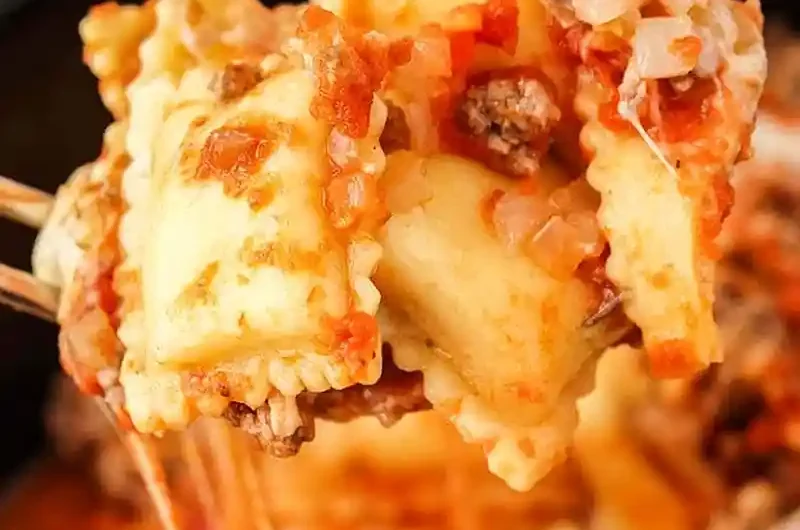
This hearty meal transforms traditional lasagna into a simple slow cooker dish using frozen ravioli. It is an ideal solution for busy weeknights when you want a comforting Italian dinner without the effort of boiling noodles. This recipe delivers rich layers of meat, sauce, and cheese with minimal preparation.
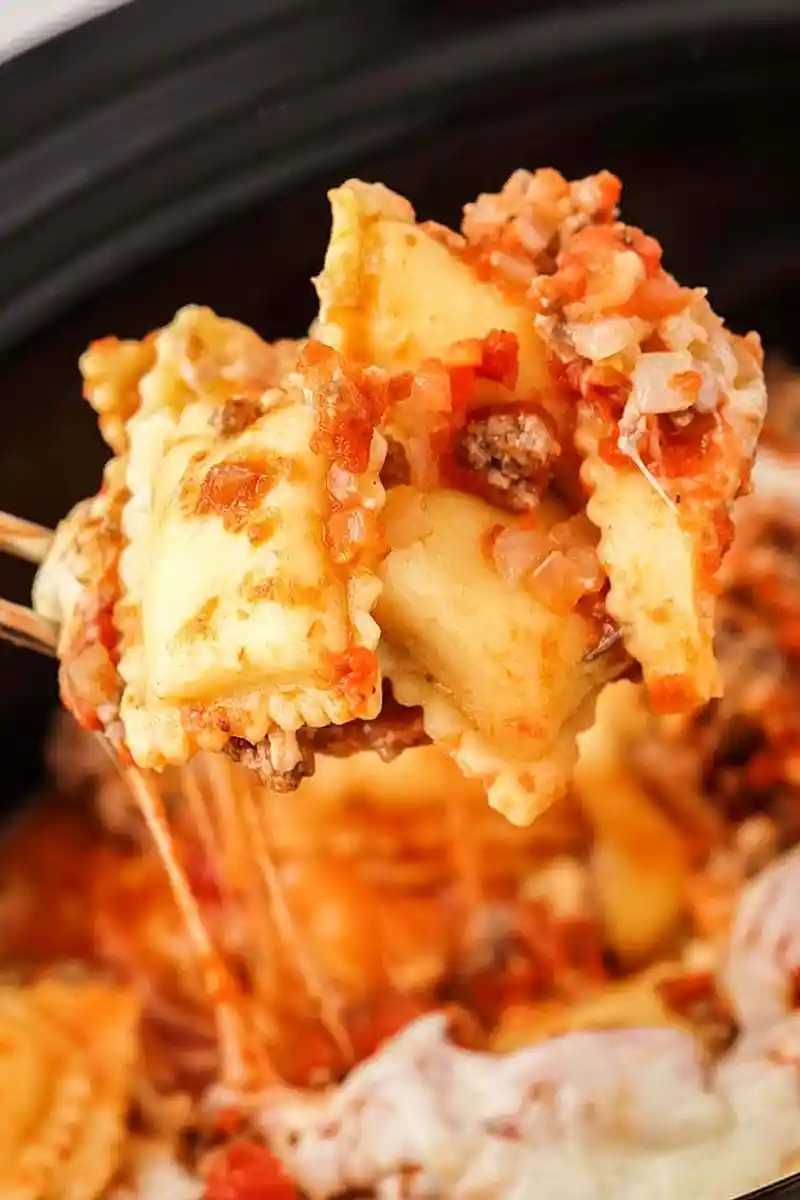
List of ingredients
- 10 ounces bag of frozen cheese-filled ravioli – use your favorite variety of frozen cheese ravioli.
- 1 pound ground beef – lean ground beef is recommended to minimize excess grease.
- 24 ounce jar of spaghetti sauce – select a brand with the flavor profile you prefer.
- 1 cup mozzarella cheese, shredded – used for the final melty topping.
- 1 yellow onion, diced – adds essential aromatic depth to the meat mixture.
step-by-step instructions
- Prepare the vessel: Spray the entire inside of the slow cooker with non-stick cooking spray to prevent sticking and simplify cleaning.
- Cook the meat: Brown the ground beef in a large skillet over medium heat. Drain the fat if desired, then stir in the diced onion and cook for 3 to 5 minutes until the onions are soft and translucent.
- Establish the base: Pour approximately one-third of the spaghetti sauce into the bottom of the slow cooker and spread it evenly.
- Build the first layer: Place half of the frozen ravioli in an even layer on top of the base sauce. Top the ravioli with half of the browned meat mixture and half of the remaining sauce.
- Complete the layers: Repeat the layering process with the remaining ravioli, meat, and sauce. Finish the dish by sprinkling the shredded mozzarella cheese over the final layer.
- Slow cook: Cover the slow cooker with a tight-fitting lid and cook on the low setting for 2.5 to 3 hours.
Optimizing Your Cooking Process
Browning Meat Thoroughly
Sauté the ground beef over medium-high heat until it is completely browned. This process develops a deeper savory flavor through the Maillard reaction. Ensure you drain the excess fat to avoid an oily texture in the final lasagna.
Managing Slow Cooker Moisture
Avoid adding extra water or broth to the pot. The frozen ravioli and the jarred sauce provide enough moisture to cook the pasta perfectly. Adding more liquid can result in a watery consistency that lacks the traditional lasagna thickness.
Ensuring Even Heat Distribution
Spread the ravioli and meat in flat, uniform layers. This ensures that the heat penetrates every part of the dish evenly. Avoid piling ingredients in the center, as this can lead to unevenly cooked pasta.
Preventing Pot Sticking
Using a high-quality non-stick spray or a thin layer of oil is essential. The cheese and sugars in the tomato sauce tend to bake onto the ceramic sides of the cooker. A proper coating makes the cleanup process significantly faster.
Ingredient Substitutions and Alternatives
Using Leaner Protein Options
If you prefer a lighter meal, substitute the ground beef with ground turkey or ground chicken. These alternatives provide a similar texture and flavor profile while reducing the overall fat content. Follow the same browning and draining steps as with the beef.
Experimenting with Ravioli Fillings
While cheese-filled ravioli is the standard, spinach and ricotta or mushroom ravioli are excellent alternatives. These options add different nutritional elements and flavor complexities. Ensure the ravioli remain frozen until they are added to the pot.
Alternative Cheese Combinations
You can replace the mozzarella with a blend of provolone, parmesan, and Monterey Jack. This creates a more complex flavor and a different melt profile. Adding dollops of ricotta cheese between the layers can also mimic a traditional lasagna texture.
Homemade Sauce Integration
If you prefer to avoid jarred products, use a thick homemade marinara sauce. Ensure the sauce is simmered and reduced enough so it does not make the ravioli too mushy. The consistency should be thick enough to hold the layers in place.
Creative Flavor Variations
Incorporating Fresh Vegetables
Add finely diced carrots, zucchini, or chopped spinach to the meat and onion mixture. Sauté them along with the beef to soften them before layering. This increases the nutrient density of the meal without altering the core flavor.
Boosting the Meat Content
For a heartier dish, add sliced frozen meatballs or browned Italian sausage to the layers. Distribute these evenly between the ravioli and sauce layers. This adds variety in texture and a more robust meat flavor.
Adding a Spicy Element
Mix a teaspoon of red pepper flakes or a dash of cayenne pepper into the spaghetti sauce. This introduces a subtle heat that cuts through the richness of the cheese. You can also use a spicy variety of jarred marinara sauce.
Using Meat-Filled Ravioli
Swap the cheese ravioli for beef or pork-free sausage-filled ravioli. This results in a double-meat lasagna that is exceptionally filling. Adjust the amount of ground beef in the meat mixture if you feel the dish is becoming too heavy.
Serving Suggestions and Side Pairings
Complementing with Garlic Bread
Serve this dish with warm garlic bread or buttery dinner rolls. The crunch of the bread provides a necessary contrast to the soft texture of the ravioli. It also serves as a tool for scooping up the remaining sauce from the plate.
Balancing with a Fresh Salad
A crisp garden salad with a light balsamic vinaigrette is the perfect side. Use a mix of romaine, cherry tomatoes, cucumbers, and red onions. The acidity of the dressing cleanses the palate between bites of rich cheese.
Pairing with Roasted Vegetables
Pan-roasted broccoli, asparagus, or Brussels sprouts add a savory, charred element to the meal. Toss them in olive oil, salt, and pepper before roasting at 400°F. This adds a healthy, colorful component to the dinner table.
Selecting a Light Dessert
Finish the meal with a refreshing dessert such as a lemon icebox pie or a fruit tart. The citrus notes provide a bright contrast to the heavy savory flavors of the lasagna. Fresh berries with a dollop of whipped cream also work well.
Storage and Preservation Guide
Refrigeration Best Practices
Allow the lasagna to cool completely before transferring it to an airtight container. Store it in the refrigerator for up to 4 to 7 days. Keeping it sealed prevents the pasta from drying out and protects it from absorbing other fridge odors.
Freezing for Future Use
This recipe is freezer-friendly for up to 3 months. Place portions in freezer-safe containers or wrap the entire dish tightly in heavy-duty aluminum foil. Ensure there is a layer of parchment paper between the food and the foil to prevent sticking.
Safe Thawing Methods
Thaw frozen portions in the refrigerator overnight before reheating. Avoid thawing at room temperature to prevent bacterial growth. Slow thawing preserves the texture of the ravioli and prevents them from becoming mushy during reheating.
Reheating for Maximum Freshness
Oven Reheating Technique
Place the stored lasagna in an oven-safe dish and cover it tightly with aluminum foil. Heat at 350°F until the center is hot. The foil traps moisture, ensuring the pasta stays tender and the sauce remains creamy.
Microwave Quick Heating
For individual servings, heat in the microwave for 1 to 2 minutes on medium power. Cover the plate with a damp paper towel to create a steam effect. This prevents the cheese from becoming rubbery and the edges from hardening.
Stovetop Reheating Option
Transfer a portion to a small skillet over medium-low heat. Add a tablespoon of water or additional marinara sauce to loosen the consistency. Stir gently to avoid breaking the ravioli as the dish warms through.
Advance Preparation Strategies
Pre-Cooking the Meat Base
Brown the ground beef and onions one or two days before you plan to assemble the meal. Store the mixture in a sealed container in the refrigerator. This reduces the active prep time on the day of cooking to just a few minutes of layering.
Partial Assembly and Freezing
Assemble the layers of sauce, ravioli, and meat in the slow cooker insert, but omit the final cheese layer. Freeze the entire unit, then add the mozzarella cheese just before reheating in the oven. This keeps the cheese from overcooking during the initial freeze.
Prepping Aromatics
Dice the yellow onion and shred the mozzarella cheese ahead of time. Store the onion in a small container and the cheese in a freezer-safe bag. Organized prep makes the assembly process seamless and efficient.
Common Troubleshooting Solutions
Correcting Watery Sauce
If the sauce appears too thin after cooking, remove the lid for the last 30 minutes of the process. This allows excess moisture to evaporate and thickens the sauce. Avoid stirring the dish too vigorously, as this can break the ravioli.
Preventing Mushy Pasta
Always use the low heat setting on your slow cooker. Cooking on high can cause the ravioli to overcook and lose their structural integrity. If you use refrigerated ravioli instead of frozen, significantly reduce the cooking time.
Achieving a Golden Brown Top
Slow cookers do not provide the dry heat needed to brown cheese. To get a caramelized finish, carefully remove the ceramic pot and place it under the oven broiler. Watch it closely for 2 to 3 minutes until the cheese is bubbly and brown.
Frequently Asked Questions
Do I need to thaw the frozen ravioli before cooking?
No, you can add the ravioli directly from the freezer into the slow cooker. The moist environment and steady heat are sufficient to cook the frozen pasta thoroughly.
Can I use refrigerated ravioli instead of frozen?
Yes, you can use refrigerated ravioli, but you must reduce the overall cooking time by one hour. Refrigerated pasta has a shorter cooking window and can become overcooked if left for the full duration.
How can I minimize the cleanup process?
The most effective method is to spray the slow cooker with non-stick cooking spray before adding any ingredients. This prevents the cheese and thick tomato sauce from bonding to the ceramic walls.
Can I substitute regular lasagna noodles for ravioli?
You can use regular noodles, but you will need to break them into smaller pieces to fit the slow cooker. Be aware that the dish will lack the creamy cheese filling that the ravioli provide.
Print
Easy Crockpot Ravioli Lasagna
- Total Time: 3 hours 15 minutes
- Yield: 6 servings 1x
- Diet: General
Description
You’re going to love how simple this easy crock pot lasagna recipe is. It’s a meal your whole family will love!
Ingredients
- 10 ounces bag of frozen cheese-filled ravioli
- 1 pound ground beef
- 24 ounce jar of spaghetti sauce
- 1 cup mozzarella cheese (shredded)
- 1 yellow onion (diced)
Instructions
- Step 1: Spray the inside of the slow cooker with non stick cooking spray.
- Step 2: Brown the ground beef in a large skillet on the stove. Drain fat if desired. Add the diced onion and cook for another 3-5 minutes until the onions are soft and translucent.
- Step 3: Place about a third of the spaghetti sauce in the bottom of a slow cooker.
- Step 4: Add half the frozen ravioli in an even layer on top of the sauce. Top with half the meat mixture and half the remaining sauce.
- Step 5: Repeat with a second layer of ravioli, meat and sauce finishing with cheese.
- Step 6: Cover and cook on low for 2 1/2 to 3 hours.
Notes
Store in an airtight container in the refrigerator for up to 4-7 days. Freeze leftovers for up to 3 months. Thaw overnight in the refrigerator and then reheat in an oven-safe dish, covered with aluminum foil to avoid burning.
- Prep Time: 15 minutes
- Cook Time: 3 hours
- Category: Lunch or Dinner
- Method: Slow Cooking
- Cuisine: Italian
Nutrition
- Serving Size: 1 serving
- Calories: 248 kcal
- Sugar: 7 g
- Sodium: 1004 mg
- Fat: 10 g
- Saturated Fat: 4 g
- Unsaturated Fat: 6 g
- Trans Fat: 0 g
- Carbohydrates: 28 g
- Fiber: 3 g
- Protein: 13 g
- Cholesterol: 40 mg
Keywords: crockpot lasagna, ravioli lasagna, slow cooker dinner, easy pasta