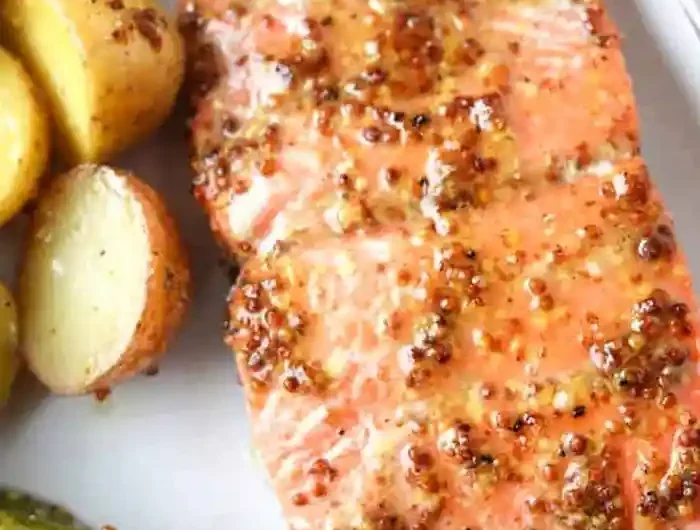
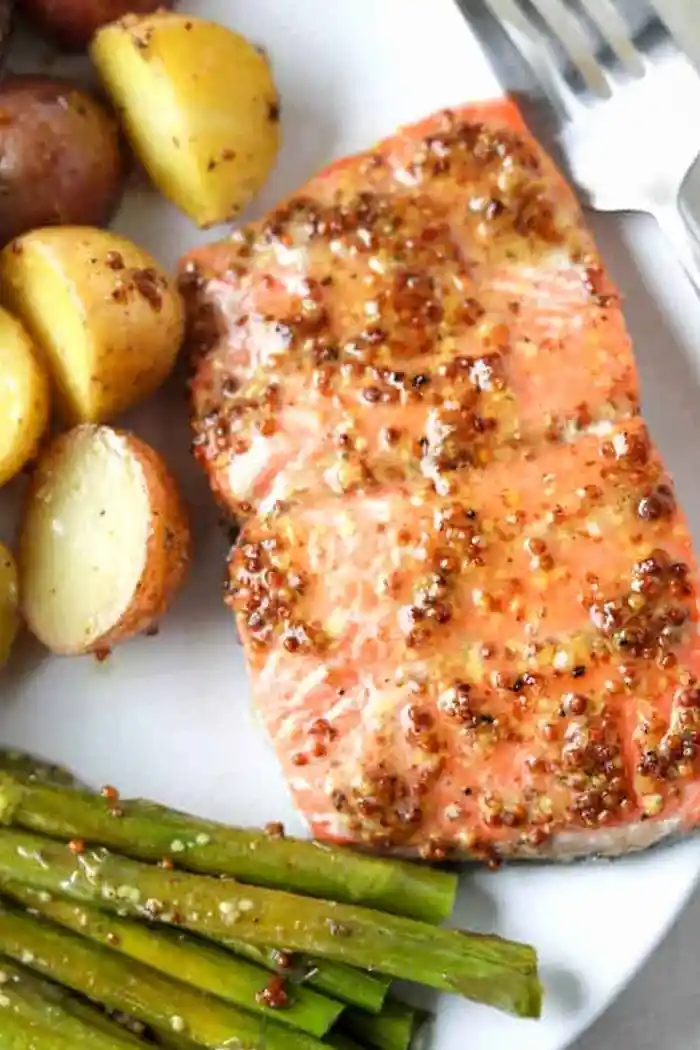
This simple one-pan salmon dinner brings together fresh asparagus, tender potatoes, and perfectly roasted salmon filets in one convenient meal. By utilizing a flavorful maple mustard glaze, you can elevate these basic ingredients into a restaurant-quality dish right in your own kitchen. It is an ideal solution for busy weeknights when you want to minimize cleanup without sacrificing nutrition or flavor.
List of ingredients
- 4 salmon filets
- 2 lbs baby potatoes, quartered
- 1 bunch asparagus, ends trimmed
- 5 tbsp olive oil, divided
- 2 tbsp grainy mustard
- 2 tbsp maple syrup
- 1 clove garlic, minced
- 2 tsp salt, divided
- 1 tsp pepper, divided
- 1/2 tsp paprika
step-by-step instructions
- Step: Preheat oven to 425F and line baking sheet with parchment paper.
- Step: Optional but recommended: microwave whole baby potatoes for 2 minutes to pre-soften. This helps them cook to the perfect texture in the oven. Then cut into quarters.
- Step: Place asparagus on baking sheet and drizzle 2 tbsp olive oil, 1/2 tsp salt, and 1/4 tsp pepper. Toss.
- Step: Place potatoes on baking sheet next to asparagus and drizzle 2 tbsp olive oil, 1/2 tsp salt, and 1/4 tsp pepper. Toss.
- Step: Bake in oven for 20 minutes. While baking, prepare salmon.
- Step: Whisk together 1 tbsp olive oil, grainy mustard, maple syrup, garlic, 1 tsp salt, 1/2 tsp pepper, and paprika.
- Step: Once vegetables have cooked, place salmon skin side down on baking sheet. Brush fillets with half of the sauce. Spoon remaining sauce on potatoes and asparagus, tossing to blend.
- Step: Bake for 12-14 minutes or until salmon is fully cooked.
- Step: Serve immediately.
Essential Roasting Techniques
Managing Oven Temperature for Crispy Potatoes
Maintaining a high temperature of 425F is crucial for this recipe because it allows the starch in the potatoes to crisp quickly on the outside while staying soft inside. If your oven tends to run hot, you may want to use an oven thermometer to verify the temperature, as roasting at lower temperatures will result in steamed potatoes rather than roasted ones. Ensure your potatoes are spread out in a single layer with enough space between them to allow air circulation, which prevents the potatoes from pooling moisture and becoming soggy.
Selecting the Right Baking Surface
Using a heavy-duty, light-colored metal baking sheet is recommended to ensure even heat distribution across the bottom of the pan. Darker pans tend to absorb more heat, which can lead to burnt bottoms on the potatoes before the centers are fully cooked through. Always line your pan with parchment paper, as this prevents the salmon skin from sticking and makes the final cleanup process significantly faster and more efficient.
Refining Your Flavor Profile
Selecting Mustard Varieties
The choice of mustard significantly impacts the final texture of the glaze, as grainy mustard contains whole seeds that provide tiny bursts of tanginess. If you prefer a smoother sauce, you can substitute Dijon mustard, though you might want to whisk in an extra teaspoon of maple syrup to maintain the desired balance of sweetness. Do not use yellow ballpark mustard, as the vinegar profile is much sharper and lacks the depth of flavor required for a glaze of this style.
Exploring Sweetener Substitutions
While pure maple syrup provides the most authentic flavor profile, you can achieve similar results using high-quality clover honey or agave nectar. These liquid sweeteners act similarly in the oven, caramelizing effectively to create a glossy finish on the salmon and vegetables. If you choose to use honey, be aware that it can brown slightly faster than maple syrup, so keep a close eye on the oven during the final few minutes of roasting.
Managing and Storing Leftovers
Proper Refrigeration Methods
When storing your salmon dinner, move the leftovers to an airtight glass container within two hours of cooking to maintain the best quality. The salmon will keep safely in the refrigerator for up to three days, but for the freshest taste, it is best enjoyed within 48 hours. Keep the vegetables and salmon together if you plan on eating the meal as a whole, as the sauce helps keep the fish from drying out while stored in the cold environment of the fridge.
Reviving Leftovers in the Oven
The best way to reheat this meal is by spreading it on a baking sheet and placing it in a 300F oven for about 10 to 12 minutes. Avoid using a microwave if possible, as high-power electromagnetic radiation tends to make the salmon tough and chewy while turning the potatoes rubbery. Adding a light spritz of water or a tiny drizzle of fresh olive oil over the fish before reheating can help retain moisture during the warming process.
Frequently Asked Questions
How can I tell if the salmon is fully cooked?
The most reliable way to check for doneness is to use an instant-read meat thermometer inserted into the thickest part of the filet, which should register 145F. If you do not have a thermometer, gently press down on the center of the fish with a fork; if it separates into clear, opaque flakes, it is ready to be removed from the oven.
Can I prepare the vegetable portion in advance?
You can certainly chop your potatoes and trim your asparagus ahead of time, storing them in separate containers in the refrigerator. If you cut the potatoes several hours before cooking, submerge them in a bowl of cold water to prevent oxidation, then pat them thoroughly dry with paper towels before tossing them with oil and seasonings. This preparation step makes the actual assembly during your dinner hour nearly instantaneous.
Should I remove the skin from the salmon?
It is generally recommended to keep the skin on during the roasting process because it acts as a protective barrier between the delicate flesh of the fish and the hot surface of the pan. The skin helps to retain the natural oils within the salmon, ensuring the final result is juicy and moist rather than dry. Once the salmon is plated, the skin will lift away easily from the meat if you prefer not to eat it.
Why did my asparagus get mushy?
Asparagus typically cooks faster than potatoes, which is why it is important to follow the specified roasting times exactly. If you prefer your asparagus with more snap, you can place it on the pan during the final 10 minutes of the initial potato roasting phase. Alternatively, use thicker, woodier stalks that can withstand the full duration of the oven heat without losing their structural integrity.
Is it possible to make this dish on a smaller scale?
This recipe scales perfectly, and you can easily reduce the ingredients by half if you are cooking for one or two people. Simply use a smaller quarter-sheet pan to ensure the ingredients are still crowded enough to create a nice roasting effect but not so sparse that they dry out. Maintain the same temperature and ratios to ensure the sauce consistency remains perfect for the smaller quantity of fish and vegetables.
Print
Easy One Pan Salmon Dinner
- Total Time: 45 minutes
- Yield: 4 servings 1x
- Diet: gluten-free
Description
This One Pan Salmon Dinner is made with salmon, asparagus, and potatoes. The maple mustard sauce is just too good not to share! The entire family will love this easy gluten-free, pescatarian dish.
Ingredients
- 4 salmon filets
- 2 lbs baby potatoes, quartered
- 1 bunch asparagus, ends trimmed
- 5 tbsp olive oil, divided
- 2 tbsp grainy mustard
- 2 tbsp maple syrup
- 1 clove garlic, minced
- 2 tsp salt, divided
- 1 tsp pepper, divided
- 1/2 tsp paprika
Instructions
- Step: Preheat oven to 425F and line baking sheet with parchment paper.
- Step: Optional but recommended: microwave whole baby potatoes for 2 minutes to pre-soften. This helps them cook to the perfect texture in the oven. Then cut into quarters.
- Step: Place asparagus on baking sheet and drizzle 2 tbsp olive oil, 1/2 tsp salt, and 1/4 tsp pepper. Toss.
- Step: Place potatoes on baking sheet next to asparagus and drizzle 2 tbsp olive oil, 1/2 tsp salt, and 1/4 tsp pepper. Toss.
- Step: Bake in oven for 20 minutes. While baking, prepare salmon.
- Step: Whisk together 1 tbsp olive oil, grainy mustard, maple syrup, garlic, 1 tsp salt, 1/2 tsp pepper, and paprika.
- Step: Once vegetables have cooked, place salmon skin side down on baking sheet. Brush fillets with half of the sauce. Spoon remaining sauce on potatoes and asparagus, tossing to blend.
- Step: Bake for 12-14 minutes or until salmon is fully cooked.
- Step: Serve immediately.
Notes
You can substitute broccoli, green beans, Brussels sprouts, or carrots if you do not have asparagus. Ensure vegetables are cut to a similar size for even roasting.
- Prep Time: 10 minutes
- Cook Time: 35 minutes
- Category: dinner
- Method: Baking
- Cuisine: American
Nutrition
- Serving Size: 1 serving
- Calories: 606 kcal
- Sugar: 8 g
- Sodium: 1335 mg
- Fat: 29 g
- Saturated Fat: 4 g
- Unsaturated Fat: 25 g
- Trans Fat: 0 g
- Carbohydrates: 48 g
- Fiber: 6 g
- Protein: 39 g
- Cholesterol: 94 mg
Keywords: salmon, one pan, gluten-free, dinner, healthy, asparagus, potatoes