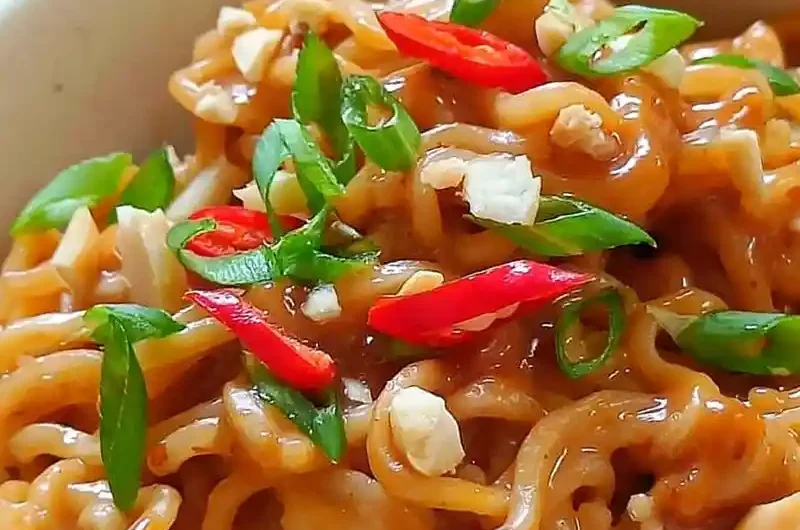
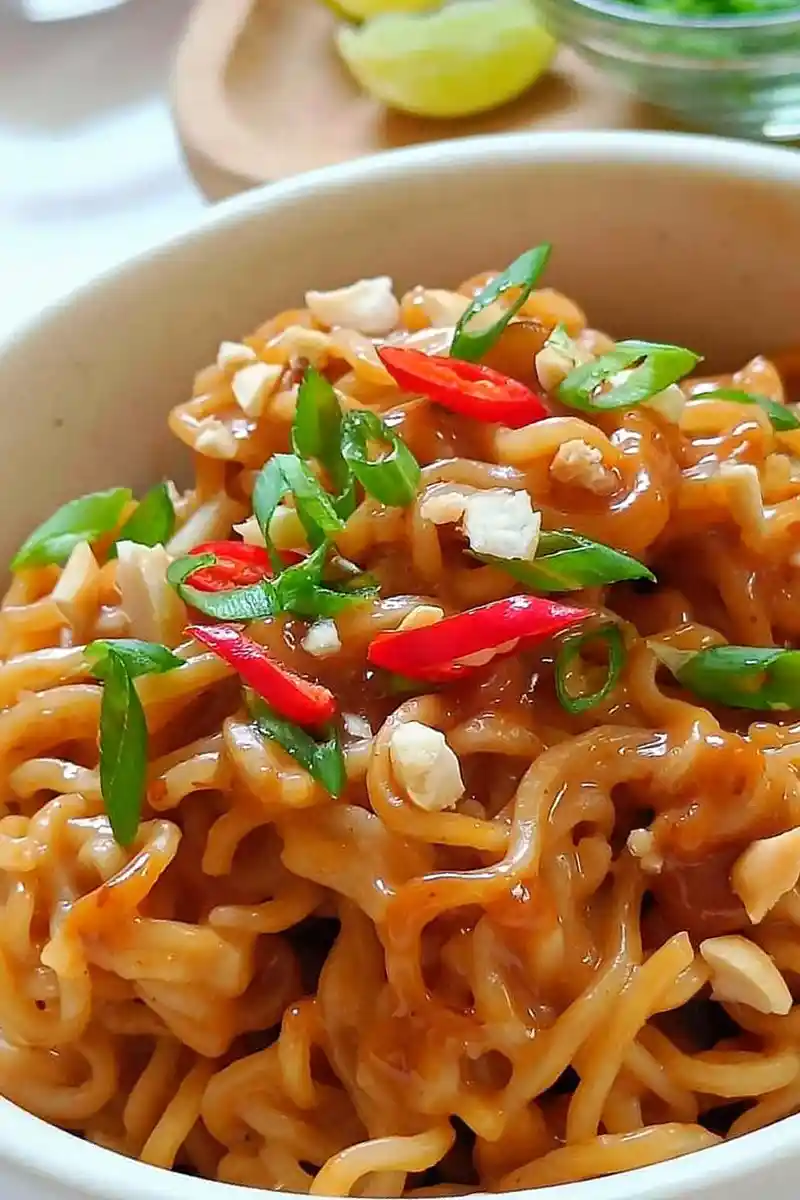
These creamy peanut butter ramen noodles are a fast and savory meal that takes less than 10 minutes to prepare. The combination of peanut butter and sriracha creates a rich, mildly spicy sauce that perfectly coats the noodles.
List of ingredients
- 1 pack or 3 oz dry instant ramen noodles – discard the seasoning packet
- 2 tablespoon creamy peanut butter – unsweetened and natural
- ½ tablespoon dark soy sauce – for a deep, salty flavor
- ½ teaspoon garlic powder – provides a consistent savory base
- 1 tablespoon sriracha – adjust based on your heat preference
- 1 tablespoon honey – or use maple syrup for a different sweetness
- 1 teaspoon lemon juice – adds necessary acidity to balance the fats
- salt – add to taste
- ½ teaspoon toasted sesame oil – for aromatic depth
- 1 chopped green onion – for a fresh, sharp finish
- 1 tablespoon crushed toasted peanuts – adds essential texture and crunch
- chopped fresh red chili – optional garnish for extra heat
step-by-step instructions
- Cook the ramen noodles: Fill a pot with water and bring it to a boil. Discard the flavor packet, add the ramen noodles, and cook until they are al dente or according to the specific package directions. Reserve ¼ cup of the starchy noodle water before draining the noodles.
- Make the peanut butter sauce: In a large bowl, whisk together the peanut butter, sriracha, soy sauce, garlic powder, honey, lemon juice, salt, toasted sesame oil, and the reserved ¼ cup of warm noodle water. Whisk until the mixture is completely smooth and emulsified.
- Taste and adjust: Taste the finished sauce. Add more sriracha for heat, honey for sweetness, or lemon juice for tanginess until the flavor profile meets your preference.
- Mix the noodles with the sauce: Add the drained ramen noodles to the sauce bowl. Stir in the chopped green onions and crushed peanuts. Toss everything together thoroughly until every noodle is evenly coated.
- Garnish and serve: To finish the dish, garnish with additional green onion, more crushed peanuts, and chopped red chili if desired. Serve immediately while hot.
Customizing the Sauce Flavor
Adjusting the Heat Level
The amount of sriracha used determines the spiciness of the dish. For a milder version, reduce the sriracha to one teaspoon or replace it with a mild chili garlic sauce. If you prefer a very spicy meal, increase the sriracha to two tablespoons or add a pinch of cayenne pepper.
Balancing the Sweetness
Honey provides a floral sweetness that cuts through the saltiness of the soy sauce. If you prefer a deeper, earthier sweetness, substitute honey with maple syrup or brown sugar. For those avoiding refined sugars, a small amount of agave nectar works well as a direct replacement.
Enhancing the Umami Profile
Dark soy sauce is used for its rich color and concentrated saltiness. You can substitute this with regular soy sauce, though the color will be lighter. For a more complex flavor, add a teaspoon of miso paste or a drop of fish sauce to the whisking process.
Adding a Zesty Note
Lemon juice provides a bright acidity that prevents the peanut butter from feeling too heavy. If you do not have lemons, lime juice is an excellent alternative that leans into a more traditional Southeast Asian flavor profile. Rice vinegar can also be used for a sharper, fermented tang.
Alternative Noodle Options
Gluten-Free Rice Noodles
Rice noodles are a great alternative for those avoiding gluten. Use thin vermicelli or medium-width rice sticks. Follow the package soaking or boiling instructions, but ensure you still reserve a small amount of the soaking water to thin out the peanut sauce.
Hearty Soba Buckwheat Noodles
Soba noodles offer a nuttier flavor and a denser texture than ramen. They pair exceptionally well with peanut butter. Be careful not to overcook them, as soba can become mushy quickly; rinse them under cold water after boiling to remove excess starch.
Thick Udon Noodles
Udon noodles provide a chewy, substantial bite. Because they are thicker, they require more sauce to be fully coated. Increase the peanut butter and liquid measurements by 50% when using udon to maintain the correct sauce-to-noodle ratio.
Using Standard Spaghetti
If instant ramen is unavailable, dried spaghetti is a practical substitute. Boil the spaghetti in salted water until al dente. The starchy pasta water from spaghetti is particularly effective at emulsifying the peanut butter into a creamy sauce.
Vegetable Additions for Nutrition
Adding Shredded Carrots and Cabbage
Grated carrots and thinly sliced Napa cabbage add crunch and vitamins. Add them to the boiling water during the last 60 seconds of the noodle cooking time. This softens them slightly while maintaining a crisp texture.
Incorporating Fresh Spinach or Kale
Baby spinach or finely chopped kale can be stirred into the hot noodles immediately after draining. The residual heat from the noodles will wilt the greens without overcooking them, preserving the bright color and nutrients.
Using Sliced Cucumber for Crunch
Thinly sliced cucumbers should be added as a fresh garnish at the end. Their cool temperature and high water content provide a refreshing contrast to the warm, rich peanut sauce. Toss them in just before serving to keep them crisp.
Stirring in Sautéed Bell Peppers
Sauté diced red or yellow bell peppers in a pan with a small amount of oil before adding them to the noodles. This caramelizes the natural sugars in the peppers and adds a sweet, smoky dimension to the dish.
Protein Pairings for a Full Meal
Adding Pan-Seared Tofu
Press extra-firm tofu to remove excess water, cube it, and sear it in a pan until golden brown. Toss the tofu into the noodles at the final stage. This adds a plant-based protein that absorbs the peanut sauce efficiently.
Topping with Poached Eggs
A soft-poached egg placed on top of the noodles adds a rich, creamy element. When the yolk breaks, it mixes with the peanut sauce to create an even silkier texture. Ensure the egg is poached for about 3 minutes for a runny center.
Using Grilled Shrimp
Quickly sauté shrimp in a pan with a bit of garlic and salt. Add the shrimp to the bowl just before serving. Shrimp provides a lean protein and a sweet flavor that complements the salty soy sauce.
Adding Shredded Cooked Chicken
Use pre-cooked rotisserie chicken or grilled chicken breast shredded into small pieces. Mix the chicken in with the noodles to ensure every piece is coated in the sauce. This transforms the snack into a filling dinner.
Texture and Consistency Tips
The Importance of Reserved Noodle Water
The starchy water from the boiling noodles acts as a binding agent. It helps the peanut butter emulsify with the soy sauce and honey, preventing the sauce from separating. Always reserve the water before draining the noodles.
Preventing Overcooked Noodles
Instant ramen noodles cook very quickly and can easily become overdone. Drain them one minute before the package instructions suggest. They will continue to cook slightly as they sit in the warm peanut sauce.
Achieving a Smooth Sauce Emulsion
If the peanut butter is too stiff, whisk it with the warm noodle water first before adding the other ingredients. The heat helps break down the fats in the peanut butter, ensuring there are no clumps in the final sauce.
Toasting Peanuts for Maximum Flavor
Raw peanuts lack the depth of toasted ones. Heat raw peanuts in a dry skillet over medium heat for 3-5 minutes, stirring constantly until they smell fragrant. This enhances the nuttiness of the overall dish.
Storage and Preservation
Refrigeration Timelines
Store leftover peanut butter ramen in an airtight container in the refrigerator. The noodles will stay safe to eat for up to three days. Note that the noodles will absorb the sauce over time, making them appear drier.
Airtight Container Selection
Use a glass container with a locking lid to prevent the noodles from absorbing odors from other foods in the fridge. Glass is preferable as it does not react with the acidity of the lemon juice or the salt in the soy sauce.
Preventing Sauce Separation
If the sauce separates during storage, do not worry. This is a natural process where the oils in the peanut butter detach. A quick stir during the reheating process will bring the sauce back together.
Reheating Methods
Stovetop Reheating Process
Place the noodles in a small pan over medium-low heat. Add one to two tablespoons of water or vegetable broth to loosen the sauce. Stir gently until the noodles are heated through and the sauce is creamy again.
Microwave Reheating Tips
Place the noodles in a microwave-safe bowl and add a splash of water. Cover the bowl with a damp paper towel to trap steam. Heat in 30-second intervals, stirring in between, to ensure even heating without drying out the noodles.
Adding Fresh Liquid to Restore Texture
Because ramen noodles are porous, they soak up the sauce while stored. Adding a teaspoon of lemon juice or a splash of water during reheating restores the original gloss and fluidity of the peanut sauce.
Make-Ahead Strategies
Preparing the Sauce in Advance
The peanut sauce can be made up to a week in advance and stored in a jar. When ready to eat, simply boil the noodles and whisk the pre-made sauce with a bit of hot noodle water to loosen it.
Pre-chopping Garnishes
Chop the green onions and crush the peanuts a day ahead of time. Store them in separate small containers in the refrigerator. This reduces the active prep time to only the noodle boiling and sauce mixing.
Par-boiling Noodles
If you are prepping for multiple meals, boil the noodles for half the recommended time. Drain them and toss them with a tiny bit of sesame oil to prevent sticking. Store them in the fridge and finish cooking them in the sauce.
Troubleshooting Common Issues
Sauce is Too Thick
If the sauce is too thick to coat the noodles, add more reserved noodle water one tablespoon at a time. Continue whisking until the sauce reaches a pourable consistency that clings to the noodles without clumping.
Sauce is Too Thin
If the sauce feels watery, whisk in an extra teaspoon of peanut butter. The fats in the peanut butter will thicken the mixture and intensify the flavor. Avoid adding more flour or starch as it will change the taste.
Flavor is Too Salty
If you accidentally add too much soy sauce, balance the saltiness by adding a bit more honey or a squeeze of extra lemon juice. The sweetness and acidity neutralize the perception of salt on the palate.
Peanut Butter is Clumpy
Clumping usually happens if the peanut butter is cold or if the water used is not hot enough. Use a whisk or a small handheld frother to blend the sauce. If clumps persist, strain the sauce through a mesh sieve before adding the noodles.
Frequently Asked Questions
Which peanut butter works best?
Unsweetened, creamy, natural peanut butter is recommended. It provides a neutral base that allows the other flavors to shine and blends more smoothly into the sauce than crunchy varieties.
How spicy is this recipe?
The recipe has a moderate heat level due to the sriracha. It is noticeable but generally balanced by the honey and peanut butter. You can easily scale the heat up or down based on your tolerance.
Can I make this vegan?
Yes, this recipe is easily made vegan. Replace the honey with maple syrup or agave nectar. Ensure the soy sauce used does not contain any animal-derived additives.
Print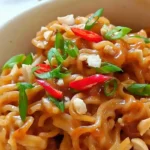
Easy Peanut Butter Ramen Noodles
- Total Time: 10 minutes
- Yield: 1 serving 1x
- Diet: General
Description
Cooked ramen noodles are coated in a creamy, mildly spicy peanut butter sauce. A quick and delicious meal ready to eat in under 10 minutes.
Ingredients
- 1 pack or 3 oz dry instant ramen noodles (discard the seasoning packet)
- 2 tablespoon creamy peanut butter (unsweetened, natural)
- ½ tablespoon dark soy sauce
- ½ teaspoon garlic powder
- 1 tablespoon sriracha
- 1 tablespoon honey (or maple syrup)
- 1 teaspoon lemon juice
- salt (to taste)
- ½ teaspoon toasted sesame oil
- 1 chopped green onion
- 1 tablespoon crushed toasted peanuts
- chopped fresh red chili (optional)
Instructions
- Cook the ramen noodles: Fill a pot with water and bring it to a boil; discard the flavor packet, add the ramen noodles, and cook until it’s al dente or according to package directions. Be sure to reserve ¼ cup of noodles water before draining the noodles.
- Make the peanut butter sauce: Whisk peanut butter, sriracha, soy sauce, garlic, honey, lemon juice, salt, toasted sesame oil, and ¼ cup warm noodles water in a large bowl until smooth.
- Taste and adjust: taste the sauce and adjust the flavor to your liking.
- Mix in the noodles with the sauce: add drained ramen noodles to the sauce, along with some chopped green onions and crushed peanuts. Toss everything together until the noodles are well coated with the sauce.
- Garnish and serve: To finish, garnish the dish with additional green onion, crushed peanuts, and chopped red chili (if desired). Serve and enjoy!
Notes
Use warm or hot cooked noodle water in the sauce to help thin out the sauce and create a creamier texture. Taste and adjust the flavor as needed by adding more salt, soy sauce, garlic powder, lemon juice, honey, or sriracha.
- Prep Time: 8 minutes
- Cook Time: 2 minutes
- Category: Dinner, Lunch, Snack
- Method: Stovetop
- Cuisine: Asian, Thai
Nutrition
- Serving Size: 1 serving
- Calories: 352 kcal
- Sugar: 21 g
- Sodium: 1051 mg
- Fat: 24 g
- Saturated Fat: 4 g
- Unsaturated Fat: 18 g
- Trans Fat: 0 g
- Carbohydrates: 30 g
- Fiber: 3 g
- Protein: 12 g
- Cholesterol: 5 mg
Keywords: How to make Peanut Butter Ramen Noodles, Peanut Butter Noodles, Peanut Butter Ramen Noodles