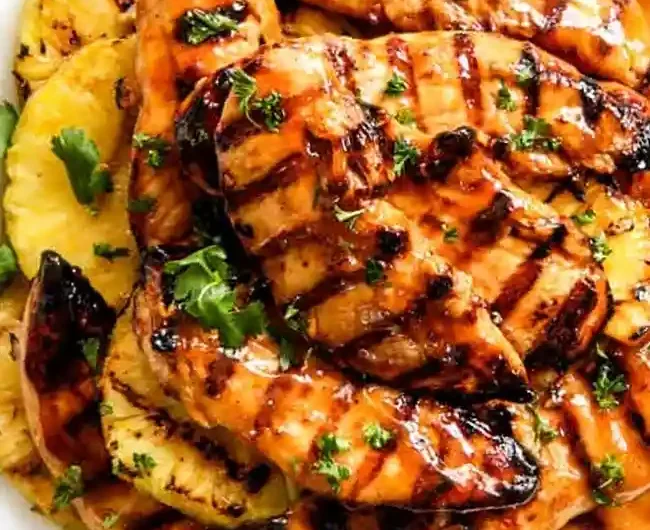
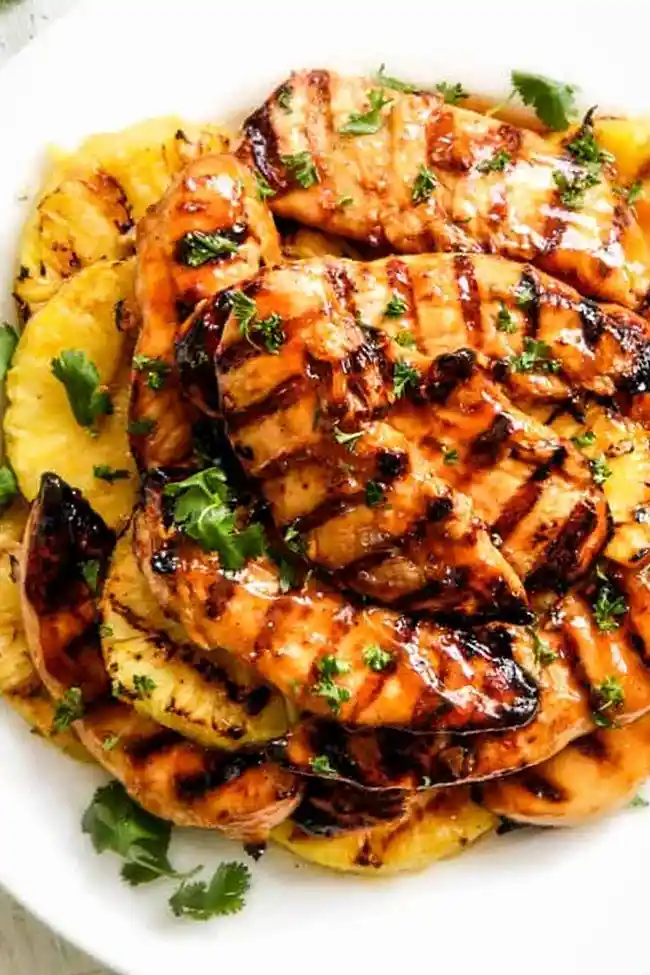
This chicken dish combines tropical sweetness with a zesty chili kick for a vibrant meal. It works perfectly as a quick weeknight dinner or an impressive option for entertaining guests.
List of ingredients
- 2 pounds chicken tenderloins (or skinless chicken breasts, pounded thin)
- 1/4 cup olive oil – used for both marinating and searing
- 2 teaspoons cornstarch – used as a thickening agent for the glaze
- 1 cup canned pineapple juice – provides a consistent sweetness without enzyme breakdown
- 1/3 cup + 1 tablespoon packed brown sugar – adds deep caramel notes
- 1-2 tablespoons lemon juice – use 1 tablespoon for a milder tang
- 2 tablespoons ketchup – adds body and a hint of tomato acidity
- 2 tablespoons apple cider vinegar – provides a bright, fruity balance
- 2 tablespoons low sodium soy sauce – adds saltiness and depth
- 1 tablespoon Dijon mustard – enhances the flavor profile with a sharp edge
- 1-2 teaspoons Asian chili paste (such as Sambal Oelek) – controls the heat level
- 1 teaspoon salt – enhances all other seasonings
- 1 teaspoon garlic powder – adds a savory aromatic base
- 1 teaspoon ginger powder – provides a warm, spicy undertone
- 1/2 teaspoon onion powder – rounds out the savory elements
- Chopped green onions – for fresh garnish
- Additional Asian chili sauce – optional for extra heat
step-by-step instructions
- Prepare the Marinade: Whisk together the pineapple juice, brown sugar, lemon juice, ketchup, apple cider vinegar, soy sauce, Dijon mustard, chili paste, salt, garlic powder, ginger powder, and onion powder in a medium bowl.
- Marinate the Meat: Pour 1/3 cup of the prepared mixture into a large freezer bag and whisk in 1/4 cup of olive oil. Add the chicken to the bag and refrigerate for 2 to 4 hours.
- Separate the Glaze: Place the remaining marinade in a separate airtight container and keep it refrigerated to be used as the final glaze.
- Temper the Chicken: Remove the chicken from the refrigerator and let it sit at room temperature for 15 to 30 minutes before cooking to ensure even heat penetration.
- Grill Option: Preheat a greased grill to medium heat (375 to 450°F). Drain the chicken from the marinade, pat it dry with paper towels, and grill undisturbed for 3 to 4 minutes per side until the internal temperature reaches 165°F.
- Prepare the Grill Glaze: Whisk 2 teaspoons of cornstarch into the reserved glaze in a small saucepan. Place the covered pan on the grill or stove and bring to a simmer, whisking until the sauce thickens. Brush this glaze over the cooked chicken.
- Stovetop Option: Heat one tablespoon of olive oil in a large non-stick skillet over medium-high heat. Drain and pat the chicken dry, then sear undisturbed for 2 to 3 minutes until browned.
- Finish Stovetop Cooking: Flip the chicken, cover the pan, and reduce heat to medium for 3 to 5 minutes until cooked through. Remove chicken to a plate and tent with foil.
- Thicken Stovetop Glaze: Whisk cornstarch into the reserved glaze and add it to the empty skillet. Simmer until thickened, then return the chicken to the pan and toss to coat thoroughly.
- Final Garnish: Serve the chicken garnished with lemon zest, chopped green onions, and extra chili sauce if desired.
Optimizing Meat Selection and Prep
Using Chicken Tenderloins for Speed
Chicken tenderloins are the ideal choice for this recipe because they cook very quickly and evenly. Their small size prevents the exterior from burning before the center is fully cooked. This makes them perfect for high-heat grilling or quick pan-searing.
Pounding Chicken Breasts for Consistency
If using full chicken breasts, use a meat mallet to pound them to a uniform thickness. This ensures that the thinner edges do not overcook while the thickest part remains raw. Aim for a consistent thickness of about half an inch across the entire piece of meat.
The Importance of Patting Meat Dry
Always pat the chicken dry with paper towels after removing it from the marinade. Excess moisture on the surface of the meat creates steam rather than a sear. Drying the meat allows for the Maillard reaction, which creates the brown, flavorful crust essential for this dish.
Technical Guide to the Marinade
Why Canned Pineapple Juice is Required
Canned pineapple juice is preferred over fresh juice because the canning process destroys bromelain, an enzyme that breaks down proteins. Fresh pineapple juice contains active bromelain that can turn chicken mushy if left too long. Canned juice provides the same flavor without compromising the texture of the meat.
Managing Marination Time Limits
Due to the acidity of the lemon juice and pineapple juice, you should not marinate the chicken for more than 4 hours. Excessive marination can break down the muscle fibers too much, leading to a rubbery or mealy consistency. Two to three hours is typically the sweet spot for deep flavor penetration.
Balancing the Sugar and Acid
The brown sugar provides a caramelized sweetness that balances the acidity of the vinegar and lemon juice. This chemical balance is what creates the ‘tangy’ profile of the dish. If the sauce feels too sharp, adding a small pinch more brown sugar can mellow the acidity.
Mastering the Glaze Consistency
The Role of Cornstarch Gelatinization
Cornstarch acts as a thickening agent by absorbing liquid and swelling when heated. This process, known as gelatinization, transforms the thin marinade into a glossy, clingy glaze. It is essential to bring the sauce to a simmer for this reaction to occur.
Preventing the Glaze from Burning
Because of the high sugar content from the brown sugar and pineapple juice, the glaze can burn quickly. Keep the heat at a medium simmer and stir constantly. If the glaze becomes too thick or starts to stick, whisk in a teaspoon of water or pineapple juice to loosen it.
Achieving a Silky Finish
For a professional, silky finish, ensure the cornstarch is fully whisked into the cold or room-temperature marinade before heating. This prevents clumps from forming. Constant whisking during the simmering process ensures a smooth, homogeneous sauce.
Customizing Flavors and Heat
Adjusting the Spicy Kick
The amount of Asian chili paste can be scaled based on your heat preference. Using one teaspoon provides a mild warmth, while two teaspoons offer a noticeable spicy kick. For those who prefer no heat, the chili paste can be replaced with a small amount of smoked paprika for color and earthiness.
Increasing the Sweetness Profile
If you prefer a dessert-like sweetness, increase the brown sugar from the listed amount to 1/2 cup. This will create a thicker, more syrupy glaze. Be mindful that higher sugar levels increase the risk of the chicken charring too quickly on the grill.
Substituting the Vinegar
While apple cider vinegar is recommended, rice wine vinegar is an excellent alternative for a more authentic Asian-inspired flavor. If using white distilled vinegar, reduce the quantity to one tablespoon, as it is more pungent and acidic than apple cider vinegar.
Ingredient Substitutions and Dietary Adjustments
Gluten-Free Soy Sauce Alternatives
To make this recipe gluten-free, replace the low sodium soy sauce with tamari or coconut aminos. Tamari provides a similar salty, fermented flavor without the wheat. Coconut aminos offer a slightly sweeter profile and are lower in sodium.
Replacing Dijon Mustard
If Dijon mustard is unavailable, yellow mustard can be used, though it lacks the complex depth and slight bitterness of Dijon. For a different twist, a small amount of honey mustard can be used, though you may want to slightly reduce the brown sugar to compensate for the extra sweetness.
Oil Options for High Heat
Olive oil is used for flavor, but for very high-heat grilling, avocado oil or grapeseed oil are safer alternatives. These oils have a higher smoke point, meaning they won’t break down or smoke as easily when the grill is at 450°F.
Strategic Side Dish Pairings
Ideal Grain Accompaniments
Steamed jasmine rice or basmati rice are the best pairings as they absorb the extra pineapple glaze. Quinoa is a nutrient-dense alternative that adds a nutty flavor to the meal. For a more traditional approach, brown rice provides a chewy texture that contrasts well with the tender chicken.
Balanced Vegetable Sides
Pair this sweet chicken with bitter or earthy vegetables to balance the palate. Steamed broccoli, sautéed spinach, or roasted Brussels sprouts work well. Grilled zucchini and bell peppers also complement the tropical theme of the dish.
Adding Fresh Fruit Elements
Serving the chicken alongside fresh, grilled pineapple rings enhances the tropical experience. The heat of the grill caramelizes the natural sugars in the fruit, mirroring the flavors in the glaze. Fresh mango cubes or a pineapple-cucumber salsa also add a refreshing contrast.
Storage and Preservation
Refrigerator Storage Guidelines
Leftover cooked pineapple chicken can be stored in an airtight container in the refrigerator for up to 5 days. Ensure the chicken is completely cooled before sealing the container to prevent excess moisture buildup. Store the glaze separately if there is a significant amount remaining.
Freezing the Marinade
You can prepare the marinade in bulk and freeze it in freezer bags for up to 3 months. This allows for ‘dump-and-go’ meal prep where you simply add chicken to the thawed marinade. Label the bags with the date to ensure freshness.
Freezing Cooked Chicken
Cooked chicken can be frozen for 2 to 3 months. Let the meat cool fully, then wrap it tightly in plastic wrap and place it in a heavy-duty freezer bag. Squeeze out as much air as possible to prevent freezer burn on the glazed surface.
Reheating for Maximum Quality
Stovetop Reheating Method
The best way to reheat this dish is in a skillet over medium heat with a drizzle of olive oil. Flip the chicken occasionally until it is warmed through. This method helps preserve the texture of the glaze and prevents the meat from becoming rubbery.
Microwave Precautions
Microwaving is generally not recommended as it can overcook the lean chicken tenderloins, making them tough. If you must use a microwave, use a low power setting and cover the dish with a damp paper towel to retain moisture.
Oven Warming Technique
For larger portions, place the chicken in a baking dish and cover it with aluminum foil to trap steam. Heat at 325°F for about 10 to 15 minutes. This gentle heating method ensures the chicken remains juicy without drying out.
Troubleshooting Common Issues
Solving Mushy Meat Texture
If your chicken turns out mushy, it is likely due to the use of fresh pineapple juice or over-marinating. Ensure you use canned juice and strictly adhere to the 4-hour marination limit. Always pat the meat dry before cooking to avoid steaming.
Fixing a Too-Salty Sauce
If the glaze tastes overly salty, whisk in a tablespoon of water, extra pineapple juice, or a squeeze of fresh lime. The added liquid and acidity will dilute the salt concentration. Adding a small amount of extra brown sugar can also mask excessive saltiness.
Dealing with a Thin Glaze
If the glaze remains thin after simmering, you may not have used enough cornstarch or didn’t reach a full boil. Mix a small amount of cornstarch with cold water to create a slurry, then whisk it into the simmering sauce. Continue to simmer until the desired thickness is achieved.
Frequently Asked Questions
Can I use fresh pineapple juice instead of canned?
It is not recommended because fresh pineapple contains bromelain, an enzyme that breaks down protein. This can make the chicken texture mushy and unappealing, especially if marinated for several hours.
How long does the prepared marinade last in the fridge?
The prepared marinade will stay fresh in an airtight container for about 5 to 7 days. However, for the best flavor and acidity, it is recommended to use it within a week.
Can this recipe be adapted for a slow cooker?
While this is designed for grilling or searing, you can cook the chicken in a slow cooker on low for 4-6 hours using the marinade. However, you must thicken the sauce with a cornstarch slurry at the end to achieve the signature glaze consistency.
What is the best thermometer for checking chicken?
An instant-read digital meat thermometer is the most accurate tool. Insert the probe into the thickest part of the tenderloin to ensure it has reached exactly 165°F without overcooking.
Print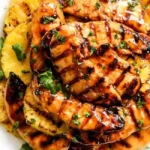
Sweet and Tangy Brown Sugar Pineapple Chicken
- Total Time: 22 minutes
- Yield: 4–6 servings 1x
- Diet: General
Description
Stove Top or Grilled Pineapple Chicken – just 10 minutes prep for this easy, flavor bursting chicken! The sweet and tangy flavor is amazing with just the right amount of chili kick and the marinade doubles as an incredible glaze for no double work!
Ingredients
- 2 pounds chicken tenderloins (OR skinless chicken breasts, pounded thin)
- 1/4 cup olive oil
- 2 teaspoons cornstarch
- 1 cup CANNED pineapple juice
- 1/3 cup + 1 tablespoon packed brown sugar
- 1–2 tablespoons lemon juice
- 2 tablespoons ketchup
- 2 tablespoons apple cider vinegar
- 2 tablespoons low sodium soy sauce
- 1 tablespoon Dijon mustard
- 1–2 teaspoons Asian chili paste (like Sambal Oelek)
- 1 teaspoon salt
- 1 teaspoon garlic powder
- 1 teaspoon ginger powder
- 1/2 teaspoon onion powder
- chopped green onions
- additional Asian chili sauce (to taste)
Instructions
- Step 1: Whisk the Marinade/Glaze ingredients together in a medium bowl.
- Step 2: Add 1/3 cup to a large freezer bag and whisk in 1/4 cup olive oil.
- Step 3: Add the chicken and marinate 2-4 hours in the refrigerator.
- Step 4: Refrigerate the remaining marinade (will become your Glaze) separately.
- Step 5: When ready to cook, let the chicken sit at room temperature for 15 to 30 minutes.
- Step 6: For Grill: grease and preheat grill to medium heat, 375 to 450°F. Drain chicken from the marinade and pat dry.
- Step 7: For Grill: Grill the chicken undisturbed for 3 to 4 minutes per side, or until chicken is cooked through (165 degrees F).
- Step 8: For Grill Glaze: add reserved glaze to a small saucepan and whisk in 2 teaspoons cornstarch. Place covered saucepan on the grill (or stove), and bring to a simmer. Once simmering, remove lid and whisk until thickened. Brush cooked chicken with glaze.
- Step 9: For Stove Top: Heat one tablespoon olive oil in a large non-stick skillet over medium high heat. Once very hot, drain chicken from marinade, pat dry and add to skillet.
- Step 10: For Stove Top: Cook undisturbed for 2-3 minutes, or until nicely browned on one side. Turn chicken over, cover, and reduce heat to medium. Cook for approximately 3-5 more minutes until chicken is cooked through.
- Step 11: For Stove Top Glaze: Whisk 2 teaspoons cornstarch to reserved Glaze and add to now empty skillet. Bring to a simmer until thickened, stirring occasionally. Add chicken to Glaze and toss to coat.
- Step 12: Garnish chicken with lemon zest and green onions and additional chili sauce to taste (optional).
Notes
Use canned pineapple juice to prevent the chicken from becoming mushy. Do not marinate longer than 4 hours.
- Prep Time: 10 minutes
- Cook Time: 12 minutes
- Category: Main Course
- Method: Grilling or Stovetop
- Cuisine: Asian-inspired
Nutrition
- Serving Size: 1 serving
- Calories: 580 kcal
- Sugar: 28 g
- Sodium: 950 mg
- Fat: 22 g
- Saturated Fat: 4 g
- Unsaturated Fat: 18 g
- Trans Fat: 0 g
- Carbohydrates: 35 g
- Fiber: 2 g
- Protein: 62 g
- Cholesterol: 120 mg
Keywords: pineapple chicken, grilled chicken, sweet and tangy, chicken glaze, easy dinner