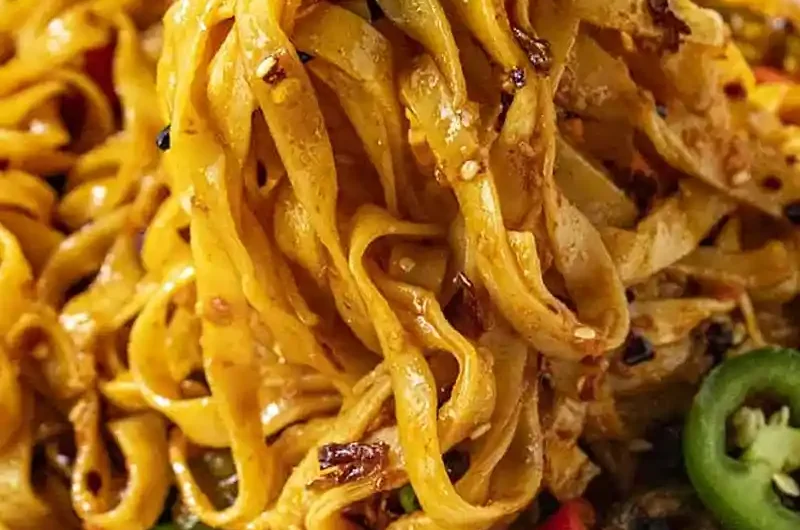
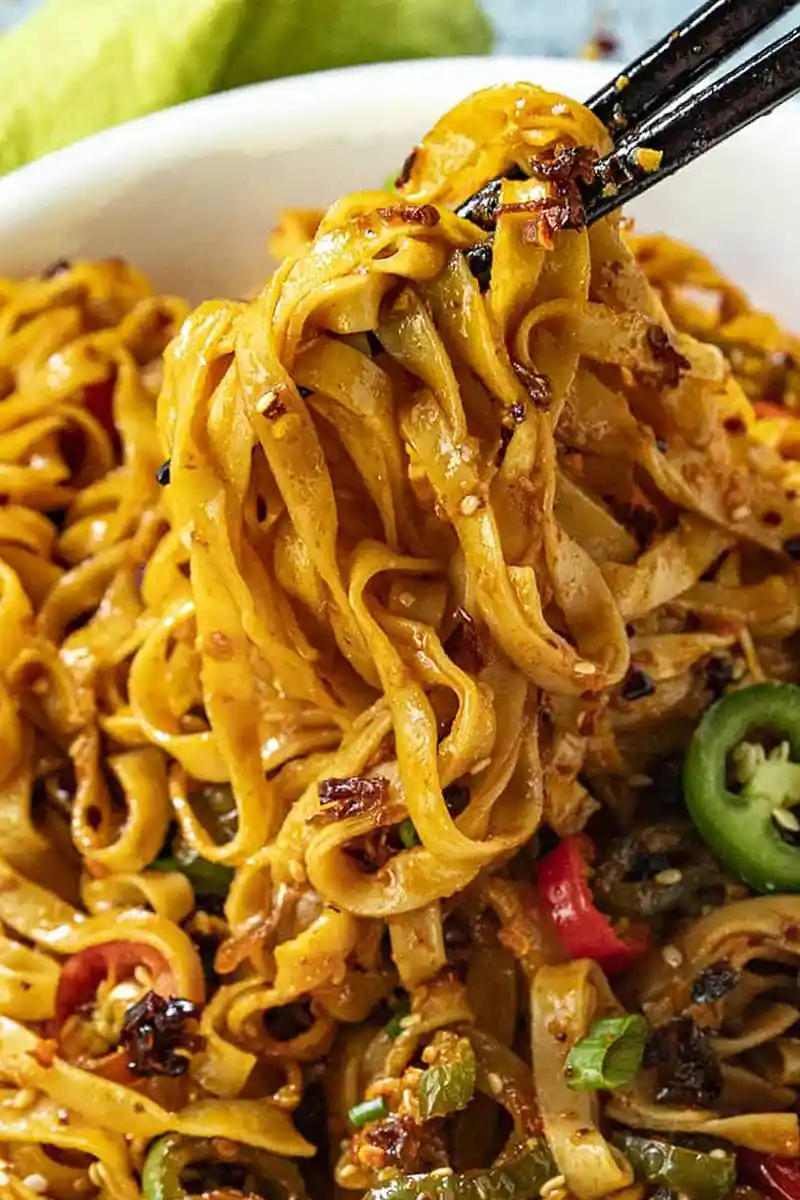
These vibrant spicy noodles are packed with an intense chili-garlic punch and quickly stir-fried for a perfect texture. This meal is an ideal solution for fast weeknight dinners when you crave bold, Asian-inspired flavors.
List of ingredients
- 2 tablespoons soy sauce – provides a salty, umami base.
- 2 tablespoons gochujang – use the hot variety for a fermented chili depth.
- 1 tablespoon sriracha – adjust the amount based on your heat preference.
- 1 tablespoon chili-garlic sauce – adds pungent garlic and spice.
- 1 tablespoon chili crisp – provides texture and smoky heat.
- 1 tablespoon sesame oil – adds a nutty aroma.
- 1 tablespoon rice wine vinegar – balances the heat with acidity.
- Salt and pepper to taste – for final seasoning.
- 12 ounces dried egg noodles – the main base of the dish.
- 2 tablespoons olive oil – used for the stir-frying process.
- 2-3 spicy chili peppers – serrano and bird’s eye are recommended for high heat.
- Garnish options: Chili flakes, extra chili crisp, fresh chopped herbs, chopped roasted peanuts, chopped green onion.
step-by-step instructions
- Prepare the sauce: Whisk together the soy sauce, gochujang, sriracha, chili-garlic sauce, chili crisp, sesame oil, and rice wine vinegar in a small bowl and set aside.
- Cook the noodles: Boil a large pot of water and cook the dried egg noodles according to the package directions, typically about 4-5 minutes. Drain them and place them in a bowl lightly coated with oil to prevent sticking.
- Sauté the peppers: Heat olive oil in a wok or a large frying pan over medium heat, then add the sliced spicy chili peppers. Cook for about 5 minutes until they have softened.
- Stir-fry the noodles: Add the cooked noodles to the pan with the peppers and stir-fry for 1 minute to lightly sear the noodles.
- Combine with sauce: Pour the prepared spicy sauce over the noodles and toss thoroughly until every strand is evenly coated.
- Final touch: Transfer the noodles to serving bowls and garnish with chili flakes, chili crisp, fresh herbs, roasted peanuts, and green onions.
Ways to Expand and Customize Your Noodles
Adding Lean Protein Options
You can transform this into a more filling meal by adding proteins. Sauté cubed chicken breast or thinly sliced beef strips in the wok before adding the chili peppers. For a seafood twist, toss in peeled shrimp during the last two minutes of cooking to ensure they remain tender.
Integrating Fresh Vegetables
Adding vegetables increases the nutritional value and adds contrasting textures. Sliced carrots, broccoli florets, and sliced mushrooms work well if added before the chili peppers. Leafy greens like bok choy or shredded cabbage should be added just before the noodles to maintain their crispness.
Adjusting the Heat Intensity
If the recipe is too spicy, swap the hot gochujang for a mild version and reduce the sriracha. To further mellow the fire, you can add a teaspoon of brown sugar or honey to the sauce. Serving the dish alongside a cooling side, such as cucumber salad, also helps balance the heat.
Using Different Noodle Varieties
While egg noodles are traditional, you can experiment with other types. Ramen noodles provide a chewier texture, while rice noodles are a great option for those avoiding gluten. If using angel hair pasta, boil it for one minute less than the package suggests to avoid overcooking during the stir-fry phase.
Professional Cooking Tips for Best Results
Preventing Noodle Clumping
Noodles often stick together after draining, especially when they cool slightly. Coating the noodles in a small amount of oil immediately after draining prevents them from forming a mass. This ensures the sauce distributes evenly across every single strand during the final toss.
Achieving the Perfect Stir-Fry Sear
To get that authentic stir-fry taste, ensure your wok or pan is very hot before adding the oil. High heat allows the chili peppers to blister and the noodles to lightly brown rather than steam. Keep the noodles moving constantly to avoid burning while achieving a charred exterior.
Balancing the Sauce Flavor
Taste the sauce before adding it to the noodles to ensure the balance of salt and acid is correct. If it tastes too salty, add a splash more rice wine vinegar. If it lacks depth, a tiny pinch of sugar can enhance the fermented notes of the gochujang.
Managing the Sautéing Process
When cooking the chili peppers, avoid burning them, as scorched peppers can taste bitter. Keep the heat at medium and stir frequently for the full five minutes. This allows the capsaicin to infuse into the oil, which then coats the noodles for a more consistent spice level.
Storage and Reheating Advice
Proper Refrigeration Methods
Store leftover noodles in an airtight container in the refrigerator for 3 to 5 days. Because the noodles absorb the sauce over time, they may appear drier the next day. Ensure the container is sealed tightly to prevent the noodles from absorbing other fridge odors.
Best Techniques for Reheating
For the best texture, reheat the noodles in a skillet over medium heat with a tablespoon of water or vegetable broth. This restores the moisture and prevents the noodles from becoming rubbery. Alternatively, microwave them in short bursts, stirring in between to ensure even heating.
Understanding Freezing Limitations
These noodles are not recommended for freezing. The starch in the egg noodles breaks down during the freezing and thawing process, resulting in a mushy, unpleasant texture. It is better to make smaller batches or store them in the fridge for short-term consumption.
Preparing the Sauce in Advance
The spicy sauce can be whisked together and stored in a glass jar in the refrigerator for up to one week. This significantly reduces the prep time for future meals. Simply shake the jar well before use as the chili crisp and sesame oil may separate.
Common Troubleshooting and FAQs
Why are my noodles too mushy?
Mushy noodles usually result from overcooking them in the boiling water or over-stirring them in the pan. To fix this, boil the noodles for 30-60 seconds less than the package instructions. They should have a slight bite (al dente) before they hit the hot pan for the final stir-fry.
What can I use if I don’t have gochujang?
Gochujang is unique because it is fermented, but you can approximate the flavor. Mix a tablespoon of miso paste with a tablespoon of sriracha and a pinch of sugar. While not identical, this provides the same combination of salty, spicy, and fermented notes.
How do I stop the sauce from separating?
Separation usually occurs if the heat is too low or if the sauce is added to a pan that isn’t hot enough. Ensure the noodles are stir-frying vigorously before pouring in the sauce. The high heat helps the emulsion of oil and paste bind to the starch of the noodles.
Can I make this recipe vegan?
Yes, you can easily make this dish vegan by swapping the egg noodles for rice noodles or wheat-based noodles without eggs. Ensure the soy sauce and gochujang brands you use are free from any animal-derived additives. Use a plant-based oil for stir-frying as specified.
How can I add more umami to the dish?
To increase the savory depth, you can add a teaspoon of mushroom powder or a splash of coconut aminos to the sauce. Adding a few drops of toasted sesame oil at the very end of cooking also enhances the aromatic profile of the dish.
What is the best way to slice the chilies?
Slice the chili peppers into thin rounds to ensure they cook evenly and release their oils quickly. If you prefer less heat, remove the seeds and white pith from the peppers before slicing. For maximum spice, keep the seeds intact.
How do I prevent the garlic in the sauce from burning?
Since the garlic is integrated into the sauce and added at the end, it is unlikely to burn. However, if you add fresh minced garlic to the oil, add it only during the last 30 seconds of sautéing the peppers. Garlic burns quickly at high temperatures and can turn bitter.
Print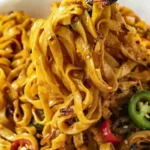
Fiery Garlic Chili Stir-Fry Noodles
- Total Time: 15 minutes
- Yield: 6 servings 1x
- Diet: General
Description
These spicy noodles are loaded with chili-garlic flavor, quickly stir fried in a vibrant, fiery Asian style sauce, so quick and easy to make!
Ingredients
- 2 tablespoons soy sauce
- 2 tablespoons gochujang
- 1 tablespoon sriracha
- 1 tablespoon chili-garlic sauce
- 1 tablespoon chili crisp
- 1 tablespoon sesame oil
- 1 tablespoon rice wine vinegar
- Salt and pepper to taste
- 12 ounces dried egg noodles
- 2 tablespoons olive oil
- 2–3 spicy chili peppers
- Chili flakes for garnish
- Extra chili crisp for garnish
- Fresh chopped herbs for garnish
- Chopped roasted peanuts for garnish
- Chopped green onion for garnish
Instructions
- Step 1: Whisk together the spicy noodles sauce ingredients and set the sauce aside.
- Step 2: Boil the noodles in hot water per the packaging directions until done, about 4-5 minutes. Drain and set into a lightly oiled bowl.
- Step 3: Heat the oil in a wok or large pan and add the chili peppers. Cook for 5 minutes to soften.
- Step 4: Add the noodles and stir fry for 1 minute.
- Step 5: Stir in the spicy noodles sauce and toss to evenly coat.
- Step 6: Transfer to bowls. Garnish and serve.
Notes
You can easily customize this dish by adding any vegetables or proteins you wish, such as chicken, shrimp, or tofu, or enjoy it on its own.
- Prep Time: 5 minutes
- Cook Time: 10 minutes
- Category: Main Course
- Method: Stir Fry
- Cuisine: American
Nutrition
- Serving Size: 1 serving
- Calories: 192 kcal
- Sugar: 2 g
- Sodium: 629 mg
- Fat: 10 g
- Saturated Fat: 2 g
- Unsaturated Fat: 8 g
- Trans Fat: 0 g
- Carbohydrates: 21 g
- Fiber: 1 g
- Protein: 4 g
- Cholesterol: 0 mg
Keywords: chili crisp, egg noodles, gochujang, sriracha