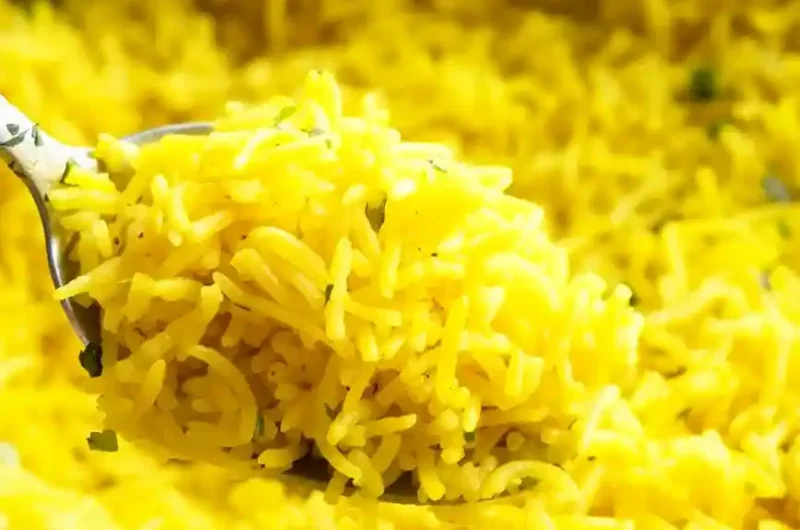
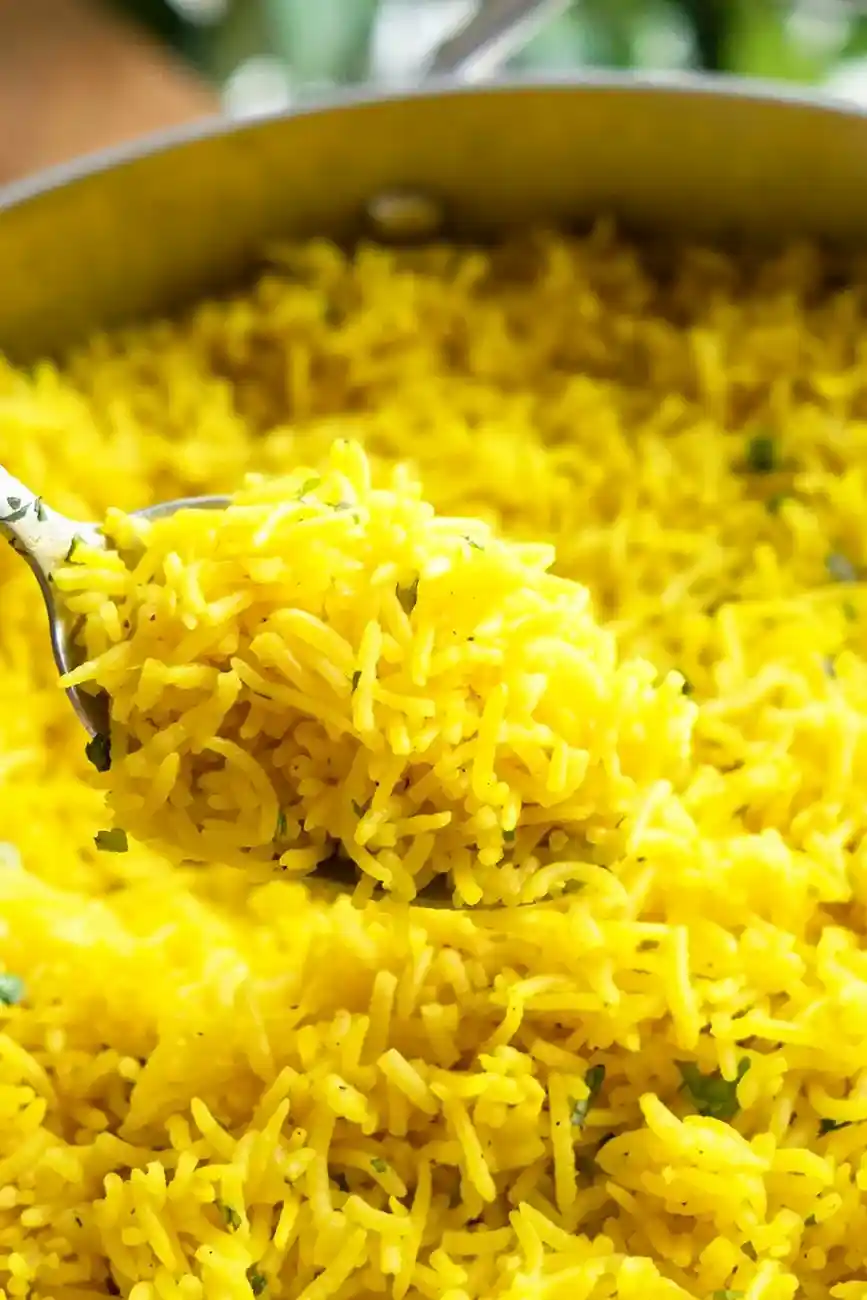
Create a vibrant and aromatic side dish with this easy turmeric rice. This one-pot recipe combines garlic and butter for a rich flavor that complements any main course.
List of ingredients
- 2 tbsp unsalted butter (or coconut oil) – adds richness and ensures fluffy grains.
- 1/2 medium onion (finely diced) – provides a sweet, aromatic base.
- 4 cloves garlic (minced) – contributes a bold, savory depth.
- 1 tsp turmeric powder – gives the rice its signature golden color and earthy taste.
- 2 cups (370g) basmati rice (or your choice of long-grain rice, rinsed and drained) – ensures a light and airy texture.
- 3 cups chicken stock (or vegetable stock) – infuses each grain with deep savory flavor.
- 1/2 tsp salt (or to taste) – enhances all the aromatic components.
- 1/4 tsp black pepper (or to taste) – adds a subtle hint of warmth.
- parsley (for garnish, optional) – adds a pop of color and fresh contrast.
- marinated chicken kebabs (or any grilled veggies, seafood, or meat to serve) – the ideal protein pairing.
step-by-step instructions
- Sauté Aromatics: Melt butter in a pot over medium heat. Add onion and garlic and sauté for about 1-2 minutes or until fragrant.
- Bloom Spices: Add turmeric powder and stir to combine. This step awakens the flavor of the spice.
- Toast the Rice: Mix in the rice until the grains are evenly coated and lightly toasted. Toasting prevents the rice from becoming mushy.
- Simmer the Grains: Add stock, salt, and pepper. Mix to combine and bring to a boil. Cover, reduce the heat to low, and simmer for 15 minutes.
- Rest and Fluff: Remove from heat and set aside for about 5 minutes before fluffing the rice with a fork. This allows the steam to finish cooking the grains evenly.
Professional Secrets for Perfect Grains
Rinse Rice to Remove Surface Starch
Washing the rice before cooking is essential for preventing clumping. Use a fine-mesh colander or a bowl to rinse the grains under cold water until the water runs clear. This removes the excess starch that otherwise makes the rice sticky.
Toast Grains for Nutty Flavor
Stirring the dry rice in butter before adding the liquid creates a light toast on the exterior of the grain. This process adds a subtle nutty flavor to the finished dish. It also helps the grains maintain their individual structure during the simmering process.
Rest Rice to Balance Moisture
Removing the pot from the heat and letting it sit covered for five to ten minutes is a critical step. During this time, the remaining moisture redistributes evenly across all grains. This results in a soft, fluffy texture rather than a wet bottom and dry top.
Maintain Low Heat During Simmering
Once the stock reaches a boil, reducing the heat to the lowest setting is vital. High heat causes the liquid to evaporate too quickly, leaving the rice undercooked in the center. A gentle simmer ensures the water is absorbed slowly and evenly.
Alternative Ingredient Options
Substitute Basmati with Jasmine Rice
While basmati is prized for its length and aroma, jasmine rice is a great alternative for a slightly stickier, floral result. If using jasmine, you may need to slightly reduce the liquid amount. Always adjust based on the specific brand instructions for the rice type.
Using Coconut Oil Instead of Butter
For a dairy-free version, replace the unsalted butter with refined coconut oil. Refined coconut oil provides a neutral taste, while unrefined oil adds a subtle tropical aroma. Both options provide the necessary fat to keep the grains separate.
Vegetable Broth for a Plant-Based Base
To make this dish vegetarian, swap the chicken stock for a high-quality vegetable broth. Ensure the broth is low-sodium if you prefer to control the salt levels yourself. Vegetable stock offers a cleaner, lighter taste that pairs well with fresh greens.
Substitute Turmeric with Saffron for Different Aroma
If you want a more luxurious flavor and color, you can use a pinch of saffron threads instead of turmeric. Saffron provides a more complex, honey-like aroma. Note that saffron is significantly more expensive and should be steeped in the warm stock first.
Creative Flavor Enhancements
Add Fresh Herbs for Brightness
While parsley is a great garnish, stirring in fresh cilantro or mint at the end adds a burst of freshness. These herbs cut through the richness of the butter and garlic. Always add fresh herbs after the heat is turned off to preserve their color.
Incorporate Sautéed Vegetables
You can mix in frozen peas, diced carrots, or corn during the last five minutes of steaming. This transforms the side dish into a more complete meal. Sautéing the vegetables briefly with the onions is another way to build deeper flavor.
Add a Touch of Lemon Juice
A squeeze of fresh lemon juice just before serving brightens the earthy tones of the turmeric. The acidity balances the richness of the garlic and butter. This is especially effective when pairing the rice with grilled seafood.
Use Garlic Powder for Subtle Taste
If you prefer a more muted garlic flavor, you can substitute fresh minced garlic with garlic powder. Stir the powder in with the turmeric during the blooming phase. This provides a more uniform distribution of flavor throughout the pot.
Best Foods to Pair with Yellow Rice
Grilled Chicken and Kebabs
The savory, char-grilled flavor of chicken kebabs complements the aromatic turmeric notes perfectly. The rice acts as a fluffy base that absorbs the juices from the meat. This is a classic Middle Eastern and Asian pairing.
Roasted Seafood and Shrimp
Garlic turmeric rice is an excellent companion for buttery shrimp or roasted salmon. The golden color of the rice visually enhances the plate. The earthy spices balance the natural sweetness of the seafood.
Tofu and Grilled Vegetables
For a vegetarian option, serve this rice with marinated tofu and grilled zucchini or bell peppers. The richness of the butter-toasted rice provides a satisfying contrast to the lightness of the vegetables. It makes the meal feel hearty and complete.
Hearty Legumes and Chickpea Stews
Pairing this rice with a thick chickpea stew or lentil curry creates a protein-rich meal. The fluffy grains help soak up the thick sauces of the stews. This combination is common in many regional cuisines across Asia.
Storage and Preservation Guide
Refrigeration Methods
Store leftover rice in an airtight container to prevent it from drying out in the fridge. Ensure the rice has cooled to room temperature before sealing the lid. This prevents condensation from building up, which can make the rice mushy.
Freezing for Long-Term Use
This rice freezes exceptionally well for meal prep. Portion the rice into small, freezer-safe bags or containers to make reheating easier. It can be stored in the freezer for up to three months without losing significant quality.
Maximum Storage Duration
Refrigerated rice should be consumed within four days for the best safety and quality. If the rice develops a sour smell or slimy texture, discard it immediately. Proper cooling is key to preventing bacterial growth in cooked grains.
Reheating for Optimal Texture
Using the Microwave Method
Place a portion of rice in a microwave-safe bowl and add a teaspoon of water or broth. Cover the bowl with a damp paper towel to trap the steam. Heat in short bursts, stirring in between, until the rice is steaming hot.
Reheating on the Stovetop
Place the rice in a small pot over low heat with a splash of water. Cover the pot with a tight-fitting lid to create a steam chamber. Stir gently every few minutes to avoid burning the bottom of the pan.
Preventing Dried-Out Grains
The most common mistake during reheating is using too much heat without moisture. Always add a small amount of liquid to restore the fluffiness. Avoid overcooking the rice a second time, as this can lead to a mushy consistency.
Common Troubleshooting Solutions
Fixing Mushy or Sticky Rice
Mushy rice is usually caused by too much liquid or skipping the rinsing process. If your rice is too sticky, try fluffing it more gently with a fork. Next time, ensure you measure your stock accurately and rinse the rice until the water is clear.
Solving Undercooked Grains
If the rice is still hard after the simmer time, add two to three tablespoons of warm water. Put the lid back on and simmer on very low heat for an additional five minutes. Let it rest again before serving to ensure the moisture is absorbed.
Preventing Burnt Bottoms
Burnt rice often happens when the heat is too high or the pot has a thin base. Use a heavy-bottomed pot or a stainless steel sauté pan for more even heat distribution. Always ensure the lid is tight to keep the steam inside the pot.
Frequently Asked Questions
Can I use a rice cooker for this recipe?
Yes, you can. Sauté the onion, garlic, and turmeric in a pan first, then add the rice and stock to the rice cooker. Use the standard white rice setting and follow the machine’s liquid ratios.
Does turmeric change the taste significantly?
Turmeric adds a mild, earthy, and slightly bitter note. In this quantity, it provides a warm aroma without overpowering the other ingredients. It is much more subtle than strong curry powders.
Can I use brown rice instead?
You can, but you will need to increase the liquid and the cooking time. Brown rice typically requires more water and about 40-50 minutes of simmering. The texture will be chewier than the basmati version.
Print
Fragrant Garlic Turmeric Rice
- Total Time: 20 minutes
- Yield: 8 servings 1x
- Diet: General
Description
This soft & fluffy turmeric rice is so easy to make yet loaded with heavenly aromas in every bite. Fragranced with garlic, butter, and onion, this one-pot middle eastern rice comes together in less than 20 minutes on the stovetop.
Ingredients
- 2 tbsp unsalted butter or coconut oil
- 1/2 medium onion, finely diced
- 4 cloves garlic, minced
- 1 tsp turmeric powder
- 2 cups basmati rice, rinsed and drained
- 3 cups chicken or vegetable stock
- 1/2 tsp salt
- 1/4 tsp black pepper
- Parsley for garnish, optional
Instructions
- Sauté: Melt butter in a pot over medium heat. Add onion and garlic and sauté for about 1-2 minutes or until fragrant.
- Spice: Add turmeric powder and stir to combine.
- Toast: Mix in the rice until the grains are evenly coated and lightly toasted.
- Boil: Add stock, salt, and pepper. Mix to combine and bring to a boil.
- Simmer: Cover, reduce the heat to low, and simmer for 15 minutes.
- Rest: Remove from heat and set aside for about 5 minutes before fluffing the rice with a fork.
Notes
Cooked rice is best served fresh, but leftovers can be stored in an airtight container for up to 4 days in the fridge, or up to 3 months in the freezer. Reheat until steaming hot; avoid reheating more than once.
- Prep Time: 5 minutes
- Cook Time: 15 minutes
- Category: Dinner
- Method: Stovetop
- Cuisine: Middle Eastern
Nutrition
- Serving Size: 1 serving
- Calories: 214 kcal
- Sugar: 1 g
- Sodium: 410 mg
- Fat: 5 g
- Saturated Fat: 3 g
- Unsaturated Fat: 2 g
- Trans Fat: 0 g
- Carbohydrates: 38 g
- Fiber: 1 g
- Protein: 4 g
- Cholesterol: 11 mg
Keywords: turmeric rice, garlic rice, yellow rice, middle eastern rice, one-pot rice, side dish