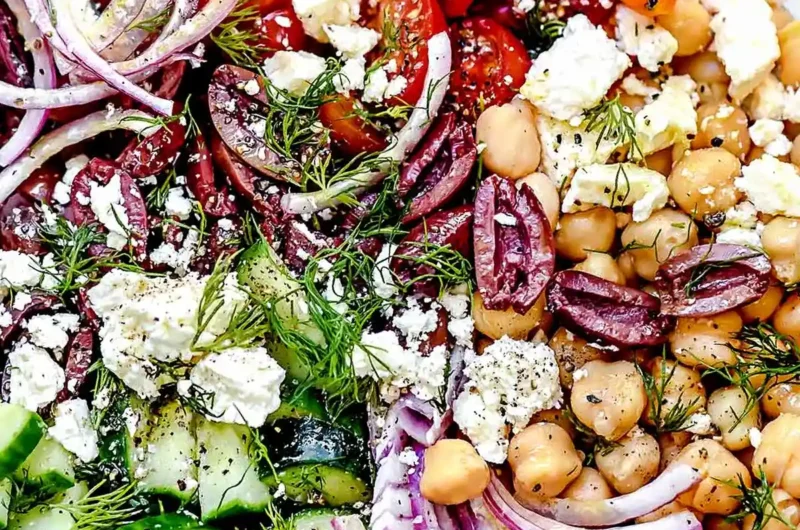
This vibrant salad combines protein-packed chickpeas with crisp vegetables and tangy feta cheese for a refreshing meal. It is an ideal choice for meal prep as the flavors deepen and meld beautifully after a few hours in the refrigerator.
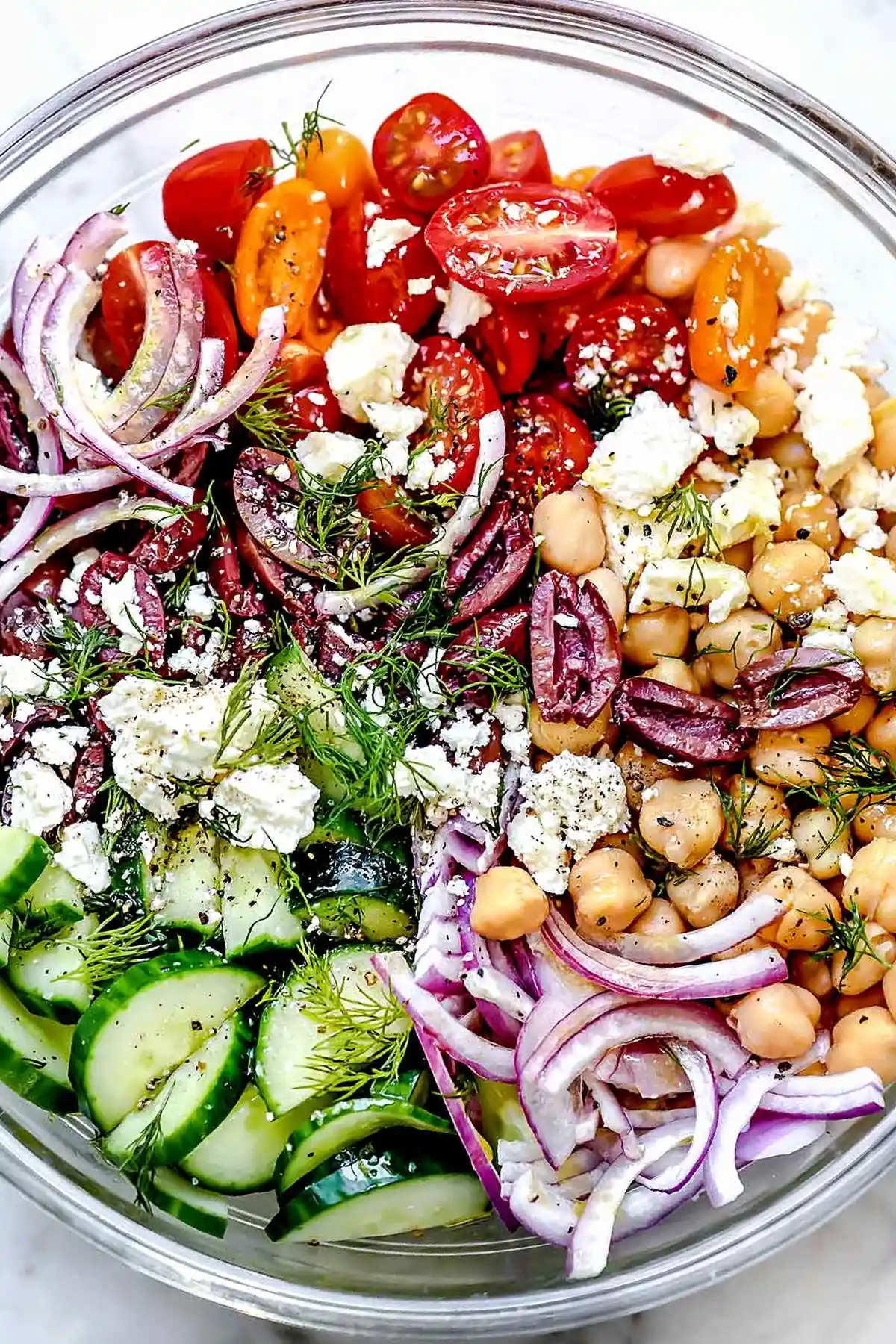
List of ingredients
- 15 ounces canned chickpeas – rinsed and drained thoroughly to remove excess sodium.
- 1 English cucumber – halved and sliced into coins for a consistent crunch.
- 2 cups cherry tomatoes – halved to release their juices into the dressing.
- 3/4 cup pitted kalamata olives – drained and halved for a salty, briny punch.
- 1/4 cup slivered red onion – thinly sliced to provide a sharp contrast to the creamy cheese.
- 6 ounces feta cheese – crumbled, preferably from a block stored in brine.
- 1/4 cup fresh dill – finely chopped for a bright, herby finish.
- 1/3 cup extra virgin olive oil – use a high-quality oil for a fruity, rich base.
- 2 tablespoons red wine vinegar – provides the signature Mediterranean tang.
- 1 teaspoon dried oregano – adds an earthy, aromatic depth.
- 1 teaspoon kosher salt – used to enhance all the fresh vegetable flavors.
- 1 teaspoon freshly ground black pepper – adds a subtle heat and woody aroma.
- 1/2 teaspoon granulated sugar – optional, used to balance the acidity of the vinegar.
step-by-step instructions
- Combine the base: In a large mixing bowl, combine the drained chickpeas, sliced cucumber, halved cherry tomatoes, kalamata olives, slivered red onion, half of the crumbled feta cheese, and the chopped fresh dill.
- Apply the dressing: Drizzle the extra virgin olive oil and red wine vinegar directly over the mixture, then sprinkle in the kosher salt, freshly ground black pepper, and optional sugar.
- Final toss and serve: Toss the ingredients gently to ensure everything is evenly coated, then fold in the remaining feta cheese to keep some chunks intact. Adjust the seasoning to your preference and serve immediately or refrigerate overnight for better flavor absorption.
Selecting the Finest Components
Choosing English Cucumbers for Texture
English cucumbers are preferred for this recipe because they have thinner skins and fewer seeds than standard slicing cucumbers. This prevents the salad from becoming too watery and ensures a consistent, crisp bite in every spoonful. There is no need to peel them, as the skin is tender and contains significant nutrients.
The Importance of Block Feta in Brine
Avoid pre-crumbled feta, as it is often coated with potato starch or cellulose to prevent the pieces from sticking together. Block feta stored in brine maintains a creamier texture and a more authentic, salty tang. Crumbling the cheese yourself allows you to control the size of the chunks, which improves the overall mouthfeel.
Selecting High-Quality Kalamata Olives
Kalamata olives provide a distinct, fruity brine that is essential for an authentic Greek flavor profile. While pitted olives are convenient, whole olives often retain more flavor and a firmer texture. Ensure you drain them well so the dark brine does not overpower the olive oil dressing.
Using Fresh Dill versus Dried Alternatives
Fresh dill offers a delicate, citrusy brightness that cannot be replicated by dried herbs. Finely chopping the fronds just before adding them to the bowl prevents bruising and preserves the volatile oils. If you must use dried dill, reduce the quantity by half to avoid an overly concentrated taste.
Adapting the Recipe for Different Tastes
Substituting the Acid Component
If you prefer a different flavor profile, you can replace the red wine vinegar with fresh lemon juice for a brighter, more citrusy note. Champagne vinegar or white balsamic vinegar also work well as milder alternatives. The key is to maintain the same ratio of acid to oil to keep the dressing balanced.
Experimenting with Mediterranean Herbs
While dill and oregano are the classics, you can customize the salad with other fresh herbs like flat-leaf parsley or mint. Adding a tablespoon of chopped mint provides a cooling effect that pairs exceptionally well with the salty feta. Basil is another great option if you want a slightly sweeter, more aromatic profile.
Incorporating Different Legumes
Although chickpeas provide a nutty and firm base, you can swap them for cannellini beans or butter beans for a creamier texture. Ensure any substitute legume is rinsed and drained thoroughly to prevent the dressing from becoming diluted. Mixing two types of beans can also add visual interest to the dish.
Adjusting the Onion Intensity
Slivered red onion adds a necessary bite, but some find the raw flavor too overpowering. To mellow the sharpness, soak the sliced onions in ice water for ten minutes and pat them dry before adding them to the bowl. This removes the harsh sulfur compounds while keeping the crunch and color.
Protein Pairing and Main Dish Conversion
Integrating Grilled Chicken for a Complete Meal
To turn this side salad into a hearty main course, add sliced grilled chicken breast seasoned with lemon and garlic. The warm chicken creates a pleasant temperature contrast with the chilled vegetables. Ensure the chicken is rested before slicing to keep the juices within the meat.
Adding Baked Shrimp or Salmon
Seared shrimp or flaked baked salmon are excellent protein additions that complement the briny olives and feta. For shrimp, a quick sauté with paprika and lemon works best. For salmon, a simple salt and pepper roast provides a rich fat content that balances the acidic dressing.
Serving with Hearty Ancient Grains
To increase the satiety of the meal, fold in cooked quinoa, farro, or bulgur wheat. These grains soak up the dressing and add a chewy texture that makes the salad feel more like a substantial bowl. Cook the grains and let them cool completely before mixing them in to avoid wilting the cucumber.
Creating a Mezze Platter
Serve the chickpea salad as part of a larger Greek platter accompanied by hummus, tzatziki, and warm pita bread. Arrange the salad in a shallow bowl surrounded by sliced bell peppers and carrot sticks. This presentation is ideal for hosting and allows guests to customize their portions.
Long-Term Storage and Freshness Management
Using Airtight Containers for Storage
Store the salad in a glass airtight container to prevent the vegetables from absorbing odors from other foods in the fridge. Glass is preferable to plastic as it does not retain stains from the olives or the scent of the onions. Press the lid firmly to minimize air exposure, which keeps the dill from oxidizing.
Understanding the Optimal Shelf Life
This salad typically stays fresh and delicious for up to five days in the refrigerator. While the chickpeas and olives remain stable, the cucumbers and tomatoes will naturally release water over time. This creates a thinner dressing, but the flavors actually become more integrated as the days pass.
Refreshing the Salad Before Serving
If the salad has been sitting for several days, it may lose some of its vibrancy. To refresh it, stir in a small splash of fresh olive oil and a pinch of salt to revive the dressing. Adding a handful of freshly chopped parsley or dill just before serving restores the bright, herbal aroma.
Avoid Reheating Cold Salads
Never heat this salad, as the cucumber will lose its structure and the feta will melt into an oily mess. If the salad is too cold from the fridge, let it sit at room temperature for fifteen minutes before serving. This allows the olive oil to loosen and the flavors of the vegetables to become more prominent.
Solving Common Texture Issues
Preventing a Watery Consistency
The most common issue with Greek salads is the accumulation of excess liquid at the bottom of the bowl. To prevent this, ensure the canned chickpeas are rinsed and dried with a paper towel. Additionally, slicing the cucumber and letting it sit in a colander with a pinch of salt for ten minutes can draw out excess moisture before mixing.
Balancing Overpowering Acidity
If the red wine vinegar makes the salad taste too sharp, you can balance the acidity in two ways. First, add a small pinch of granulated sugar or a drizzle of honey to mellow the tang. Alternatively, add an extra tablespoon of extra virgin olive oil to coat the ingredients and soften the acid’s impact.
Maintaining Feta Chunk Integrity
To avoid having the feta dissolve into the dressing and turn the salad cloudy, add half the cheese at the beginning and the other half at the very end. Fold the final portion in gently with a rubber spatula rather than stirring vigorously. This ensures you have distinct, creamy pieces of cheese in every bite.
Managing Salt Levels in Brined Ingredients
Since both feta and Kalamata olives are naturally salty, be cautious when adding additional kosher salt. Always taste the salad after tossing it with the cheese and olives before adding the measured salt. You may find that the brined components provide enough seasoning on their own.
Frequently Asked Questions
Can I use dried chickpeas instead of canned?
Yes, you can use dried chickpeas by soaking them overnight and simmering them until tender. Once cooked, drain them and let them cool completely before adding them to the salad. This method often results in a firmer texture and allows you to control the sodium levels.
How do I make this salad vegan or dairy-free?
To make the recipe vegan, simply omit the feta cheese or replace it with a plant-based feta alternative. To maintain the salty, tangy profile, you can add a few extra olives or a tablespoon of capers. Some people also use cubed extra-firm tofu marinated in lemon and salt as a substitute.
Does the salad get soggy over time?
The salad does soften slightly as the salt draws moisture from the cucumbers and tomatoes. However, because chickpeas are sturdy, the overall structure remains hearty. For the crispest results, add the cucumber and dressing only a few hours before serving.
Can I use a different type of olive?
While Kalamata olives are traditional, you can use Castelvetrano olives for a milder, butterier taste. Black canned olives are an option but offer less depth and a saltier, one-dimensional flavor. Always ensure the olives are pitted and drained well.
Is it possible to freeze this salad?
No, this salad is not suitable for freezing. The high water content of the cucumbers and tomatoes would cause them to collapse and become mushy upon thawing. The feta cheese also changes texture significantly when frozen and thawed, losing its creamy consistency.
Print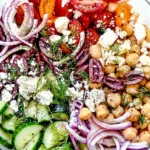
Fresh Greek Chickpea Salad
- Total Time: 15 minutes
- Yield: 6 servings 1x
- Diet: Vegetarian
Description
This one-bowl wonder of a salad is packed with chickpeas, olives, feta, and fresh veggies. It’s a fantastic make-ahead chickpea salad that stays fresh for a couple days in the fridge.
Ingredients
- 15 ounces canned chickpeas, rinsed and drained
- 1 English cucumber, halved and sliced into coins
- 2 cups halved cherry tomatoes
- 3/4 cup pitted kalamata olives, drained and halved
- 1/4 cup slivered red onion
- 6 ounces feta cheese, crumbled
- 1/4 cup chopped fresh dill
- 1/3 cup extra virgin olive oil
- 2 tablespoons lemon juice
- 1 teaspoon dried oregano
- 1 teaspoon kosher salt
- 1 teaspoon freshly ground black pepper
- 1/2 teaspoon granulated sugar, optional
Instructions
- Step: In a large bowl, add the drained chickpeas, cucumber, tomatoes, kalamata olives, red onion, half of the feta cheese and the dill.
- Step: Drizzle with the olive oil and lemon juice then season with the kosher salt, freshly ground black pepper and sugar.
- Step: Toss gently and add the rest of the feta cheese. Adjust seasoning and serve or refrigerate overnight.
Notes
Feel free to use other acids in place of lemon juice such as white balsamic vinegar or champagne vinegar. To add more protein, you can include grilled salmon, baked shrimp, or shredded rotisserie chicken.
- Prep Time: 15 minutes
- Cook Time: 0 minutes
- Category: Salad
- Method: Mixing
- Cuisine: Greek
Nutrition
- Serving Size: 1 serving
- Calories: 229 kcal
- Sugar: 4 g
- Sodium: 976 mg
- Fat: 21 g
- Saturated Fat: 6 g
- Unsaturated Fat: 15 g
- Trans Fat: 0 g
- Carbohydrates: 7 g
- Fiber: 1 g
- Protein: 5 g
- Cholesterol: 25 mg
Keywords: Greek chickpea salad, Mediterranean, meal prep, vegetarian, healthy lunch