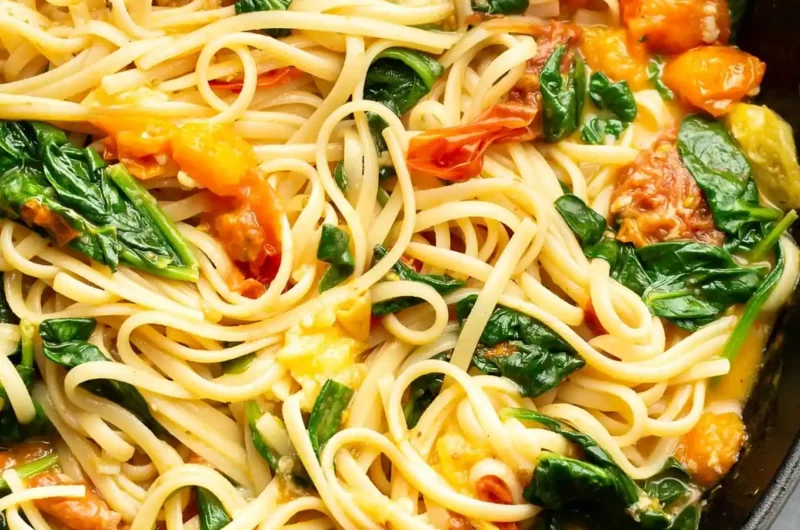
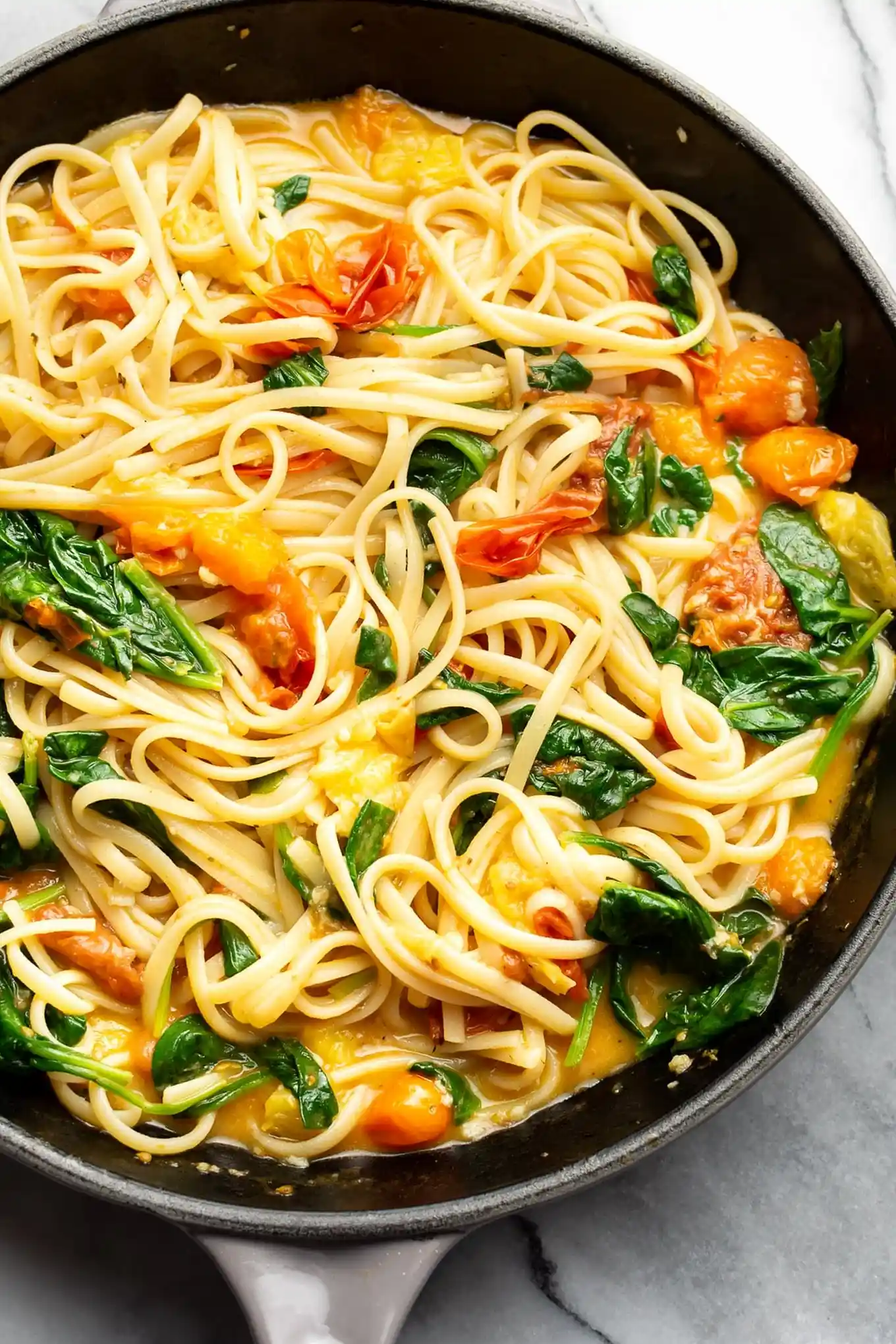
This garlic butter pasta combines fresh tomatoes and baby spinach for a light, vibrant meal. It is an efficient recipe perfect for busy weeknights when you want a nutritious dinner in under 30 minutes.
List of ingredients
- 8 ounces pasta (linguine recommended) – provides the base for the meal.
- 1 tablespoon olive oil – used for initial sautéing.
- 3 tablespoons butter – creates the rich base of the sauce.
- 5-6 cloves garlic (minced) – provides the primary aromatic flavor.
- 12 ounces little tomatoes (grape or cherry), cut in halves – adds acidity and sweetness.
- 1/4 teaspoon Italian seasoning – a blend of dried herbs for depth.
- 2 cups fresh baby spinach (packed) – adds nutritional greens.
- 1/2 cup freshly grated parmesan cheese – thickens the sauce and adds saltiness.
- Salt and pepper – adjusted to taste for final seasoning.
step-by-step instructions
- Boil the pasta: Bring a large pot of salted water to a boil. Cook the pasta according to the package directions until it reaches an al dente texture.
- Prepare the sauce base: When the pasta has approximately 10 minutes remaining, place a skillet over medium-high heat. Add the olive oil and butter and melt them together.
- Sauté aromatics and vegetables: Stir in the minced garlic, halved tomatoes, and Italian seasoning. Cook for 4-5 minutes until the tomatoes soften and release their juices. Reduce the heat if the liquid begins to bubble off too quickly.
- Wilt the spinach: Add the baby spinach to the skillet. Stir for 1-2 minutes until the leaves have wilted.
- Combine and finish: Reserve 1/4 cup of the hot pasta water and stir it into the skillet. Drain the pasta and add it to the sauce along with the grated parmesan cheese. Toss everything together until the cheese is melted and the sauce is smooth. Season with salt and pepper and serve immediately.
Pasta Selection and Preparation
Choosing Long Pasta Shapes
Linguine is the recommended choice for this recipe because its flat, narrow shape provides a larger surface area for the garlic butter sauce to adhere to. You can also use spaghetti or bucatini to achieve a similar result. These long shapes blend well with the long leaves of wilted spinach.
Cooking Pasta Al Dente
Al dente pasta refers to noodles that are cooked to be firm to the bite. Check the package instructions and subtract one or two minutes from the cooking time. This prevents the pasta from becoming mushy when it is tossed in the skillet with the hot sauce.
The Role of Salted Boiling Water
Adding a generous amount of salt to the boiling water is the only opportunity to season the pasta itself. The salt penetrates the noodle as it hydrates, enhancing the overall flavor profile. Use approximately one tablespoon of salt per gallon of water for optimal results.
Handling Pasta Quantities
Using 8 ounces of pasta typically serves four people as a light meal or two to three people as a main course. If you increase the pasta amount, ensure you scale the butter and garlic proportionally to maintain the sauce ratio. Always use a pot large enough to allow the noodles to move freely.
Vegetable Tips and Substitutions
Selecting the Best Tomatoes
Cherry and grape tomatoes are ideal because they burst easily and create a natural sauce. Multi-colored varieties can be used to add visual appeal to the final dish. Ensure the tomatoes are ripe and firm before slicing them in half.
Using Fresh Spinach Variants
Baby spinach is preferred for this recipe because it wilts quickly and has a mild flavor. If using mature spinach, you may need to sauté it for an additional minute to ensure it softens. Ensure the spinach is washed and packed tightly into the measuring cup.
Adding Fresh Basil Leaves
Fresh basil can be added at the very end of the cooking process for a more aromatic flavor. Stir in a handful of torn basil leaves just before tossing in the pasta. This replaces or complements the dried Italian seasoning with a brighter taste.
Incorporating Other Leafy Greens
Kale or Swiss chard can be substituted for spinach, though they require longer cooking times. Sauté these greens for 3-5 minutes before adding the other ingredients. This ensures the tougher leaves are tender enough to eat.
Enhancing the Garlic Butter Sauce
Mincing Garlic for Maximum Flavor
Using a garlic press is an efficient way to mince cloves without having to peel them first. If using a knife, mince the garlic as finely as possible to ensure it distributes evenly throughout the butter. Avoid burning the garlic, as it can become bitter.
Controlling Heat to Prevent Burning
Maintain a medium-high heat for the initial sauté, but be ready to lower it to medium once the tomatoes begin to break down. If the pan becomes too dry, a small splash of water or olive oil can prevent the garlic from scorching. The goal is a simmer, not a hard fry.
Using High-Quality Butter
Unsalted butter allows you to control the sodium levels of the dish more accurately. If using salted butter, reduce the amount of added salt during the final seasoning step. High-fat European-style butter can provide a creamier consistency to the sauce.
Selecting the Right Olive Oil
Extra virgin olive oil adds a fruity note that complements the garlic and tomatoes. The oil also raises the smoke point of the butter, preventing it from browning too quickly. Use a high-quality oil to ensure the flavor remains clean.
Protein Add-ins for a Heartier Meal
Adding Sautéed Shrimp
Shrimp can be added by sautéing them in the skillet before the garlic and tomatoes. Cook them until they turn pink and opaque, then remove them from the pan and set them aside. Stir the cooked shrimp back in at the final step with the pasta.
Mixing in Rotisserie Chicken
Pre-cooked rotisserie chicken is an easy way to add protein without extra cooking time. Shred the chicken and stir it into the skillet along with the spinach. The residual heat from the sauce will warm the chicken through.
Adding Pan-Seared Salmon Pieces
Salmon cubes can be seared separately and placed on top of the plated pasta. This prevents the salmon from breaking apart during the tossing process. Season the salmon with salt, pepper, and a bit of the Italian seasoning.
Using Chickpeas for Plant-Based Protein
Canned chickpeas, rinsed and drained, can be added to the skillet with the tomatoes. Sauté them for a few minutes to allow them to absorb the garlic butter flavor. This provides a hearty, plant-based alternative to meat.
The Science of Pasta Water
Why Reserve Pasta Water?
Pasta water contains starch released from the noodles during the boiling process. This starch acts as an emulsifier, helping the oil and butter bind to the pasta. Without it, the sauce may separate or pool at the bottom of the plate.
Creating a Silky Sauce Emulsion
When the reserved water hits the butter and cheese, it creates a cohesive, silky emulsion. This process coats each strand of linguine evenly rather than just sliding off. It transforms a simple butter sauce into a professional-style glaze.
Adjusting Sauce Consistency
If the pasta seems too dry after adding the cheese, add an extra tablespoon of reserved pasta water. Stir vigorously over low heat to incorporate the liquid. This allows you to customize the thickness of the sauce to your preference.
Cheese and Seasoning Options
Freshly Grating Parmesan Cheese
Grating parmesan from a block is superior to using pre-shredded cheese. Pre-shredded cheeses often contain anti-clumping agents like cellulose, which prevent them from melting smoothly. Freshly grated cheese incorporates into the sauce more efficiently.
Adjusting Italian Seasoning Blends
Italian seasoning usually contains oregano, basil, rosemary, and thyme. If you lack a pre-made blend, you can mix these dried herbs in equal parts. A pinch of crushed red pepper flakes can be added for a subtle spicy kick.
Alternative Hard Cheeses
Pecorino Romano can be used as a substitute for parmesan for a saltier, sharper flavor. Grana Padano is another option for a milder, nuttier taste. Use the same measurement of 1/2 cup regardless of the hard cheese chosen.
Balancing the Acidity
If the tomatoes are too acidic, a small pinch of sugar can balance the flavor. This enhances the natural sweetness of the cherry tomatoes. Taste the sauce after the tomatoes have softened before adding the cheese.
Serving and Pairing Suggestions
Serving with Crusty Bread
A slice of toasted sourdough or a warm baguette is ideal for this dish. The bread can be used to soak up the remaining garlic butter sauce from the plate. Brush the bread with olive oil and toast it in the oven for a few minutes.
Pairing with a Fresh Green Salad
A simple mixed green salad with a vinaigrette provides a refreshing contrast to the rich butter sauce. Use a dressing made of lemon juice and olive oil to cut through the heaviness of the parmesan. Add cucumber or radish for extra crunch.
Adding Garlic Bread as a Side
Cheesy garlic bread complements the flavors of the pasta while adding more texture. Use a French loaf, spread with garlic butter and mozzarella, and bake until golden. This makes the meal more substantial for larger appetites.
Storage and Reheating Guide
Storing Leftovers in the Fridge
Place leftover pasta in an airtight container and refrigerate it for up to three days. The pasta may absorb some of the sauce as it sits, which is normal. Ensure the container is completely sealed to prevent the pasta from drying out.
Reheating Pasta in a Saucepan
Avoid using a microwave for reheating, as it can make the pasta rubbery. Instead, place the leftovers in a saucepan over low heat. Add a splash of water or a small knob of butter to loosen the sauce as it warms.
Avoiding the Freezer for Fresh Pasta
Freezing pasta with fresh spinach and tomatoes is not recommended. The vegetables lose their structure and become watery upon thawing. For the best quality, consume the dish within a few days of preparation.
Common Troubleshooting and FAQs
Why are my tomatoes not bursting?
If the tomatoes remain whole, the skillet temperature may be too low. Ensure you are using medium-high heat and avoid overcrowding the pan. You can also press down gently on the tomatoes with a spatula to help them release their juices.
How do I stop the spinach from overcooking?
Add the spinach at the very end of the vegetable sauté process. Stir only until the leaves have just wilted, which usually takes about 60 to 120 seconds. Overcooking the spinach will make it lose its vibrant green color.
What if my sauce is too oily?
An oily sauce usually means there wasn’t enough pasta water to emulsify the fats. Stir in an additional tablespoon of reserved pasta water and toss the noodles vigorously. The starch will help bind the oil into the sauce.
Can I make this recipe vegan?
Replace the butter with a plant-based butter alternative and the parmesan with nutritional yeast or a vegan parmesan substitute. Use olive oil for the initial sauté as usual. The remaining ingredients are naturally vegan.
Print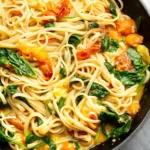
Garlic Butter Pasta with Spinach and Tomatoes
- Total Time: 30 minutes
- Yield: 4 servings 1x
- Diet: Vegetarian
Description
This fresh spinach and tomato pasta recipe has a light yet mouthwatering garlic butter sauce! It’s bright, simple to make, and great for summer weeknights.
Ingredients
- 8 ounces pasta (linguine)
- 1 tablespoon olive oil
- 3 tablespoons butter
- 5–6 cloves garlic, minced
- 12 ounces little tomatoes (grape, cherry, etc.), cut in halves
- 1/4 teaspoon Italian seasoning
- 2 cups fresh baby spinach
- 1/2 cup freshly grated parmesan cheese (microbial rennet)
- Salt and pepper to taste
Instructions
- Step: Boil a salted pot of water for the pasta and cook it al dente according to package directions.
- Step: Add the olive oil and butter to a skillet over medium-high heat when the pasta is about 10 minutes away from being cooked.
- Step: Add the garlic, tomatoes, and Italian seasoning to the skillet and cook until the tomatoes have become very soft (about 4-5 minutes).
- Step: Stir in the spinach and let it cook for a minute or two until it’s wilted.
- Step: Reserve 1/4 cup of the hot pasta water and add it to the skillet, then drain the pasta and add it to the skillet, along with the parmesan cheese.
- Step: Toss the pasta with the sauce, season with salt and pepper, and serve immediately.
Notes
Use whatever tomatoes look best. This recipe is also great with fresh basil if available.
- Prep Time: 10 minutes
- Cook Time: 20 minutes
- Category: Main Course
- Method: Sautéing
- Cuisine: American
Nutrition
- Serving Size: 1 serving
- Calories: 395 kcal
- Sugar: 4 g
- Sodium: 286 mg
- Fat: 17 g
- Saturated Fat: 8 g
- Unsaturated Fat: 9 g
- Trans Fat: 1 g
- Carbohydrates: 48 g
- Fiber: 3 g
- Protein: 14 g
- Cholesterol: 34 mg
Keywords: spinach, tomato, garlic butter pasta, summer pasta, vegetarian pasta