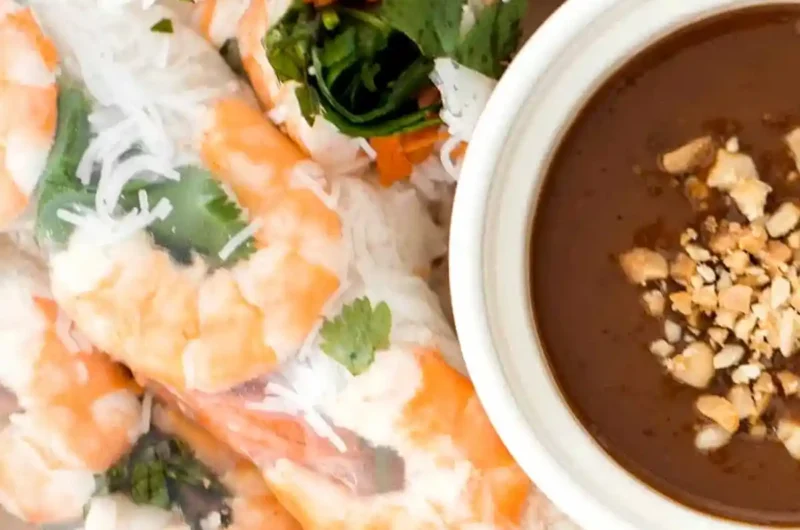
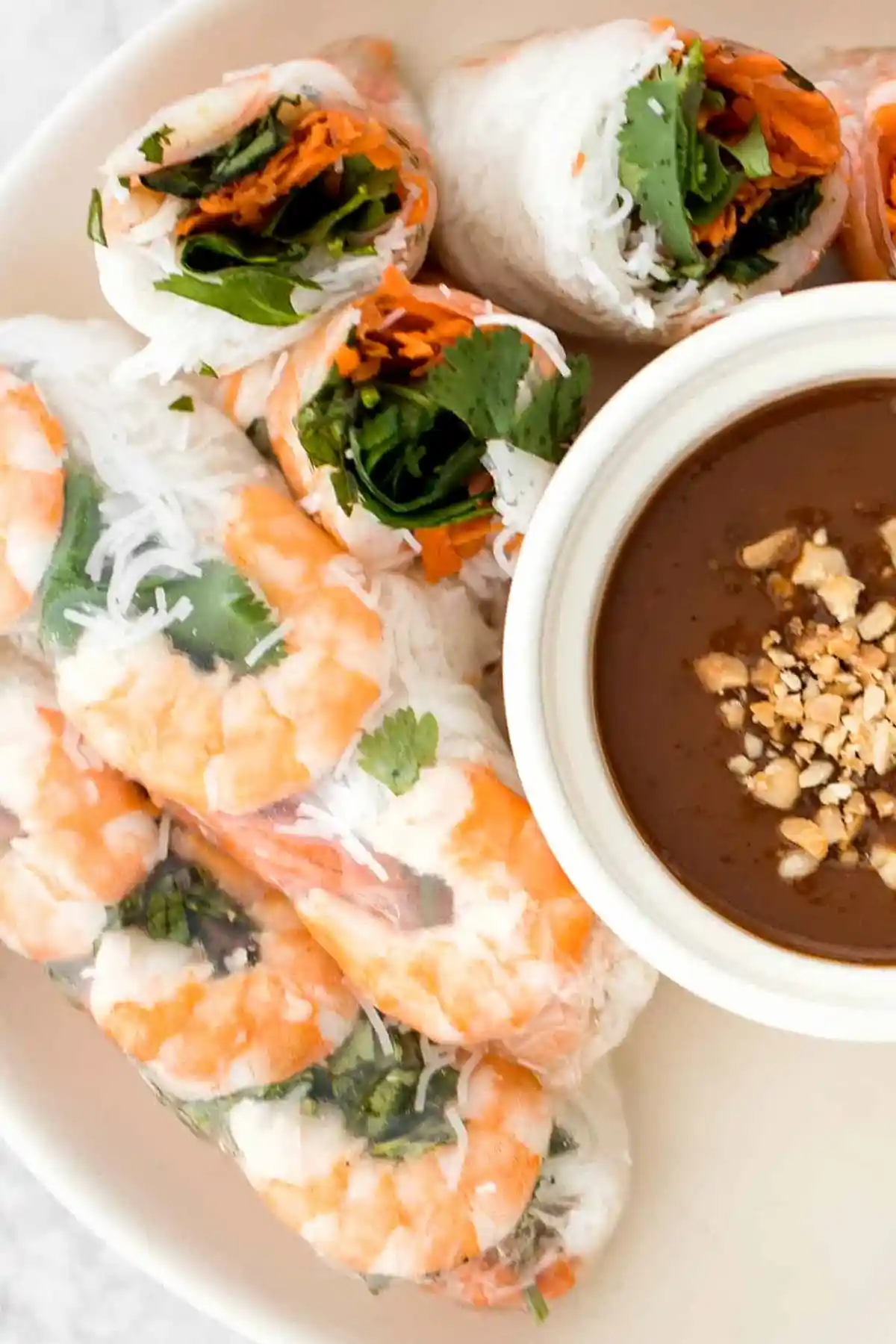
These fresh Vietnamese salad rolls are a light, healthy appetizer featuring tender shrimp and crisp vegetables wrapped in delicate rice paper. They are paired with a creamy peanut dipping sauce for a balanced flavor profile. This dish is an ideal choice for warm weather or a refreshing party platter.
List of ingredients
- 9 large shrimp, peeled and deveined – sliced lengthwise after cooking.
- 1 cup thin rice vermicelli noodles – cooked and cooled.
- 6 (8.5 inch) rice wrappers – available in most Asian grocery stores.
- 1 cup carrots, shredded – adds color and a slight crunch.
- 1/3 cup cilantro, loosely chopped – for a bright, herbal note.
- 3 tablespoons fresh basil, chopped – Thai basil is preferred for authentic flavor.
- 3 tablespoons fresh mint, chopped – provides a cooling finish.
- 2 tablespoons hoisin sauce – or use black bean sauce as a substitute.
- 1 tablespoon peanut butter – creamy or chunky both work well.
- 1 tablespoon water – used to adjust sauce consistency.
- 1/2 tablespoon fresh lime juice – adds a necessary tangy acidity.
- 1/2 tablespoon honey – or granulated sugar for sweetness.
- 1 tablespoon roasted peanuts, chopped – for garnishing the sauce.
step-by-step instructions
- Cook the shrimp: Bring a medium pot of water to a boil over high heat. Add the shrimp and cook for 3-5 minutes until they are pink and opaque. Drain immediately and run under cold water to prevent overcooking. Once cooled, slice each shrimp in half lengthwise.
- Prepare the noodles: Bring a separate pot of water to a boil. Add the rice vermicelli noodles and cook for 2 minutes until tender. Drain through a strainer and rinse under cold water to stop the cooking process, shaking off all excess moisture.
- Soften the wrappers: Fill a large shallow bowl with warm water, about 1-2 inches deep. Quickly dip one rice wrapper into the water for 1-2 seconds according to the package instructions. Place the softened wrapper on a clean, flat, dry surface to finish softening.
- Assemble the fillings: Place 2 tablespoons of vermicelli noodles in the center of the wrapper in a horizontal log shape, leaving 2 inches of space on the sides. Arrange 3 shrimp halves, pink side down, in a row above the noodles. Place 2 tablespoons of shredded carrots below the noodles, then top the shrimp with 1 tablespoon of cilantro, 1/2 tablespoon of basil, and 1/2 tablespoon of mint.
- Roll the wraps: Roll the wrapper tightly but gently from the bottom over the noodles. Fold the left and right sides inward and continue rolling until the roll is sealed. Use moistened fingers to help the paper seal if it feels too dry.
- Prepare the peanut sauce: In a small mixing bowl, whisk together the hoisin sauce, peanut butter, water, lime juice, and honey. Stir until the mixture is smooth and creamy. Garnish the top with chopped roasted peanuts before serving.
Mastering the Wrapping Technique
Using the Correct Water Temperature
The water used for dipping rice paper should be warm, not boiling. Boiling water can make the wrappers too soft and prone to tearing instantly. Warm water ensures the starch hydrates evenly, allowing the wrapper to remain pliable without becoming mushy.
Avoiding Overfilling the Rolls
Overstuffing the wrappers is the most common cause of tearing. Keep the fillings in a compact center log to ensure there is enough rice paper to fold over the edges. If the roll is too thick, the paper will stretch and eventually break during the final seal.
Creating a Secure Seal
When rolling, apply light but firm pressure to the fillings to keep them tight. Folding the sides inward before finishing the roll creates a secure cylinder that prevents ingredients from falling out. If the edge does not stick, a tiny drop of water on your finger can help seal the seam.
Preventing Finished Rolls from Sticking
Rice paper becomes very sticky once hydrated. To prevent the rolls from adhering to each other, place them slightly apart on a platter. Lining the plate with lettuce leaves or parchment paper makes it easier to lift and serve individual rolls without tearing the skin.
Ingredient Substitutions and Customizations
Plant-Based Protein Alternatives
To make this recipe vegetarian or vegan, replace the shrimp with extra-firm tofu that has been pressed and pan-seared. Tempeh or smoked tofu also provide a hearty texture and savory flavor. Ensure any replacement protein is sliced thinly to fit the shape of the roll.
Swapping the Fresh Herbs
While mint, basil, and cilantro are traditional, you can adapt the herbs to your preference. Fresh parsley can replace cilantro, and sweet basil works well if Thai basil is unavailable. If you lack mint, increasing the amount of basil will still provide a fragrant, aromatic profile.
Alternative Vegetable Additions
Beyond carrots, you can add thin strips of cucumber, red cabbage, or bell peppers for extra crunch. Sliced avocado adds a creamy element that contrasts well with the fresh vegetables. Bean sprouts are another traditional addition that provides a unique, watery crunch.
Modifying the Peanut Sauce Consistency
The thickness of the peanut sauce depends on the brand of peanut butter used. If the sauce is too thick to dip, whisk in an extra teaspoon of warm water at a time. If it is too thin, add a small amount of additional peanut butter to thicken the texture.
Replacing the Sweetener in the Sauce
Honey is used for a rich sweetness, but maple syrup or agave nectar are excellent vegan alternatives. Granulated sugar also works, though it may require a bit more stirring or a splash of warm water to dissolve completely into the sauce.
Serving and Presentation Ideas
Plating for Entertaining
Arrange the rolls on a large circular platter with the peanut sauce placed in a bowl in the center. Garnish the platter with extra mint leaves and lime wedges to enhance the visual appeal. This presentation allows guests to easily grab a roll and dip it into the central sauce.
Complementary Side Dishes
These rolls pair exceptionally well with other Southeast Asian flavors. Consider serving them alongside a spicy papaya salad or a light cucumber salad with rice vinegar. They also make a great appetizer before a main course of Pho or lemongrass grilled chicken.
Customizing the Sauce Garnish
While chopped peanuts are traditional, you can use toasted sesame seeds for a different nutty flavor. A drizzle of sriracha or a sprinkle of red chili flakes on top of the sauce adds a pop of color and a hint of heat. Freshly chopped scallions also add a professional touch to the dipping bowl.
Storage and Freshness Guidelines
Refrigerating the Salad Rolls
These rolls are best eaten immediately, but they can be stored in the refrigerator for up to 24 to 48 hours. Wrap each roll individually in plastic wrap to prevent them from sticking together. Alternatively, place them in an airtight container lined with slightly damp paper towels to keep the wrappers from drying out.
Maintaining Wrapper Texture
Once refrigerated, rice paper can sometimes become tough or overly sticky. To restore a bit of pliability, let the rolls sit at room temperature for 10 to 15 minutes before serving. Avoid heating them, as the fresh vegetables will lose their crunch and the rice paper may melt.
Storing the Peanut Sauce
The peanut sauce can be made in advance and stored in a sealed jar in the refrigerator for up to one week. Because the peanut butter naturally thickens when cold, you will likely need to stir in a teaspoon of warm water to loosen the sauce before serving it again.
Troubleshooting Common Issues
Fixing Torn Rice Paper
If a wrapper tears during the rolling process, do not discard the roll. You can simply dip a second rice wrapper and wrap it around the damaged roll for reinforcement. This double-layering technique provides extra strength and ensures the fillings stay secure.
Handling Sticky Wrappers
If the rice paper is sticking to your work surface, ensure you are using a clean, dry plastic cutting board or a damp lint-free cloth. Avoid using wooden boards that might absorb the moisture too quickly or cause the paper to snag. Working with a slightly moist surface can actually prevent sticking in some cases.
Preventing Rubbery Shrimp
Rubbery shrimp are usually the result of overcooking. Set a timer for exactly 3-5 minutes and remove them from the heat as soon as they turn opaque. Immediately plunging them into an ice bath stops the cooking process and keeps the texture tender and snapy.
Frequently Asked Questions
Can these salad rolls be frozen?
No, freezing is not recommended for fresh salad rolls. The moisture in the vegetables causes the rice paper to break down during the thawing process. Additionally, the fresh herbs will wilt and lose their flavor, resulting in a mushy texture.
How do I prevent the rolls from becoming dry?
The best way to prevent dryness is to serve them immediately. If you must store them, the damp paper towel method in an airtight container is most effective. Avoid exposing the rolls to open air or fans, which can dehydrate the rice paper quickly.
What is the difference between these and fried spring rolls?
These are often called summer rolls or salad rolls because they are not fried. Traditional spring rolls are usually wrapped in a wheat-based pastry and deep-fried until crispy. These use hydrated rice paper and fresh, raw ingredients for a light, cold appetizer.
Can I use different types of noodles?
Yes, glass noodles (made from mung bean starch) are a common alternative to rice vermicelli. They have a slightly different chew and are more translucent. Follow the package instructions for glass noodles as they may require a longer soaking time than rice noodles.
What can I use if I have a peanut allergy?
For a peanut-free version, you can substitute the peanut butter with almond butter or sunflower seed butter. These provide a similar creaminess and richness while remaining safe for those with peanut allergies. Adjust the water ratio to match the consistency of the substitute butter.
Print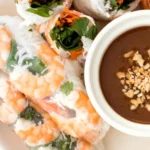
Fresh Vietnamese Shrimp Salad Rolls with Peanut Sauce
- Total Time: 20 minutes
- Yield: 6 salad rolls 1x
- Diet: Gluten Free
Description
Fresh, light, healthy, and bursting with flavor, Vietnamese Salad Rolls with Shrimp are a refreshing dish you’ll want to make on repeat all summer long. Filled with tender shrimp, soft vermicelli noodles, crisp vegetables, and fragrant herbs, then wrapped in delicate rice paper, they’re as beautiful as they are delicious. Served with a creamy homemade peanut sauce, every bite is a perfect balance of fresh, savory, and tangy.
Ingredients
- 9 large shrimp, peeled and deveined
- 1 cup thin rice vermicelli noodles
- 6 (8.5 inch) rice wrappers
- 1 cup carrots, shredded
- 1/3 cup cilantro, loosely chopped
- 3 tablespoons fresh basil, chopped
- 3 tablespoons fresh mint, chopped
- 2 tablespoons hoisin sauce (or black bean sauce)
- 1 tablespoon peanut butter
- 1 tablespoon water
- 1/2 tablespoon fresh lime juice
- 1/2 tablespoon honey (or granulated sugar)
- 1 tablespoon roasted peanuts, chopped
Instructions
- Step: Bring a medium pot of water to a boil over high heat. Add the shrimp and cook for 3-5 minutes until pink and opaque. Do not overcook, as this can make them tough. Drain and immediately run under cold water to cool. Once cool enough to handle, slice each shrimp in half lengthwise.
- Step: Prepare the vermicelli noodles. Bring a separate pot of water to a boil over high heat. Add the vermicelli noodles and cook for 2 minutes until tender. Drain well using a strainer, then rinse under cold water to stop the cooking. Shake off any excess water.
- Step: Fill a large shallow bowl or dish with warm water, about 1–2 inches deep. Working with one wrapper at a time, quickly dip it into the warm water for 1–2 seconds, or according to package instructions. Shake off excess water and place the softened wrapper on a clean, dry, flat surface.
- Step: Arrange 2 tablespoons of vermicelli noodles in the center of the wrapper in a horizontal log shape, leaving about 2 inches of space on each side. Place 3 shrimp halves, pink side down, in a row just above the noodles. Add 2 tablespoons of shredded carrots in a row just below the noodles. Place 1 tablespoon of cilantro, ½ tablespoon of basil, and ½ tablespoon of mint on top of the shrimp.
- Step: Starting from the bottom, roll the wrapper up tightly but gently over the noodles. Fold the left and right sides inward, then continue rolling until sealed. If the wrapper feels too dry or stiff, lightly moisten your fingers and the wrapper to help soften.
- Step: In a small mixing bowl, combine hoisin sauce, peanut butter, water, lime juice, and honey. Stir until smooth and well combined. Sprinkle chopped roasted peanuts on top for garnish.
Notes
Customize the ingredients: You can choose your favourite vegetables or meat. Popular choices include cucumbers, cabbage, lettuce, avocado, firm tofu, and shredded chicken. Storage: Wrap each roll individually in plastic wrap or store in an airtight container lined with damp paper towels. Refrigerate for up to 24-48 hours.
- Prep Time: 15 minutes
- Cook Time: 5 minutes
- Category: Appetizer
- Method: Assembly Line
- Cuisine: Vietnamese
Nutrition
- Serving Size: 1 salad roll
- Calories: 210 kcal
- Sugar: 7 g
- Sodium: 450 mg
- Fat: 9 g
- Saturated Fat: 2 g
- Unsaturated Fat: 7 g
- Trans Fat: 0 g
- Carbohydrates: 24 g
- Fiber: 3 g
- Protein: 11 g
- Cholesterol: 65 mg
Keywords: Vietnamese Salad Rolls, shrimp spring rolls, summer rolls, rice paper rolls, peanut dipping sauce, gluten-free appetizer