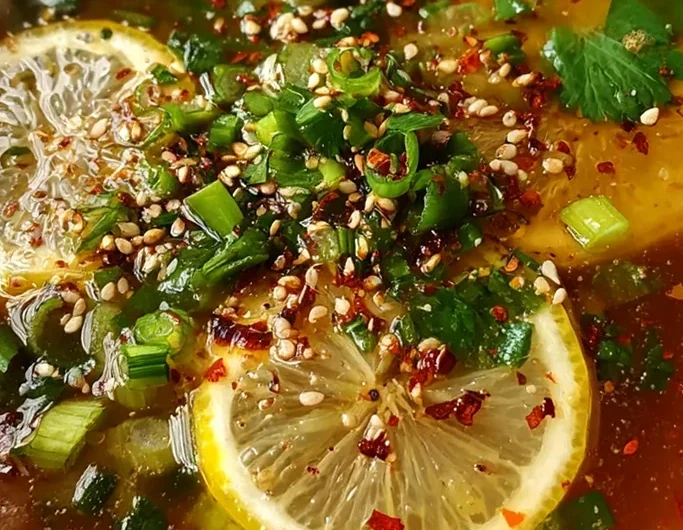
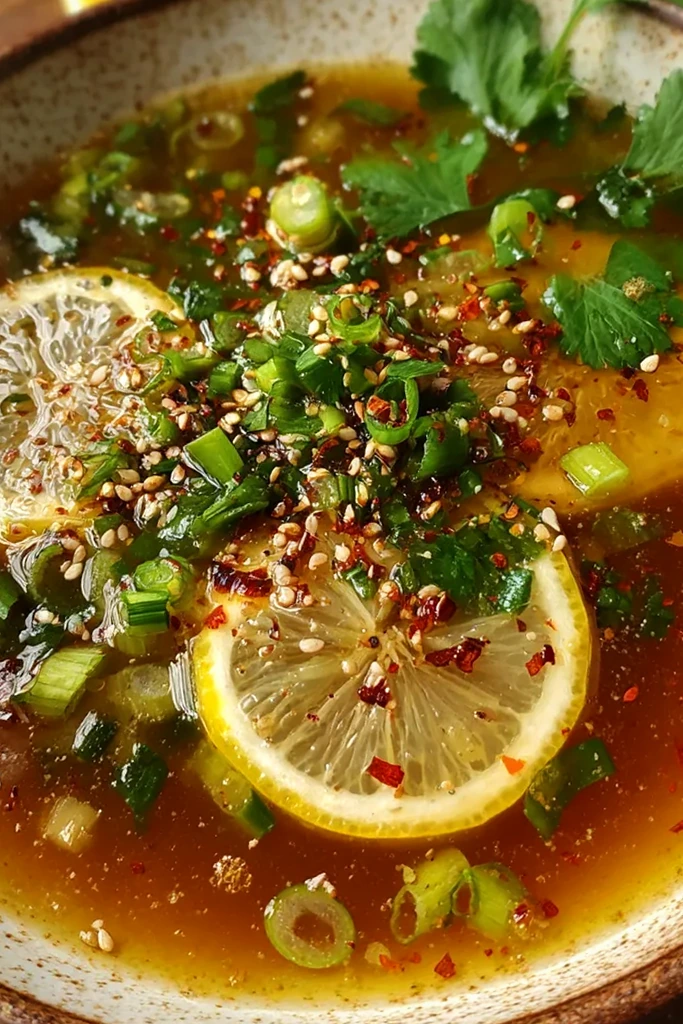
This Miso-Ginger Lemon Detox Broth is a deeply nourishing, restorative elixir that balances vibrant citrus notes with the rich, savory depth of fermented miso. It is designed to be a light yet flavorful tonic that provides gentle heat and digestive support. Whether you need a soothing afternoon pick-me-up or a foundation for a nutrient-dense lunch, this broth delivers warmth in every sip.
List of ingredients
- 4 cups vegetable broth
- 2 tablespoons miso paste (preferably white or yellow)
- 1 tablespoon fresh ginger, grated
- 2 cloves garlic, minced
- 1 tablespoon soy sauce or tamari
- Juice of 1 lemon
- 1 tablespoon sesame oil
- 1/2 teaspoon red pepper flakes (optional)
- 1/4 cup green onions, chopped
- 1 tablespoon fresh cilantro, chopped (optional)
- Salt and pepper to taste
step-by-step instructions
- Step: In a medium-sized pot, bring the vegetable broth to a gentle simmer over medium heat.
- Step: Add the grated ginger and minced garlic to the pot, allowing them to infuse their flavors into the broth for about 5 minutes.
- Step: While the broth simmers, take a small bowl and mix the miso paste with a few tablespoons of hot broth. Stir until the miso is fully dissolved and smooth.
- Step: Pour the dissolved miso mixture back into the pot, stirring well to combine.
- Step: Add the soy sauce (or tamari), lemon juice, sesame oil, and red pepper flakes (if using) to the broth. Stir to ensure all ingredients are well mixed.
- Step: Allow the broth to simmer for an additional 5-10 minutes to meld the flavors together. Taste and adjust seasoning with salt and pepper as desired.
- Step: When ready to serve, ladle the broth into bowls and garnish with chopped green onions and fresh cilantro, if using.
Refining the Flavor Profile
Balancing the Miso Intensity
Miso is a potent ingredient that changes flavor based on its color and fermentation length. White miso is sweeter and lighter, while darker varieties offer a more robust, intense saltiness that can easily overpower delicate ingredients. If you choose a darker miso, start with a smaller quantity and add more only after tasting the broth thoroughly.
Selecting the Right Vegetable Base
Since this broth relies on a simple list of components, the quality of your vegetable broth makes a significant difference in the final outcome. Homemade vegetable stock or a low-sodium store-bought brand will give you the most control over the salinity of the dish. Avoid overly salty pre-made stocks, as the miso and soy sauce will add sufficient saltiness on their own.
Preparation and Culinary Techniques
Importance of Temperature Control
The primary rule when working with miso is to avoid boiling it after it has been added to the pot. Boiling can degrade the live probiotic cultures found in raw miso and may cause the flavor to become overly sour or scorched. Always stir your miso into the broth after it has been removed from high heat or while the liquid is at a very low simmer.
Maximizing Ginger and Garlic Infusion
To get the most out of your ginger and garlic, ensure they are finely grated or minced so they can release their essential oils into the broth efficiently. If you prefer a smoother texture, you can strain the broth through a fine-mesh sieve after the initial 5-minute infusion period. This leaves the spicy, aromatic base intact while removing the fibrous pieces of ginger and garlic.
Adding Substance to the Bowl
Building a Nutrient-Dense Meal
While this broth is excellent as a light starter, it can easily transition into a main course by adding various vegetables and proteins. Sliced shiitake mushrooms, baby spinach, or bok choy wilt beautifully in the hot broth during the final few minutes of simmering. For added heartiness, incorporate cooked soba noodles, rice vermicelli, or cubes of silken tofu to provide a satisfying, well-rounded lunch.
Textural Enhancements
Playing with textures can make a simple soup feel more like a gourmet experience. Toasted sesame seeds, paper-thin slices of fresh radish, or even a small handful of crushed roasted peanuts can provide a necessary crunch against the smooth broth. These additions should be added as a garnish right at the end to ensure they retain their structural integrity.
Storage and Reheating Guidelines
Extending the Life of Your Broth
If you find yourself with extra broth, store it in an airtight glass container once it has cooled to room temperature. It will stay fresh in the refrigerator for up to three days, allowing the flavors to continue to develop over time. Always ensure the container is tightly sealed to prevent the pungent aromatics from affecting other foods in your fridge.
Techniques for Gentle Reheating
When you are ready to enjoy your stored broth, avoid the microwave if possible, as it can heat unevenly and damage the delicate balance of the ingredients. Reheat the broth on the stovetop over low heat, stirring occasionally until it reaches the desired temperature. If the broth seems too thick or salty upon storage, whisk in a tablespoon of hot water to revive its consistency and clarity.
Common Queries
Can I make this broth in larger batches for the week?
Yes, this broth is a fantastic candidate for meal prepping and scales easily to larger quantities. Simply multiply the ingredients, prepare as directed, and portion the broth into individual jars. When you are ready to serve, just grab a jar, heat it up, and add your fresh toppings.
What is the best way to handle the optional red pepper flakes?
If you are sensitive to heat, you can start with a tiny pinch of red pepper flakes or leave them out entirely. For those who enjoy a more dynamic spice profile, you can swap the flakes for a fresh chili pepper, thinly sliced, or use a dash of a chili-infused oil. Add the heat during the final stage of cooking to ensure the spiciness permeates the broth without becoming harsh.
How do I make the broth more protein-rich?
To add protein without compromising the lightness of the dish, you can poach an egg directly in the simmering broth for the last 3 minutes of cooking. Alternatively, stir in precooked edamame or finely diced cooked chicken breast right before serving. These proteins pair naturally with the savory umami base provided by the miso and soy sauce.
Is this broth suitable for different dietary requirements?
This recipe is naturally plant-based and can be made entirely gluten-free by ensuring your tamari and miso are both certified gluten-free. Many misos are fermented with rice or soybeans, but some brands include barley, so checking the label is essential for those with gluten sensitivities. The recipe is also naturally free from animal fats, making it a clean and refreshing option for various wellness-focused diets.
Health and Wellness Considerations
Understanding Miso Benefits
Miso is highly regarded for its role in traditional diets, particularly due to the fermentation process that creates beneficial probiotics. By keeping the miso intake moderate and avoiding excessive heat, you preserve the integrity of these nutrients. It adds a complex, earthy flavor that makes the broth feel satisfying and substantial despite its low caloric density.
The Role of Ginger and Lemon
The combination of ginger and lemon is a classic pairing for a reason, as both ingredients are valued for their intense flavor and traditional use in soothing the digestive system. Ginger provides a warming sensation that can help clear the senses, while the citric acid in lemon provides a bright finish that acts as a natural palate cleanser. Together, they create a balanced flavor profile that is both stimulating and deeply comforting.
Print
Miso-Ginger Lemon Detox Broth
- Total Time: PT25M
- Yield: 4 servings 1x
- Diet: Vegan
Description
Warm miso melds with fiery ginger and bright lemon juice in this light, savory broth. Each spoonful offers gentle heat, a citrus lift and gut-friendly probiotics, perfect for sipping or building a heartier soup.
Ingredients
- 4 cups vegetable broth
- 2 tablespoons miso paste (preferably white or yellow)
- 1 tablespoon fresh ginger, grated
- 2 cloves garlic, minced
- 1 tablespoon soy sauce or tamari
- Juice of 1 lemon
- 1 tablespoon sesame oil
- 1/2 teaspoon red pepper flakes (optional)
- 1/4 cup green onions, chopped
- 1 tablespoon fresh cilantro, chopped (optional)
- Salt and pepper to taste
Instructions
- Step: In a medium-sized pot, bring the vegetable broth to a gentle simmer over medium heat.
- Step: Add the grated ginger and minced garlic to the pot, allowing them to infuse their flavors into the broth for about 5 minutes.
- Step: While the broth simmers, take a small bowl and mix the miso paste with a few tablespoons of hot broth. Stir until the miso is fully dissolved and smooth.
- Step: Pour the dissolved miso mixture back into the pot, stirring well to combine.
- Step: Add the soy sauce (or tamari), lemon juice, sesame oil, and red pepper flakes (if using) to the broth. Stir to ensure all ingredients are well mixed.
- Step: Allow the broth to simmer for an additional 5-10 minutes to meld the flavors together. Taste and adjust seasoning with salt and pepper as desired.
- Step: When ready to serve, ladle the broth into bowls and garnish with chopped green onions and fresh cilantro, if using.
Notes
This broth can be enjoyed warm as a soothing drink or used as a base for other soups. You can add other vegetables, like mushrooms or spinach, for added nutrition. Miso is packed with probiotics, making this broth great for gut health. Adjust the amount of ginger and garlic to your liking for a more robust flavor.
- Prep Time: PT10M
- Cook Time: PT15M
- Category: Soups
- Method: Simmering
- Cuisine: Fusion
Nutrition
- Serving Size: 1 cup
- Calories: 65 kcal
- Sugar: 2 g
- Sodium: 750 mg
- Fat: 3.5 g
- Saturated Fat: 0.5 g
- Unsaturated Fat: 2.8 g
- Trans Fat: 0 g
- Carbohydrates: 6 g
- Fiber: 1 g
- Protein: 2 g
- Cholesterol: 0 mg
Keywords: miso, ginger, lemon, detox, broth, soup, gut health, vegan