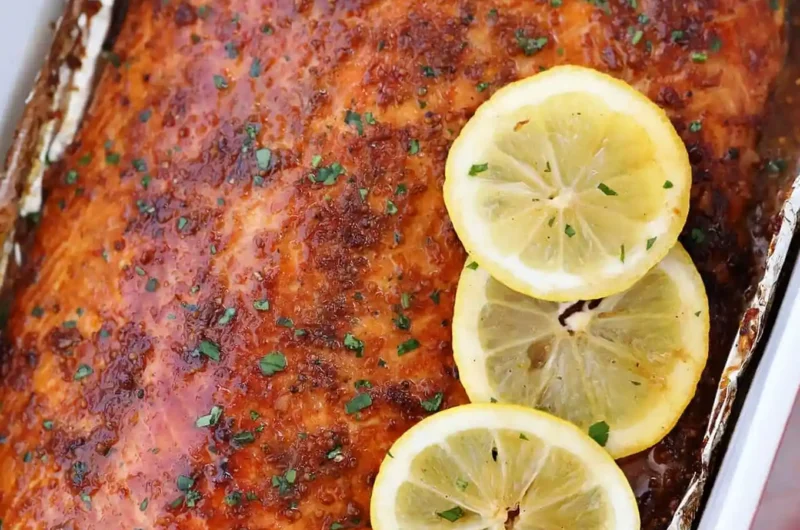
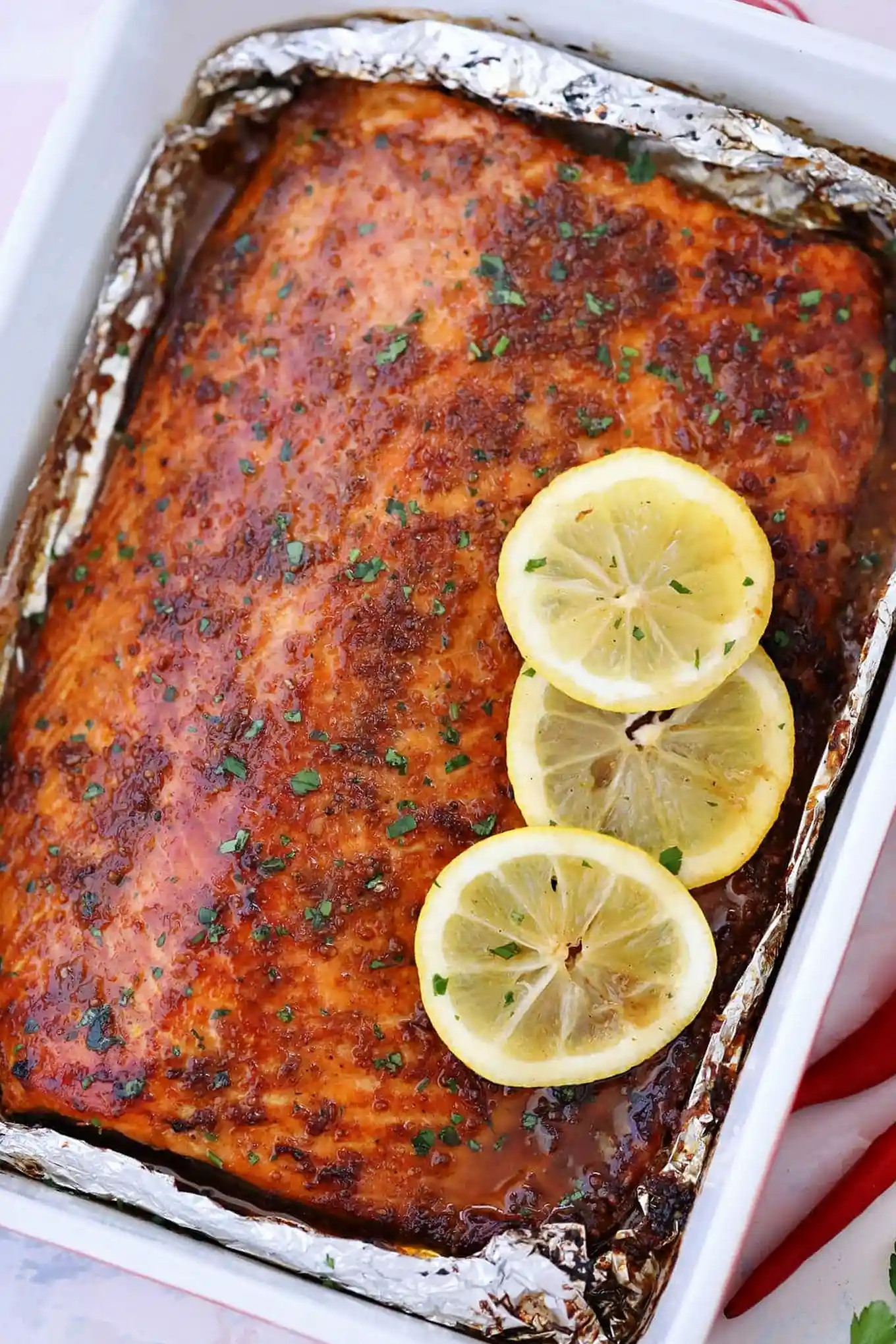
This honey and garlic glazed salmon is a quick, flavorful dinner that balances sweetness with tangy citrus. The foil-packet method ensures the fish remains moist and tender throughout the baking process.
List of ingredients
- 2 pounds salmon – center cut or whole filet.
- 2 tablespoons olive oil – helps with moisture and heat distribution.
- 1/4 cup brown sugar – provides sweetness and helps with caramelization.
- 1/4 cup soy sauce – adds a savory, salty depth.
- 2 tablespoons unsalted butter (optional) – adds richness to the finish.
- 1/4 cup honey – creates a thick, sticky glaze.
- 5 cloves garlic, minced – provides a sharp, aromatic flavor.
- 2 tablespoons stone ground mustard – adds a tangy, slightly spicy note.
- Zest of one orange – introduces bright citrus oils.
- Juice of one lemon – provides acidity to balance the sugar.
- 1/4 cup orange juice – adds fruitiness and liquid volume.
- Salt and pepper to taste – essential for basic seasoning.
step-by-step instructions
- Preheat: Set your oven to 350 degrees Fahrenheit to ensure it is fully heated before the fish goes in.
- Prepare Tray: Line a baking sheet with aluminum foil and place the salmon skin-side down. Sprinkle the fish with salt and pepper for base seasoning.
- Create Pocket: Fold up the sides of the aluminum foil around the salmon to create a containment pocket that seals in moisture.
- Mix Glaze: In a medium bowl, whisk together the olive oil, brown sugar, soy sauce, honey, garlic, stone ground mustard, orange zest, lemon juice, and orange juice.
- Apply Sauce: Pour the prepared glaze over the salmon and then spread the optional butter across the top of the fish.
- Seal: Cover the salmon with another piece of aluminum foil and seal the edges tightly to trap the steam.
- Bake: Transfer the dish to the oven and bake for about 20-25 minutes. Be careful not to overcook the fish to maintain its tenderness.
- Caramelize: Uncover the foil from the top and baste the salmon with more sauce and butter. Place under the broiler for 2-3 minutes until the surface is brown and caramelized.
- Serve: Remove from the oven and serve immediately with a side of salad, greens, or steamed vegetables.
Cooking Success Tips
Temper the Salmon Before Baking
Remove the salmon from the refrigerator about 15 minutes before you begin cooking. This allows the fish to reach a more uniform temperature, which ensures that the center cooks through at the same rate as the exterior.
Monitor the Broiling Process
Because this recipe uses brown sugar and honey, the glaze can transition from caramelized to burnt very quickly. Keep a close eye on the fish during the final 2-3 minutes under the broiler to prevent the sugars from scorching.
Use Freshly Minced Garlic
For the best flavor profile, use fresh garlic cloves rather than pre-minced jarred garlic. Fresh garlic provides a sharper, more authentic aroma that cuts through the sweetness of the honey and brown sugar.
Select Heavy Duty Foil
Using a heavy-duty aluminum foil prevents the packet from tearing or leaking during the baking process. A secure seal is critical for steaming the fish in its own juices and the glaze.
Ingredient Substitutions
Coconut Aminos for Soy Sauce
For those avoiding soy, coconut aminos are an excellent alternative. They offer a similar savory and salty profile but with a slightly sweeter taste and lower sodium content.
Maple Syrup instead of Honey
If you prefer a deeper, woodsy sweetness, maple syrup can be used in place of honey. Use the same measurement to maintain the consistency and sugar balance of the glaze.
Fresh Lime for Lemon Juice
While lemon juice is standard for acidity, fresh lime juice provides a zesty, tropical twist. This pairs exceptionally well with the orange juice and zest already present in the recipe.
Dijon Mustard for Stone Ground
If stone ground mustard is unavailable, Dijon mustard is a suitable replacement. It has a smoother texture but provides the same necessary tang to balance the glaze.
Recipe Variations
Cooking Individual Fillets
While baking a whole filet is visually impressive, you can easily cut the salmon into individual portions before starting. Simply place the portions on the foil with a small gap between them to ensure the glaze surrounds each piece.
Preparing Skinless Salmon
You can remove the skin before cooking if you prefer a different texture or presentation. The foil-packet method still keeps the fish moist, so the absence of skin will not negatively impact the juiciness.
Adding Roasted Vegetables
Turn this into a complete one-pan meal by adding thin asparagus spears or sliced carrots into the foil packet. Place the vegetables around the salmon so they can soak up the glaze as they roast in the oven.
Adding Fresh Herbs
To add a layer of freshness, garnish the finished fish with chopped fresh dill or parsley. These herbs provide a bright, herbal contrast that balances the rich sweetness of the glaze.
Serving Ideas
Pairing with Grains and Starches
This salmon pairs perfectly with fluffy white rice, quinoa, or creamy mashed potatoes. These sides are ideal for soaking up the excess glaze and pan juices from the bottom of the foil packet.
Balanced Green Side Dishes
A simple side of baby spinach or an arugula salad with a light vinaigrette provides a refreshing contrast. The slight bitterness of the greens balances the sugar in the glaze effectively.
Complementary Steamed Vegetables
Broccolini, steamed carrots, or sautéed kale provide necessary nutrients and a pop of color to the plate. Lightly seasoning them with salt and lemon juice complements the flavors of the salmon.
Serving with Fresh Fruit
A side of mango salsa or sliced avocado adds a creamy, tropical element to the meal. The acidity of the mango or the richness of the avocado pairs well with the orange notes in the sauce.
Storage and Reheating
Refrigeration Guidelines
Store leftover salmon in an airtight glass container in the refrigerator for up to three days. Ensure the fish is fully cooled before sealing the lid to prevent excess moisture from building up inside the container.
Gentle Reheating Methods
To avoid drying out the fish, reheat leftovers in a low oven around 275 degrees or in an air fryer. Heat just until warmed through, as overcooking salmon a second time can make it tough and rubbery.
Avoiding the Microwave
Avoid reheating the salmon in a microwave, as this often leads to uneven heating and an unpleasant fishy odor. A slow heat in the oven preserves the texture of the glaze and the flake of the fish.
Freezing Considerations
It is generally not recommended to freeze salmon after it has been cooked and glazed. The texture of the fish and the consistency of the sugar-based glaze often degrade during the freezing and thawing process.
Troubleshooting Common Issues
Salmon is Too Dry
If the fish feels dry, it was likely left in the oven too long. Use a meat thermometer to check for an internal temperature of 145 degrees Fahrenheit, or remove it slightly earlier and let it carry over.
Glaze is Too Thin
If the sauce hasn’t thickened enough, you can simmer the leftover glaze in a small saucepan over medium heat. Stir constantly for a few minutes until it reduces into a thick syrup before pouring it over the fish.
Salmon Sticking to Foil
To prevent the fish from sticking to the foil, you can place a piece of parchment paper between the salmon and the aluminum foil. This creates a non-stick barrier while still allowing the foil to seal the steam inside.
Too Much Sweetness
If the glaze tastes too sweet, add an extra squeeze of fresh lemon juice or a pinch more salt. The acidity and salinity will help balance the brown sugar and honey.
Choosing the Right Salmon
Wild Caught vs Farmed Salmon
Wild-caught salmon, such as Sockeye, often has a bolder flavor and a deeper red color. Farmed Atlantic salmon is generally milder and has a higher fat content, which can make the fish even more moist.
Fillets versus Steaks
Fillets are the most common choice for this recipe due to their uniform thickness. If using salmon steaks, which include the bone, you may need to increase the baking time by 5-10 minutes to ensure the center is cooked.
Handling Frozen Salmon
If using frozen salmon, thaw it completely in the refrigerator for 24 hours before cooking. Thawing the fish slowly prevents the cell structure from breaking down, which keeps the texture firm.
Glaze Chemistry and Flavor
The Role of the Maillard Reaction
The final broiling step triggers the Maillard reaction, where the sugars and proteins interact under high heat. This creates the characteristic brown crust and deep, complex flavors associated with caramelized glazes.
Balancing Sweet and Sour
The combination of orange juice, lemon juice, and soy sauce creates a balanced flavor profile. The acidity cuts through the richness of the butter and the intensity of the brown sugar.
Viscosity and Honey
Honey acts as a thickening agent in the glaze, providing a glossy appearance. When heated, it reduces and clings to the fish, ensuring every bite is coated in flavor.
Make-Ahead Advice
Prepping the Glaze Early
You can whisk the glaze ingredients together up to 24 hours in advance. Store the mixture in a sealed jar in the refrigerator and give it a good shake before pouring it over the salmon.
Marinating the Fish
For a deeper flavor infusion, you can let the salmon sit in the glaze for 30 minutes before sealing the foil. Avoid marinating for too long, as the acid in the lemon and orange juice can start to break down the fish.
Organizing the Baking Tray
You can line your baking sheet and prepare the foil pocket in advance. This streamlines the process, allowing you to simply add the fish and sauce when you are ready to cook.
Frequently Asked Questions
What is the best type of salmon for this recipe?
Sockeye or King salmon are excellent choices because of their high fat content, which prevents the fish from drying out. However, Atlantic salmon is widely available and works perfectly with this glaze.
Can I make this in an air fryer?
Yes, you can air fry the salmon at 380 degrees for about 10-12 minutes. Skip the foil packet and brush the glaze on during the last few minutes to prevent the sugars from burning.
How do I know when the salmon is officially done?
The salmon is done when it flakes easily with a fork and reaches an internal temperature of 145 degrees Fahrenheit. The center should be opaque rather than translucent.
Can I use a different type of sugar?
Coconut sugar or maple sugar can be used as alternatives to brown sugar. These options provide a similar depth of flavor and caramelization properties during the broiling phase.
Print
Garlic Brown Sugar Glazed Salmon
- Total Time: 30 minutes
- Yield: 4 servings 1x
- Diet: General
Description
Garlic Brown Sugar Glazed Salmon is amazingly flavorful and an easy weeknight dinner to make. The salmon is infused with garlic and honey, then sealed in foil and baked to perfection.
Ingredients
- 2 pounds salmon
- 2 tablespoons olive oil
- ¼ cup brown sugar
- ¼ cup soy sauce
- 2 tablespoons unsalted butter (optional)
- 1/4 cup honey
- 5 cloves garlic (minced)
- 2 tablespoons stone ground mustard
- zest of one orange
- juice of one lemon
- 1/4 cup orange juice
- salt and pepper to taste
Instructions
- Preheat: Preheat oven to 350 degrees.
- Prepare: Then, line a baking sheet with aluminum foil and transfer the fish into it with skin side down. Sprinkle with salt and pepper.
- Fold: Fold up the sides of the aluminum foil around the salmon.
- Glaze: In a medium bowl whisk together all the ingredients except butter. Pour the glaze over the salmon and then spread the butter over the fish.
- Seal: Top the salmon with aluminum foil and seal.
- Bake: Transfer the dish to the oven and bake for about 20-25 minutes. Keep an eye not to overcook it.
- Broil: Lastly, uncover the foil off of the top and baste the salmon with some more sauce and butter and put on broil. Broil for 2-3 minutes or until brown and caramelized.
- Serve: Serve with a salad, greens, or veggies.
Notes
Remove fish from the fridge 15 minutes before you’re ready to start cooking. When broiling, be careful not to burn it; the glaze only needs 2-3 minutes to thicken. You may add dill or parsley for extra flavor, or bake the fish without skin if preferred.
- Prep Time: 5 minutes
- Cook Time: 25 minutes
- Category: Main Course
- Method: Baking
- Cuisine: American
Nutrition
- Serving Size: 1 serving
- Calories: 414 kcal
- Sugar: 17 g
- Sodium: 780 mg
- Fat: 24 g
- Saturated Fat: 4 g
- Unsaturated Fat: 20 g
- Trans Fat: 0 g
- Carbohydrates: 16 g
- Fiber: 0 g
- Protein: 46 g
- Cholesterol: 110 mg
Keywords: Garlic Brown Sugar Glazed Salmon, baked salmon, honey garlic salmon