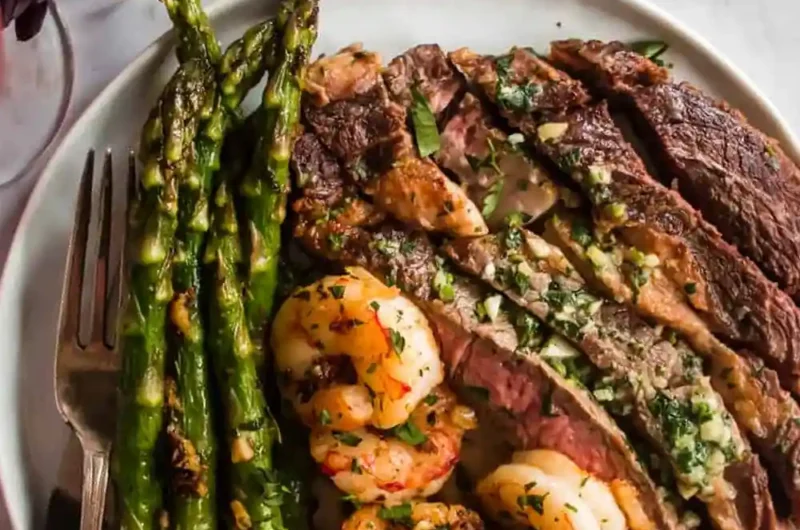
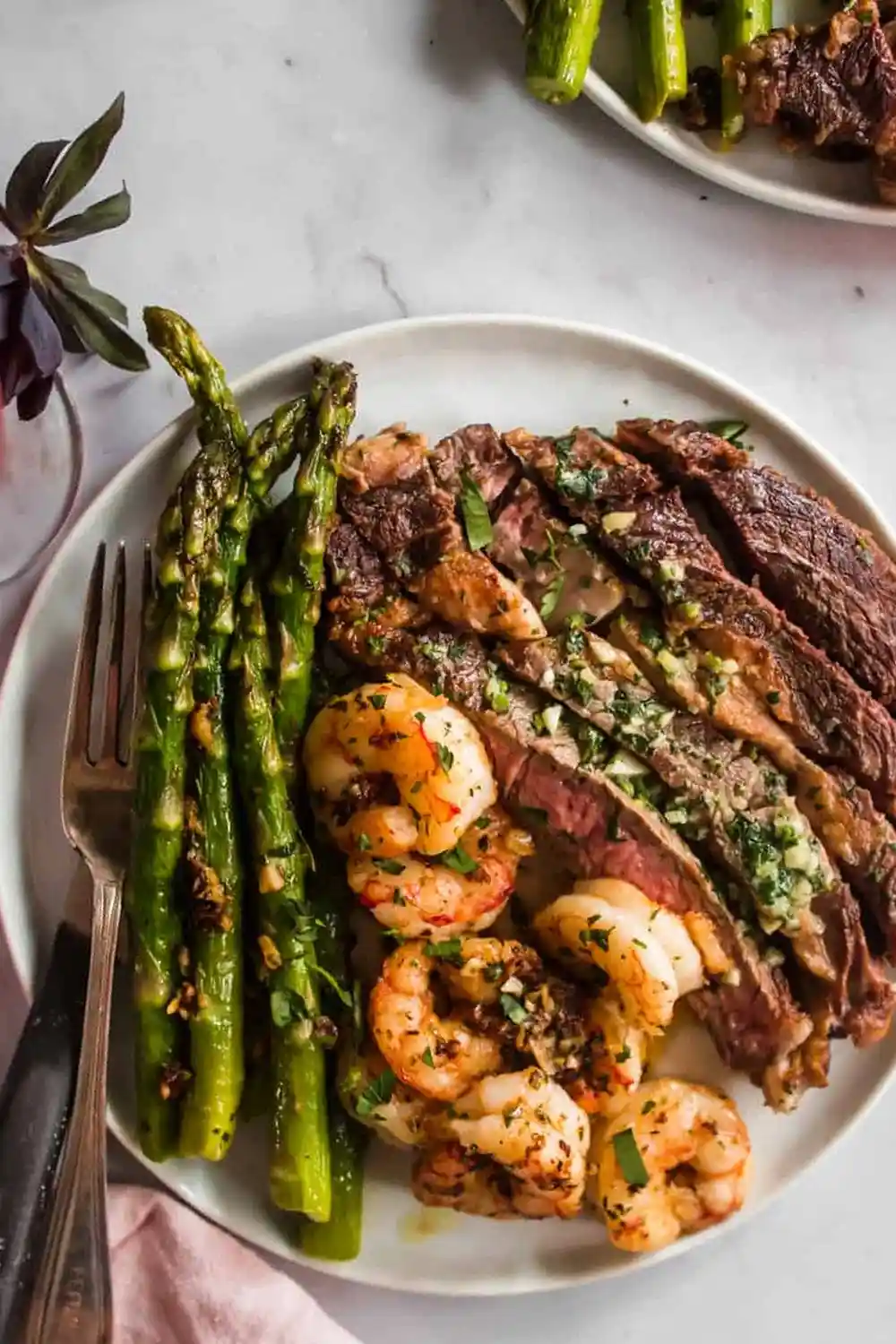
Create a restaurant-quality surf and turf experience at home with this rich and savory garlic butter ribeye steak and shrimp. This meal combines tender beef with succulent seafood for a high-protein dinner that is both elegant and satisfying.
List of ingredients
- 1 beef Ribeye Steak – a well-marbled cut for maximum juiciness.
- 16 extra-large shrimp – deveined, with tails left on or removed per preference.
- 5 tbsp unsalted butter – softened and divided for the compound butter and pan searing.
- 3 cloves garlic – finely chopped for an aromatic base.
- 2 tbsp fresh parsley – chopped to add brightness and color.
- 3 tbsp olive oil – divided for searing the meat, shrimp, and vegetables.
- 12 spears asparagus – trimmed to remove woody ends.
- sea salt – to taste for seasoning all components.
step-by-step instructions
- Prepare the shrimp: Ensure your shrimp are completely thawed at least 30 minutes before you begin cooking.
- Create the garlic butter: In a small bowl, mix 4 tablespoons of softened butter, chopped garlic, and parsley. Cover the mixture and keep it refrigerated until needed for the final drizzle.
- Prepare the pan and meat: Heat a large cast iron or grill pan over high heat and lightly grease with oil. Pat the ribeye steak dry with paper towels, brush each side with 1/2 tablespoon of olive oil, and season generously with sea salt.
- Sear the ribeye: Cook the steak for 3-5 minutes per side until it reaches your preferred doneness, using a meat thermometer for accuracy. Move the steak to a warm plate, top with 1 tablespoon of butter, cover loosely with foil, and let it rest for at least 5 minutes.
- Cook the asparagus: Wipe the pan clean and melt 2 tablespoons of butter with 1 tablespoon of olive oil over medium-low heat. Add the asparagus and 4 tablespoons of water, cooking for 5 minutes while rotating the spears; season with salt and move to a serving platter.
- Sear the shrimp: Season the shrimp with salt on both sides. Wipe the pan again, heat to medium, and melt the remaining 2 tablespoons of butter and 1 tablespoon of olive oil. Cook the shrimp for 2-3 minutes per side until they are pink on the outside and opaque white inside.
- Final assembly: Place the shrimp on the platter with the asparagus. Slice the rested steak into thin strips against the grain and add to the platter. Drizzle the entire dish with the remaining pan juices and the melted herbed garlic butter.
Choosing the Perfect Beef Cut
The Benefits of Ribeye Steak
Ribeye is ideal for this recipe because of its high fat content and intramuscular marbling. This fat renders during the searing process, providing a rich flavor and ensuring the meat remains juicy even at medium doneness. It is widely considered one of the most flavorful cuts of beef available.
Alternative Steak Options
If you prefer a leaner profile, you can substitute the ribeye with a New York Strip or a Sirloin steak. For a more bone-in experience, a T-bone or Porterhouse steak works well, though these may require slightly longer cooking times. Regardless of the cut, always choose a steak at least 1 to 1.5 inches thick for the best sear.
Understanding Steak Thickness
Thicker steaks allow for a deep brown crust on the outside while keeping the center rare or medium-rare. Very thin steaks can overcook quickly, so adjust your searing time accordingly. For steaks thicker than 2 inches, consider finishing them in the oven after the initial pan sear.
Preparing High-Quality Seafood
Safe Thawing Methods for Shrimp
Always thaw frozen shrimp slowly in the refrigerator overnight for the best texture. If you are short on time, place them in a sealed bag and submerge them in a bowl of cold water, changing the water every 30 minutes. Avoid using warm water as it can compromise the texture and safety of the seafood.
The Importance of Deveining
Deveining involves removing the digestive tract from the back of the shrimp, which ensures a clean taste and better texture. You can use a small paring knife to make a shallow slit along the back to pull out the vein. Many store-bought shrimp come pre-deveined, which simplifies the preparation process.
Tail-On versus Tail-Off
Leaving the tails on provides a more professional, restaurant-style presentation and gives you a convenient handle for dipping. However, removing the tails makes the shrimp easier to eat in a single bite. Choose the option that best suits your serving style and guest preferences.
Mastering the Pan-Searing Technique
Achieving a Perfect Crust
The key to a great steak is the Maillard reaction, which occurs when proteins and sugars brown under high heat. Ensure your pan is smoking hot before the meat hits the surface. This creates a savory, caramelized crust that locks in the juices and adds depth to the flavor.
Removing Surface Moisture
Moisture is the enemy of a good sear because it creates steam, which prevents the meat from browning. Always pat your steak and shrimp dry with paper towels immediately before seasoning. This ensures the oil and heat interact directly with the protein for a crispier finish.
The Necessity of Resting Meat
Resting the steak allows the muscle fibers to relax and the juices to redistribute throughout the meat. If you cut into a steak immediately after cooking, the juices will run out onto the board, leaving the meat dry. Tenting with foil keeps the meat warm while it rests for 5 to 10 minutes.
Customizing Vegetables and Garnishes
Substituting the Asparagus
While asparagus is a classic pairing, you can use other green vegetables like broccolini, sautéed spinach, or trimmed green beans. Follow the same method of sautéing in butter and olive oil with a splash of water. These alternatives provide a similar snap and nutritional balance to the meal.
Exploring Different Herb Pairings
Fresh parsley provides a clean, peppery finish, but you can experiment with other herbs. Thyme and rosemary are excellent choices for the garlic butter if you want a more earthy, woody aroma. For a citrusy twist, add a teaspoon of lemon zest to the butter mixture.
Garlic Variations for Added Depth
If you find raw chopped garlic too pungent, you can use roasted garlic cloves mashed into a paste. Garlic powder can be used as a substitute if fresh garlic is unavailable, though it lacks the same aromatic punch. Always keep the heat moderate when adding garlic to a pan to avoid burning it.
Serving and Plating Suggestions
Slicing Techniques for Tenderness
To ensure every bite is tender, always slice your steak against the grain. Identify the direction of the muscle fibers and cut perpendicular to them. This shortens the fibers, making the meat much easier to chew and more enjoyable to eat.
Creating an Elegant Platter
Arrange the steak strips in the center of a large platter and surround them with the seared shrimp and asparagus. This visual arrangement highlights the ‘surf and turf’ nature of the dish. The final drizzle of melted garlic butter over everything ties the components together visually and flavorfully.
Complementary Side Dishes
To make this a full feast, serve the platter with a side of creamy cauliflower mash or garlic mashed potatoes. A light Mediterranean salad with lemon vinaigrette can cut through the richness of the butter. For a more indulgent meal, consider adding seared scallops to the plate.
Storage and Food Safety
Refrigerating Leftovers
Store any leftover steak, shrimp, and asparagus in separate airtight containers to maintain their individual textures. Ensure the food has cooled slightly before sealing to prevent excess condensation. Label the containers with the date to ensure you use them within the safe window.
Maximum Storage Duration
Cooked beef and seafood should be consumed within 3 to 4 days when kept in a refrigerator at or below 40°F (4°C). Shrimp can lose their texture more quickly than beef, so prioritize eating the seafood first. If you notice any off-smells or sliminess, discard the food immediately.
Freezing Considerations
It is generally not recommended to freeze cooked ribeye or shrimp, as the reheating process often makes them tough and rubbery. The high butter content in the sauce can also separate during freezing and thawing. For the best quality, prepare only what you plan to eat within a few days.
Effective Reheating Methods
Using the Oven for Beef
To reheat steak without overcooking it, place it in a low-temperature oven (about 250°F or 120°C) on a baking sheet. Heat it gently until it is warmed through, which prevents the meat from becoming tough. This method preserves the internal temperature better than high-heat options.
Stovetop Warming for Shrimp
Shrimp overcook very easily, so the best way to reheat them is in a skillet over medium-low heat. Add a small knob of butter and warm the shrimp for only 1-2 minutes. Avoid heating them until they curl tightly, as this is a sign they are becoming rubbery.
Microwave Precautions
Avoid using the microwave for this dish if possible, as it often creates uneven hot spots and toughens the proteins. If you must use a microwave, use a low power setting and heat in short 30-second bursts. Cover the dish with a damp paper towel to help retain moisture.
Troubleshooting Common Cooking Issues
Preventing Burnt Garlic
Garlic has a low burn point and can become bitter if exposed to high heat for too long. When sautéing vegetables or shrimp, ensure the heat is at medium or medium-low. If you see the garlic turning dark brown too quickly, add a splash of water or a bit more butter to lower the pan temperature.
Identifying Overcooked Shrimp
Shrimp are finished when they turn a bright pink color and form a ‘C’ shape. If they curl tightly into an ‘O’ shape, they are likely overcooked and will be tough. Remove them from the pan the moment they become opaque to ensure a tender bite.
Handling a Stuck Steak
If the steak feels stuck to the pan when you try to flip it, leave it alone for another minute. The meat will naturally release from the pan once a proper crust has formed. Forcing the meat to flip too early can tear the surface and ruin the sear.
Frequently Asked Questions
Can I use frozen shrimp for this recipe?
Yes, you can use frozen shrimp, but they must be completely thawed and patted dry before cooking. Cooking frozen shrimp directly in the pan will release too much water, which prevents them from searing and results in a boiled texture.
How do I know when the steak is medium-rare?
The most reliable way is using an instant-read meat thermometer. For medium-rare, remove the steak from the pan when the internal temperature reaches 130-135°F (54-57°C), as the temperature will rise to about 145°F (63°C) while resting.
Is a cast iron skillet necessary for this dish?
While a cast iron skillet is preferred for its superior heat retention and ability to create a crust, any heavy-bottomed stainless steel or grill pan will work. The goal is to use a pan that can withstand high heat without warping.
Can I make the garlic butter in advance?
Yes, the compound garlic butter can be made up to two days in advance and stored in the refrigerator. This actually allows the flavors of the garlic and parsley to meld together, improving the overall taste of the sauce.
What if I don’t have a meat thermometer?
You can use the finger-poke test to estimate doneness, though it is less accurate. A medium-rare steak should feel similar to the fleshy part of your palm just below the thumb when your thumb is touching your middle finger.
Print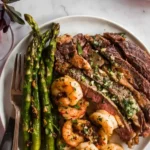
Garlic Butter Ribeye Steak and Shrimp
- Total Time: 20 minutes
- Yield: 2 servings 1x
- Diet: Keto
Description
This juicy and savory surf and turf recipe is the perfect choice for date night. Succulent Ribeye Steak and pan-seared shrimp are drizzled in creamy garlic butter to make each bite burst with flavor.
Ingredients
- 1 beef Ribeye Steak
- 16 extra-large shrimp, deveined with tails on or off
- 5 tbsp unsalted butter, softened and divided
- 3 cloves garlic, finely chopped
- 2 tbsp fresh parsley, chopped
- 3 tbsp olive oil, divided
- 12 spears asparagus, trimmed
- sea salt, to taste
Instructions
- Step: At least 30 minutes before cooking make sure your shrimp have been thawed.
- Step: Make the garlic butter by mixing 4 tablespoons of butter, garlic, and chopped parsley together in a bowl. Cover and refrigerate until ready to use.
- Step: Heat a large grill pan or cast iron pan over high heat. Lightly grease the pan with oil. Pat steaks dry with a paper towel. Brush each side lightly with ½ tbsp of oil and generously season with salt.
- Step: Sear the steak for 3-5 minutes on each side until browned and cooked to desired doneness as measured with an instant-read or oven-proof thermometer. Transfer the steak to a warm plate. Spread 1 tablespoon of butter all over the steak. Tent it with foil and let it rest for at least 5 minutes while you prep the rest.
- Step: While steaks are resting, wipe down the pan and melt 2 tablespoons of butter with 1 tablespoon of olive oil on medium-low heat. Add asparagus and 4 tablespoons of water. Cook the trimmed asparagus for 5 minutes, rotating every minute. Season with salt. Remove to serving platter.
- Step: Season shrimp with salt on both sides. Wipe down the same pan, bring the pan to medium heat, melt the remaining 2 tablespoons of butter and 1 tablespoon of olive oil. Add shrimp and cook for 2-3 minutes, flip and cook for another 2-3 minutes.
- Step: Add the shrimp to a serving plate. Cut the steak into thin strips against the grain, add to the serving platter along with shrimp and asparagus. Drizzle with the leftover pan juices and melted herbed garlic butter.
Notes
Ensure shrimp are completely thawed and patted dry before cooking. Ribeye can be replaced with Strip, Sirloin, T-bone, Eye fillet, Scotch fillet, or Porterhouse steaks. Resting the steak for 5-10 minutes is essential for tenderness and juiciness.
- Prep Time: 5 minutes
- Cook Time: 15 minutes
- Category: Dinner
- Method: Pan-searing
- Cuisine: American
Nutrition
- Serving Size: 1 serving
- Calories: 729 kcal
- Sugar: 1 g
- Sodium: 439 mg
- Fat: 66 g
- Saturated Fat: 28 g
- Unsaturated Fat: 37 g
- Trans Fat: 1 g
- Carbohydrates: 2 g
- Fiber: 1 g
- Protein: 33 g
- Cholesterol: 265 mg
Keywords: beef, dates, dinner, easy dinner, ribeye, seafood, steak, weeknight dinner