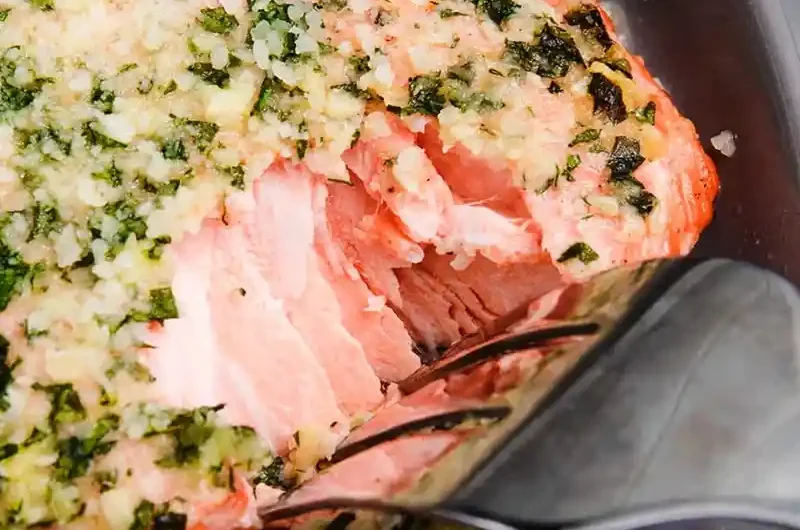
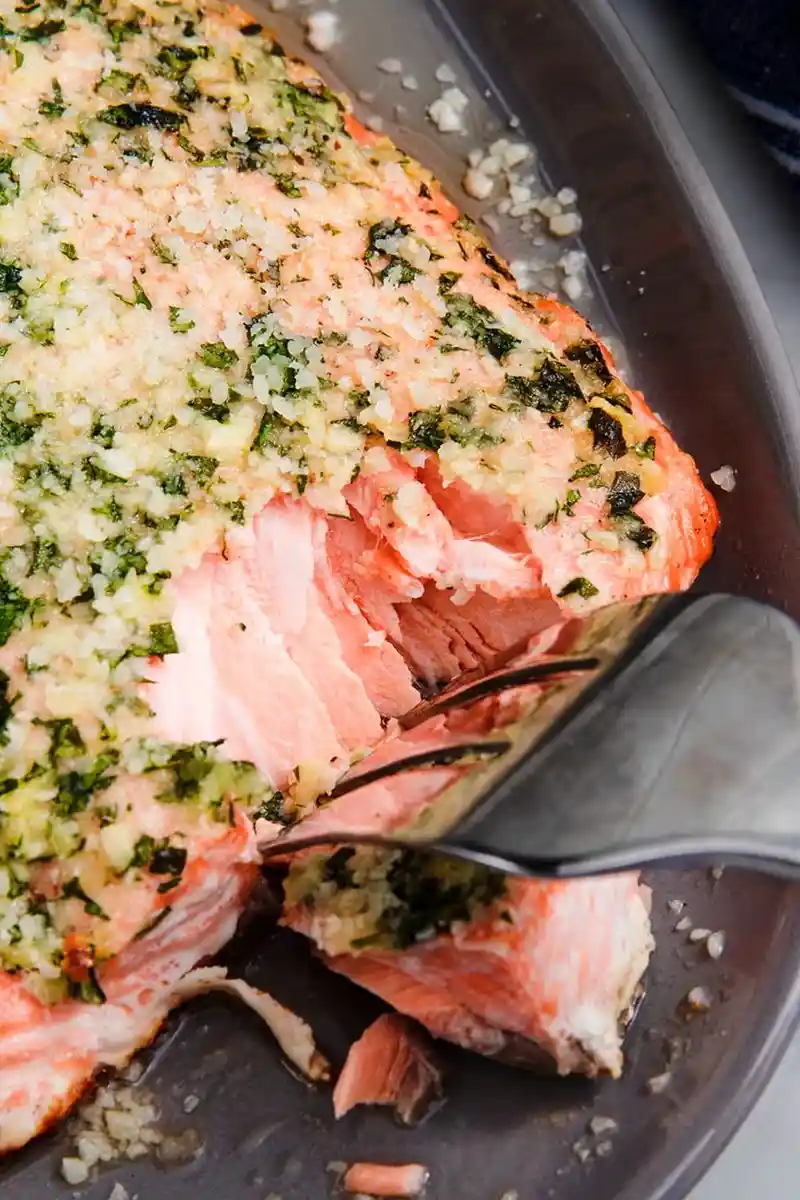
This low-carb salmon dish uses a rich blend of butter and Parmesan to create a savory crust. It is a fast, oven-baked meal that provides healthy fats and high protein.
List of ingredients
- 1 to 3 lb. salmon fillet – use a center cut for the most consistent thickness.
- Kosher salt – used for basic seasoning.
- Freshly ground black pepper – adds a mild heat to the fish.
- 4 tbsp. melted butter – serves as the base for the flavor crust.
- 1/4 cup freshly grated Parmesan – provides a salty, golden finish.
- 2 cloves garlic, minced – adds pungent, aromatic depth.
- 2 tbsp. freshly chopped parsley – adds a fresh, herbaceous note.
step-by-step instructions
- Prepare the Oven and Pan: Preheat your oven to 350°F. Line a large, rimmed baking sheet with aluminum foil and lightly grease the surface with cooking spray to prevent sticking. Place the salmon fillet on the tray and season all sides with salt and pepper.
- Apply the Flavor Crust: In a small mixing bowl, combine the melted butter, grated Parmesan, minced garlic, and chopped parsley. Spread the mixture evenly over the top of the salmon, patting it down gently to ensure the coating adheres to the fish. Bake the salmon for approximately 25 minutes, or until the meat is cooked through and flakes easily.
- Broil for Color: Switch the oven setting to broil. Place the salmon back under the heat for about 2 more minutes, watching closely until the Parmesan crust becomes lightly golden brown.
Technical Tips for Perfect Salmon
Use a Digital Meat Thermometer
To avoid overcooking the fish, use a digital thermometer to check the internal temperature. Salmon is perfectly cooked when it reaches 145°F in the thickest part. Removing it slightly early allows carry-over cooking to finish the process without drying the meat.
Pat the Salmon Dry First
Use paper towels to thoroughly pat the surface of the fish dry before adding salt and pepper. Removing excess moisture helps the butter and Parmesan mixture adhere better to the fillet. This prevents the crust from sliding off during the baking process.
Select a Uniform Cut
Choose a center-cut fillet where the thickness is relatively even from end to end. This ensures that the entire piece of fish cooks at the same rate. If you have a tapered tail piece, you may need to shield it with foil to prevent it from overcooking.
Allow the Fish to Rest
Once you remove the salmon from the oven, let it rest for 5 minutes before serving. Resting allows the juices to redistribute throughout the fillet, ensuring the meat remains moist. This also makes it easier to flake the fish into individual portions.
Ingredient Substitutions and Alternatives
Swap Butter for Ghee
If you prefer a higher smoke point, replace the melted butter with melted ghee. Ghee provides the same rich, nutty flavor as butter but is more stable under high heat. This is particularly useful if you plan to broil the fish for a longer period.
Use Pecorino Romano instead of Parmesan
For a sharper, saltier flavor profile, substitute the Parmesan cheese with freshly grated Pecorino Romano. Because Pecorino is saltier, you should slightly reduce the amount of kosher salt added to the fish. Both cheeses melt well and create a similar golden crust.
Substitute Fresh Garlic with Powder
If fresh garlic is unavailable, you can use garlic powder as a convenient alternative. Use 1/4 teaspoon of garlic powder for every clove of fresh garlic required. Mix the powder directly into the melted butter before adding the cheese and parsley.
Alternative Low-Carb Fish Options
This crust method also works well with other fatty fish like Steelhead trout or Arctic char. These fish have a similar texture and fat content to salmon, meaning they can withstand the same baking time. Adjust the cooking time slightly based on the thickness of the fillet.
Using Dried Parsley
If fresh parsley is not on hand, dried parsley can be used in a pinch. Use a ratio of one teaspoon of dried parsley for every tablespoon of fresh parsley. Note that the color will be less vibrant, and the flavor will be more subtle.
Low-Carb Serving Suggestions
Pair with Roasted Asparagus
Asparagus is a classic pairing that can be cooked on the same baking sheet as the salmon. Toss asparagus spears in olive oil and salt, then roast them for 12-15 minutes. The earthy flavor of the asparagus complements the richness of the Parmesan butter.
Serve with Cauliflower Mash
Create a low-carb alternative to mashed potatoes by steaming cauliflower and blending it with butter and cream. This provides a creamy base that absorbs the garlic butter drippings from the salmon. Season with salt and white pepper for a clean taste.
Pair with Sautéed Spinach
Quickly sauté fresh spinach with a touch of olive oil and a squeeze of lemon juice. The acidity of the lemon cuts through the richness of the cheese and butter. This adds a bright, nutrient-dense element to the meal.
Add a Fresh Arugula Salad
Serve the salmon alongside a simple bed of arugula tossed in a light vinaigrette. Use lemon juice and extra virgin olive oil to keep the salad keto-friendly. The peppery notes of arugula balance the savory garlic and Parmesan flavors.
Complement with Roasted Brussels Sprouts
Halve Brussels sprouts and roast them at 400°F until the edges are charred and crispy. The caramelized sugars in the sprouts pair well with the salty crust of the salmon. This adds a satisfying crunch to the overall plate.
Storage and Food Safety
Use Glass Airtight Containers
Store leftover salmon in a glass container with a tight-sealing lid to keep air out. Glass is preferable to plastic because it does not absorb the strong scent of fish. Ensure the container is completely sealed to prevent the salmon from drying out in the fridge.
Optimal Refrigeration Temperature
Keep your refrigerator set to 40°F (4°C) or below to maintain food safety. Storing the fish in the coldest part of the fridge helps preserve the quality of the fats. This prevents the butter-based crust from spoiling quickly.
Maximum Safe Storage Duration
Cooked salmon should be consumed within three to four days when kept refrigerated. Beyond this window, the texture of the fish begins to degrade and the risk of bacterial growth increases. If you cannot eat it within this time, it is best to discard it.
Managing Fish Odors in the Fridge
To prevent the smell of salmon from affecting other foods, place an open box of baking soda on your fridge shelf. The baking soda absorbs airborne odors and keeps the interior smelling fresh. Using a high-quality vacuum seal can also eliminate scent leakage.
Reheating Best Practices
Low-Temperature Oven Reheating
The best way to reheat salmon is in the oven at 275°F (135°C). Place the fish on a baking sheet and cover it loosely with foil to trap moisture. Heat for 10-15 minutes until the fish is warmed through without overcooking the center.
Avoiding the Microwave
Avoid using a microwave to reheat salmon, as it often leads to a rubbery texture. Microwaves heat unevenly, which can cause the fish to overcook in some areas while remaining cold in others. If you must use one, use the lowest power setting and heat in 30-second intervals.
Steam-Based Reheating
For a more moist result, you can use a steamer basket over simmering water for a few minutes. This method gently warms the fish and prevents the Parmesan crust from becoming too hard. Be careful not to steam for too long, or the crust will become soggy.
Adding Moisture During Reheating
If the salmon appears dry before reheating, add a small pat of butter or a teaspoon of water to the pan. This creates a small amount of steam that helps rehydrate the fish. This is especially helpful when using the oven method.
Common Troubleshooting
Preventing the Crust from Burning
If the Parmesan crust browns too quickly during the broiling stage, move the oven rack to a lower position. This increases the distance between the heating element and the fish. Keep a close eye on the fish, as broiling can go from golden to burnt in seconds.
Addressing Uneven Cooking
If the thin end of the fillet is overcooked while the center is raw, use a piece of foil to cover the edges. This shields the thinner parts from direct heat while the thicker part continues to cook. This technique is essential for large, non-uniform fillets.
Resolving Excess Liquid on the Pan
If you notice a lot of white albumin (protein) leaking from the fish, it usually means the heat is too high. While safe to eat, you can reduce this by patting the fish dry and cooking at a slightly lower temperature. Ensuring the fish is not crowded on the pan also helps.
Fixing a Too-Salty Crust
If the final dish tastes too salty, serve it with an unsalted side dish like steamed broccoli. You can also squeeze fresh lemon juice over the fillet just before eating. The citric acid helps neutralize the perception of salt on the palate.
Frequently Asked Questions
Can I use frozen salmon for this recipe?
Yes, you can use frozen salmon, but it must be completely thawed before cooking. Thaw the fish in the refrigerator overnight for the best results. Cooking frozen fillets directly can lead to uneven cooking and excess water release.
Is this recipe suitable for an air fryer?
Yes, this recipe can be adapted for an air fryer. Place the coated salmon in the basket and cook at 380°F for 10-12 minutes. Check the internal temperature to ensure it has reached 145°F.
Which type of Parmesan cheese is best to use?
Freshly grated Parmesan is highly recommended over the pre-shredded canned variety. Fresh cheese melts more smoothly and creates a better crust. Pre-shredded cheeses often contain anti-caking agents that can affect the texture.
How can I tell when the salmon is done without a thermometer?
Use a fork to gently press down on the thickest part of the fillet. If the meat flakes easily along the natural lines (myotomes), the salmon is done. If it resists flaking and looks translucent in the center, it needs more time.
Can I make this recipe ahead of time?
You can prepare the butter and cheese mixture and coat the salmon up to 24 hours in advance. Store the coated fillets in the refrigerator until you are ready to bake. This allows the flavors to meld, though the crust may be slightly softer.
Print
Garlic Butter Salmon with Parmesan Crust
- Total Time: 30 minutes
- Yield: 8 servings 1x
- Diet: Keto
Description
This salmon is Keto friendly and absolutely delicious, featuring a garlic butter and Parmesan crust.
Ingredients
- 1 lb. salmon fillet
- Kosher salt
- Freshly ground black pepper
- 4 tbsp. melted butter
- 1/4 cup freshly grated Parmesan (microbial-rennet)
- 2 cloves garlic, minced
- 2 tbsp. freshly chopped parsley
Instructions
- Preheat: Preheat oven to 350°. Line a large, rimmed baking sheet with foil and lightly grease with cooking spray. Place salmon on top and season with salt and pepper.
- Coat: In a small bowl, mix together melted butter, Parmesan, and parsley. Coat salmon with mixture, patting to cover in an even layer. Bake until the salmon is cooked through, about 25 minutes.
- Broil: Switch oven to broil and broil until top begins to turn lightly golden, about 2 more minutes.
Notes
Use a microbial-rennet Parmesan to ensure the recipe meets dietary safety requirements.
- Prep Time: 5 minutes
- Cook Time: 27 minutes
- Category: Dinner, Seafood
- Method: Baking
- Cuisine: Low-Carb
Nutrition
- Serving Size: 1 serving
- Calories: 189 kcal
- Sugar: 1 g
- Sodium: 350 mg
- Fat: 14 g
- Saturated Fat: 6 g
- Unsaturated Fat: 8 g
- Trans Fat: 0 g
- Carbohydrates: 3 g
- Fiber: 1 g
- Protein: 18 g
- Cholesterol: 60 mg
Keywords: Keto, Garlic Butter Salmon, Low Carb, Seafood, Oven-Baked Salmon