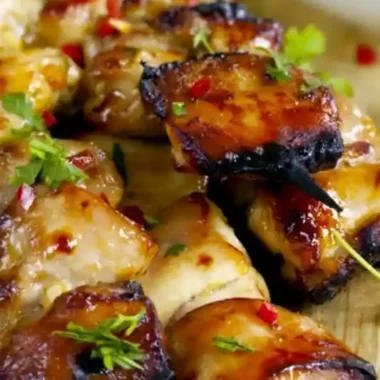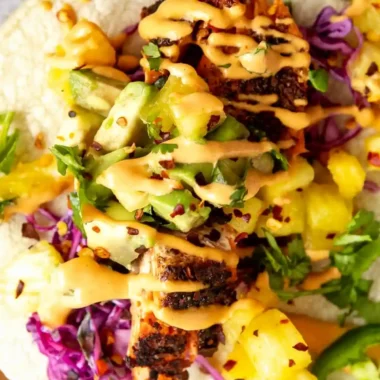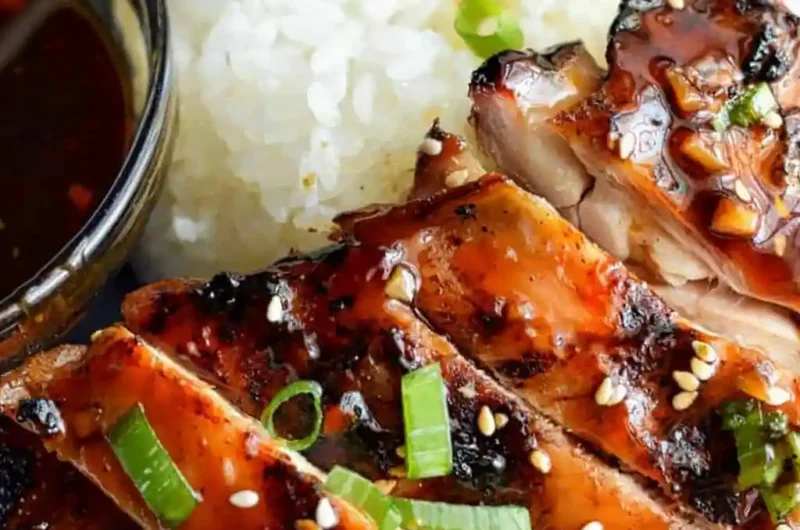
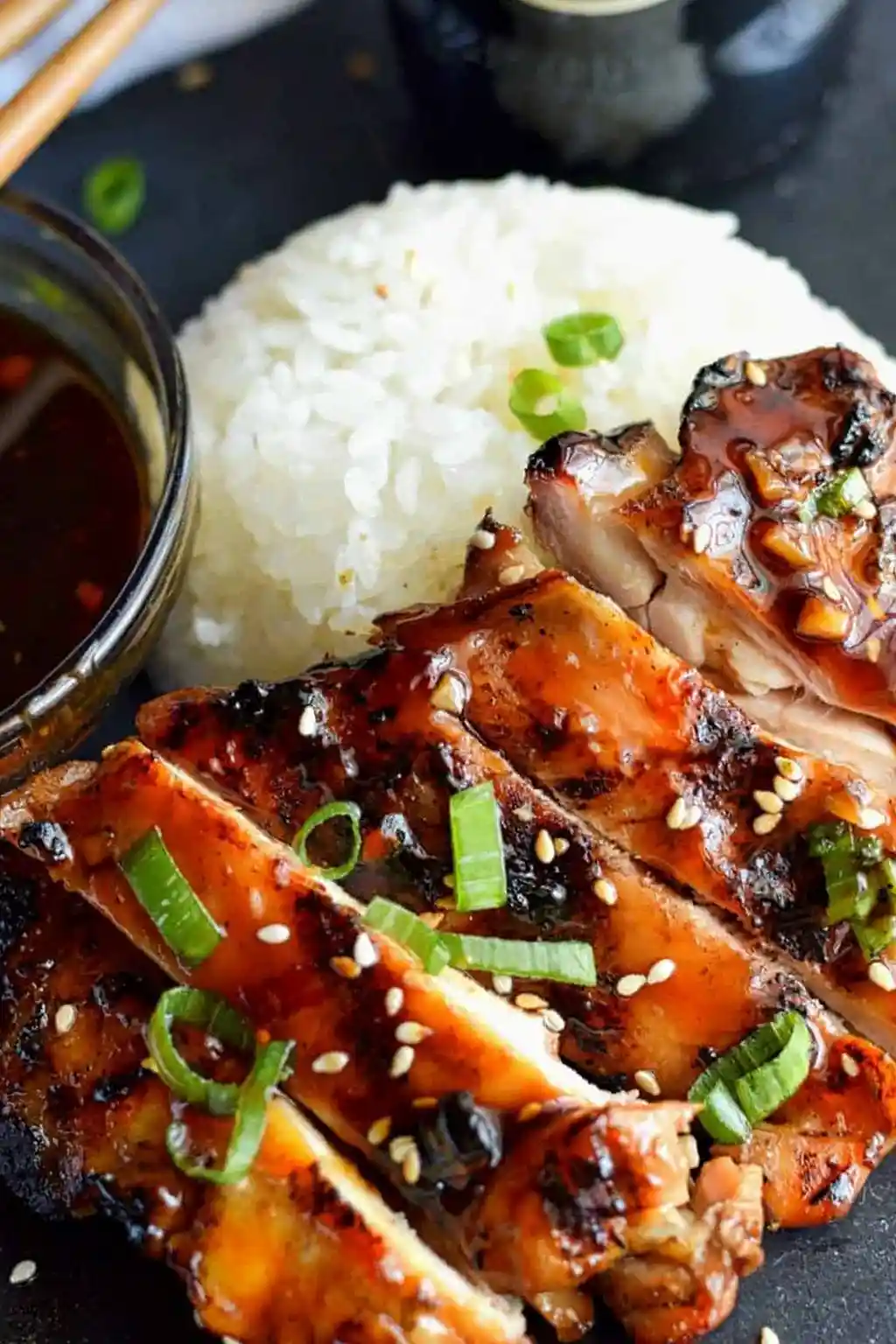
This grilled teriyaki chicken features a rich, sticky glaze that balances sweet and savory notes. It is a versatile meal that pairs perfectly with steamed rice and fresh vegetables.
List of ingredients
- 8 boneless skinless chicken thighs – provides juicy texture and flavor.
- 1 cup soy sauce (low sodium) – the primary salty base for the sauce.
- 1 cup brown sugar – adds sweetness and helps the glaze thicken.
- 1/4 cup rice wine vinegar – provides a mild acidic balance.
- 1/2 cup water – dilutes the sauce for a balanced consistency.
- 4-5 large cloves garlic, finely minced – adds pungent aromatic depth.
- 3 tsp freshly grated ginger – gives a fresh, spicy kick.
- 2 tablespoons cornstarch – used as a thickening agent for the final glaze.
- 3 green onions – sliced for a fresh garnish.
- sesame seeds (optional) – adds a nutty finish and visual appeal.
step-by-step instructions
- Prepare the marinade: In a small bowl, whisk together the soy sauce, brown sugar, rice vinegar, water, minced garlic, and grated ginger until well combined.
- Marinate the chicken: Pour half of the whisked mixture over the chicken thighs. Let the chicken marinate for at least 2 hours, though overnight is preferred for deeper flavor penetration.
- Prepare the glaze: Place the remaining half of the marinade in a small pot over medium heat. Stir in the cornstarch until completely dissolved.
- Thicken the sauce: Bring the mixture to a boil, then reduce the heat and simmer for 3-4 minutes until thickened. Remove the pot from the heat and set it aside.
- Sear the meat: Heat a grill or a cast iron pan over high heat. Cook the chicken for 6-7 minutes on each side to establish a deep sear.
- Apply the glaze: Brush the prepared teriyaki sauce generously onto the chicken.
- Finish cooking: Continue cooking for another 3-4 minutes on each side, or until the internal juices run clear.
- Rest and serve: Let the chicken rest for 10 minutes to redistribute juices. Serve alongside rice and garnish with sliced green onions and sesame seeds.
Selecting the Best Poultry Cuts
Using Boneless Skinless Chicken Thighs
Chicken thighs are the preferred choice for this recipe because they contain more fat than breasts. This higher fat content prevents the meat from drying out during the high-heat searing process. Thighs remain tender and juicy even after the grilling and glazing stages.
Substituting with Chicken Breasts
If you prefer leaner meat, boneless skinless chicken breasts can be used. Because breasts cook faster and dry out more easily, reduce the searing time slightly. It is recommended to slice thick breasts into thinner cutlets to ensure even cooking without overdoing the exterior.
Preparing the Meat for Marinade
Pat the chicken dry with paper towels before adding the marinade. Removing surface moisture allows the soy-based mixture to adhere better to the meat. This prevents the sauce from sliding off and ensures a more concentrated flavor on the surface.
Optimizing the Teriyaki Sauce
The Role of Brown Sugar
Brown sugar is essential for creating the characteristic sticky texture of teriyaki. The molasses content in brown sugar caramelizes quickly under high heat, creating a glossy sheen. This process also adds a deeper, more complex sweetness than white granulated sugar.
Balancing Acidity with Rice Wine Vinegar
Rice wine vinegar provides a gentle acidity that cuts through the richness of the sugar and soy sauce. Unlike white distilled vinegar, it has a milder profile that does not overpower the ginger and garlic. This balance is key to achieving an authentic teriyaki taste.
Achieving the Perfect Glaze Consistency
Cornstarch acts as a stabilizer that transforms the marinade into a thick syrup. When the cornstarch is heated to a boil, the granules swell and trap water, creating a viscous texture. This ensures the sauce clings to the chicken rather than pooling on the plate.
Fresh Ginger versus Ground Ginger
Freshly grated ginger contains volatile oils that provide a bright, zesty flavor. While ground ginger can be used in a pinch, it lacks the aromatic intensity of the fresh root. For the best results, peel the ginger with a spoon before grating it finely.
Grilling and Searing Techniques
Utilizing High Heat for the Maillard Reaction
Cooking the chicken over high heat initiates the Maillard reaction, which browns the proteins and sugars. This creates a savory crust that locks in juices and adds complex flavors. Ensure your cast iron pan or grill is shimmering hot before adding the meat.
Preventing the Glaze from Burning
Because the glaze contains a high concentration of sugar, it can burn if left over high heat for too long. The strategy of searing the meat first and applying the sauce at the end prevents this. This allows the chicken to cook through while the glaze only caramelizes slightly.
Using a Cast Iron Pan for Indoor Grilling
A cast iron skillet is an excellent alternative to an outdoor grill because of its superior heat retention. It mimics the searing power of a grill by maintaining a consistent temperature across the surface. Be sure to use a high-smoke point oil to prevent sticking.
Ensuring Proper Doneness and Safety
Using a Digital Meat Thermometer
The only way to guarantee the chicken is safe and juicy is by using a meat thermometer. Aim for an internal temperature of 165 degrees Fahrenheit (74 degrees Celsius). Checking the thickest part of the thigh ensures no raw spots remain.
Identifying the ‘Clear Juices’ Signal
When a thermometer is unavailable, press the center of the chicken; the juices should run clear rather than pink. However, this method is less precise than a thermometer. Always ensure the meat is opaque throughout.
The Importance of the Resting Period
Resting the chicken for 10 minutes allows the muscle fibers to relax and reabsorb the juices. If you cut into the meat immediately, the juices will leak out onto the board, leaving the chicken dry. This short wait significantly improves the final texture.
Serving and Pairing Suggestions
Choosing the Right Rice
Steamed jasmine rice is an ideal companion due to its slightly floral aroma and fluffy texture. Basmati rice is another great option for those who prefer a firmer grain. Rinsing the rice under cold water before cooking removes excess starch and prevents clumping.
Adding Nutritious Vegetable Sides
Steamed broccoli or sautéed snap peas provide a crisp contrast to the sticky chicken. The bitterness of charred bok choy also complements the sweetness of the teriyaki glaze. These vegetables can be steamed quickly while the chicken is resting.
Fresh Garnish Applications
Sliced green onions add a sharp, fresh bite that cuts through the sugar. Sesame seeds provide a subtle nuttiness and a professional visual finish. Both should be added immediately before serving to maintain their color and flavor.
Ingredient Substitutions and Alternatives
Low-Sodium Soy Alternatives
For those seeking a soy-free option, coconut aminos can be used as a replacement. Coconut aminos are naturally sweeter and lower in sodium than soy sauce. You may need to slightly reduce the amount of brown sugar when using this substitute.
Alternative Sweeteners
Maple syrup or honey can replace brown sugar for a different flavor profile. Honey creates a thicker, stickier glaze, while maple syrup adds a woody sweetness. Adjust the cornstarch amount if the sauce becomes too thin with these liquid sweeteners.
Substitutes for Rice Wine Vinegar
Apple cider vinegar is a suitable replacement if rice wine vinegar is unavailable. It has a slightly fruitier taste but provides the necessary acidity. Use it in the same quantity to maintain the balance of the marinade.
Storage and Reheating Advice
Refrigeration Guidelines
Store leftover teriyaki chicken in an airtight container in the refrigerator. It will remain fresh for 3 to 4 days. Keep the extra sauce in a separate container to prevent the chicken from becoming overly soggy.
Freezing Marinated Chicken
You can freeze the chicken while it is still in the marinade for up to 3 months. Use a heavy-duty freezer bag and squeeze out all the air to prevent freezer burn. Thaw the meat completely in the refrigerator before grilling.
Best Reheating Methods
To reheat, use a skillet over medium heat with a splash of water or extra sauce. This prevents the chicken from drying out and helps the glaze liquefy again. Avoid over-microwaving, as it can make the meat rubbery.
Common Troubleshooting
What to do if the sauce is too thin?
If the glaze does not thicken sufficiently, simmer it for an additional 2-3 minutes. You can also mix a small amount of cornstarch with cold water to create a slurry and stir it into the boiling sauce. Continue simmering until the desired consistency is reached.
How to fix dry chicken?
Dryness usually occurs from overcooking or using chicken breasts without enough care. To fix this during serving, add an extra generous coating of the teriyaki glaze. For future batches, ensure you are using a meat thermometer to stop cooking at exactly 165 degrees.
Handling a glaze that burns too quickly?
If the sauce begins to blacken instead of caramelize, lower the heat immediately. You can add a tablespoon of water to the pan to deglaze the surface and cool the temperature. Always brush the sauce on during the final few minutes of cooking.
Frequently Asked Questions
Can I use store-bought teriyaki sauce?
Yes, store-bought sauce is a convenient alternative, but it often contains more preservatives and less fresh garlic and ginger. If using a commercial sauce, you may not need the extra cornstarch thickening step.
Can this recipe be made in an oven?
Yes, you can bake the chicken at 400 degrees Fahrenheit. Bake for 20-25 minutes, brushing the glaze on during the last 5-10 minutes of cooking to ensure it caramelizes without burning.
How long can the chicken marinate?
The minimum marinating time is 2 hours, but 24 hours is ideal for the best flavor. Avoid marinating for more than 48 hours, as the acidity in the vinegar can start to break down the meat texture too much.
Can I use a slow cooker for this?
While a slow cooker can tenderize the meat, you will lose the charred, grilled flavor. If using a slow cooker, cook on low for 6 hours, then finish the chicken under a broiler for 3-5 minutes to caramelize the sauce.
Print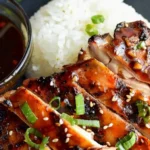
Grilled Teriyaki Chicken with Sticky Glaze
- Total Time: 140 minutes
- Yield: 8 servings 1x
- Diet: General
Description
Teriyaki chicken is bathed in a sticky flavorful teriyaki sauce and grilled to perfection!
Ingredients
- 8 boneless skinless chicken thighs
- 1 cup low sodium soy sauce
- 1 cup brown sugar
- 1/4 cup rice vinegar
- 1/2 cup water
- 4–5 large cloves garlic, finely minced
- 3 tsp freshly grated ginger
- 2 tablespoons cornstarch
- 3 green onions
- sesame seeds (optional)
Instructions
- Step: In a small bowl whisk together soy sauce, brown sugar, rice vinegar, water, garlic and ginger. Pour half of the mixture over chicken and let marinade for at least 2 hours preferable over night.
- Step: Meanwhile place the remaining marinade in a small pot and place over medium heat. Add the cornstarch and mix until dissolved. Bring to a boil, reduce heat and simmer 3-4 minutes. Remove from heat and set aside.
- Step: Heat a grill or cast iron pan over high heat and cook 6-7 minutes on each side to get a nice sear. Brush the teriyaki sauce on. Cook for another 3-4 minutes on each side or until juices run clear.
- Step: Let chicken rest 10 minutes. Serve with rice and top with green onions and sesame seeds
Notes
You can use chicken breasts instead if you prefer. The longer the teriyaki chicken marinades, the more flavor it will have. I recommend using a digital meat thermometer to ensure correct doneness.
- Prep Time: 120 minutes
- Cook Time: 20 minutes
- Category: Entrees
- Method: Grilling
- Cuisine: American
Nutrition
- Serving Size: 1 serving
- Calories: 321 kcal
- Sugar: 22 g
- Sodium: 1958 mg
- Fat: 11 g
- Saturated Fat: 3 g
- Unsaturated Fat: 7 g
- Trans Fat: 0 g
- Carbohydrates: 28 g
- Fiber: 1 g
- Protein: 31 g
- Cholesterol: 137 mg
Keywords: teriyaki chicken, grilled chicken, sticky sauce, easy dinner