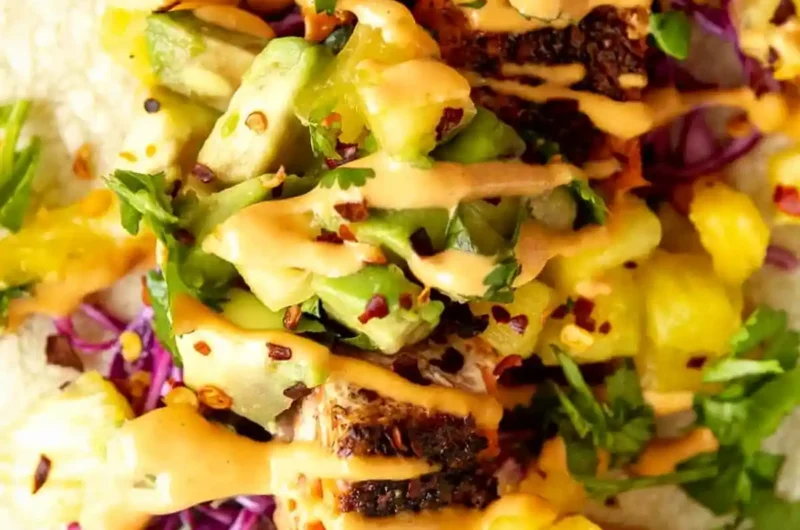
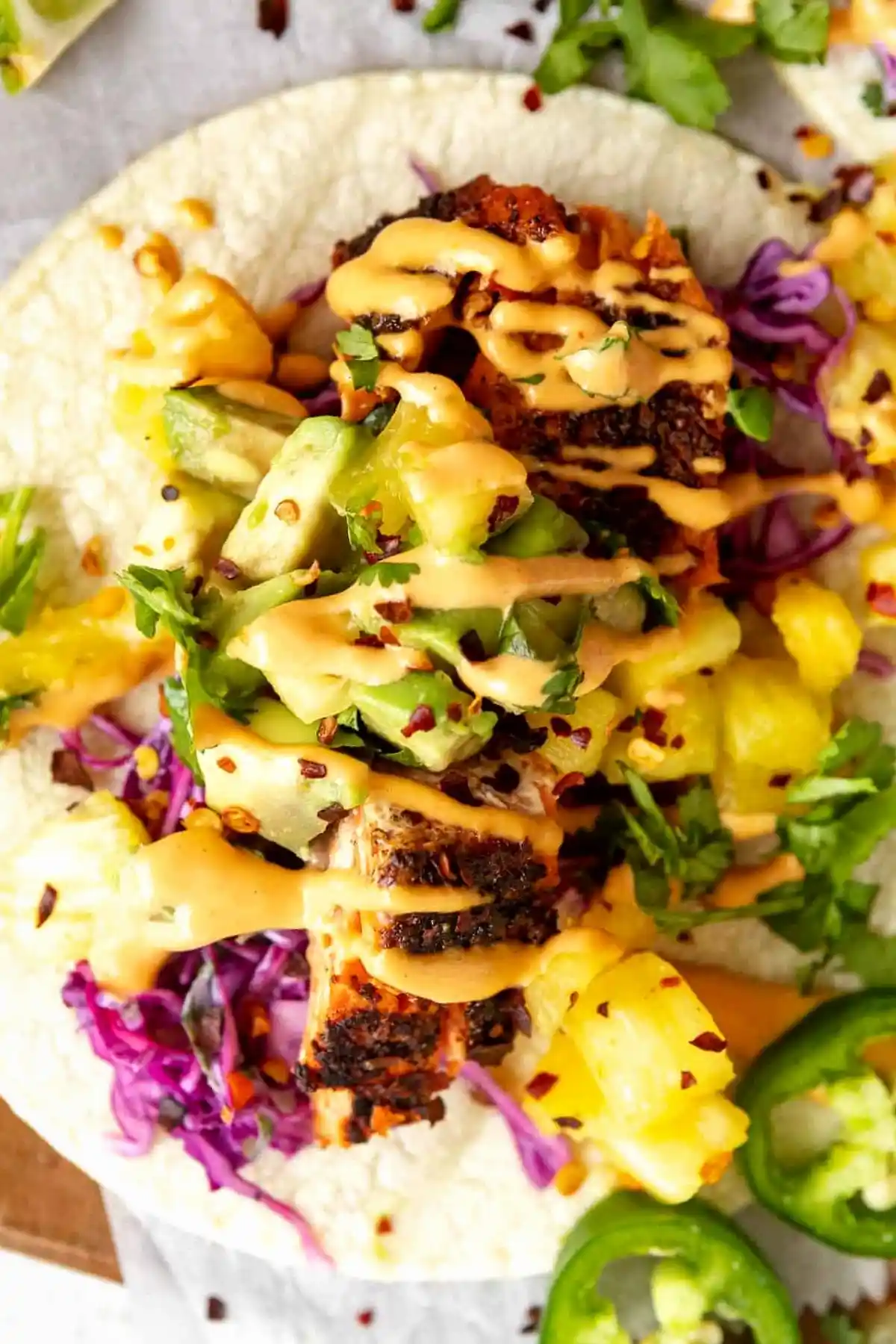
These high-protein salmon tacos combine blackened fillets with a refreshing tropical salsa and crunchy cabbage slaw. They are a quick, gluten-free meal that takes only 30 minutes from preparation to plate.
List of ingredients
- 1 pound salmon, cut into filets – wild caught is recommended for better flavor.
- 1/2 teaspoon salt – enhances the natural taste of the fish.
- 1 teaspoon brown sugar – aids in caramelization during searing.
- 1 1/4 teaspoon chili powder – provides a mild earthy heat.
- 1/2 teaspoon paprika – adds a rich red color and smoky depth.
- 1/2 teaspoon cumin – adds a nutty, warm aroma.
- 1/2 teaspoon onion powder – provides a savory base note.
- 1/2 teaspoon garlic powder – adds pungent aromatic flavor.
- 2 tablespoons olive oil – used for pan-frying the salmon.
- 2 cups shredded purple cabbage – adds crunch and color to the slaw.
- 2 tablespoons lime juice – provides acidity for the cabbage.
- 1/2 teaspoon salt – for seasoning the slaw.
- 1/2 cup chopped cilantro – adds fresh herbal notes to the cabbage.
- 2 tablespoons greek yogurt – creates a creamy texture in the slaw.
- 1 1/2 cups finely diced pineapple – adds sweetness to the salsa.
- 1/2 avocado, cubed – provides a creamy contrast to the pineapple.
- 1 jalapeno, diced – adds a spicy kick to the salsa.
- 1/3 cup chopped cilantro – for freshness in the salsa.
- 1 tablespoon lime juice – prevents avocado oxidation in the salsa.
- 1 batch chipotle aioli or sauce of choice – for a creamy, spicy finish.
- 8 corn tortillas – serves as the gluten-free base.
step-by-step instructions
- Prepare the slaw: Combine all ingredients for the cabbage slaw in a small bowl and mix well with a fork. Using a mandoline helps achieve very thin cabbage shreds for better texture. Set this aside to let flavors meld.
- Season the salmon: Mix together salt, sugar, and all the dry spices in a small dish. Rub the mixture firmly into the salmon filets until they are well coated on all sides.
- Heat the pan: Add olive oil to a skillet and heat it over medium heat until the oil shimmers.
- Sear the fish: Place the salmon in the skillet skin side up. Cook for about 4-5 minutes, then flip and cook for an additional 4-5 minutes or until the fish is just cooked through.
- Mix the salsa: Combine all pineapple salsa ingredients in a small bowl. Taste the mixture and add an extra squeeze of lime if more acidity is needed.
- Flake the salmon: Once the salmon is finished cooking, use a fork to flake the fillets into medium-sized pieces.
- Assemble the tacos: Place a base of cabbage slaw on each corn tortilla. Add the flaked salmon on top, then garnish with the pineapple avocado salsa and a drizzle of chipotle aioli.
Optimizing Salmon Selection and Prep
Choosing Wild Caught Salmon
Wild caught salmon typically offers a more robust flavor and a firmer texture compared to farmed varieties. It often contains higher levels of omega-3 fatty acids and lacks the added fats found in some farmed fish. Look for Sockeye or King salmon for the best results in tacos.
Managing Fish Moisture
Before applying the spice rub, pat the salmon filets dry with a paper towel. Removing surface moisture prevents the fish from steaming in the pan, which allows it to develop a proper blackened crust. This ensures the spices adhere better to the flesh.
Handling Skin-On Filets
Keeping the skin on during cooking helps the fillet maintain its shape and prevents it from breaking apart. The skin also acts as a barrier that protects the delicate flesh from direct heat. You can easily remove the skin or leave it on after flaking the fish.
Precision Cooking Techniques
Maintaining Medium Heat
Using medium heat is critical to ensure the brown sugar in the rub caramelizes without burning. If the pan is too hot, the sugar will scorch, creating a bitter taste. If the pan is too cool, the fish will boil in its own juices rather than searing.
Identifying the Perfect Doneness
Salmon is cooked through when it reaches an internal temperature of 145°F or when it flakes easily with a fork. Avoid overcooking, as salmon can become dry and chalky very quickly. The center should remain slightly translucent for maximum juiciness.
Preventing Pan Sticking
Ensure the olive oil is hot before adding the salmon to create a non-stick surface. Do not move the fish immediately after placing it in the pan; let it sear undisturbed for a few minutes. This allows the proteins to set and release naturally from the skillet.
Customizing the Toppings
Substituting Mango for Pineapple
If you prefer a different tropical profile, diced mango is an excellent substitute for pineapple. Mango provides a similar sweetness and texture but with a softer, more buttery consistency. Keep the lime juice and jalapeno the same to balance the sweetness.
Using Alternative Cabbage Varieties
While purple cabbage provides a striking color, you can use green cabbage or a mix of both. Napa cabbage is another option for a softer crunch. Ensure the cabbage is shredded very thinly to ensure it mixes well with the Greek yogurt dressing.
Adjusting the Heat Level
For a milder salsa, remove the seeds and membranes from the jalapeno before dicing. If you prefer more heat, add a pinch of cayenne pepper to the salmon rub or use a habanero in the salsa. The acidity of the lime helps temper the capsaicin for a balanced taste.
Tortilla Preparation and Alternatives
Warming Corn Tortillas
Corn tortillas can be brittle if served cold. Warm them in a dry skillet over medium-high heat for 30 seconds per side until they are pliable and slightly charred. This improves the flavor and prevents them from cracking during assembly.
Utilizing Flour or Grain-Free Wraps
If you are not avoiding gluten, flour tortillas provide a softer texture and a larger surface area. For those seeking grain-free options, almond flour or coconut flour tortillas work well. Simply warm them according to the package instructions before filling.
Using Lettuce Wraps for Low Carb
Replace tortillas with large butter lettuce or romaine leaves for a low-carb or ketogenic version. This adds an extra layer of freshness and crispness. Be sure to dry the lettuce thoroughly so the tacos do not become soggy.
Storage and Food Safety
Refrigeration Guidelines
Store the salmon, cabbage slaw, and pineapple salsa in separate airtight containers in the refrigerator. This prevents the flavors from blending and stops the slaw from becoming watery. These components will stay fresh for up to three days.
Preventing Avocado Oxidation
The lime juice in the salsa acts as an antioxidant, slowing down the browning process of the avocado. To further protect the salsa, press a piece of plastic wrap directly onto the surface of the food before sealing the container. This limits oxygen exposure.
Reheating the Salmon
To reheat the salmon, place the pieces in a pan over medium heat for 2-3 minutes. Avoid using a microwave, as it can make the fish rubbery. Alternatively, you can serve the salmon cold, which pairs very well with the chilled salsa and slaw.
Serving Suggestions and Pairings
Pairing with Mexican Green Rice
Serve these tacos with a side of cilantro lime rice or Mexican green rice for a complete meal. The savory, herbaceous notes of the rice complement the blackened spices of the salmon. This adds necessary carbohydrates to balance the high protein content.
Adding Complementary Side Dishes
A side of black beans seasoned with cumin and garlic provides an earthy contrast to the sweet pineapple. Alternatively, a simple corn salad with bell peppers and red onion adds more texture and color to the plate.
Alternative Sauce Options
If you do not have chipotle aioli, a mixture of sour cream and Sriracha is a great alternative. A squeeze of fresh lime and a dollop of Greek yogurt also work well for a lighter option. Avocado crema is another excellent choice for added richness.
Troubleshooting Common Issues
Addressing Watery Salsa
If the pineapple salsa becomes too watery, drain the diced pineapple in a colander before mixing. You can also add a small amount of finely diced red onion, which absorbs some of the excess moisture. Avoid adding too much lime juice at once.
Fixing Bland Slaw
If the cabbage slaw lacks flavor, increase the amount of lime juice or add a pinch more salt. A teaspoon of apple cider vinegar can also provide a different type of tanginess. Ensure the cabbage is well-massaged with the dressing to soften the fibers.
Managing Salmon Breakage
If the salmon breaks apart while flipping, you may have flipped it too early. Wait until a brown crust has fully formed on the bottom before attempting to turn the fillet. Using a wide fish spatula helps support the entire fillet during the flip.
Frequently Asked Questions
Can I air fry the salmon instead of pan-searing?
Yes, you can air fry the salmon at 400°F for about 7-10 minutes depending on the thickness. Rub the fillets with oil and spices as directed, then cook until the internal temperature reaches 145°F. This method is slightly healthier as it uses less oil.
What can I use instead of Greek yogurt in the slaw?
Mayonnaise is the most common substitute for Greek yogurt and provides a richer flavor. For a vegan option, use a dairy-free yogurt or a mixture of mashed avocado and lime juice. This keeps the slaw creamy without the dairy.
Is it okay to use frozen salmon for this recipe?
Yes, frozen salmon works well as long as it is completely thawed before cooking. Thaw it slowly in the refrigerator overnight to maintain the texture. Pat it very dry before seasoning to avoid excess moisture in the pan.
How do I stop the tortillas from breaking?
Warming the tortillas is the best way to prevent breakage. If they are still cracking, try sprinkling a few drops of water on them before heating them in the skillet. This creates a small amount of steam that makes them more flexible.
Can I make the salsa a day in advance?
You can prepare the pineapple and jalapeno mixture a day early, but add the avocado and lime juice just before serving. This ensures the avocado stays bright green and the texture remains chunky rather than mushy.
Print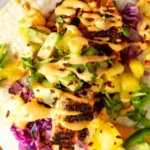
Spiced Salmon Tacos with Pineapple Avocado Salsa
- Total Time: 30 minutes
- Yield: 4 servings 1x
- Diet: Gluten-Free
Description
These crispy salmon tacos are the ultimate 30 minute dinner. They’re coated in spices, pan fried until blackened, then served with cabbage lime slaw, pineapple avocado salsa and chipotle aioli. The best high protein gluten free dinner!
Ingredients
- 1 pound salmon, cut into filets
- 1/2 teaspoon salt
- 1 teaspoon brown sugar
- 1 1/4 teaspoon chili powder
- 1/2 teaspoon paprika
- 1/2 teaspoon cumin
- 1/2 teaspoon onion powder
- 1/2 teaspoon garlic powder
- 2 tablespoons olive oil
- 2 cups shredded purple cabbage
- 2 tablespoons lime juice
- 1/2 teaspoon salt
- 1/2 cup chopped cilantro
- 2 tablespoons greek yogurt
- 1 1/2 cups finely diced pineapple
- 1/2 avocado, cubed
- 1 jalapeno, diced
- 1/3 cup chopped cilantro
- 1 tablespoon lime juice
- 1 batch chipotle aioli
- 8 corn tortillas
Instructions
- Step: Combine all ingredients for the cabbage slaw in a small bowl and mix well with a fork.
- Step: Mix together salt, sugar and all spices for the salmon in a small dish.
- Step: Rub into the salmon until well coated.
- Step: Add the olive oil to a skillet and heat over medium heat.
- Step: Add the salmon, skin side up and cook for about 4-5 minutes, then flip and cook an additional 4-5 minutes or until just cooked through.
- Step: Combine all ingredients for the pineapple salsa in a small bowl.
- Step: When the salmon is done flake with a fork into medium sized pieces.
- Step: Assemble the tacos with a base of the slaw, add on the salmon, then top with the salsa and chipotle aioli.
Notes
If you aren’t a pineapple fan, you can sub with mango.
- Prep Time: 15 minutes
- Cook Time: 15 minutes
- Category: Dinner
- Method: Pan Frying
- Cuisine: American
Nutrition
- Serving Size: 2 tacos
- Calories: 438 kcal
- Sugar: 7 g
- Sodium: 680 mg
- Fat: 20 g
- Saturated Fat: 4 g
- Unsaturated Fat: 16 g
- Trans Fat: 0 g
- Carbohydrates: 40 g
- Fiber: 7 g
- Protein: 28 g
- Cholesterol: 85 mg
Keywords: salmon tacos, pineapple avocado salsa, gluten free dinner, high protein dinner