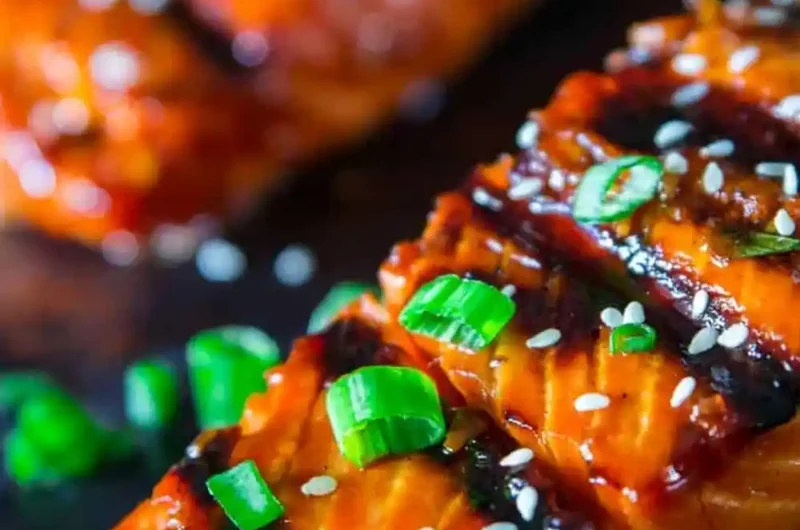
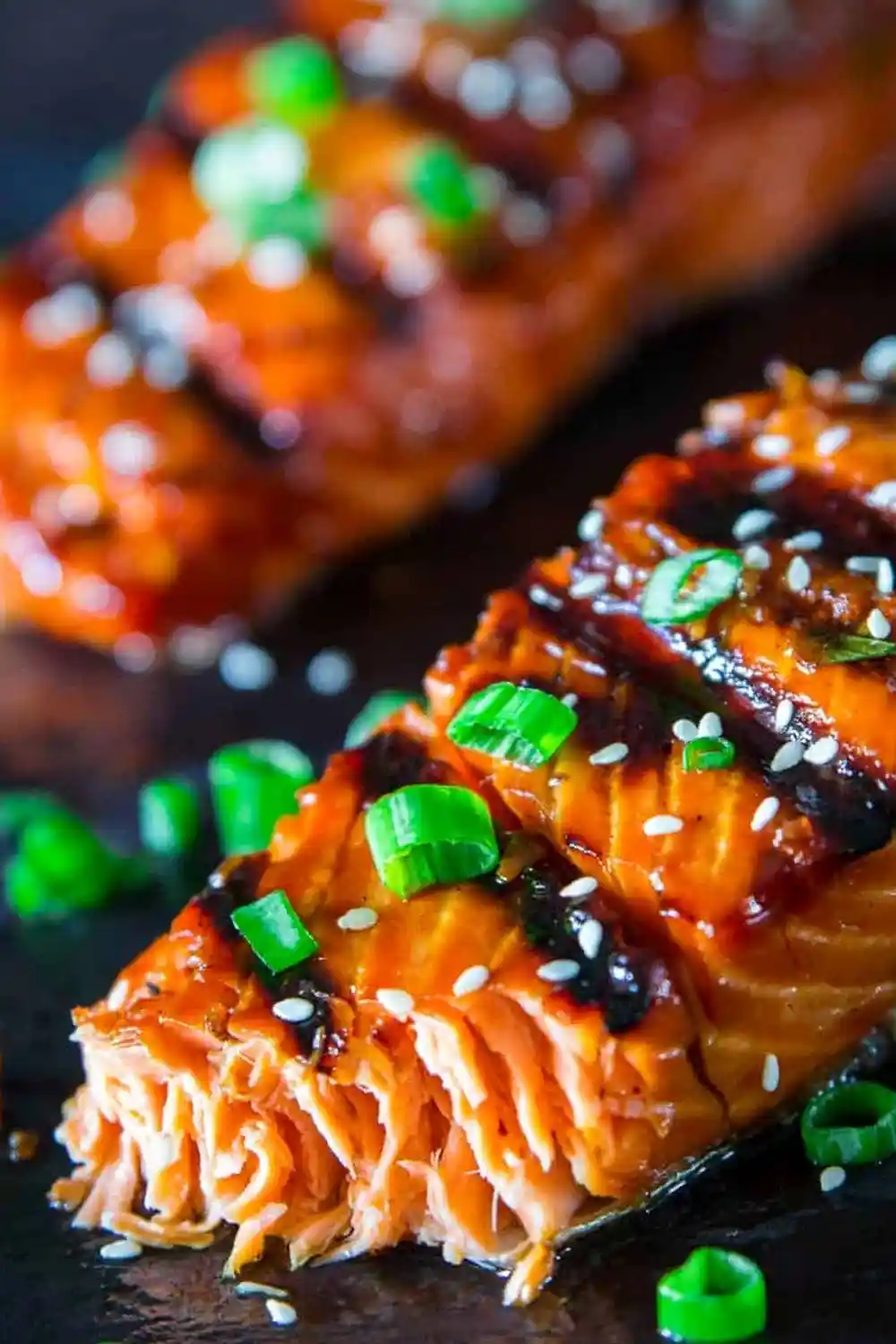
This recipe creates a perfectly caramelized salmon fillet with a sweet and savory teriyaki glaze. It is a nutritious, high-protein meal that is ideal for outdoor cooking during the warmer months.
List of ingredients
- 1/2 cup brown sugar – provides sweetness and helps the fish caramelize on the grill.
- 3 garlic cloves, minced – adds a pungent, aromatic depth to the marinade.
- 1 tsp ginger, minced – introduces a fresh, zesty warmth.
- 1/2 tsp red pepper flakes – adds a subtle hint of heat to balance the sugar.
- 1 cup low sodium soy sauce – the primary source of salt and umami flavor.
- 2 tbsp apple cider vinegar – a non-alcoholic alternative to rice wine that provides necessary acidity.
- 2 tbsp olive oil – helps prevent the fish from sticking to the grill grates.
- 1/4 cup green onion, chopped – adds a mild onion flavor and visual contrast.
- 2 lb king salmon fillets – a rich, fatty fish that stays moist under high heat.
- 2 tsp corn starch – used to thicken the reserved marinade into a glossy glaze.
step-by-step instructions
- Prepare the base marinade: In a medium bowl, whisk together the brown sugar, minced garlic, minced ginger, soy sauce, red pepper flakes, and apple cider vinegar. Carefully measure and reserve 1/2 cup of this mixture in a small saucepan for the final glaze.
- Finish the marinade: Add the olive oil and chopped green onions to the larger portion of the marinade remaining in the bowl. Stir well to ensure the oil is fully incorporated.
- Marinate the fish: Place the king salmon fillets into a large zip-lock bag. Pour the marinade over the fillets, seal the bag tightly, and refrigerate for at least one hour to allow the flavors to penetrate the meat.
- Thicken the glaze: Combine 2 tsp of corn starch with 1 tsp of water to create a smooth slurry. Pour this slurry into the reserved 1/2 cup of marinade in the saucepan and cook over medium-high heat for about 10 minutes, stirring occasionally until the sauce thickens.
- Grill the salmon: Preheat your grill to medium heat and generously apply nonstick spray to the grates. Place the marinated salmon fillets on the grill and cook for approximately 6 minutes per side.
- Final glaze and serve: Once the salmon is cooked through, remove the fillets from the grill. Immediately brush the thickened teriyaki glaze over the top of each piece and serve hot.
Professional Grilling Techniques for Salmon
Maintain Medium Heat for Even Cooking
Grilling salmon on too high a heat can cause the sugars in the teriyaki marinade to burn before the center is cooked. Keeping the grill at a steady medium temperature ensures a slow caramelization of the exterior. This prevents a charred outer layer while keeping the interior moist.
Preventing Salmon from Sticking
Salmon is prone to sticking to grill grates due to its natural proteins and the sugars in the marinade. Ensure the grill is fully preheated before adding the fish. Applying a high-smoke-point oil or nonstick spray immediately before placing the fillets helps create a barrier.
Determine Doneness by Internal Temperature
The most accurate way to tell if salmon is done is by using an instant-read meat thermometer. Aim for an internal temperature of 145 degrees Fahrenheit, or slightly lower if you prefer a more tender medium-rare finish. Avoid overcooking, as salmon can become dry and chalky very quickly.
Use a Wide Fish Spatula for Flipping
Using a standard small spatula can cause the delicate fillets to break or flake apart when flipping. A wide, thin fish spatula allows you to get completely underneath the fillet. This ensures a clean flip and keeps the presentation intact.
Ingredient Substitutions and Alternatives
Replacing Brown Sugar with Maple Syrup
If you prefer a more earthy sweetness, you can replace the brown sugar with an equal amount of pure maple syrup. This change alters the flavor profile slightly but maintains the caramelization properties. It is an excellent option for those looking for a more natural sweetener.
Using Coconut Aminos for a Soy-Free Option
For a soy-free alternative, substitute the low sodium soy sauce with coconut aminos. Coconut aminos are naturally sweeter and have a lower sodium content than soy sauce. You may need to add a pinch of extra salt to maintain the savory balance.
Substituting King Salmon with Other Fish
While king salmon is recommended for its high fat content, you can use Atlantic salmon or Sockeye salmon. Sockeye is leaner, so you should reduce the grilling time slightly to avoid drying out the fish. Steelhead trout is also an excellent substitute that mimics the texture of salmon.
Adjusting the Heat Level
If the red pepper flakes provide too much heat, you can omit them entirely or replace them with a pinch of paprika. For those who prefer a spicier dish, adding a teaspoon of Sriracha to the marinade provides a deeper, fermented heat. Adjust this based on your personal preference.
Flavor Variations for Customizing Your Salmon
Adding Toasted Sesame Seeds
Sprinkling toasted sesame seeds over the salmon after brushing on the glaze adds a nutty flavor and a professional look. You can use white, black, or a mix of both for visual appeal. Toast them in a dry pan for two minutes before applying.
Incorporating Fresh Citrus Juice
Adding a squeeze of fresh lime or lemon juice to the glaze right before serving cuts through the sweetness of the brown sugar. This acidity brightens the overall dish and complements the richness of the king salmon. It is best applied as a final garnish.
Integrating Fresh Ginger Root
For a more intense ginger flavor, use freshly grated ginger instead of minced ginger. Grating the root releases more aromatic oils and provides a sharper, cleaner taste. This is particularly effective if you are serving the salmon with steamed greens.
Adding a Hint of Garlic Powder
While fresh garlic is used in the marinade, adding a small amount of garlic powder to the cornstarch slurry can intensify the savory notes. This ensures the glaze has a consistent garlic flavor throughout. Use about 1/4 teaspoon for the reserved glaze portion.
Best Side Dish Pairings
Pairing with Grains
White jasmine rice is the classic accompaniment for teriyaki salmon because it absorbs the extra glaze. For a nuttier flavor and more fiber, try wild brown rice or quinoa. These grains provide a hearty base that balances the sweetness of the fish.
Adding Steamed Asian Greens
Bok choy or steamed broccoli are excellent pairings that add a fresh, crisp element to the meal. Lightly sautéing them with a bit of sesame oil and salt complements the teriyaki flavors. These vegetables provide a necessary color contrast on the plate.
Serving with a Cucumber Salad
A chilled cucumber salad with rice vinegar and sesame oil provides a refreshing contrast to the warm, grilled salmon. Thinly sliced cucumbers and red onions create a crisp texture. This helps cleanse the palate between bites of the rich fish.
Adding Sautéed Snap Peas
Snap peas offer a sweet, crunchy texture that pairs well with the caramelized glaze. Sauté them quickly over high heat to keep them vibrant and crisp. A touch of lemon juice at the end helps tie the vegetables to the salmon.
Proper Storage and Reheating Guidelines
Refrigerating Leftovers
Store leftover grilled salmon in an airtight container in the refrigerator for up to three days. Ensure the salmon has cooled slightly before sealing to prevent excess moisture from building up. Keep the extra glaze in a separate container to maintain its consistency.
Best Reheating Methods
To avoid overcooking the fish during reheating, use a low-temperature oven or a skillet on low heat. Place the salmon on a baking sheet and cover it loosely with foil to trap moisture. Heat at 275 degrees Fahrenheit until just warmed through.
Avoiding the Microwave
Microwaving salmon often leads to an uneven texture and a fishy smell. The high heat can make the proteins rubbery and dry out the fillets. If a microwave is the only option, use the lowest power setting and heat in short 30-second bursts.
Freezing Cooked Salmon
While cooked salmon can be frozen, the texture may change slightly upon thawing. Wrap the fillets tightly in freezer-safe foil and place them in a heavy-duty freezer bag. Thaw them slowly in the refrigerator overnight before reheating in the oven.
Make-Ahead Preparation Strategies
Advanced Marinating Limits
Avoid marinating the salmon for more than 24 hours. The acidity in the apple cider vinegar can begin to break down the muscle fibers, making the fish too soft or mushy. A window of 2 to 6 hours is generally ideal for maximum flavor.
Preparing the Glaze in Advance
The cornstarch-based glaze can be made a day ahead and stored in the refrigerator. When you are ready to use it, gently reheat it in a saucepan over medium heat. You may need to add a teaspoon of water to loosen the consistency if it has thickened too much.
Pre-Chopping Aromatics
Mince the garlic, ginger, and green onions ahead of time and store them in small containers. This reduces the active prep time on the day of cooking. Keep the minced garlic in a small amount of oil to prevent it from oxidizing.
Preparing the Salmon Fillets
Pat the salmon fillets dry with paper towels before placing them in the marinade bag. Removing surface moisture allows the marinade to adhere better to the fish. This ensures a more consistent flavor and better caramelization on the grill.
Common Grilling Troubleshooting
Dealing with Excessive Charring
If the salmon is charring too quickly, move the fillets to a cooler part of the grill. This is often caused by the brown sugar burning. You can also lower the heat or use a foil packet to protect the fish while still allowing it to cook.
Fixing a Thin Glaze
If the glaze did not thicken sufficiently, whisk in a small amount of additional cornstarch slurry. Simmer the sauce for another 2 to 3 minutes over medium heat. The sauce should be thick enough to coat the back of a spoon without running off immediately.
Solving the Sticking Problem
If the salmon sticks to the grill, do not force it off, as this will tear the fillet. Wait another minute or two; usually, the fish will naturally release once a proper sear has formed. Ensure your grill grates are clean and well-oiled for future attempts.
Managing Overcooked Salmon
If the salmon becomes slightly overcooked, you can save it by adding a bit more glaze and a squeeze of fresh lemon. The extra moisture and acidity help mask the dryness. In the future, use a thermometer to pull the fish off the heat exactly at 145 degrees Fahrenheit.
Frequently Asked Questions
Can I use a different cut of salmon?
Yes, you can use salmon steaks or center-cut fillets. Steaks are thicker and may require a few extra minutes of grilling time per side. Center-cuts provide a uniform thickness, which leads to more even cooking.
How do I know when salmon is done?
The salmon is done when the flesh transitions from translucent to opaque and flakes easily with a fork. The most reliable method is using a meat thermometer to check for an internal temperature of 145 degrees Fahrenheit.
Can I make this in an oven?
Yes, you can bake the salmon at 400 degrees Fahrenheit on a lined baking sheet. Bake for 12 to 15 minutes depending on thickness, and brush the glaze on during the last 3 minutes of cooking. Broil for 1 to 2 minutes at the end for a caramelized finish.
Should I leave the skin on?
Leaving the skin on is recommended as it protects the flesh from the direct heat of the grill. It also helps keep the fillet together during the flipping process. You can choose to eat the skin or remove it after cooking.
Print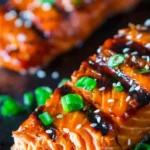
Grilled Teriyaki Salmon
- Total Time: 135 minutes
- Yield: 6 servings 1x
- Diet: Pescatarian
Description
A simple and easy teriyaki salmon recipe that will be on repeat during grilling season.
Ingredients
- 1/2 cup brown sugar
- 3 garlic cloves, minced
- 1 tsp ginger, minced
- 1/2 tsp red pepper flakes
- 1 cup low sodium soy sauce
- 2 tbsp rice vinegar
- 2 tbsp olive oil
- 1/4 cup green onion, chopped
- 2 lb king salmon fillets
- 2 tsp corn starch
Instructions
- Step 1: In a bowl, combine brown sugar, garlic, ginger, soy sauce, red pepper flakes, and rice vinegar. Reserve 1/2 cup and set aside into a small saucepan.
- Step 2: In the bowl with the larger amount of the marinade add olive oil and chopped green onion.
- Step 3: Place the salmon fillets in a large zip-lock bag and pour the marinade into the bag. Close tightly and refrigerate for at least 1 hour.
- Step 4: Mix 2 tsp corn starch with 1 tsp water. Add the dissolved corn starch to the reserved 1/2 cup of the soy sauce mixture. cook on medium high heat until it begins to thicken into a glaze (about 10 minutes).
- Step 5: Fire up the grill on medium heat and spray generously with nonstick spray. Cook the marinated salmon fillets about 6 minutes on each side.
- Step 6: Once the salmon is cooked through completely, remove from the grill and brush the glaze on top. Serve hot.
Notes
Serve with white rice or wild brown rice.
- Prep Time: 120 minutes
- Cook Time: 15 minutes
- Category: Main Course
- Method: Grilling
- Cuisine: Asian-American
Nutrition
- Serving Size: 1 fillet
- Calories: 361 kcal
- Sugar: 18 g
- Sodium: 1492 mg
- Fat: 14 g
- Saturated Fat: 2 g
- Unsaturated Fat: 12 g
- Trans Fat: 0 g
- Carbohydrates: 23 g
- Fiber: 1 g
- Protein: 32 g
- Cholesterol: 83 mg
Keywords: grilled teriyaki salmon, king salmon, grilled fish, Asian-American cuisine