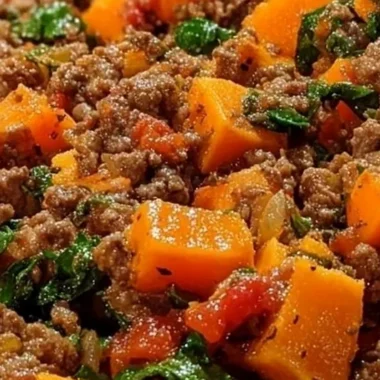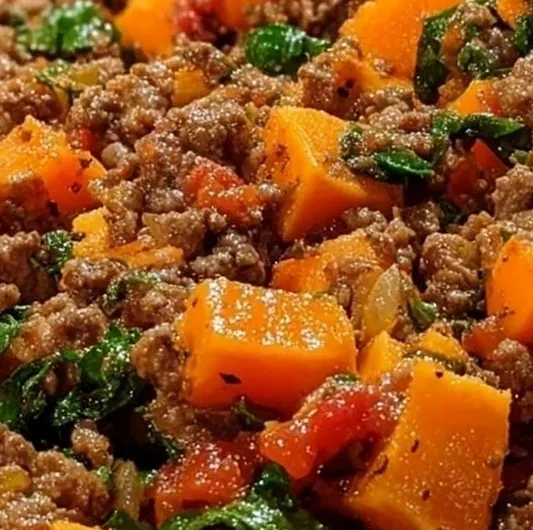
This ground beef and sweet potato skillet is a masterclass in efficient, flavorful home cooking, bringing together earthy root vegetables and savory protein in a single vessel. Designed for maximum nutritional density and minimal cleanup, this one-pan dinner provides a balanced profile of fiber, complex carbohydrates, and high-quality protein. It is a reliable solution for busy weeknights when you desire a home-cooked meal without the burden of multiple pots or extensive prep time.
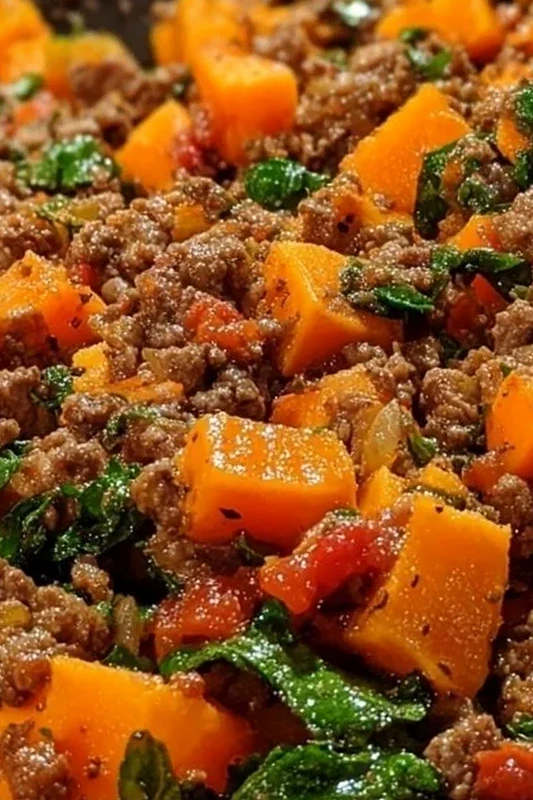
List of ingredients
- 1 lb ground beef
- 2 medium sweet potatoes, peeled and diced
- 1 small onion, chopped
- 2 cloves garlic, minced
- 1 cup diced tomatoes, canned or fresh
- 2 cups spinach or kale, chopped
- 1 tablespoon olive oil
- 1 teaspoon salt
- 1/2 teaspoon black pepper
- 1/2 teaspoon smoked paprika or chili powder (optional)
step-by-step instructions
- Step: Heat olive oil in a large skillet over medium heat. Add chopped onion and sauté for 3–4 minutes until soft.
- Step: Stir in minced garlic and cook for 30 seconds until fragrant.
- Step: Add ground beef and break it up with a spoon. Cook until browned and fully cooked, about 6–8 minutes. Drain excess fat if needed.
- Step: Add diced sweet potatoes and stir to combine. Let cook for 5 minutes to begin softening.
- Step: Pour in diced tomatoes. Cover the skillet and reduce heat. Simmer for 10–15 minutes, stirring occasionally, until sweet potatoes are fork-tender.
- Step: Add spinach or kale and cook until wilted, about 2 minutes.
- Step: Season with salt, pepper, and paprika or chili powder if using. Stir well and adjust seasoning to taste.
- Step: Serve warm, optionally over rice, quinoa, or with a fried egg on top.
Refining Your Skillet Technique
Achieving Uniform Potato Texture
To ensure all your sweet potato pieces cook at the same speed, focus on the precision of your knife work. Aim for half-inch cubes; when pieces are significantly larger than others, the smaller ones disintegrate into a paste while the larger ones remain hard and raw in the center. Consistency in cutting size is the single most important factor in achieving that perfect bite where the potato is tender but still holds its shape.
Managing Moisture Levels
If you prefer a thicker, less sauce-heavy skillet, leave the lid off for the final three minutes of the simmering process. This allows excess liquid from the tomatoes and beef to evaporate, resulting in a more concentrated flavor profile. Conversely, if the pan appears too dry, a tablespoon or two of vegetable broth can be added to help the potatoes steam properly without needing to increase the oil content.
Customizing Your Flavor Profiles
Selecting the Best Greens
While spinach is the classic choice due to its mild flavor and quick wilting time, kale offers a heartier, more robust texture that holds up well if you are planning to reheat this dish later in the week. If choosing kale, massage the leaves briefly with a pinch of salt before adding them to the skillet; this breaks down the cellular structure, making the greens more tender and easier to digest.
Enhancing with Savory Additions
For those looking to build more complex flavors without adding heavy fats, consider a splash of balsamic vinegar right at the end of the cooking process. The slight acidity cuts through the natural sugars of the sweet potatoes and the richness of the beef. Alternatively, adding a pinch of ground cumin or coriander can push the profile toward a warm, aromatic finish that complements the smoked paprika perfectly.
Optimizing for Meal Prep
Managing Batch Storage
This dish is exceptionally well-suited for long-term planning, as the flavors often meld together better after resting in the refrigerator for twenty-four hours. Ensure you allow the skillet to reach room temperature before sealing it in airtight glass containers to prevent excess condensation from softening the potatoes further. If you intend to eat this throughout the week, consider slightly under-cooking the sweet potatoes by two minutes, as the residual heat during storage will complete the cooking process.
Freezer Stability Factors
When freezing, avoid adding delicate herbs or greens until the moment of reheating, as they can lose their color and vibrancy during the thawing process. Portion the beef and potato base into individual servings to make defrosting quick and simple, especially for work lunches. When ready to eat, move the portion to the refrigerator overnight, then reheat on the stovetop rather than the microwave to preserve the original texture of the vegetables.
Troubleshooting Common Issues
Addressing Excess Saltiness
If you accidentally add too much salt, the best way to counteract the flavor is by increasing the volume of the other ingredients. Adding a bit more diced tomato or a small amount of extra sautéed onion can help dilute the saltiness without needing to drain away the pan juices. You can also incorporate a starch like cooked white rice or quinoa, which acts as a neutral canvas to balance out the intense seasoning of the primary mixture.
Fixing Under-Cooked Sweet Potatoes
If you find that the beef is cooked but the potatoes are still firm after the standard fifteen minutes, do not panic. Simply add three tablespoons of warm water, cover the pan tightly, and set the heat to the lowest setting for an additional five to seven minutes. The trapped steam will effectively penetrate the center of the potatoes, ensuring they reach a buttery consistency without scorching the bottom of the beef mixture.
Serving Variations and Accompaniments
Texture Contrasts for Dinner
While the skillet is nutritionally complete on its own, adding a crunch factor can significantly enhance the eating experience. Toasted pumpkin seeds or slivered almonds sprinkled over the top just before serving provide a pleasant contrast to the soft potatoes and tender beef. This addition also adds a subtle nutty undertone that pairs beautifully with the sweetness of the root vegetables.
Refreshing Toppings
Consider using fresh herbs like cilantro, parsley, or green onions to finish the dish. These fresh elements cut through the savory fat and add a bright, herbaceous note that elevates the skillet from a simple comfort meal to something more vibrant. For a creamy finish that remains dairy-free, a small dollop of coconut cream or a drizzle of tahini sauce can add a layer of luxurious texture that blends seamlessly with the other ingredients.
Addressing Common Cooking Questions
Can I prepare this in a slow cooker?
While this recipe is optimized for a stovetop skillet to maintain the texture of the potatoes, you can adapt it for a slow cooker if you prefer. Brown the beef and onions in a separate pan first to develop flavor, then add everything to the slow cooker on low for three hours. Monitor the potatoes closely, as they can break down into a mash if left in a slow cooker for too long.
How do I make this dish vegetarian?
You can substitute the ground beef with brown lentils or a high-quality plant-based protein crumble. If using lentils, ensure they are pre-cooked or sprouted so they do not soak up all the liquid in the pan meant for the potatoes. The cooking time will remain relatively similar, but you may need to adjust your seasoning as plant-based proteins often require slightly more salt or savory herbs to mimic the depth of beef.
Are sweet potatoes better than other starches?
Sweet potatoes provide a superior nutritional profile for a skillet meal compared to white potatoes due to their high beta-carotene content and complex fiber structure. Their natural sugar content undergoes a mild caramelization when sautéed, which provides a depth of flavor that standard Russet or Yukon Gold potatoes simply cannot replicate. They also hold their shape better when simmered in acidic tomato bases, making them the superior choice for this specific cooking method.
What is the ideal way to reheat leftovers?
The best method for reheating is using a cast-iron skillet over medium-low heat with a tiny splash of water. This creates a gentle steam effect that keeps the beef moist and the potatoes from turning mushy. Avoid high-heat microwave settings, as these tend to dry out the protein fibers, leading to a tough and rubbery texture that is far less enjoyable than the original freshly prepared dish.
Print
Ground Beef and Sweet Potato Skillet
- Total Time: PT30M
- Yield: 4 servings 1x
- Diet: Gluten-free, Paleo-friendly
Description
A quick, hearty one-pan dinner loaded with protein and veggies, this ground beef and sweet potato skillet is perfect for busy weeknights. It’s a healthy recipe packed with sweet potatoes, lean beef, tomatoes, and greens—all cooked in one pan for an easy dinner idea. Ideal for gluten-free, paleo-friendly diets and perfect for meal prep.
Ingredients
- 1 lb ground beef
- 2 medium sweet potatoes, peeled and diced
- 1 small onion, chopped
- 2 cloves garlic, minced
- 1 cup diced tomatoes, canned or fresh
- 2 cups spinach or kale, chopped
- 1 tablespoon olive oil
- 1 teaspoon salt
- 1/2 teaspoon black pepper
- 1/2 teaspoon smoked paprika or chili powder (optional)
Instructions
- Step: Heat olive oil in a large skillet over medium heat. Add chopped onion and sauté for 3–4 minutes until soft.
- Step: Stir in minced garlic and cook for 30 seconds until fragrant.
- Step: Add ground beef and break it up with a spoon. Cook until browned and fully cooked, about 6–8 minutes. Drain excess fat if needed.
- Step: Add diced sweet potatoes and stir to combine. Let cook for 5 minutes to begin softening.
- Step: Pour in diced tomatoes. Cover the skillet and reduce heat. Simmer for 10–15 minutes, stirring occasionally, until sweet potatoes are fork-tender.
- Step: Add spinach or kale and cook until wilted, about 2 minutes.
- Step: Season with salt, pepper, and paprika or chili powder if using. Stir well and adjust seasoning to taste.
- Step: Serve warm, optionally over rice, quinoa, or with a fried egg on top.
Notes
Use lean ground beef for a lighter version of this dish. Add shredded cheese after cooking for a creamy topping. This dish freezes well—perfect for batch cooking or meal prep.
- Prep Time: PT10M
- Cook Time: PT20M
- Category: Dinner
- Method: Skillet
- Cuisine: American
Nutrition
- Serving Size: 1 serving
- Calories: 385 kcal
- Sugar: 7g
- Sodium: 510mg
- Fat: 18g
- Saturated Fat: 6g
- Unsaturated Fat: 10g
- Trans Fat: 0g
- Carbohydrates: 28g
- Fiber: 5g
- Protein: 26g
- Cholesterol: 70mg
Keywords: easy dinner, one-pan meal, healthy recipe, gluten-free, sweet potato recipe, ground beef skillet, meal prep, quick weeknight dinner