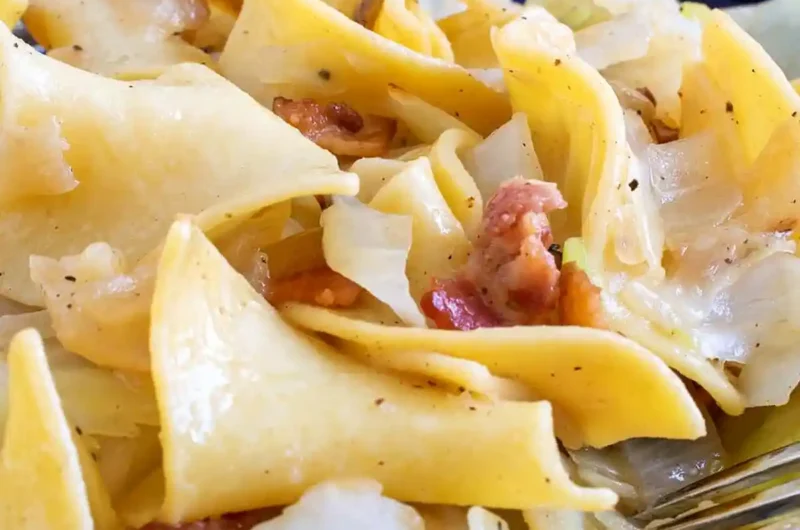
This traditional Eastern European dish combines caramelized cabbage and tender egg noodles in a rich butter sauce. It is a budget-friendly comfort meal that works perfectly as a hearty side or a simple main course.
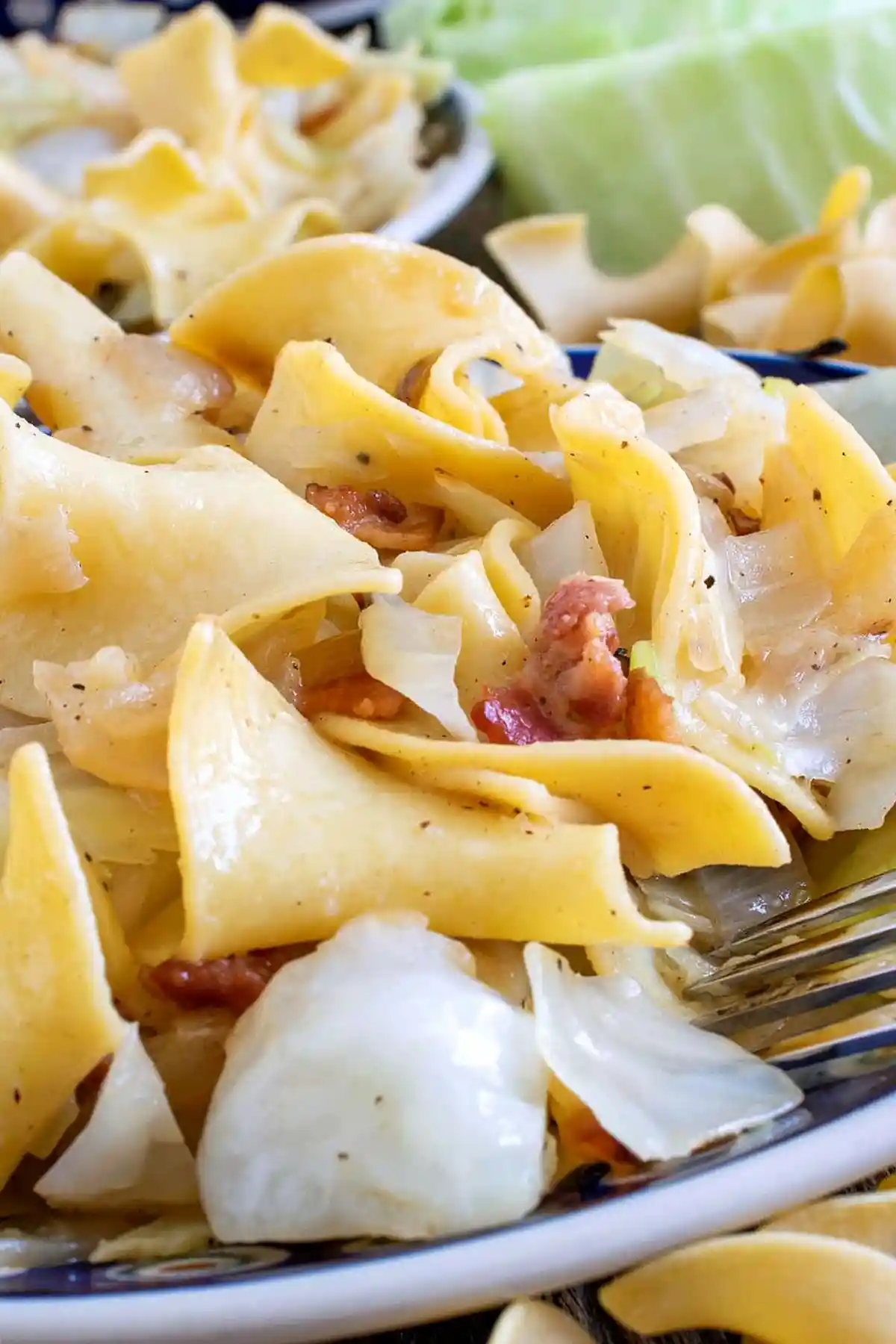
List of ingredients
- 4 ounces turkey bacon, diced small – provides a smoky flavor without pork.
- 6 tablespoons unsalted butter, divided – used for sautéing and finishing.
- 2 cups yellow onion, diced – adds a mild, sweet base.
- 1 1/2 pounds green cabbage, cored and cut into one-inch chunks – the primary vegetable component.
- 1 teaspoon kosher salt – enhances all natural flavors.
- 1/2 teaspoon freshly ground black pepper – provides a necessary pungent kick.
- 6 ounces dry egg noodles, dumpling or extra broad size – ensures a hearty texture.
step-by-step instructions
- Brown the bacon: In a nonstick medium pot, cook the diced turkey bacon over medium heat until it becomes crisp.
- Prepare the pan: Remove the cooked bacon using a spider or strainer, leaving exactly one tablespoon of the fat in the pot and discarding any excess.
- Sauté onions: Maintain medium heat and add two tablespoons of butter along with the diced onions, cooking for approximately two minutes until softened.
- Cook cabbage: Stir in another two tablespoons of butter, the cabbage chunks, salt, and pepper. Once the mixture is heated through, return the cooked turkey bacon to the pot, cover with a lid, and cook on medium-low for ten minutes or until the cabbage reaches a tender consistency.
- Boil noodles: While the cabbage is simmering, cook the dry egg noodles in a separate pot of boiling salted water according to the package instructions.
- Combine ingredients: Once the cabbage is tender, drain the noodles well and add them to the cabbage mixture along with the final two tablespoons of butter.
- Final heat: Stir everything together and heat until the dish reaches serving temperature. Taste and add more salt or black pepper if desired before serving.
Expert Ingredient Selection
Choosing the Right Green Cabbage
Select a dense, heavy head of green cabbage with tightly packed leaves. Avoid cabbage that feels soft or has brown spots on the outer layers. Fresh, crisp cabbage maintains its structure better during the frying process, preventing it from becoming overly mushy.
Selecting Premium Egg Noodles
Extra broad egg noodles or dumpling-style noodles are ideal because their thickness stands up to the heavy butter sauce. Look for noodles made with high-quality flour and eggs to ensure they remain chewy rather than gummy. Avoid thin pasta varieties that may break apart during the final mixing stage.
The Importance of Unsalted Butter
Using unsalted butter allows for precise control over the sodium levels in the dish. Since the turkey bacon and kosher salt already contribute salinity, unsalted butter prevents the final result from becoming overly salty. High-fat European-style butter can add an extra layer of richness if available.
Turkey Bacon as a Flavor Base
Turkey bacon serves as an excellent replacement for traditional cured meats, providing the necessary smoky depth and saltiness. Ensure the bacon is diced into very small, uniform pieces so that the flavor is evenly distributed throughout the cabbage and noodles. Sautéing it until crisp ensures a pleasant textural contrast.
Advanced Cooking Techniques
Achieving Proper Caramelization
The key to deep flavor in Haluski is the caramelization of the onions and cabbage. Allow the vegetables to brown slightly without stirring constantly, which lets the natural sugars react with the heat. This process creates a savory, nutty profile that balances the sweetness of the cabbage.
Managing Heat for Texture
Keep the heat on medium-low when the pot is covered to steam the cabbage gently. High heat can burn the bottom of the cabbage before the centers are tender. Using a lid traps moisture and heat, ensuring the cabbage cooks evenly throughout the one-inch chunks.
Preventing Noodle Overcooking
Cook the egg noodles for one minute less than the package directions suggest for ‘al dente’. The noodles will continue to cook slightly when they are tossed with the hot cabbage and butter. This prevents them from becoming too soft or falling apart during the final heating phase.
Emulsifying the Finishing Butter
Adding the final two tablespoons of butter at the very end creates a glossy coating on the noodles. Stir the butter in vigorously over low heat to ensure it emulsifies with any remaining cabbage juices. This prevents the dish from feeling greasy and instead creates a smooth, cohesive sauce.
Customizations and Variations
Adding Caraway Seeds for Earthiness
For a more traditional Central European taste, stir in half a teaspoon of caraway seeds when adding the cabbage. Caraway adds a distinct, anise-like flavor that cuts through the richness of the butter. Toast the seeds briefly in the butter before adding the vegetables for maximum aroma.
Incorporating Smoked Turkey Sausage
To make the dish more filling, add sliced smoked turkey sausage along with the turkey bacon. Sauté the sausage slices until browned before adding the onions. This adds a different textural element and increases the overall protein content of the meal.
Using Savoy Cabbage for Texture
Savoy cabbage is a great alternative if you prefer a more crinkled texture and a slightly milder flavor. Because Savoy cabbage has thinner leaves, it may cook faster than standard green cabbage. Reduce the covered cooking time by two to three minutes to avoid overcooking.
Integrating Sautéed Mushrooms
Sliced cremini or button mushrooms add an earthy, umami dimension to the recipe. Sauté the mushrooms with the onions until their moisture has evaporated and they have browned. This addition pairs exceptionally well with the butter and black pepper.
Serving and Pairing Ideas
Serving as a Main Course
When serving Haluski as a primary entree, increase the portion of turkey bacon and consider adding a side of steamed peas. The addition of a green vegetable provides a fresh contrast to the rich, buttery nature of the noodles. A sprinkle of fresh parsley on top adds color and brightness.
Using Haluski as a Side Dish
This dish pairs excellently with roasted poultry or grilled turkey breasts. The savory cabbage complements the lean protein of the meat. Serve smaller portions to allow the Haluski to act as a flavor-rich accompaniment rather than the center of the meal.
Adding a Tangy Contrast
Serve the finished dish with a side of unsweetened applesauce or a dollop of sour cream. The acidity and coolness of these condiments cut through the fat of the butter and turkey bacon. This creates a balanced palate and enhances the overall eating experience.
Storage and Reheating Guide
Refrigeration Guidelines
Store leftover Haluski in an airtight container in the refrigerator for up to three days. Ensure the dish has cooled slightly before sealing the lid to prevent excessive condensation. Keep the container tightly sealed to prevent the noodles from absorbing odors from other foods.
Stovetop Reheating Method
For the best texture, reheat the dish in a skillet over medium-low heat. Add a small knob of butter or a tablespoon of water to restore the moisture and creaminess of the sauce. Stir gently to avoid breaking the noodles while heating through.
Microwave Reheating Tips
Place a portion of Haluski in a microwave-safe bowl and cover it with a damp paper towel. Heat in 30-second intervals, stirring in between, to ensure the heat is distributed evenly. This method prevents the edges of the noodles from becoming hard or rubbery.
Make-Ahead Advice
Preparing the Cabbage Base
The cabbage and onion mixture can be cooked several days in advance and stored in the fridge. When you are ready to serve, simply boil the noodles fresh and combine them with the pre-cooked cabbage. This reduces the final preparation time to only a few minutes.
Freezing Considerations
It is not recommended to freeze the completed dish, as the egg noodles often become mushy upon thawing. However, you can freeze the sautéed cabbage and turkey bacon mixture. Thaw this mixture overnight in the refrigerator before reheating and tossing with freshly boiled noodles.
Troubleshooting Common Issues
Fixing Watery Cabbage
If the cabbage releases too much liquid, remove the lid and increase the heat to medium-high for a few minutes. Allow the liquid to evaporate and the cabbage to fry in the remaining butter. This ensures the dish remains a ‘fry’ rather than a ‘stew’.
Preventing Stuck Noodles
If the noodles clump together after draining, toss them with a teaspoon of oil or butter immediately. This creates a barrier that prevents the starches from bonding. Ensure you drain the noodles thoroughly in a colander so that excess water does not dilute the cabbage sauce.
Adjusting Overly Salty Results
If the dish tastes too salty due to the turkey bacon, add a small squeeze of lemon juice or a teaspoon of apple cider vinegar. The acidity helps neutralize the perception of salt on the tongue. You can also add an extra handful of fresh cabbage to bulk up the volume and dilute the saltiness.
Frequently Asked Questions
Can I use red cabbage?
You can use red cabbage, but it will change the color of the entire dish to a purplish hue. The flavor is also slightly more peppery and less sweet than green cabbage. If you use red cabbage, be aware that the visual presentation will be significantly different.
Can I make this dish without butter?
You can substitute butter with a neutral oil or a plant-based butter alternative. However, the distinct flavor and creamy mouthfeel of Haluski come primarily from the butter. If using oil, you may want to add a pinch of garlic powder to compensate for the loss of flavor.
What can I use instead of egg noodles?
While egg noodles are traditional, you can use spiral pasta or bowtie pasta for a different shape. Avoid using rice or corn pasta, as they lack the necessary structure to hold onto the butter sauce. Ensure whatever pasta you choose is cooked to al dente before mixing.
How do I stop the cabbage from burning?
If the cabbage begins to brown too quickly, add a tablespoon of water or vegetable broth to the pan. This lowers the surface temperature and introduces steam, which helps soften the cabbage. Continue stirring frequently to ensure even heat distribution.
Print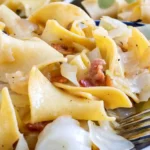
Haluski (Fried Cabbage and Noodles)
- Total Time: 25 minutes
- Yield: 4 servings 1x
- Diet: General
Description
Haluski is a simple, rustic, and traditional dish made with fried cabbage and noodles in butter.
Ingredients
- 4 ounces beef bacon, diced small
- 6 tablespoons unsalted butter, divided
- 2 cups yellow onion, diced
- 1 1/2 pounds green cabbage, cored and cut into one-inch chunks
- 1 teaspoon kosher salt
- 1/2 teaspoon freshly ground black pepper
- 6 ounces dry egg noodles, dumpling or extra broad size
Instructions
- Step: In a nonstick medium pot, cook beef bacon to crisp over medium heat.
- Step: Remove beef bacon with a spider or strainer and leave one tablespoon of the beef bacon fat in the pan. Discard the rest.
- Step: Keep heat on medium and add two tablespoons of butter and the onions and cook two minutes.
- Step: Add another two tablespoons of butter, cabbage, salt, and pepper and cook. Once heated, add cooked beef bacon, cover, and cook ten minutes on medium low or until cabbage is tender.
- Step: While cabbage is cooking, cook egg noodles per package instructions.
- Step: Once cabbage is tender, add drained cooked noodles along with the remaining two tablespoons of butter.
- Step: Heat to serving temperature, taste for additional salt and pepper and serve.
Notes
This dish traditionally is served heavy on black pepper, but adjust to your taste preference.
- Prep Time: 10 minutes
- Cook Time: 15 minutes
- Category: entree
- Method: boil, fry
- Cuisine: Polish
Nutrition
- Serving Size: 1 serving
- Calories: 580 kcal
- Sugar: 6 g
- Sodium: 850 mg
- Fat: 38 g
- Saturated Fat: 18 g
- Unsaturated Fat: 15 g
- Trans Fat: 0 g
- Carbohydrates: 32 g
- Fiber: 4 g
- Protein: 16 g
- Cholesterol: 85 mg
Keywords: Haluski, fried cabbage and noodles, Polish cuisine, comfort food