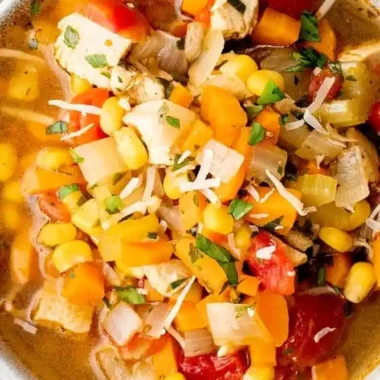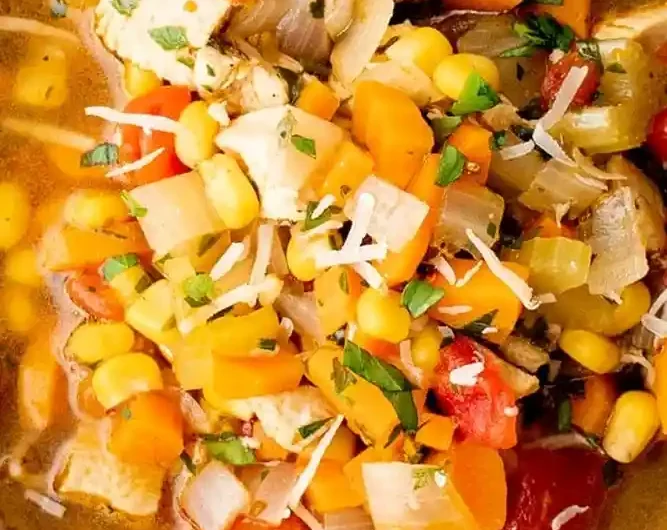
This nourishing chicken vegetable soup combines tender meat, fresh garden vegetables, and pasta in a savory broth. It is a quick, one-pot meal that provides a balanced dinner in just 30 minutes. Perfect for cold weather or a comforting family meal.
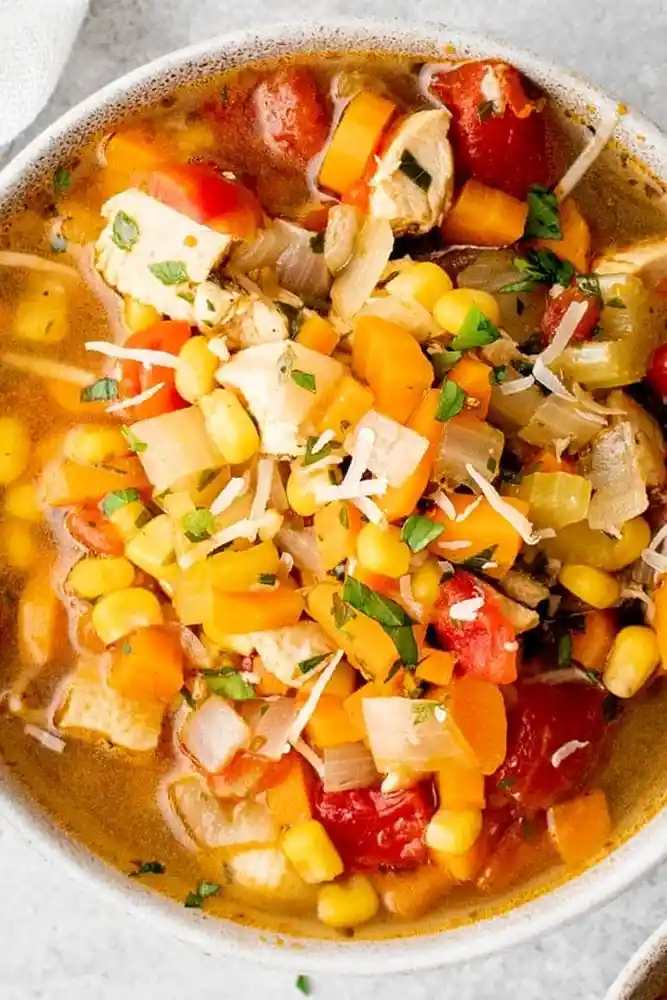
List of ingredients
- 2 tablespoons extra virgin olive oil – used for sautéing the base vegetables.
- 1 cup diced carrots – provides sweetness and color.
- 1 cup diced celery – adds a classic savory aromatic base.
- 1 cup diced onion – essential for depth of flavor.
- 1 teaspoon minced garlic – adds a pungent, aromatic quality.
- 2 tablespoons dried oregano – gives the soup an earthy, herbal note.
- 1 bay leaf – adds a subtle floral depth to the broth.
- 6-8 cups low sodium chicken stock – the liquid base for the soup.
- 1 cup corn (fresh or canned, drained) – adds texture and mild sweetness.
- 15 ounces can diced tomatoes (undrained) – provides acidity and body.
- 2 cups diced or shredded chicken – cooked chicken for protein.
- 2 cups uncooked small pasta or egg noodles (3-4 cups cooked) – for heartiness.
- Salt and pepper to taste – used to balance the overall seasoning.
- 2 tablespoons fresh parsley (chopped) – for a bright, fresh finish.
- Fresh grated Parmesan cheese (optional) – for a salty, nutty garnish.
step-by-step instructions
- Sauté the Aromatics: Heat olive oil in a 5-quart dutch oven over medium-high heat. Add the onions, carrots, and celery with a pinch of salt, cooking for about 5 minutes until they begin to soften.
- Toast the Spices: Stir in the minced garlic, dried oregano, bay leaf, and a pinch of black pepper. Cook for 1 minute to release the essential oils and fragrance of the herbs.
- Simmer the Soup: Add the shredded chicken, undrained diced tomatoes, corn, and chicken stock to the pot. Bring the mixture to a boil, then reduce the heat to low, cover, and simmer for 15-20 minutes.
- Prepare the Pasta: While the soup simmers, boil a separate pot of water and cook the pasta until it reaches an al dente texture. Drain the pasta and set it aside.
- Final Touch and Serving: Stir fresh chopped parsley into the soup just before turning off the heat. To serve, place a portion of cooked pasta in each bowl and ladle the soup over it. Garnish with extra parsley and grated Parmesan cheese if desired.
Customizing Your Vegetable Mix
Incorporating Leafy Greens
You can add a handful of fresh spinach or chopped kale during the last few minutes of simmering. These greens wilt quickly and add significant nutrients without altering the flavor profile. Stir them in right before the parsley for the best color.
Using Frozen Mixed Vegetables
If you are short on time, a frozen blend of peas, carrots, and corn can replace the fresh versions. Add frozen vegetables directly to the broth during the simmer phase. Note that frozen peas should be added at the very end to prevent them from becoming mushy.
Adding Root Vegetables for Texture
Parsnips or turnips can be diced similarly to carrots to add an earthy, complex flavor. These vegetables take slightly longer to cook, so ensure they are diced small. Sauté them along with the onions and celery at the start.
Integrating Green Beans or Zucchini
Fresh sliced green beans or diced zucchini add a nice crunch and freshness. Add these during the last 10 minutes of the simmering process. This prevents the zucchini from breaking down too much in the hot liquid.
Chicken Preparation and Selection
Utilizing Rotisserie Chicken
A store-bought rotisserie chicken is an excellent shortcut for this recipe. Simply remove the skin and shred the meat into bite-sized pieces. This often adds a deeper roasted flavor to the final broth.
Poaching Fresh Chicken Breasts
If you have raw breasts, poach them gently in simmering chicken broth until cooked through. Once cooled slightly, dice or shred the meat. This method ensures the chicken remains moist and tender in the soup.
Using Chicken Thighs for Richness
Boneless, skinless chicken thighs offer more flavor and a richer texture than breasts. Cook them separately or simmer them in the pot longer if using raw meat. Their higher fat content contributes to a more velvety broth.
Preparing Leftover Roasted Chicken
Leftover chicken from a previous roast or grilled meal works perfectly here. Ensure any charred bits are removed to keep the broth clear. Chop the meat into uniform cubes for consistent bites.
Enhancing the Broth Flavor
Controlling Sodium Levels
Using low-sodium chicken stock allows you to control the salt level more accurately. Taste the soup frequently and add salt in small increments. This prevents the broth from becoming overly salty as it reduces.
Adding a Tangy Citrus Finish
Squeeze a fresh lemon wedge into the pot just before serving to brighten the flavors. The acidity cuts through the richness of the chicken and stock. This is a professional chef’s trick for making homemade soups taste more vibrant.
Creating Homemade Chicken Stock
For a superior taste, use a homemade stock made from chicken carcasses and aromatic vegetables. Homemade stock generally has more gelatin, which gives the soup a better mouthfeel. Store extra stock in the freezer for future batches.
Experimenting with Fresh Herbs
While dried oregano is standard, fresh thyme or rosemary can be added. Add a sprig of fresh thyme during the simmering process and remove it before serving. These herbs provide a woody aroma that complements the carrots and celery.
Pasta Guide and Alternatives
Selecting the Best Pasta Shape
Small shapes like ditalini, macaroni, or small shells are ideal because they fit easily on a spoon. Egg noodles are also a classic choice for a heartier, more traditional feel. Choose a pasta that complements the size of the diced vegetables.
Implementing Gluten-Free Substitutes
You can easily swap traditional pasta for gluten-free alternatives made from brown rice or corn. Follow the package instructions for cooking to avoid the pasta becoming too sticky. Orzo-shaped gluten-free pasta works well for this specific recipe.
The Logic of Separate Cooking
Cooking pasta in a separate pot prevents the starch from thickening the soup broth. This keeps the broth clear and prevents the pasta from absorbing all the liquid. It also ensures the pasta stays al dente regardless of how long the soup is stored.
Low-Carb Pasta Replacements
For a lower-carb version, replace wheat pasta with zucchini noodles or cauliflower florets. If using zucchini noodles, simply sauté them briefly or add them to the bowl raw and ladle hot soup over them. This maintains a crisp texture.
Slow Cooker Adaptation
Crockpot Settings and Timing
Place all ingredients except the pasta and parsley into the slow cooker. Set the device to LOW for 6-8 hours or HIGH for 3-4 hours. This slow extraction of flavor results in a very deep and integrated taste.
Managing Herbs in the Slow Cooker
Avoid adding fresh parsley at the start of a slow cooker cycle, as it will lose its flavor and color. Stir in the fresh herbs only after the cooking cycle is complete. Similarly, add the bay leaf at the start but remove it before serving.
Adjusting Liquid for Slow Cooking
Slow cookers lose less moisture through evaporation than a dutch oven. You may want to reduce the chicken stock by one cup if you prefer a thicker soup. Always check the consistency before the final serving.
Storage and Food Safety
Refrigeration Guidelines
Store the leftover soup in an airtight container in the refrigerator for up to 4 days. It is highly recommended to store the cooked pasta in a separate container. This prevents the pasta from swelling and turning mushy over time.
Freezing the Soup Base
The soup base freezes exceptionally well for up to 3 months. Remove the bay leaf before freezing to prevent the flavor from becoming too intense. Always freeze the soup without the pasta, as noodles do not freeze and thaw well.
Safe Reheating Methods
To reheat, place the soup in a saucepan over medium heat until it reaches a simmer. If the broth has thickened too much in the fridge, add a splash of water or extra stock. Reheat the pasta separately in boiling water or a microwave.
Preventing Oxidation
To keep the vegetables from discoloring, cool the soup quickly before putting it in the fridge. Using a shallow container helps the soup cool down faster and more evenly. This maintains the integrity of the vegetable textures.
Troubleshooting Common Issues
Fixing a Too-Thick Broth
If the soup becomes too thick, simply stir in half a cup of water or additional chicken stock. Do this gradually until the desired consistency is reached. Ensure you taste for salt after adding more liquid to maintain balance.
Adjusting Overly Salty Soup
If the broth is too salty, add a peeled, halved potato and simmer it for 15 minutes. The potato absorbs some of the excess salt from the liquid. Remove the potato before serving the soup.
Preventing Mushy Vegetables
Avoid overcooking the root vegetables during the initial sauté phase. They should be slightly softened but still hold their shape. Remember that they will continue to cook during the 20-minute simmer period.
Dealing with Cloudy Broth
Cloudiness usually occurs from boiling the soup too vigorously or from pasta starch. Keep the soup at a gentle simmer rather than a rolling boil. Always cook the pasta separately to ensure a clear, professional-looking broth.
Frequently Asked Questions
What vegetables work best in chicken soup?
While carrots, celery, and onions are the gold standard, peas, corn, and diced tomatoes add great texture. You can also include zucchini or spinach for extra nutrition. The best mix depends on your personal preference and what is in season.
Can I freeze chicken soup?
Yes, you can freeze the soup base for several months. However, you must omit the pasta and fresh parsley before freezing. Thaw the soup in the refrigerator and cook fresh pasta to add when reheating.
How do I add more flavor to the broth?
Toasting the garlic and oregano at the beginning is key to unlocking depth. You can also add a squeeze of lemon juice or a pinch of paprika for a different flavor profile. Using a high-quality bone broth instead of stock also increases richness.
Can I make this in a slow cooker?
Absolutely. Simply combine the ingredients (minus pasta and parsley) and cook on low for 6-8 hours. Cook your pasta separately and stir in the parsley right before serving for the best results.
Print
Hearty Chicken and Vegetable Soup with Pasta
- Total Time: 30 minutes
- Yield: 6 servings 1x
- Diet: General
Description
Chicken Vegetable Soup has simple ingredients like tender chicken, fresh vegetables and pasta in a rich broth, and it’s ready in 30 minutes.
Ingredients
- 2 tablespoons extra virgin olive oil
- 1 cup diced carrots
- 1 cup diced celery
- 1 cup diced onion
- 1 teaspoon minced garlic
- 2 tablespoons dried oregano
- 1 bay leaf
- 6–8 cups low sodium chicken stock
- 1 cup corn (fresh or canned, drained)
- 15 ounces can diced tomatoes (undrained)
- 2 cups diced or shredded chicken
- 2 cups uncooked small pasta or egg noodles
- Salt and pepper to taste
- 2 tablespoons fresh parsley (chopped)
- Fresh grated Parmesan cheese (optional)
Instructions
- Sauté: In a 5-quart dutch oven, heat olive oil for over medium-high heat. Add onions, carrots and celery. Add a pinch of salt to the vegetables and cook until they begin to soften; about 5 minutes.
- Season: Add garlic, oregano, bay leaf and a pinch of black pepper. Cook for 1 minute.
- Simmer: Add shredded chicken, tomatoes, corn and broth. Bring soup to a boil, then reduce heat to low. Cover and simmer for 15-20 minutes. Stir in chopped parsley just before serving.
- Cook Pasta: Meanwhile, boil a pot of water for the pasta and cook to al dente. Drain and set aside.
- Serve: To serve, spoon desired amount of pasta in each bowl and ladle soup over the pasta. Garnish with chopped parsley and grated Parmesan cheese, if desired.
Notes
Storage: Store leftover soup in an airtight container in the refrigerator for 3-4 days. Store the pasta in a separate container. Reheating: The soup and pasta can be reheated together in a saucepan or in a microwave safe bowl.
- Prep Time: 10 minutes
- Cook Time: 20 minutes
- Category: Dinner
- Method: Simmering
- Cuisine: American
Nutrition
- Serving Size: 1 serving
- Calories: 344 kcal
- Sugar: 7 g
- Sodium: 240 mg
- Fat: 9 g
- Saturated Fat: 2 g
- Unsaturated Fat: 7 g
- Trans Fat: 0 g
- Carbohydrates: 42 g
- Fiber: 4 g
- Protein: 26 g
- Cholesterol: 40 mg
Keywords: chicken vegetable soup