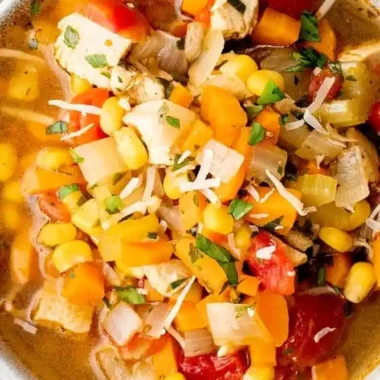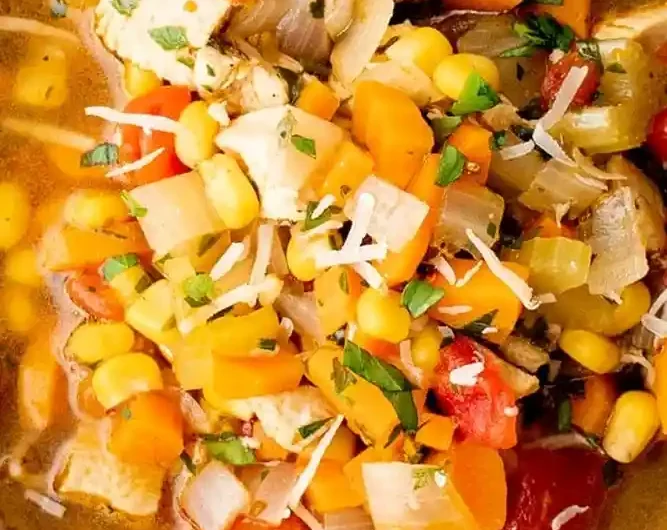
This nourishing chicken vegetable soup combines tender pieces of poultry with a vibrant medley of fresh vegetables and pasta in a savory, aromatic broth. It is an ideal meal for busy weeknights, offering a comforting and balanced dish that comes together in just thirty minutes. By using simple pantry staples and fresh produce, you can create a restaurant-quality soup right in your own kitchen that satisfies the entire family.

List of ingredients
- 2 tablespoons extra virgin olive oil
- 1 cup diced carrots
- 1 cup diced celery
- 1 cup diced onion
- 1 teaspoon minced garlic
- 2 tablespoons dried oregano
- 1 bay leaf
- 6-8 cups low sodium chicken stock
- 1 cup corn (fresh or canned, drained)
- 15 ounces can diced tomatoes (undrained)
- 2 cups diced or shredded chicken
- 2 cups uncooked small pasta or egg noodles
- Salt and pepper to taste
- 2 tablespoons fresh parsley (chopped)
- Fresh grated Parmesan cheese (optional)
step-by-step instructions
- Step: In a 5-quart dutch oven, heat olive oil over medium-high heat. Add onions, carrots and celery. Add a pinch of salt to the vegetables and cook until they begin to soften; about 5 minutes.
- Step: Add garlic, oregano, bay leaf and a pinch of black pepper. Cook for 1 minute.
- Step: Add shredded chicken, tomatoes, corn and broth. Bring soup to a boil, then reduce heat to low. Cover and simmer for 15-20 minutes. Stir in chopped parsley just before serving.
- Step: Meanwhile, boil a pot of water for the pasta and cook to al dente. Drain and set aside.
- Step: To serve, spoon desired amount of pasta in each bowl and ladle soup over the pasta. Garnish with chopped parsley and grated Parmesan cheese, if desired.
Refining Your Vegetable Selection
Maximizing Freshness and Texture
To ensure your soup remains satisfying, aim to dice your vegetables into uniform, bite-sized pieces. This consistency allows carrots, celery, and onions to cook at the same rate, preventing some pieces from becoming mushy while others remain raw. If you choose to use heartier vegetables like zucchini or green beans, add them during the final 10 minutes of simmering to maintain their vibrant color and slight snap.
Utilizing Freezer-Friendly Produce
If you have leftover fresh produce nearing the end of its life, this soup is the perfect vehicle for using them up. You can easily substitute the fresh corn with frozen varieties or toss in a handful of peas or spinach right at the end. These additions don’t require long cooking times and help keep the soup nutrient-dense and colorful without any extra preparation work.
Refining the Broth Base
Developing Deeper Savory Notes
The secret to a complex broth is the initial sautéeing of the aromatics. By cooking the onion, carrot, and celery until they just start to caramelize, you release natural sugars that provide a richer foundation than boiling them straight in the stock. Don’t rush this stage, as the initial browning is what distinguishes a flavorful soup from a bland one.
Managing Salt Levels
Because the saltiness of chicken stock can vary significantly by brand, always taste your broth before adding extra salt. Start with a conservative amount and adjust as the soup simmers and reduces. If you find the soup is too salty, adding a small amount of water or extra vegetables can help balance the flavor profile without compromising the integrity of the dish.
Pasta Preparation Strategies
Avoiding Overcooked Starch
One common mistake when making soup is boiling the pasta directly in the broth, which releases starch and creates a cloudy, thick, or mushy consistency. By cooking the pasta separately, you maintain control over the texture and keep the broth clear and clean. This method also prevents the pasta from absorbing all the liquid in the pot if you have leftovers stored in the refrigerator.
Optimal Pasta Varieties
Choose small-shaped pasta like ditalini, small shells, or orecchiette, as these hold the broth beautifully within their shapes. Egg noodles are another classic choice that provides a silky mouthfeel. Regardless of the type chosen, keep the pasta slightly al dente, as it will soften further once combined with the hot liquid in your serving bowl.
Common Questions About Chicken Soup
Can I make this in a slow cooker?
Yes, you can easily adapt this recipe for a slow cooker by combining all ingredients except the pasta and fresh parsley in the crockpot. Cover and cook on low for 2 to 3 hours until the vegetables are tender. Remember to cook your pasta separately and add it to the bowls just before serving to keep the textures perfect.
How should I store leftover soup?
Store your leftover soup in an airtight container in the refrigerator for up to 3 to 4 days. It is highly recommended to store the cooked pasta in a separate container from the soup broth. This prevents the pasta from soaking up too much liquid and becoming bloated while sitting in the fridge.
How can I elevate the flavor?
Adding a squeeze of fresh lemon juice just before serving can provide a bright, acidic kick that cuts through the richness of the chicken stock. Additionally, adding a touch of dried thyme or rosemary alongside the oregano can introduce new layers of herbal depth. Freshly grated Parmesan cheese acts as an excellent finishing element, providing a salty, umami boost that complements the vegetables perfectly.
Managing Soup Leftovers
Effective Reheating Techniques
When reheating individual portions, place the desired amount of soup and pasta into a saucepan over medium heat, stirring occasionally until warmed through. If using a microwave, place the soup in a bowl and heat in short 30-second bursts, stirring in between to ensure even temperature distribution. Be careful not to boil the soup repeatedly, as this can degrade the texture of the vegetables.
Freezing for Future Use
If you intend to freeze the soup, it is best to do so without adding the pasta. The starch in cooked pasta can change consistency drastically when frozen and thawed, often becoming gritty or overly soft. Simply freeze the broth and vegetable mixture in freezer-safe bags or containers, then boil a fresh batch of pasta when you are ready to enjoy the meal again.
Troubleshooting Common Issues
Addressing Thin or Watery Broths
If your soup tastes a bit thin, you can simmer it for an extra 10 minutes uncovered to allow some of the liquid to evaporate and concentrate the flavors. Alternatively, adding a small amount of cornstarch slurry can provide a slightly thicker, more luxurious mouthfeel without altering the taste. Ensure you whisk the slurry thoroughly to avoid any clumps in the final broth.
Fixing Bland or Under-Seasoned Batches
If the soup lacks depth, ensure you have effectively toasted your spices at the beginning. If the result is still underwhelming, a pinch of onion powder or an extra splash of chicken stock can reinvigorate the base. Sometimes, a lack of brightness is the issue, in which case a dash of white vinegar or fresh lemon juice can wake up the ingredients immediately. Always taste and adjust at the very end before adding your garnish.
Managing Vegetable Texture
If you find your carrots or celery are too soft, try cutting them slightly larger or adding them to the pot a few minutes after the onions. Conversely, if you prefer softer vegetables, ensure the simmer stage is steady and the lid remains firmly closed throughout the process. The trap of steam is highly effective at tenderizing root vegetables quickly and efficiently, ensuring they reach a pleasant, melt-in-the-mouth state.
Print
Wholesome Chicken Vegetable Soup
- Total Time: 30 minutes
- Yield: 6 servings 1x
- Diet: High Protein
Description
Chicken Vegetable Soup has simple ingredients like tender chicken, fresh vegetables and pasta in a rich broth, and it’s ready in 30 minutes.
Ingredients
- 2 tablespoons extra virgin olive oil
- 1 cup diced carrots
- 1 cup diced celery
- 1 cup diced onion
- 1 teaspoon minced garlic
- 2 tablespoons dried oregano
- 1 bay leaf
- 6–8 cups low sodium chicken stock
- 1 cup corn (fresh or canned, drained)
- 15 ounces can diced tomatoes (undrained)
- 2 cups diced or shredded chicken
- 2 cups uncooked small pasta or egg noodles
- Salt and pepper to taste
- 2 tablespoons fresh parsley (chopped)
- Fresh grated Parmesan cheese (optional)
Instructions
- Step: In a 5-quart dutch oven, heat olive oil over medium-high heat. Add onions, carrots and celery. Add a pinch of salt to the vegetables and cook until they begin to soften; about 5 minutes.
- Step: Add garlic, oregano, bay leaf and a pinch of black pepper. Cook for 1 minute.
- Step: Add shredded chicken, tomatoes, corn and broth. Bring soup to a boil, then reduce heat to low. Cover and simmer for 15-20 minutes. Stir in chopped parsley just before serving.
- Step: Meanwhile, boil a pot of water for the pasta and cook to al dente. Drain and set aside.
- Step: To serve, spoon desired amount of pasta in each bowl and ladle soup over the pasta. Garnish with chopped parsley and grated Parmesan cheese, if desired.
Notes
Store leftover soup in an airtight container in the refrigerator for 3-4 days. Store the pasta in a separate container. Reheating: The soup and pasta can be reheated together in a saucepan or in a microwave safe bowl.
- Prep Time: 10 minutes
- Cook Time: 20 minutes
- Category: Dinner
- Method: Stovetop
- Cuisine: American
Nutrition
- Serving Size: 1 bowl
- Calories: 344 kcal
- Sugar: 7 g
- Sodium: 240 mg
- Fat: 9 g
- Saturated Fat: 2 g
- Unsaturated Fat: 7 g
- Trans Fat: 0 g
- Carbohydrates: 42 g
- Fiber: 4 g
- Protein: 26 g
- Cholesterol: 40 mg
Keywords: chicken vegetable soup