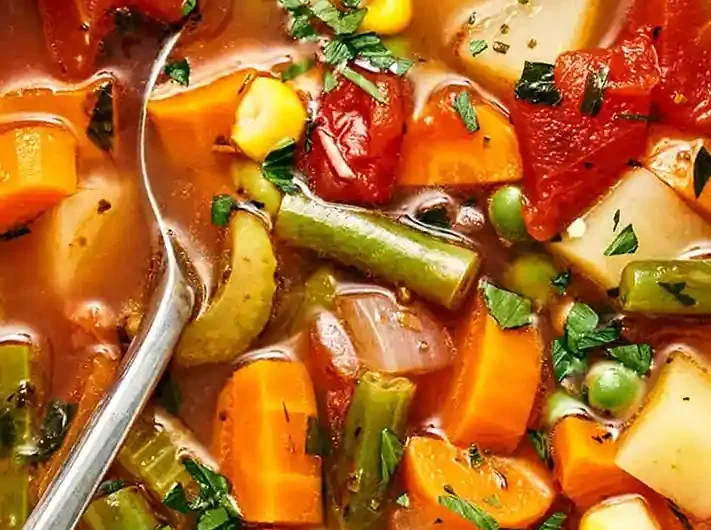
This nutritious vegetable soup is a versatile meal that makes the most of simple, garden-fresh ingredients. It is a light yet filling option perfect for any season.
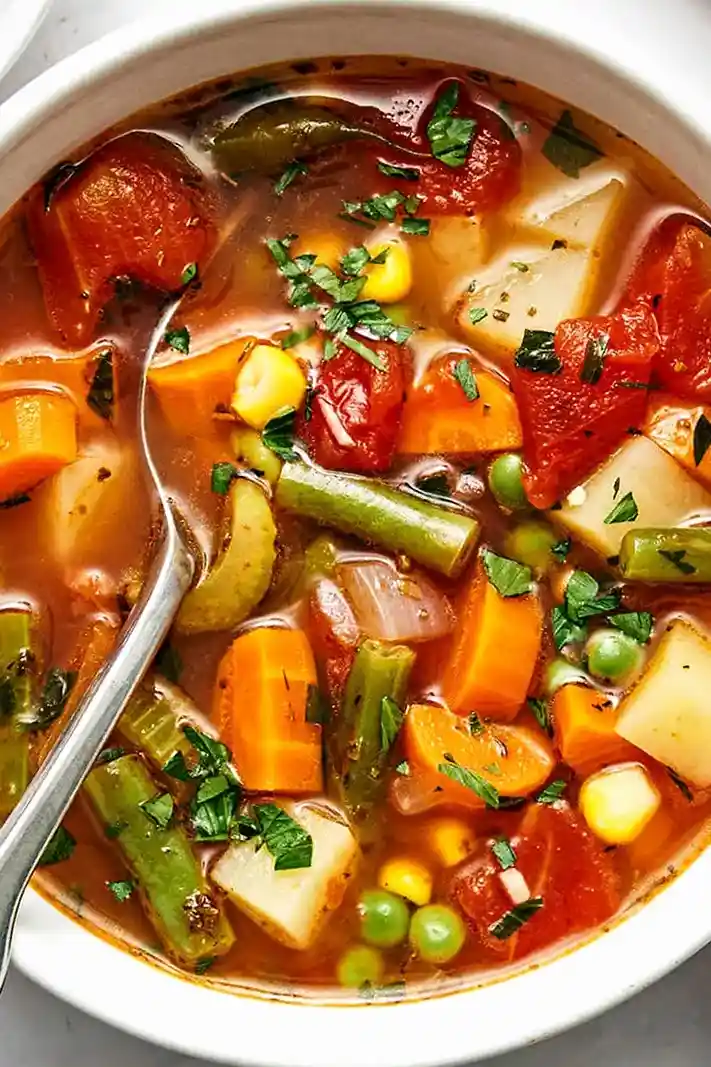
List of ingredients
- 2 tablespoons extra virgin olive oil – used for sautéing the base vegetables.
- 1 medium onion, diced – provides a sweet, aromatic foundation.
- 4 medium carrots, peeled and sliced – adds color and natural sweetness.
- 3 celery ribs, sliced – contributes a savory, earthy depth.
- 4 garlic cloves, minced – provides a pungent, aromatic kick.
- 2 teaspoons Italian seasoning – a blend of dried herbs for classic flavor.
- 1 teaspoon kosher salt – enhances all the natural flavors of the vegetables.
- ½ teaspoon freshly ground black pepper – adds a subtle, warm spice.
- 3 Yukon gold potatoes, peeled and diced – provides heartiness and a creamy texture.
- 1 ½ cups chopped fresh green beans – adds a crisp, fresh element.
- 2 (14.5 ounce) cans diced tomatoes – adds acidity and body to the broth.
- 2 bay leaves – infuses the soup with a subtle herbal aroma.
- 6 to 8 cups low-sodium vegetable broth – the savory liquid base of the soup.
- 1 cup frozen corn – adds sweetness and a pop of color.
- 1 cup frozen peas – adds a touch of sweetness and freshness.
- 2 to 3 tablespoons fresh lemon juice – brightens the overall flavor profile.
- ¼ cup chopped fresh parsley – provides a fresh, clean finish.
step-by-step instructions
- Saute the veggies: Heat the oil in a large pot over medium-high heat. Add the onion, carrots, and celery, and saute for 4 to 5 minutes, until softened. Add the garlic, Italian seasoning, salt, and pepper, and saute another 30 seconds.
- Add more veggies: Add the potatoes, green beans, tomatoes, bay leaves, and broth. Stir together and bring to a boil, then reduce the heat to low, cover, and simmer for 20 minutes, until the potatoes are just fork tender.
- Add the frozen veggies: Add the corn and peas, stir, and cook about 5 to 7 minutes longer.
- Serve: Turn off the heat and stir in the lemon juice and parsley. Ladle the vegetable soup into bowls.
Vegetable Selection and Preparation
Choosing the Best Potatoes
Yukon Gold potatoes are ideal for this soup because they hold their shape well during the simmering process. Unlike Russet potatoes, which can break down and thicken the soup too much, Yukon Golds maintain a buttery texture. Ensure you dice them into uniform cubes to guarantee they cook evenly.
Prepping the Mirepoix Base
The combination of onion, carrots, and celery is known as a mirepoix and forms the flavor foundation of the soup. Sautéing these first allows their natural sugars to caramelize and develop a deeper flavor. Maintain a medium-high heat to ensure they soften without browning too quickly.
Handling Fresh Green Beans
When using fresh green beans, trim the stem ends before chopping them into bite-sized pieces. Adding them during the initial simmer allows them to soften while still retaining a slight snap. If you prefer them very tender, you can add them slightly later in the process.
Flavor Optimization Techniques
Selecting High-Quality Vegetable Broth
Since the broth is the primary liquid, its quality significantly impacts the final taste. Using a low-sodium version allows you to control the salt levels more precisely. Look for broths with a clean ingredient list to avoid an overly processed aftertaste.
The Impact of Fresh Lemon Juice
Adding lemon juice at the very end is a crucial step to brighten the heavy, earthy flavors of the root vegetables. The acidity cuts through the starch of the potatoes and the richness of the oil. Always stir it in after the heat is turned off to keep the citrus flavor vibrant.
Managing Garlic and Dried Herbs
Garlic burns quickly and can become bitter if cooked too long. Adding it for only 30 seconds before adding the liquid prevents this. Similarly, adding the Italian seasoning during the sauté phase toasts the dried herbs, releasing their essential oils for a more potent flavor.
Ingredient Substitutions
Alternative Root Vegetables
If you do not have Yukon Gold potatoes, parsnips or turnips can be used for a more peppery flavor. Sweet potatoes are also an option, though they will change the flavor profile to be sweeter. Adjust the simmer time based on the density of the substitute vegetable used.
Swapping Canned Tomatoes
Diced tomatoes provide a chunky texture, but crushed tomatoes can be used for a thicker, more integrated broth. Fire-roasted diced tomatoes are an excellent substitute to add a subtle smoky dimension to the soup. Ensure you include the juice from the can for maximum flavor.
Using Different Leafy Greens
To increase the nutrient density, you can add chopped kale or spinach during the final 5 minutes of cooking. These greens wilt quickly and do not require long simmering times. This is an easy way to use up leftover greens from your refrigerator.
Replacing Frozen Corn and Peas
If you do not have corn or peas, frozen edamame or diced frozen carrots can work well. Fresh corn cut from the cob is a great summer alternative. The goal is to add a vegetable that requires minimal cooking time to preserve its bright color.
Customizing the Protein Content
Adding Plant-Based Proteins
To make the soup more filling, stir in a can of rinsed chickpeas or brown lentils. Lentils should be added at the same time as the potatoes as they require more time to soften. Chickpeas can be added along with the frozen vegetables to maintain their texture.
Integrating Cooked Meats
For those who prefer meat, shredded cooked chicken or browned beef chunks can be added. It is best to cook the meat separately to ensure it is fully seared and safe. Fold the meat into the soup during the last 5 to 7 minutes just to heat it through.
Using Tofu for Protein
Firm tofu, diced into small cubes, is a great addition for a plant-based protein boost. Add the tofu during the final simmering stage with the frozen peas and corn. This prevents the tofu from breaking apart while ensuring it absorbs the broth’s flavor.
Serving and Pairing Ideas
Best Bread Pairings
A crusty sourdough baguette or warm garlic bread complements the acidity of the tomatoes and lemon. Toasted ciabatta is also a great choice for dipping into the broth. The crunch of the bread provides a necessary contrast to the soft vegetables.
Adding Fresh Garnishes
While parsley is included in the recipe, a sprinkle of fresh chives or basil can add another layer of flavor. A dollop of Greek yogurt or a swirl of olive oil on top adds a rich finish. These additions are optional but enhance the visual presentation.
Side Dish Suggestions
Serve this soup alongside a crisp green salad with a light vinaigrette to balance the heartiness of the potatoes. A side of grilled cheese using a microbial-rennet cheese is a classic pairing. This combination creates a complete and satisfying meal.
Storage and Preservation
Refrigeration Guidelines
Allow the soup to cool completely to room temperature before transferring it to an airtight container. This prevents condensation and keeps the vegetables from becoming overly mushy. The soup will remain fresh in the refrigerator for 4 to 5 days.
Freezing for Long-Term Use
This soup freezes exceptionally well for up to 3 months. Use freezer-safe glass jars or silicone molds to create individual portions. Leave a small amount of headspace at the top of the container to allow for expansion during the freezing process.
Effective Reheating Methods
For a single serving, microwave the soup on medium heat, stirring halfway through. For larger quantities, reheat the soup in a pot over medium-low heat. Add a splash of water or vegetable broth if the soup has thickened too much during storage.
Troubleshooting and FAQs
Why are my vegetables too mushy?
Vegetables become mushy if they are boiled too vigorously or simmered for too long. Keep the heat on low once the soup reaches a boil to ensure a gentle simmer. Follow the timing closely, especially for the potatoes and frozen vegetables.
How can I make the soup thicker?
If you prefer a thicker consistency, take two cups of the finished soup and blend them in a blender or with an immersion blender. Stir the pureed mixture back into the main pot. This thickens the broth naturally without adding flour or cornstarch.
Can I use a slow cooker for this recipe?
Yes, you can adapt this for a slow cooker by sautéing the aromatics first and then adding all ingredients except the lemon juice and parsley. Cook on low for 6 to 8 hours or high for 3 to 4 hours. Stir in the final fresh ingredients just before serving.
How do I prevent potatoes from breaking?
Avoid over-stirring the soup once the potatoes have begun to soften. Stir gently with a wooden spoon to avoid smashing the cubes. Using a waxy potato like Yukon Gold instead of a starchy one also helps them stay intact.
What should I do if the soup is too salty?
If the broth is too salty, add an extra cup of water or unsalted vegetable broth to dilute the concentration. You can also add another diced potato, which can absorb some of the excess salt. Adding a bit more lemon juice can also help mask the saltiness.
Print
Hearty Garden Vegetable Soup
- Total Time: 50 minutes
- Yield: 8 servings 1x
- Diet: Vegetarian
Description
This easy vegetable soup recipe is packed with delicious flavor and uses the simplest vegetables to their full potential!
Ingredients
- 2 tablespoons extra virgin olive oil
- 1 medium onion (diced)
- 4 medium carrots (peeled and sliced)
- 3 celery ribs (sliced)
- 4 garlic cloves (minced)
- 2 teaspoons Italian seasoning
- 1 teaspoon kosher salt
- ½ teaspoon freshly ground black pepper
- 3 Yukon gold potatoes (peeled and diced)
- 1 ½ cups chopped fresh green beans
- 2 (14.5 ounce) cans diced tomatoes
- 2 bay leaves
- 6 to 8 cups low-sodium vegetable broth
- 1 cup frozen corn
- 1 cup frozen peas
- 2 to 3 tablespoons fresh lemon juice
- ¼ cup chopped fresh parsley
Instructions
- Saute the veggies: Heat the oil in a large pot over medium-high heat. Add the onion, carrots, and celery, and saute for 4 to 5 minutes, until softened. Add the garlic, Italian seasoning, salt, and pepper, and saute another 30 seconds.
- Add more veggies: Add the potatoes, green beans, tomatoes, bay leaves, and broth. Stir together and bring to a boil, then reduce the heat to low, cover, and simmer for 20 minutes, until the potatoes are just fork tender.
- Add the frozen veggies: Add the corn and peas, stir, and cook about 5 to 7 minutes longer.
- Serve: Turn off the heat and stir in the lemon juice and parsley. Ladle the vegetable soup into bowls.
Notes
Customization: Use any fresh or frozen vegetables on hand such as zucchini, radish, sweet potato, or leafy greens. Storage: Refrigerate in an airtight container for 4-5 days or freeze for up to 3 months.
- Prep Time: 15 minutes
- Cook Time: 35 minutes
- Category: Dinner
- Method: Stovetop
- Cuisine: American
Nutrition
- Serving Size: 1 bowl
- Calories: 176 kcal
- Sugar: 8 g
- Sodium: 480 mg
- Fat: 4 g
- Saturated Fat: 1 g
- Unsaturated Fat: 3 g
- Trans Fat: 0 g
- Carbohydrates: 32 g
- Fiber: 7 g
- Protein: 6 g
- Cholesterol: 0 mg
Keywords: vegetable soup, easy dinner, healthy soup, vegetarian, plant-based