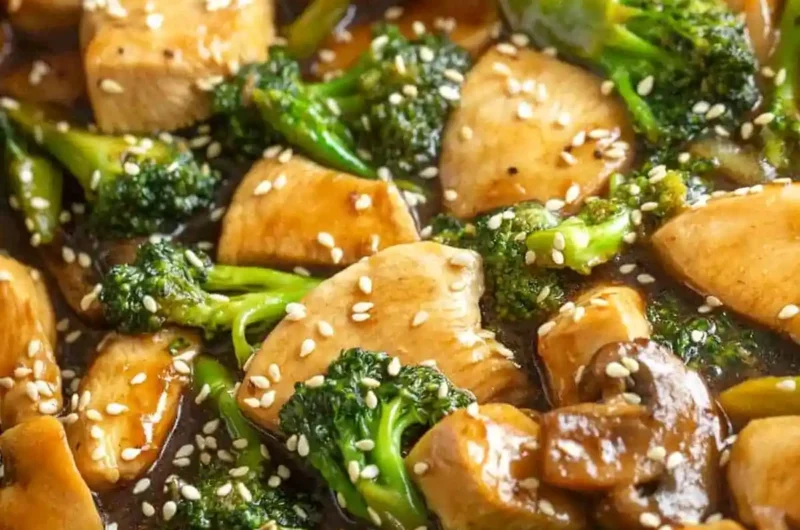
This quick and healthy stir fry combines tender chicken, crisp broccoli, and savory mushrooms in a rich, glossy sauce. It is a perfect 30-minute meal that pairs beautifully with steamed white rice or quinoa.
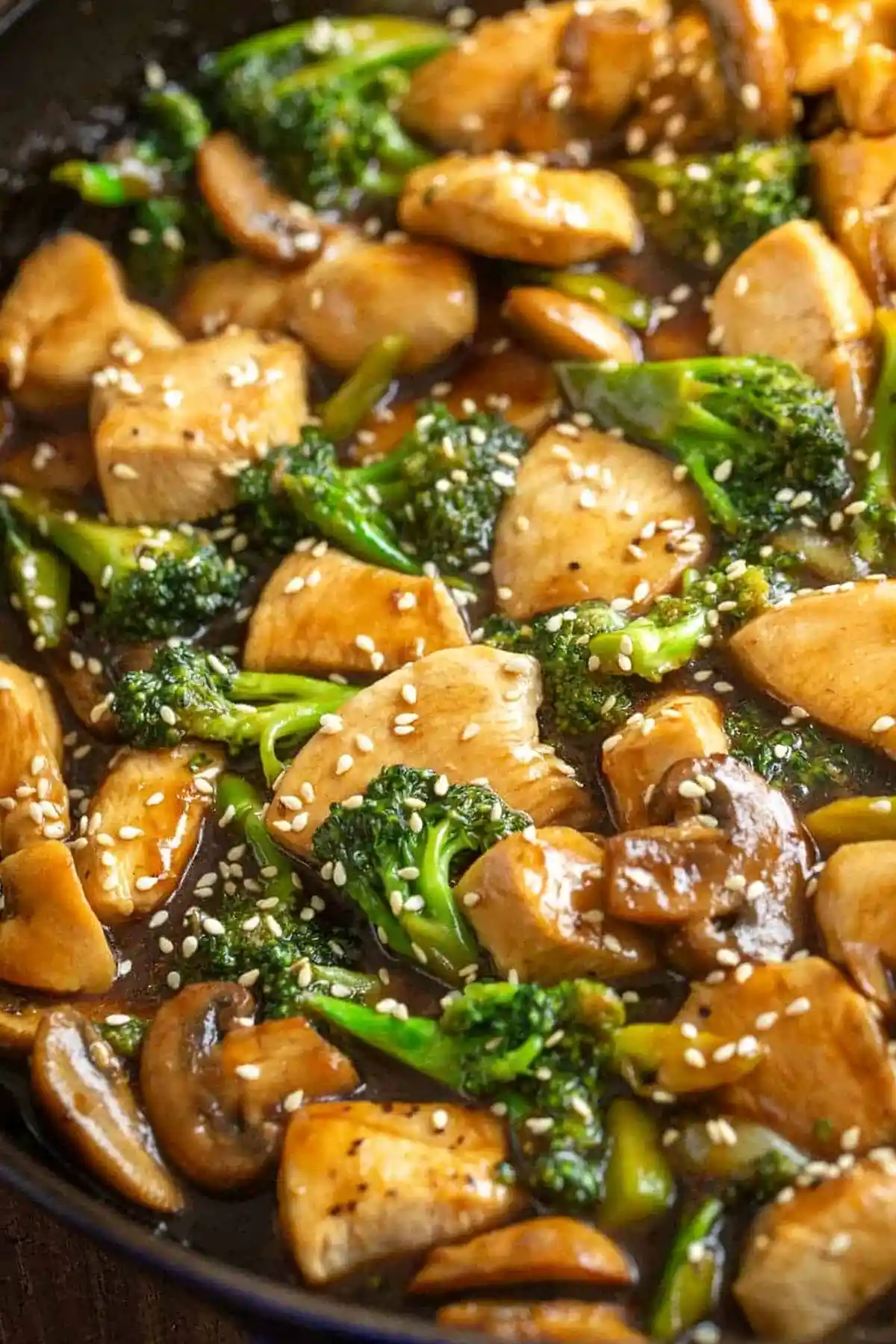
List of ingredients
- 1 lb boneless skinless chicken breast – cut into 3/4″ bite-sized pieces
- 2 Tbsp cooking oil (such as extra light olive oil) – divided for searing and sautéing
- 1 lb broccoli – cut into florets, approximately 5 cups
- 1 small yellow onion – sliced into thin strips
- 1/2 lb white button mushrooms – thickly sliced
- 2/3 cup low sodium chicken broth – for the sauce base
- 3 Tbsp low sodium soy sauce – use Tamari for a gluten-free version, or adjust to taste
- 2 Tbsp light brown sugar – packed, or substitute with honey to taste
- 1 Tbsp corn starch – used as a thickening agent
- 1 Tbsp sesame oil – provides authentic toasted flavor
- 1 tsp fresh ginger – peeled and grated, lightly packed
- 1 tsp garlic – approximately 2 small cloves, grated
- 1/4 tsp black pepper – plus additional pepper for seasoning the chicken
step-by-step instructions
- Prepare the Sauce: In a small mixing bowl, combine the chicken broth, soy sauce, brown sugar, corn starch, sesame oil, grated ginger, grated garlic, and black pepper. Whisk the mixture thoroughly until the sugar and corn starch are fully dissolved; using warm broth can help the sugar dissolve more quickly. Set the sauce aside for later use.
- Sear the Chicken: Cut the chicken breast into uniform pieces no larger than 3/4″ thick and season lightly with black pepper. Heat a large, heavy skillet or a wok over medium-high heat and add 1 tablespoon of oil. Place the chicken in a single layer and let it sit undisturbed for 1 minute to develop a golden-brown sear, then stir fry for another 5 minutes until cooked through. Transfer the cooked chicken to a bowl and cover it loosely to maintain heat.
- Sauté the Vegetables: Using the same skillet, add another 1 tablespoon of oil along with the broccoli florets, sliced onion, and mushrooms. Stir fry the vegetables for about 3 minutes, or until the mushrooms have softened and the broccoli remains crisp-tender. Once reached, reduce the heat to medium-low.
- Thicken the Sauce: Give the prepared sauce a quick stir to ensure the corn starch has not settled at the bottom. Pour the entire sauce mixture over the sautéed vegetables. Simmer for 3 to 4 minutes until the sauce thickens and the raw flavor of the garlic and ginger mellows. If the sauce becomes too thick, add water one tablespoon at a time to reach your desired consistency.
- Combine and Finish: Return the seared chicken and any accumulated juices to the pan. Stir for about 30 seconds until the chicken is heated through and well-coated in the sauce. Taste and add a splash more soy sauce if needed, then serve immediately over hot rice.
Essential Stir Fry Techniques
Organize Ingredients Before Cooking
Stir frying happens very quickly over high heat, leaving no time for chopping during the process. Perform a full mise en place by having all vegetables sliced and the sauce whisked before turning on the stove. This prevents the chicken or vegetables from overcooking while you search for another ingredient.
Use a Heavy-Bottomed Pan or Wok
A cast-iron skillet or a carbon steel wok is ideal because they retain heat efficiently. High heat is necessary to sear the meat and keep the vegetables crisp without steaming them. Ensure the pan is hot enough that the oil shimmers before adding your ingredients.
Avoid Overcrowding the Pan
Adding too much meat or vegetables at once drops the temperature of the pan, causing the food to release moisture and boil rather than sear. Cook the chicken in batches if your pan is small. This ensures a golden-brown crust and a better overall texture.
Protein Substitutions
Using Chicken Thighs for Tenderness
If you prefer a juicier result, substitute chicken breasts with boneless, skinless chicken thighs. Thighs have a higher fat content, which makes them more forgiving and less likely to dry out during high-heat cooking. Follow the same cutting and searing instructions as the breast meat.
Substituting with Firm Tofu
For a plant-based version, use extra-firm tofu pressed to remove excess water. Cut the tofu into cubes and sear them in oil until all sides are golden brown before removing them from the pan. Return the tofu to the sauce at the very end to maintain its structure.
Using Shrimp for a Faster Meal
Shrimp is an excellent alternative that cooks even faster than chicken. Sear the shrimp for about 1-2 minutes per side until pink, then remove them immediately to avoid rubbery textures. Add them back to the pan during the final 30 seconds of cooking.
Vegetable Modifications
Incorporating Snap Peas and Zucchini
To add more color and nutrition, you can replace a portion of the broccoli with snap peas or sliced zucchini. These vegetables cook at a similar rate to broccoli and absorb the sauce well. Add zucchini slightly later than the broccoli to prevent it from becoming too soft.
Replacing Onions with Carrots
If you prefer a sweeter flavor, use julienned carrots instead of yellow onions. Since carrots are denser, add them to the pan 1-2 minutes before the broccoli to ensure they are tender. This adds a nice crunch and vibrant orange color to the dish.
Prioritizing Fresh over Frozen Vegetables
Fresh vegetables are highly recommended for stir fry to maintain a crisp texture. Frozen vegetables often release significant amounts of water when heated, which can dilute the sauce and make the broccoli mushy. If you must use frozen, thaw and pat them dry before adding to the skillet.
Sauce Customization Tips
Ensuring the Sauce is Gluten-Free
Standard soy sauce contains wheat, making it unsuitable for those avoiding gluten. Substitute it with Tamari or coconut aminos to maintain the savory umami profile. The corn starch used in this recipe is naturally gluten-free, keeping the sauce thick and glossy.
Adjusting Sweetness with Honey
While brown sugar provides a deep, molasses-like sweetness, honey or maple syrup can be used as substitutes. Use about 1.5 to 2 tablespoons of liquid sweetener to match the flavor profile. Taste the sauce before simmering to ensure the sweetness is balanced with the soy sauce.
Modifying Salt Levels
Different brands of soy sauce vary in sodium content. Start with the recommended amount, but always taste the finished dish before serving. You can increase the saltiness with more soy sauce or reduce it by using a low-sodium variety and adding a pinch of salt if needed.
Using Ground Ginger for Convenience
Fresh ginger is preferred for its bright, spicy notes, but ground ginger is a practical alternative. Substitute 1 teaspoon of fresh grated ginger with approximately 1/4 teaspoon of ground ginger. Add the powder directly into the sauce mixture before whisking.
Serving and Pairing Ideas
Choosing the Right Rice
Long-grain jasmine rice is the traditional choice for this dish due to its floral aroma and fluffy texture. For a nuttier flavor, basmati rice is an excellent substitute. Ensure the rice is cooked and steaming hot to soak up the savory stir fry sauce.
Using Quinoa for More Protein
If you want a higher protein and fiber content, serve the stir fry over cooked quinoa. Quinoa’s slightly earthy taste complements the ginger and garlic in the sauce. This is a great option for those looking for a gluten-free grain alternative.
Garnishing for Presentation
Enhance the visual appeal and flavor by adding a garnish just before serving. Toasted sesame seeds add a nutty crunch, while thinly sliced green onions provide a fresh, sharp contrast to the rich sauce. A drizzle of extra sesame oil can also add a final aromatic touch.
Storage and Reheating Advice
Refrigerating Leftovers
Allow the stir fry to cool to room temperature before transferring it to an airtight container. Store it in the refrigerator for 3 to 4 days. Keep the rice in a separate container to prevent it from absorbing all the sauce and becoming soggy.
Best Methods for Reheating
The most effective way to reheat is in a skillet over medium heat. Add a tiny splash of water or chicken broth to loosen the sauce as it warms up. Stir occasionally until the chicken and vegetables are heated through.
Using the Microwave for Quick Warm-ups
If using a microwave, heat the dish in 30-second intervals, stirring between each session. This ensures the heat is distributed evenly and prevents the chicken from becoming tough. Add a teaspoon of water to the dish to restore the sauce’s glossiness.
Why Freezing is Not Recommended
It is best to avoid freezing this dish because of the broccoli content. The cellular structure of broccoli breaks down during freezing and thawing, resulting in a mushy, unappealing texture. The sauce may also separate upon thawing.
Troubleshooting Common Issues
Fixing a Sauce That is Too Thick
If the sauce becomes too thick or sticky after simmering, do not panic. Add warm water or chicken broth one tablespoon at a time while stirring over low heat. This will thin the sauce back to a pourable consistency without losing flavor.
Preventing Mushy Vegetables
The key to crisp vegetables is high heat and short cooking times. Do not overcook the broccoli during the initial sauté phase, as it will continue to cook once the sauce is added. Remove the vegetables from the heat as soon as they are vibrant green and slightly tender.
Avoiding Overcooked Chicken
Chicken breast can dry out quickly if cooked for too long. Ensure the pieces are cut to a uniform size so they cook evenly. Remove the chicken from the pan as soon as it is golden brown and just cooked through, as it will warm up again at the end.
Frequently Asked Questions
Can I use a different cooking oil?
Yes, any oil with a high smoke point will work. Avocado oil, canola oil, or grapeseed oil are excellent choices. Avoid using extra virgin olive oil for the high-heat searing phase as it can smoke and change the flavor of the dish.
How do I peel ginger easily?
The most efficient way to peel fresh ginger is by using the edge of a metal teaspoon. Gently scrape the skin away from the ginger root; the spoon conforms to the bumps and curves of the root, removing the skin without wasting the ginger itself.
Can I add other types of mushrooms?
Absolutely. While white button mushrooms are standard, shiitake or cremini mushrooms add a deeper, more earthy flavor. If using shiitakes, remove the woody stems before slicing the caps.
Print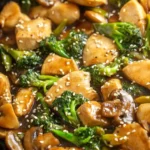
Easy Chicken and Broccoli Stir Fry
- Total Time: 30 minutes
- Yield: 4 servings 1x
- Diet: General
Description
The sauce in this stir fry is perfectly “saucy,” making it ideal for serving over hot and fluffy white rice.
Ingredients
- 1 lb chicken breast (boneless skinless), cut into 3/4″ pieces
- 2 Tbsp cooking oil, divided
- 1 lb broccoli, cut into florets
- 1 small yellow onion, sliced into strips
- 1/2 lb white button mushrooms, thickly sliced
- 2/3 cup low sodium chicken broth
- 3 Tbsp low sodium soy sauce
- 2 Tbsp light brown sugar, packed
- 1 Tbsp corn starch
- 1 Tbsp sesame oil
- 1 tsp fresh ginger, peeled and grated
- 1 tsp garlic, grated
- 1/4 tsp black pepper
Instructions
- Make the Sauce: In a small bowl, combine all of the sauce ingredients and whisk to dissolve sugar and corn starch (warm broth will help dissolve the sugar faster). Set sauce aside.
- Prepare Chicken: cut chicken into small bite-sized pieces (no more than 3/4” thick) and season lightly with pepper. Heat a large heavy skillet or wok over medium-high heat. Add 1 Tbsp oil. Add chicken in a single layer and let it sit undisturbed for 1 minute to get a good sear then stir fry for another 5 minutes or until golden brown just cooked through then remove to a bowl and loosely cover to keep warm.
- Stir Fry Veggies: In the same skillet, add another 1 Tbsp oil along with broccoli florets, sliced onion and sliced mushrooms. Stir fry 3 minutes or until mushrooms are softened and broccoli is crisp-tender then reduce heat to medium/low.
- Add Sauce: Give the sauce a quick stir in case there was any settling of starch and pour all of it over the vegetables. Simmer 3-4 minutes or until sauce is thickened and garlic and ginger are mellowed in flavor. To thin the sauce, add water a tablespoon at a time.
- Combine and Serve: Return chicken to the pan and stir another 30 seconds or until heated through. Add more soy sauce to taste if needed and serve over hot rice.
Notes
Start cooking your rice first. Prep and chop all stir fry ingredients and make the sauce before cooking. Use Tamari for a gluten-free option.
- Prep Time: 15 minutes
- Cook Time: 15 minutes
- Category: Main Course
- Method: Stir Fry
- Cuisine: Asian
Nutrition
- Serving Size: 1 serving
- Calories: 325 kcal
- Sugar: 10 g
- Sodium: 586 mg
- Fat: 14 g
- Saturated Fat: 2 g
- Unsaturated Fat: 12 g
- Trans Fat: 0 g
- Carbohydrates: 21 g
- Fiber: 4 g
- Protein: 31 g
- Cholesterol: 73 mg
Keywords: chicken and broccoli, Chicken broccoli stir fry