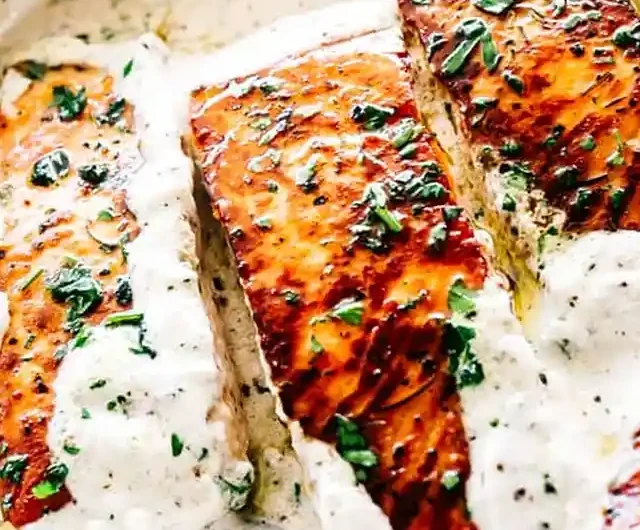
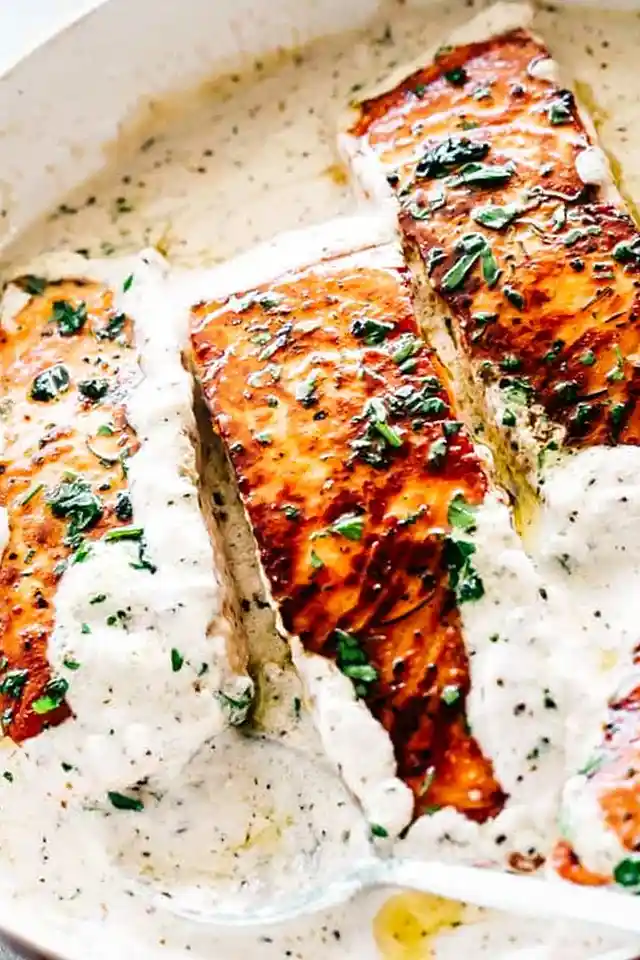
This one-skillet meal features crispy pan-seared salmon fillets topped with a rich lemon garlic cream sauce. It is a fast dinner option that delivers restaurant-quality results in under 30 minutes.
List of ingredients
- 2 tablespoons olive oil – used for searing the fish.
- 6 skin-on salmon fillets – room temperature, about 4 to 5 ounces each.
- salt and freshly ground black pepper – used for seasoning to taste.
- 1 tablespoon butter – for sautéing the sauce base.
- 1 cup half & half – can be substituted with heavy cream or low-fat evaporated milk.
- ½ tablespoon all purpose flour – used to slightly thicken the cream sauce.
- ⅓ cup grated Parmesan cheese – adds a salty, savory depth.
- 1 lemon – both zested and juiced for brightness.
- 3 cloves garlic – minced finely.
- 1 teaspoon dried dill – provides a classic seafood flavor.
- ¾ teaspoon dried thyme – adds earthy herbal notes.
- salt and freshly ground black pepper – used for sauce seasoning to taste.
- lemon slices – for final garnishing.
- fresh chopped parsley – for final garnishing.
step-by-step instructions
- Heat the oil: Warm the olive oil in a large skillet over medium-high heat until it shimmers.
- Season and sear: Sprinkle salt and pepper on both sides of the salmon fillets. Place them skin-side down in the hot skillet, cooking only two or three at a time to avoid crowding.
- Cook undisturbed: Let the fillets sear without moving them for 6 minutes, until they are about three-quarters cooked through.
- Flip and finish: Carefully flip the fillets with a spatula and cook for another 2 minutes. Remove the fish from the skillet and set them aside on a plate.
- Mix the sauce: In a separate mixing bowl, whisk together the half & half, flour, Parmesan cheese, lemon juice, lemon zest, minced garlic, dill, thyme, salt, and pepper until smooth.
- Melt the butter: Add the butter to the same skillet used for the salmon and melt it over medium heat.
- Simmer the sauce: Pour the whisked sauce mixture into the skillet and bring it to a boil. Once boiling, immediately lower the heat to a simmer.
- Combine and warm: Return the seared salmon fillets to the skillet. Cook for 2 to 3 minutes until the fish is heated through and coated in the sauce.
- Garnish and serve: Remove the skillet from the heat. Spoon the cream sauce over the fillets and garnish with lemon slices and fresh parsley.
Mastering the Salmon Searing Process
Ensure Fillets Reach Room Temperature
Taking salmon out of the refrigerator 15 to 20 minutes before cooking prevents the outside from overcooking before the center reaches the safe internal temperature. This leads to a more uniform cook and reduces the likelihood of the fish curling in the pan.
Achieve a Crispy Skin Texture
The key to crispy skin is using a high-smoke point oil and avoiding the urge to move the fish. Once the salmon hits the pan, let the proteins bond and sear undisturbed for several minutes. Moving the fish too early causes the skin to tear and prevents a golden crust.
Avoid Overcrowding the Skillet
Cooking too many fillets at once lowers the temperature of the pan and releases excess moisture. This turns the searing process into steaming, which results in pale, soft skin. Cook in batches to maintain high heat for a proper sear.
Choosing the Right Cooking Oil
While olive oil works well, avocado oil is an excellent alternative due to its higher smoke point. A higher smoke point allows the pan to get hotter without the oil burning, which helps in creating a better crust on the salmon skin.
Optimizing the Lemon Garlic Cream Sauce
Preventing Flour Clumps
Whisk the flour thoroughly into the cold half & half before adding it to the pan. This ensures the starch is evenly distributed and prevents lumps from forming once the sauce begins to boil and thicken.
Balancing the Acidity
The lemon juice provides a necessary contrast to the richness of the cream and cheese. If the sauce feels too tart, add a pinch more salt; if it feels too heavy, add an extra squeeze of fresh lemon juice before serving.
Adjusting the Sauce Consistency
If the sauce becomes too thick during the simmering process, stir in a tablespoon of water or vegetable broth to thin it out. Conversely, if it is too thin, let it simmer for an extra minute to allow more moisture to evaporate.
Selecting the Right Cheese
While Parmesan is the standard for this recipe, Pecorino Romano provides a saltier, sharper profile. Asiago is another great alternative that melts smoothly into the cream sauce without separating.
Protein and Dairy Substitutions
Using Alternative Seafood
This sauce pairs exceptionally well with other white fish or shellfish. Large shrimp or steelhead trout fillets can be used in place of salmon, though shrimp will require a significantly shorter searing time of about 2 minutes per side.
Dairy-Free Creamy Alternatives
For a dairy-free version, replace the half & half with full-fat canned coconut milk or cashew cream. Use a plant-based Parmesan alternative or nutritional yeast to maintain the savory, salty flavor profile.
Swapping Dried Herbs for Fresh
If using fresh dill or thyme, increase the quantity by three times the amount of dried herbs. Fresh herbs are more delicate and should be stirred in at the very end of the sauce simmering process to preserve their flavor.
Using Garlic Powder instead of Fresh
If fresh garlic is unavailable, use 1/4 teaspoon of garlic powder for every clove required. Add the powder directly into the whisked sauce mixture to ensure it blends evenly without burning in the butter.
Recommended Side Dish Pairings
Complementary Grain Options
Serve the salmon over a bed of lemon-infused basmati rice or wild rice for a nutty contrast. Quinoa or a light couscous also work well to soak up the excess cream sauce from the skillet.
Fresh and Roasted Vegetable Sides
Roasted asparagus or sautéed spinach provide a bright, fresh balance to the rich sauce. For a heartier option, try skillet-roasted zucchini and mushrooms seasoned with salt and pepper.
Pasta Pairing Suggestions
Fettuccine or linguine are ideal pairings, as the cream sauce mimics a classic Alfredo. Toss the pasta in a small amount of the sauce before plating the salmon on top for a cohesive meal.
Light Salad Accompaniments
A cold orzo salad with feta cheese, cucumbers, and a light vinaigrette complements the warmth of the salmon. The acidity of a fresh salad helps cut through the richness of the cream sauce.
Storage and Reheating Guidelines
Proper Refrigeration Methods
Allow the salmon and sauce to cool completely before transferring them to an airtight container. Store the dish in the refrigerator for up to three days to maintain quality and safety.
Gentle Reheating Techniques
To avoid overcooking the fish, reheat the salmon in a skillet over low heat. Add a splash of water or vegetable broth to the pan to loosen the sauce and keep it from breaking.
Managing Sauce Separation
Cream-based sauces can sometimes separate or thicken when chilled. When reheating, stir the sauce constantly over low heat to re-emulsify the fats and liquids for a smooth texture.
Freezing Considerations
It is not recommended to freeze this dish once the cream sauce has been added. The dairy in the sauce is likely to break and become grainy upon thawing, and the salmon texture may become mushy.
Troubleshooting Common Cooking Issues
Fixing a Broken or Curdled Sauce
Curdling usually happens if the sauce is boiled too vigorously or if the heat is too high. If the sauce breaks, remove it from the heat immediately and whisk in a teaspoon of cold water or a small knob of cold butter to bring it back together.
Preventing Salmon from Sticking
If the fish sticks to the pan, it usually means the oil wasn’t hot enough or the fish was moved too soon. Wait for the salmon to naturally release from the pan surface as the crust forms.
Avoiding Overcooked Salmon
Salmon can dry out quickly if left on the heat too long. Use an instant-read thermometer to ensure the internal temperature reaches 145°F, or press the top of the fillet; it should flake easily with a fork.
Managing Excessive Sauce Thickness
If the sauce thickens too quickly, it may be due to the type of half & half or the amount of cheese used. Lower the heat and stir in a small amount of milk or cream to return it to a pourable consistency.
Frequently Asked Questions
Can I use frozen salmon for this recipe?
Yes, but you must thaw the fillets completely in the refrigerator overnight. Pat the fish very dry with paper towels before seasoning, as excess moisture will prevent the skin from searing properly.
How do I know when the salmon is perfectly done?
The most accurate method is using a meat thermometer to hit 145°F. Alternatively, the fish is done when the flesh changes from translucent to opaque and flakes easily when pressed.
Can this recipe be made in the oven?
You can sear the salmon in the oven using a broiler for the crust, then simmer the sauce on the stove. However, the skillet method provides the best control over the skin’s crispiness.
What is the best cut of salmon for this dish?
Center-cut fillets are best because they provide a uniform thickness, ensuring all pieces cook at the same rate. Wild-caught salmon typically offers a firmer texture and more intense flavor.
Is it possible to make the sauce without flour?
Yes, you can omit the flour and simmer the sauce slightly longer to reduce and thicken it naturally. Alternatively, a small amount of cornstarch mixed with water can be used as a thickener.
Which lemon is best for zesting and juicing?
Choose heavy, thin-skinned lemons as they typically contain more juice. Use a microplane for zesting to avoid hitting the bitter white pith of the peel.
Print
Pan Seared Salmon with Lemon Garlic Cream Sauce
- Total Time: 30 minutes
- Yield: 6 servings 1x
- Diet: General
Description
This quick, delicious, and creamy salmon recipe is prepared in just one skillet and served with an incredible lemon garlic cream sauce, and it’s done in under 30 minutes.
Ingredients
- 2 tablespoons olive oil
- 6 skin-on salmon fillets, room temperature, 4 to 5 ounces each
- salt and freshly ground black pepper, to taste
- 1 tablespoon butter
- 1 cup half & half
- ½ tablespoon all purpose flour
- ⅓ cup grated Parmesan cheese (microbial-rennet)
- 1 lemon, zested and juiced
- 3 cloves garlic, minced
- 1 teaspoon dried dill
- ¾ teaspoon dried thyme
- lemon slices, for garnish
- fresh chopped parsley, for garnish
Instructions
- Sear Salmon: Heat olive oil in a large skillet over medium-high heat. Season fillets with salt and pepper, place skin-side down, and cook for 6 minutes. Flip and cook for 2 more minutes, then remove and set aside.
- Prepare Sauce Mixture: In a bowl, whisk together half & half, flour, Parmesan cheese, lemon juice, lemon zest, minced garlic, dill, thyme, salt, and pepper.
- Simmer Sauce: Melt butter in the same skillet over medium heat. Pour in the sauce mixture, bring to a boil, then reduce heat to a simmer.
- Finish: Return salmon fillets to the skillet and cook for 2-3 minutes. Spoon sauce over fillets and garnish with lemon slices and parsley.
Notes
Use wild-caught salmon for a firmer texture and richer flavor. For the best sear, avoid moving the fillets in the pan until it is time to flip them.
- Prep Time: 10 minutes
- Cook Time: 20 minutes
- Category: Dinner
- Method: Pan-searing
- Cuisine: Mediterranean
Nutrition
- Serving Size: 1 fillet
- Calories: 271 kcal
- Sugar: 2 g
- Sodium: 191 mg
- Fat: 15 g
- Saturated Fat: 4 g
- Unsaturated Fat: 11 g
- Trans Fat: 0 g
- Carbohydrates: 4 g
- Fiber: 0 g
- Protein: 25 g
- Cholesterol: 74 mg
Keywords: creamy salmon, pan-seared salmon, lemon garlic cream sauce, seafood dinner, quick weeknight meal