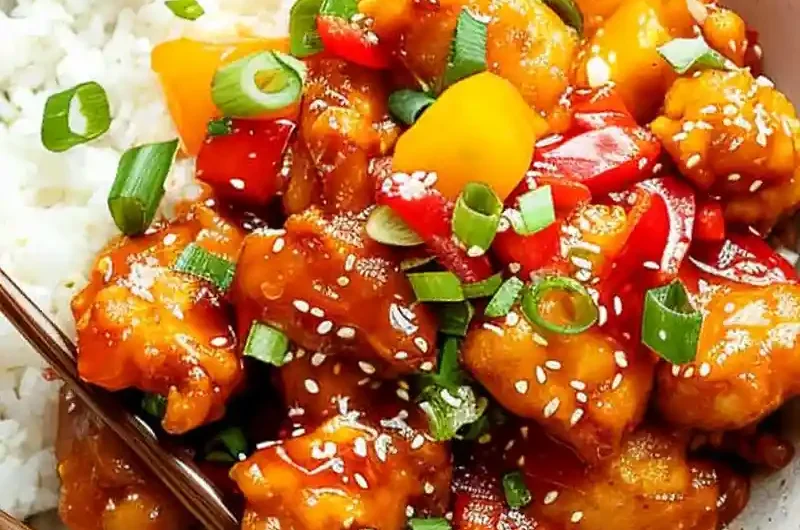
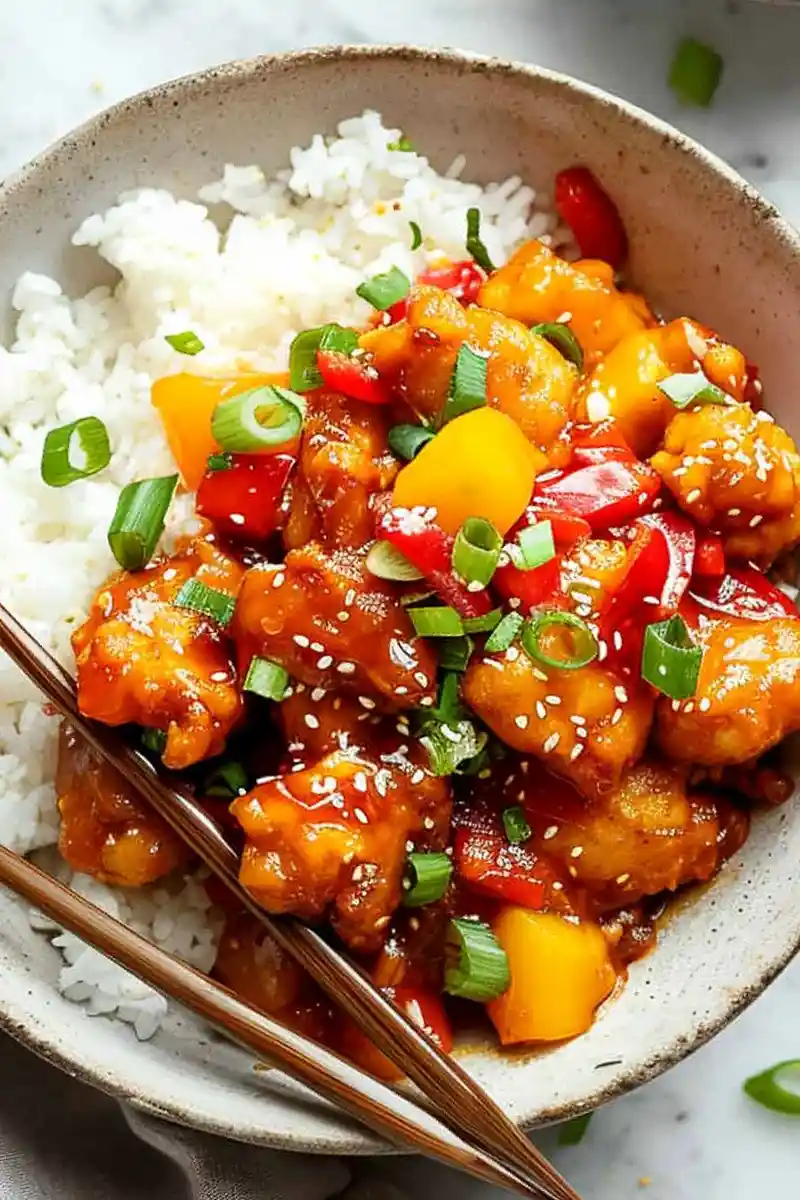
This quick weeknight dinner combines tender chicken pieces with a vibrant, tangy sauce and crisp vegetables. It provides a healthy and affordable alternative to takeout that the whole family will enjoy.
List of ingredients
- 500 g boneless, skinless chicken breast, diced into 2.5 cm cubes – ensures lean protein and fast cooking.
- 6 tablespoons cornstarch – used for creating a crispy exterior on the chicken.
- 50 ml vegetable oil – for frying the chicken pieces.
- Salt and pepper to taste – essential for seasoning the cornstarch coating.
- 1 onion, thinly sliced – adds a savory depth to the base.
- 1 red bell pepper, chopped – provides color and sweetness.
- 1 yellow bell pepper, chopped – adds visual contrast and mild flavor.
- 6 tablespoons ketchup – serves as the tomato-based foundation for the sauce.
- 2 tablespoons cider vinegar – provides the necessary acidic tang.
- 6 tablespoons demerara or brown sugar – adds a rich, caramelized sweetness.
- 1 tablespoon soy sauce – adds umami and a salty balance.
- 1 tablespoon fresh ginger, grated – provides a pungent, aromatic heat.
- 2 cloves garlic, grated – enhances the overall savory profile.
- 432 g tin pineapple pieces, drained – adds tropical sweetness (reserve the juice for sauce adjustment).
step-by-step instructions
- Coat the Chicken: Place the cornstarch in a medium bowl and season it generously with salt and pepper. Toss the diced chicken pieces in the mixture until every side is evenly coated.
- Fry the Chicken: Heat the vegetable oil in a high-sided skillet over medium-high heat. Fry the chicken pieces on all sides until they are golden brown, then move them to a plate lined with paper towels. Note that the chicken does not need to be fully cooked through at this stage.
- Sauté the Vegetables: Using the same skillet, add the sliced onion. Stir frequently to scrape up the browned bits from the bottom of the pan, which adds extra flavor. Once the onion is soft, add the chopped red and yellow bell peppers and stir-fry until they just begin to soften.
- Prepare and Simmer the Sauce: In a separate bowl or measuring jug, whisk together the ketchup, cider vinegar, brown sugar, soy sauce, grated ginger, and grated garlic until smooth. Pour this mixture into the skillet with the vegetables and bring it to a gentle simmer. Add the drained pineapple pieces and stir in some reserved pineapple juice to reach your preferred sauce consistency.
- Combine and Finish: Return the golden chicken pieces to the skillet. Simmer everything together for another 5-6 minutes, stirring occasionally, until the chicken is cooked through and the sauce has thickened into a glossy glaze.
Professional Cooking Tips
Double Frying for Extra Crunch
To achieve a restaurant-style crispiness, fry the chicken twice. After the first fry, let the pieces rest for a few minutes, then flash-fry them again in very hot oil for 60 seconds before removing them from the pan.
Maintaining Vegetable Texture
Cook your peppers and onions on high heat for a shorter duration. This prevents them from becoming mushy and ensures they retain a vibrant color and a slight snap when bitten.
Preventing Pan Crowding
Fry the chicken in batches if your skillet is small. Overcrowding the pan lowers the oil temperature, which leads to the chicken absorbing more oil and becoming soggy rather than crispy.
Ingredient Substitutions
Using Chicken Thighs for More Flavor
Substitute chicken breast with boneless, skinless chicken thighs. Thighs have a higher fat content, which makes the meat juicier and more resistant to overcooking during the simmering process.
Substituting Tofu for a Plant-Based Version
Use extra-firm tofu instead of chicken. Press the tofu to remove excess water, dice it into cubes, and coat it in cornstarch exactly as you would with the chicken for a similar texture.
Alternative Sweeteners for the Sauce
If you do not have brown sugar, honey or maple syrup are excellent alternatives. These will add a slightly different flavor profile but maintain the necessary thickness and sweetness for the glaze.
Rice Vinegar Instead of Cider Vinegar
Rice vinegar is a great substitute for cider vinegar. It offers a milder, slightly sweeter acidity that is very common in traditional East Asian cooking.
Flavor Variations
Adding Fresh Mango for a Tropical Twist
Replace the pineapple pieces with fresh, diced mango. This creates a creamier, more floral sweetness that pairs exceptionally well with the ginger and garlic in the sauce.
Incorporating Chili for a Spicy Kick
Stir in a teaspoon of red chili flakes or a tablespoon of Sriracha into the sauce mixture. This adds a layer of heat that balances the sweetness of the sugar and pineapple.
Using Frozen Pineapple Chunks
Frozen pineapple can be used if fresh or canned is unavailable. Thaw and pat the chunks dry with a paper towel before adding them to the pan to prevent the sauce from becoming too watery.
Serving and Presentation
Pairing with Steamed Jasmine Rice
Serve the chicken over a bed of fluffy jasmine rice. The neutral flavor of the rice helps absorb the bold sweet and sour sauce, making every bite balanced.
Serving with Stir-Fried Noodles
For a heartier meal, serve the dish over thin egg noodles or rice noodles. Toss the noodles with a small amount of sesame oil and soy sauce before topping them with the chicken.
Adding Fresh Garnishments
Garnish the final dish with thinly sliced green onions or toasted sesame seeds. These additions provide a fresh contrast and a professional look to the plating.
Storage and Reheating
Storing Leftovers in the Fridge
Place the cooled chicken and sauce in an airtight container. It will stay fresh in the refrigerator for up to 4 days, making it an excellent option for meal prep.
Reheating in a Skillet
For the best results, reheat the leftovers in a skillet over medium heat. Add a splash of water or pineapple juice to loosen the sauce as it warms through.
Microwave Reheating Instructions
If using a microwave, heat the chicken in 30-second intervals. Stir between each interval to ensure the sauce is evenly distributed and the chicken is heated through without drying out.
Make-Ahead Advice
Preparing the Sauce in Advance
You can whisk the sauce ingredients together up to 24 hours before cooking. Store the mixture in a sealed jar in the fridge and shake it well before pouring it into the pan.
Pre-Cutting the Vegetables
Chop the onion and bell peppers ahead of time and store them in a container. This reduces the active prep time during the weeknight rush.
Pre-coating the Chicken
Toss the chicken in the seasoned cornstarch a few hours before cooking. Keep it refrigerated, but be aware that the coating may become slightly damp, so fry it immediately upon removal from the fridge.
Troubleshooting Common Issues
Fixing a Sauce That Is Too Thin
If the sauce has not thickened enough, create a slurry by mixing one teaspoon of cornstarch with a tablespoon of cold water. Stir this into the simmering sauce and cook for another minute until it reaches a glossy consistency.
Preventing Soggy Chicken Coating
To keep the chicken crispy, only add it back to the sauce in the final few minutes of cooking. Avoid simmering the chicken for too long once it is coated in the glaze.
Managing Burnt Sugar Residue
If the sugar in the sauce begins to stick or burn, add a tablespoon of pineapple juice or water immediately. Use a wooden spoon to scrape the browned bits back into the sauce for extra flavor.
Frequently Asked Questions
Can I bake the chicken instead of frying?
Yes, you can toss the coated chicken in oil and bake it on a tray at 200°C (400°F) for 20-25 minutes. Once golden, toss the baked pieces into the prepared sauce in the skillet.
What is the best oil for frying this recipe?
Use an oil with a high smoke point, such as vegetable, canola, or sunflower oil. Avoid using extra virgin olive oil, as it can burn at the temperatures needed for crisping the chicken.
How do I make this recipe gluten-free?
Replace the soy sauce with tamari or coconut aminos. Ensure your cornstarch is certified gluten-free, although most pure cornstarch naturally is.
Can I use a different type of pepper?
Absolutely. You can use orange bell peppers or even mild mini-peppers. If you prefer a spicy version, add a diced jalapeño or serrano pepper during the sautéing phase.
Why is my sauce too sour?
If the acidity from the vinegar is too strong, add a small amount of extra brown sugar or a tablespoon of pineapple juice. Balance the flavors by tasting the sauce before adding the chicken back in.
Print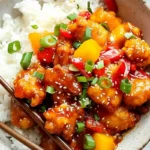
Homemade Sweet and Sour Chicken
- Total Time: 45 minutes
- Yield: 4 servings 1x
- Diet: General
Description
This Sweet and Sour Chicken recipe is a delicious blend of tangy and sweet flavours, perfect for a quick weeknight dinner. The tender chicken pieces are coated in a flavourful sauce, combined with vibrant vegetables and juicy pineapple.
Ingredients
- 500 g boneless skinless chicken breast, diced into 2.5 cm cubes
- 6 tablespoons cornstarch
- 50 ml vegetable oil for frying
- Salt and pepper to taste
- 1 onion, thinly sliced
- 1 red bell pepper, chopped
- 1 yellow bell pepper, chopped
- 6 tablespoons ketchup
- 2 tablespoons cider vinegar
- 6 tablespoons demerara or brown sugar
- 1 tablespoon soy sauce
- 1 tablespoon fresh ginger, grated
- 2 cloves garlic, grated
- 432 g tin pineapple pieces, drained (reserve the juice)
Instructions
- Prepare the Chicken: Place the cornstarch in a medium bowl, season well with salt and pepper. Toss the chicken pieces in the cornstarch mixture until evenly coated.
- Cook the Chicken: In a high-sided skillet, heat the vegetable oil over medium-high heat. Gently fry the chicken pieces on all sides until golden brown. Remove the chicken and place it on a plate lined with paper towels.
- Cook the Vegetables: After frying the chicken, add the sliced onion to the skillet. Scrape up the browned bits from the bottom of the skillet using a spatula or wooden spoon. Add the chopped bell peppers and cook until they start to soften.
- Prepare the Sauce: In a bowl or measuring jug, whisk together the ketchup, cider vinegar, brown sugar, soy sauce, grated ginger, and grated garlic. Pour the sauce into the skillet and bring it to a gentle simmer. Add the pineapple pieces, reserving the juice. Adjust the sauce consistency by adding pineapple juice to taste.
- Combine and Cook: Add the partially cooked chicken back into the skillet. Simmer the mixture for another 5-6 minutes, or until the chicken is cooked through and the sauce has thickened.
Notes
Add the reserved pineapple juice to adjust the consistency of the sauce according to your preference. Using boneless, skinless chicken breast ensures ease of cooking.
- Prep Time: 20 minutes
- Cook Time: 25 minutes
- Category: Easy Dinner
- Method: Stir-fry
- Cuisine: Chinese-inspired
Nutrition
- Serving Size: 1 serving
- Calories: 431 kcal
- Sugar: 25 g
- Sodium: 617 mg
- Fat: 16 g
- Saturated Fat: 3 g
- Unsaturated Fat: 12 g
- Trans Fat: 1 g
- Carbohydrates: 42 g
- Fiber: 2 g
- Protein: 28 g
- Cholesterol: 80 mg
Keywords: sweet and sour chicken, easy dinner, Chinese-inspired, chicken breast, pineapple