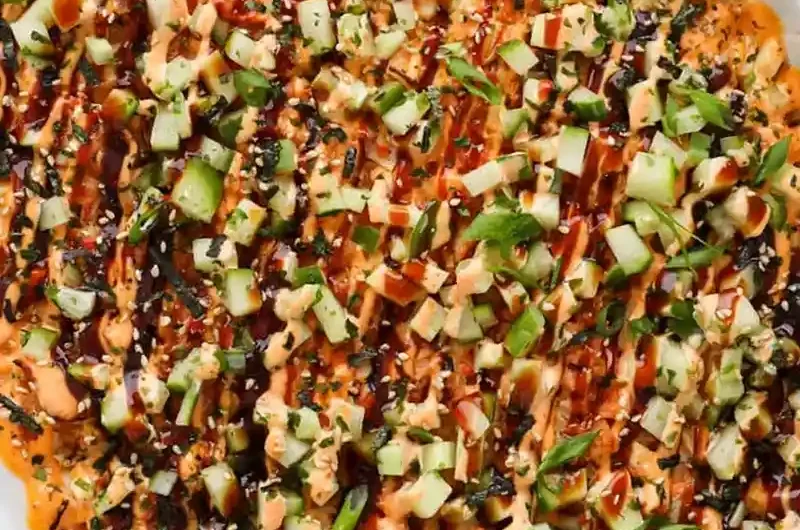
This savory sushi bake combines creamy seafood and tangy rice in one easy-to-serve pan. It is an ideal alternative to rolling individual sushi pieces when feeding a large group.
List of ingredients
- 2 cups dry Calrose Sushi Rice – a short-grain rice essential for the right stickiness.
- 2 cups water – used for cooking the rice.
- 1/4 cup seasoned rice vinegar (Marukan) – adds the necessary tang and acidity.
- 16 oz imitation crab, chopped into small pieces – provides a flaky texture and salty flavor.
- 10 cooked tempura shrimp, chopped – adds a crunch and savory depth.
- 1/2 cup Japanese mayonnaise – richer and sweeter than standard mayonnaise.
- 2 oz cream cheese – must be softened for a smooth mixture.
- 1 Tbsp sriracha – provides a base level of heat to the crab filling.
- 3 tablespoon furikake – a Japanese seasoning for the rice layer.
- 1/2 cup Spicy mayo – used as a final decorative drizzle.
- 1-2 Tbsp Furikake – used for the final garnish.
- 1/4 cup alcohol-free unagi sauce – a sweet and savory soy-based glaze.
step-by-step instructions
- Wash the rice: Place dry Calrose Sushi Rice into a fine-mesh sieve and run cold water over it for 1 minute, stirring with a spoon.
- Cook the rice: Transfer the washed rice to a rice cooker, add water, and start the cooking cycle.
- Prepare the base: Move the cooked rice to a rimmed baking sheet.
- Season the rice: Pour 1/4 cup seasoned rice vinegar over the hot rice and fold it in gently using a rice paddle to avoid mashing the grains. Set aside to cool.
- Create the seafood filling: In a mixing bowl, combine the chopped imitation crab, chopped tempura shrimp, Japanese mayonnaise, softened cream cheese, and 1 Tbsp sriracha.
- Mix thoroughly: Stir the filling until all ingredients are well combined and the texture is uniform.
- Assemble the layers: Spread the cooled sushi rice evenly into the baking sheet and compress it firmly.
- Add first seasoning: Sprinkle 3 Tbsp of furikake over the top of the compressed rice.
- Top with filling: Spread the creamy crab and shrimp mixture evenly over the seasoned rice layer.
- Broil: Place the pan in the oven under the broiler for 4 minutes until the top is slightly toasted.
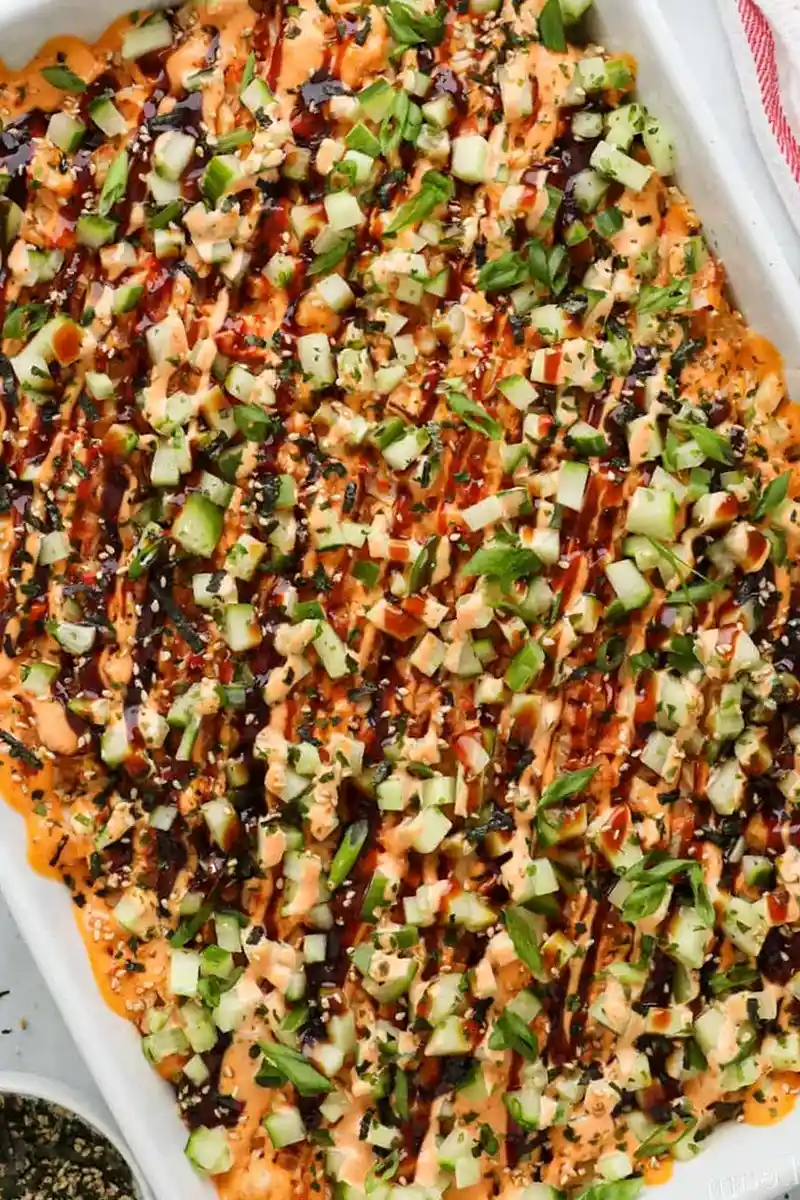
- Final touches: Drizzle the spicy mayonnaise and alcohol-free unagi sauce over the top. Garnish with chopped cucumber, extra furikake, and sliced green onions.
Essential Ingredient Breakdown
The Importance of Short-Grain Sushi Rice
Calrose or other short-grain varieties are necessary because they contain higher levels of amylopectin starch. This specific starch allows the rice to stick together without becoming a mushy paste. Long-grain rice lacks this property and will not hold the sushi bake structure.
Using Japanese Kewpie Mayonnaise
Japanese mayonnaise differs from American versions because it uses only egg yolks and a touch of rice vinegar. This results in a creamier, richer flavor and a distinct pale yellow color. It provides the authentic umami taste that defines sushi-style dishes.
The Role of Seasoned Rice Vinegar
Seasoned rice vinegar is a blend of vinegar, sugar, and salt. It cuts through the richness of the cream cheese and mayonnaise, providing a balanced acidity. Adding this while the rice is hot allows the grains to absorb the flavor deeply.
Choosing the Right Imitation Crab
Flaked imitation crab is preferred over whole sticks because it blends more seamlessly with the mayonnaise and cream cheese. It creates a uniform consistency that is easier to scoop with seaweed snacks. Ensure it is finely chopped to avoid large chunks.
Alcohol-Free Unagi Sauce Selection
Unagi sauce, also known as eel sauce, is a thick, sweet reduction of soy sauce and sugar. Using an alcohol-free version ensures the recipe meets specific dietary needs while maintaining the savory-sweet profile. It acts as a glaze that complements the spicy mayo.
The Flavor Profile of Furikake
Furikake is a dry Japanese seasoning typically made of toasted sesame seeds, nori, and salt. It adds a nutty flavor and an aesthetic contrast to the white rice. It helps bridge the flavor gap between the rice base and the creamy topping.
Professional Cooking Techniques
Rinse Rice to Remove Excess Starch
Rinsing the rice in a fine-mesh sieve is a critical step to prevent the bake from becoming gummy. Surface starch can create a thick, glue-like film during the cooking process. Washing until the water runs clear ensures that individual grains remain distinct.
Gentle Folding with a Rice Paddle
When incorporating the vinegar, use a cutting or folding motion rather than stirring. Stirring can crush the delicate grains of sushi rice, which releases more starch and ruins the texture. A plastic rice paddle is ideal as it prevents the rice from sticking.
Compressing the Rice Base
Pressing the cooled rice firmly into the baking sheet creates a stable foundation. If the rice is too loose, the seafood topping will sink into the grains during the broiling process. A firm press ensures clean scoops when serving.
Softening Cream Cheese for Mixing
Always allow the cream cheese to reach room temperature before mixing it with the seafood. Cold cream cheese creates lumps that are difficult to stir out without overworking the crab. Softened cheese integrates smoothly for a velvety texture.
Mastering the Broiler Setting
The broiler provides direct, high heat from the top of the oven, which caramelizes the mayonnaise and unagi sauce. Because the heat is so intense, you must watch the pan closely. Four minutes is typically enough to achieve a golden brown finish without burning.
Ingredient Substitutions and Variations
Replacing Imitation Crab with Salmon
You can substitute the imitation crab with cooked, flaked salmon or spicy salmon mix. This adds a richer, more buttery flavor to the topping. Maintain the same proportions of mayonnaise and cream cheese to ensure the texture remains creamy.
Integrating Fresh Vegetables for Crunch
While cucumber is used as a garnish, you can mix finely diced carrots or radish into the filling. Avocado can be added as a layer between the rice and the crab. These additions provide a fresh contrast to the rich seafood topping.
Homemade Japanese Mayo Alternative
If Japanese mayonnaise is unavailable, whisk together regular mayonnaise, a small amount of rice vinegar, and a pinch of sugar. This mimics the tang and sweetness of the original. However, the texture will be slightly thinner than Kewpie.
Adjusting the Heat Level
To increase the spice, add more sriracha to the crab mixture or use a spicy version of furikake. For a milder version, reduce the sriracha to a teaspoon. The spicy mayo drizzle can also be adjusted based on personal preference.
Using Different Protein Options
Tuna or yellowtail can be used in place of crab for a more premium version of the bake. Ensure the fish is fully cooked if you are broiling the dish. Cooked shrimp can be increased in quantity for a shrimp-forward experience.
Serving and Pairing Recommendations
Pairing with Roasted Seaweed Snacks
The most traditional way to eat sushi bake is by scooping it into small squares of roasted nori (seaweed). The salty, crisp texture of the seaweed perfectly complements the soft, creamy topping and tangy rice. This makes the dish interactive and fun for guests.
Complementary Side Salads
A light, acidic salad helps balance the richness of the cream cheese and mayonnaise. A cabbage and cucumber salad with a rice vinegar dressing is a great choice. A spinach salad with a citrus vinaigrette also works well.
Asian-Inspired Side Dishes
Serve this bake alongside other Japanese classics like edamame or gyoza. It also pairs well with vegetable fried rice or a simple miso soup. These sides round out the meal and provide a variety of textures.
Plating for Large Gatherings
Since this is made in a baking sheet, it is easy to serve directly from the pan. To make it look more professional, garnish with a heavy sprinkle of green onions and sesame seeds. Place a bowl of sliced cucumbers on the side for guests to add extra crunch.
Storage and Reheating Guide
Proper Refrigerator Storage
Store the leftover sushi bake in an airtight container to prevent the rice from drying out. It will remain fresh and safe to eat for up to three days. Keep it refrigerated at all times due to the seafood and dairy components.
The Best Reheating Methods
For the best results, reheat small portions in the microwave, covering them with a damp paper towel to steam the rice. Alternatively, use a conventional oven at 350 degrees Fahrenheit until warmed through. Avoid overheating, as the mayonnaise can separate.
Why Freezing is Not Recommended
Freezing this dish is not advised because the emulsion in the mayonnaise and cream cheese will break upon thawing. The tempura shrimp will also lose its crispness and become soggy. For the best quality, enjoy the bake fresh or refrigerated.
Make-Ahead Preparation Tips
You can prepare the sushi rice several hours in advance and keep it covered at room temperature. The crab mixture can also be mixed and stored in the fridge. Assemble and broil the dish just before serving to ensure the best texture.
Troubleshooting Common Issues
Preventing Gummy or Sticky Rice
If your rice turns out gummy, it is usually due to insufficient rinsing or too much water. Ensure you use a precise measuring cup for both the rice and the water. Rinsing the rice until the water is clear is the most effective way to avoid this issue.
Avoiding Burnt Toppings
Because the broiler is very hot, the mayonnaise can burn quickly. If the top is browning too fast, move the oven rack to a lower position. You can also cover the pan loosely with foil if the rice needs more heating but the top is already done.
Stopping Rice from Sticking to the Pan
To prevent the rice from sticking to the baking sheet, lightly butter the pan before spreading the rice. Using a non-stick baking sheet or lining it with parchment paper also helps. This ensures that the bake can be scooped easily without tearing the base.
Frequently Asked Questions
What exactly is a sushi bake?
A sushi bake is a deconstructed version of a sushi roll, typically resembling a casserole. It features layers of seasoned sushi rice topped with a creamy seafood mixture and broiled until warm. It is served as a dip or a main course.
Can this dish be served cold?
Yes, sushi bake can be enjoyed either warm from the oven or chilled from the refrigerator. The flavors remain consistent, though the texture of the cream cheese and mayonnaise is firmer when cold.
Do I need a rice cooker for this recipe?
While a rice cooker is recommended for consistency, you can use a stovetop pot. Simmer the rice on low heat with a tight-fitting lid until the water is absorbed. Let it steam for 10 minutes before adding the vinegar.
Can I use long-grain white rice instead?
Long-grain rice is not recommended because it does not have the sticky quality needed to hold the bake together. The result would be a loose pile of rice rather than a cohesive base. Always use short-grain or medium-grain sushi rice.
Print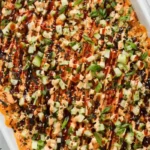
Creamy Seafood Sushi Bake
- Total Time: 35 minutes
- Yield: 6 servings 1x
- Diet: Seafood
Description
This Easy Sushi Bake is made with creamy crab filling, spicy mayo, and tangy sweet rice. You’ll love how easy and delicious it is.
Ingredients
- 2 cups dry Calrose Sushi Rice
- 2 cups water
- 1/4 cup seasoned rice vinegar
- 16 oz imitation crab, chopped into small pieces
- 10 cooked tempura shrimp, chopped
- 1/2 cup Japanese mayonnaise
- 2 oz cream cheese
- 1 Tbsp sriracha
- 3 tablespoon furikake
- 1/2 cup Spicy mayo
- 1–2 Tbsp Furikake
- 1/4 cup Unagi sauce
Instructions
- Clean the rice: Add the dry Calrose Sushi Rice into a fine-mesh sieve and run it under cold water for about 1 minute making sure to mix the rice around with a spoon.
- Cook the rice: Place the rice in your rice cooker and add the water and turn it on.
- Season the rice: Once the rice is cooked, transfer it to a rimmed baking sheet, pour 1/4 cup seasoned rice vinegar over the rice and fold it in gently with a rice paddle, then set aside to cool.
- Prepare crab mixture: In a bowl, add the chopped imitation crab, chopped tempura shrimp, Japanese mayonnaise, softened cream cheese, and 1 Tbsp sriracha, then mix everything together.
- Assemble: Evenly spread and compress the cooled sushi rice into the baking sheet and add 3 Tbsp furikake over the rice.
- Bake: Spread the spicy crab mixture over the rice and broil for 4 minutes in the oven.
- Finish: Drizzle some spicy mayonnaise and Unagi on top, then garnish with chopped cucumber, furikake, and green onion.
Notes
Store the Sushi Bake in an airtight container in the refrigerator for up to 3 days. Reheat in the microwave or in the oven until warmed through.
- Prep Time: 15 minutes
- Cook Time: 20 minutes
- Category: Appetizer, Main Course
- Method: Baking
- Cuisine: Japanese
Nutrition
- Serving Size: 1 serving
- Calories: 434 kcal
- Sugar: 2 g
- Sodium: 600 mg
- Fat: 24 g
- Saturated Fat: 5 g
- Unsaturated Fat: 18 g
- Trans Fat: 1 g
- Carbohydrates: 45 g
- Fiber: 2 g
- Protein: 6 g
- Cholesterol: 26 mg
Keywords: sushi bake, Japanese cuisine, imitation crab, spicy mayo, seafood appetizer