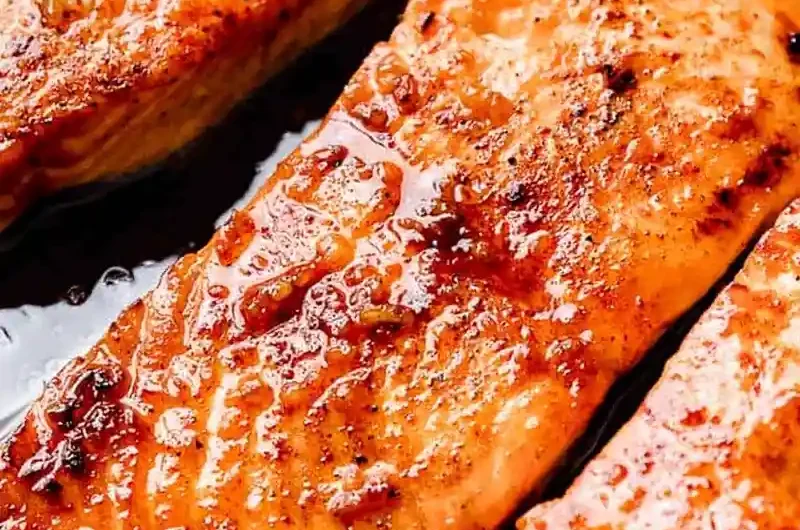
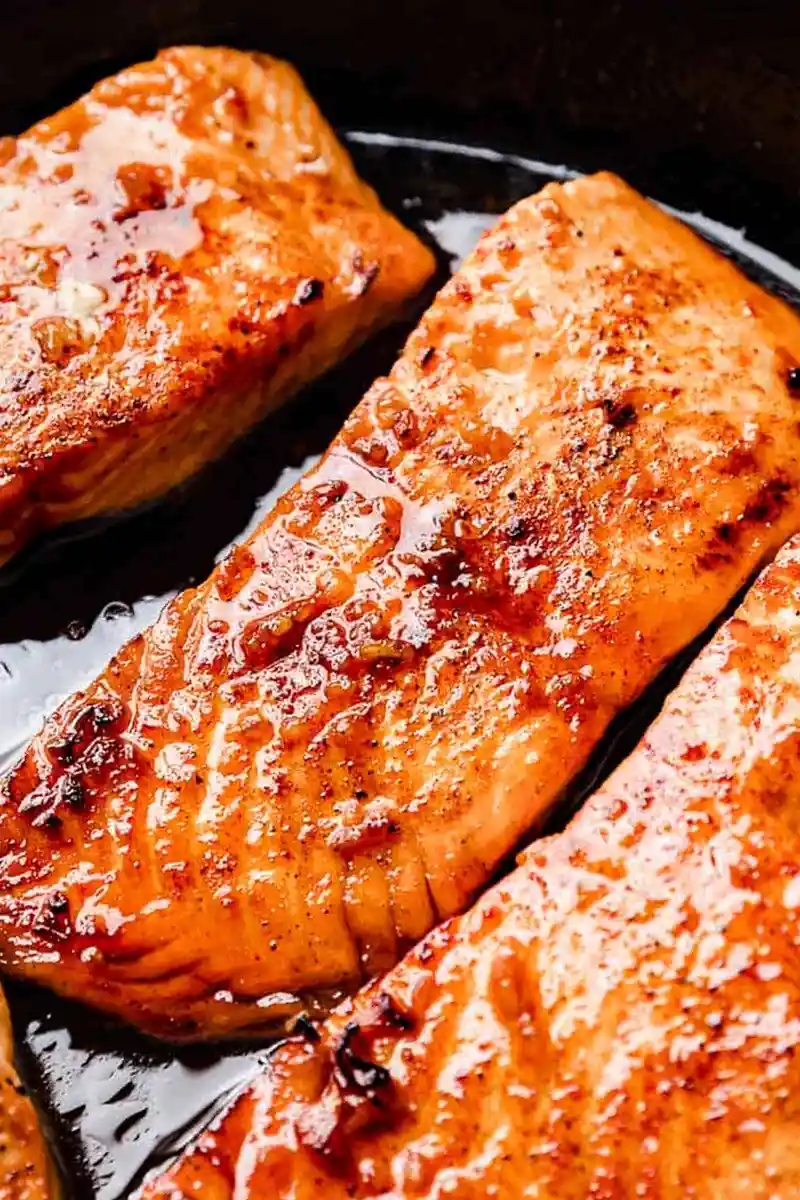
This quick dinner combines a sweet and savory glaze with tender baked fish in just 20 minutes. It is a nutritious meal that uses simple pantry staples to create a restaurant-quality finish.
List of ingredients
- 4 salmon filets (skin on or off, about 8 oz each) – Use fillets of similar thickness for even cooking.
- salt and pepper – Use to taste for basic seasoning.
- 1 teaspoon paprika – Adds an earthy depth and vibrant color.
- 3 tablespoons butter (salted or unsalted) – Used for sautéing garlic and enriching the sauce.
- 5 garlic cloves (minced) – Provides a pungent, savory base for the glaze.
- 5 tablespoons honey – The primary sweetener that enables caramelization.
- 2 tablespoons water – Helps thin the sauce slightly for better coating.
- juice of 1 lemon – Adds necessary acidity to balance the sugar.
- 1 tablespoon low sodium soy sauce – Enhances the salty, umami profile of the dish.
step-by-step instructions
- Prepare the oven: Place your oven shelf in the middle position and preheat the oven to the broil setting.
- Season the fish: Apply salt, pepper, and paprika to both sides of each salmon filet.
- Sauté the garlic: Melt butter in a large cast iron skillet over medium-high heat, then add the minced garlic and cook for 1 minute until it becomes fragrant.
- Simmer the glaze: Stir in the honey, water, lemon juice, and soy sauce. Cook for about 2 minutes, allowing the sauce to combine and slowly thicken.
- Sear the salmon: Place the salmon filets in the skillet, skin side down if applicable. Cook for 4 minutes while frequently spooning the sauce over the top of the fish.
- Broil to finish: Baste the fish one last time with the sauce. Place the skillet in the oven and broil for 5 minutes, or until the internal temperature reaches 145°F.
- Serve: Remove the skillet from the oven and serve the salmon immediately.
Pro Tips for Superior Results
Pat the Salmon Dry Before Seasoning
Use paper towels to firmly press all moisture off the surface of the fish. Removing surface water prevents the salmon from steaming and allows the paprika and salt to adhere better. This step is essential for achieving a crisp sear on the skin.
Bring Fillets to Room Temperature
Take the salmon out of the refrigerator about 15 to 20 minutes before cooking. This prevents the center of the fish from remaining cold while the outside overcooks. Room temperature fish cooks more uniformly throughout the filet.
Ensure Uniform Fillet Thickness
Select salmon pieces that are roughly the same thickness to avoid some pieces overcooking while others remain raw. If one piece is significantly thicker, you can gently press it down with a spatula during the searing process. This ensures every serving reaches 145°F at the same time.
Use a Heavy Cast Iron Skillet
A cast iron skillet is ideal because it retains heat better than stainless steel or non-stick pans. This high heat retention helps the honey in the sauce caramelize more effectively. It also allows for a seamless transition from the stovetop to the broiler.
Ingredient Alternatives and Substitutions
Substitute Honey with Maple Syrup
If you prefer a different sweetness, maple syrup is an excellent alternative to honey. It provides a woody, rich flavor that pairs well with the soy sauce and lemon. Use the same quantity as honey for a similar consistency.
Use Coconut Aminos for a Soy-Free Option
Coconut aminos can be used as a direct replacement for low sodium soy sauce. This option reduces the sodium content and removes soy allergens while maintaining the umami depth. It is slightly sweeter, so you may want to reduce the honey by one tablespoon.
Swap Butter for Olive Oil
For a dairy-free version, substitute the butter with a high-smoke point olive oil. While you will lose the creamy richness of the butter, the olive oil still allows the garlic to sauté properly. The final glaze will be slightly less thick but still flavorful.
Replace Fresh Lemon with Bottled Juice
When fresh lemons are unavailable, bottled lemon juice is a practical substitute. Use the same measurement of juice to maintain the acidity levels of the sauce. Ensure the bottled juice is 100% lemon juice without added sugars.
Serving Suggestions and Side Pairings
Combine with Roasted Cauliflower
Roasted cauliflower florets provide a nutty contrast to the sweet honey glaze. Toss them in olive oil and salt, then roast them in the oven alongside the salmon. The charred edges of the cauliflower complement the caramelization of the fish.
Serve with Buttered Green Vegetables
Steamed broccoli or sautéed snap peas with a touch of butter balance the richness of the salmon. The freshness of green vegetables cuts through the density of the honey and soy sauce. These sides add essential nutrients and a bright color to the plate.
Pair with Baked Sweet Potatoes
Baked sweet potatoes offer a hearty carbohydrate that echoes the sweetness of the honey glaze. Slice them into rounds or bake them whole for a filling meal. A pinch of cinnamon on the potatoes enhances the overall flavor profile of the dish.
Add a Fresh Rocket and Pear Salad
A salad made with peppery rocket (arugula) and sliced pears provides a crisp, acidic contrast. The bitterness of the greens balances the saltiness of the soy sauce. Use a simple vinaigrette of olive oil and apple cider vinegar for the dressing.
Storage and Preservation Guidelines
Store in Airtight Containers
Place leftover salmon in a glass or plastic airtight container immediately after it cools. This prevents the fish from absorbing other odors in the refrigerator. Properly sealed salmon will stay fresh and safe to eat for up to 4 days.
Reheating to Prevent Dryness
Salmon can easily become overcooked and dry when reheated in a microwave. To prevent this, place a small pat of butter on top of the filet before warming. Alternatively, reheat the fish in a low-temperature oven covered with foil to trap moisture.
Utilize Cold Leftovers in Salads
Cold honey garlic salmon is excellent when flaked over a bed of mixed greens. The remaining glaze acts as a built-in seasoning for the salad. Combine it with cucumbers, cherry tomatoes, and a lemon-based dressing for a healthy lunch.
Incorporate Leftovers into Sandwiches
Flake the cooked salmon and mix it with a small amount of Greek yogurt or mayonnaise. Serve it on toasted whole-grain bread with sliced avocado and sprouts. This transforms the dinner leftovers into a gourmet sandwich option.
Avoid Freezing Cooked Salmon
While it is possible to freeze cooked fish, the texture often becomes mushy or overly dry upon thawing. It is highly recommended to eat the salmon fresh or within the 4-day refrigeration window. If you must freeze it, use a vacuum sealer to minimize freezer burn.
Troubleshooting Common Issues
Preventing the Sauce from Burning
The honey in the sauce can burn quickly if the skillet is too hot. Keep the heat at medium-high and stir constantly during the first few minutes. If the sauce begins to darken too rapidly, add a teaspoon of water to lower the temperature.
Avoiding Overcooked Fish
Salmon continues to cook for a few minutes after being removed from the oven. Take the skillet out when the internal temperature is 140°F to 145°F. If you do not have a thermometer, check if the fish flakes easily with a fork.
Fixing a Sauce That Is Too Thin
If the glaze does not thicken during the initial stovetop phase, simmer it for an extra minute before adding the fish. Ensure the heat is sufficient to create a slow boil. The reduction of water and the heating of honey are what create the syrupy consistency.
Preventing Salmon from Sticking
Ensure the butter is fully melted and shimmering before placing the fish in the pan. Do not move the filets for the first 2-3 minutes of searing. This allows a crust to form, which naturally releases the fish from the pan surface.
Frequently Asked Questions
Do I need to cover the salmon in the oven?
No, you should leave the salmon uncovered during the broiling process. Covering the fish would trap steam and prevent the top from becoming crispy. Leaving it open allows the honey glaze to caramelize under the direct heat of the broiler.
How do you know when salmon is done?
The most accurate method is using an instant-read thermometer to reach 145°F. Alternatively, you can use the flake test by gently pressing a fork into the thickest part of the filet. If the flesh separates easily along the natural lines, it is finished.
Do I need to take the skin off salmon before cooking it?
It is better to leave the skin on during the cooking process. The skin acts as a thermal barrier that protects the delicate flesh from the intense heat of the skillet. This helps prevent the fish from overcooking and sticking to the pan.
Print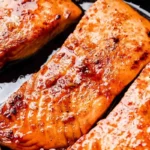
Honey Garlic Baked Salmon
- Total Time: 20 minutes
- Yield: 4 servings 1x
- Diet: General
Description
This easy Honey Garlic Baked Salmon recipe is a 20 minute healthy meal! The salmon is baked in a sweet honey garlic sauce that has a hint of soy sauce for extra flavor.
Ingredients
- 4 salmon filets (skin on or off, about 8 oz each)
- salt and pepper (to season the salmon)
- 1 teaspoon paprika
- 3 tablespoons butter (salted or unsalted)
- 5 garlic cloves (minced)
- 5 tablespoons honey
- 2 tablespoons water
- juice of 1 lemon
- 1 tablespoon low sodium soy sauce
Instructions
- Prepare Oven: Place oven shelf in the middle of the oven and preheat your oven to broil.
- Season: Season both sides of the salmon with salt and pepper and the paprika.
- Make Sauce: In a large cast iron skillet melt the butter over medium-high heat. Add the garlic and cook for 1 minute or until fragrant. Stir in the honey, water, lemon juice, and soy sauce. Stir to combine and cook for 2 minutes, the sauce will slowly thicken.
- Sear: Place the salmon in the skillet, skin side down (if it has skin). Cook for 4 minutes, Spooning the sauce over the tops of the filets.
- Bake: Baste the fish one last time and then place the skillet in the oven and bake for 5 minutes. Internal temp of the salmon should reach 145°F.
- Serve: Remove from oven and serve immediately.
Notes
Keep the skin on the salmon to protect the flesh from the hot pan. Ensure salmon is at room temperature and patted dry prior to cooking for crispier skin. Do not flip the salmon; the top will bake in the oven. Store leftovers in an airtight container for up to 4 days.
- Prep Time: 5 minutes
- Cook Time: 15 minutes
- Category: Main Course
- Method: Baking
- Cuisine: American
Nutrition
- Serving Size: 1 filet
- Calories: 406 kcal
- Sugar: 22 g
- Sodium: 285 mg
- Fat: 19 g
- Saturated Fat: 7 g
- Unsaturated Fat: 11 g
- Trans Fat: 1 g
- Carbohydrates: 23 g
- Fiber: 1 g
- Protein: 34 g
- Cholesterol: 116 mg
Keywords: honey garlic salmon, baked salmon, healthy salmon, 20 minute meal, quick dinner