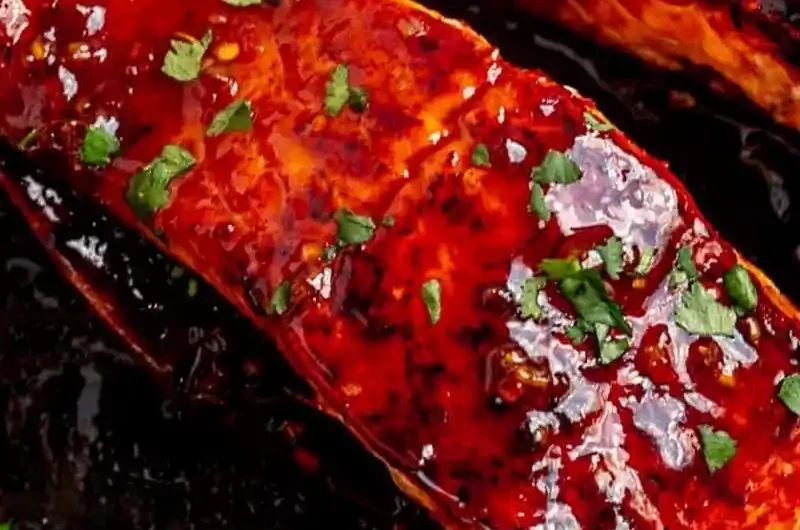
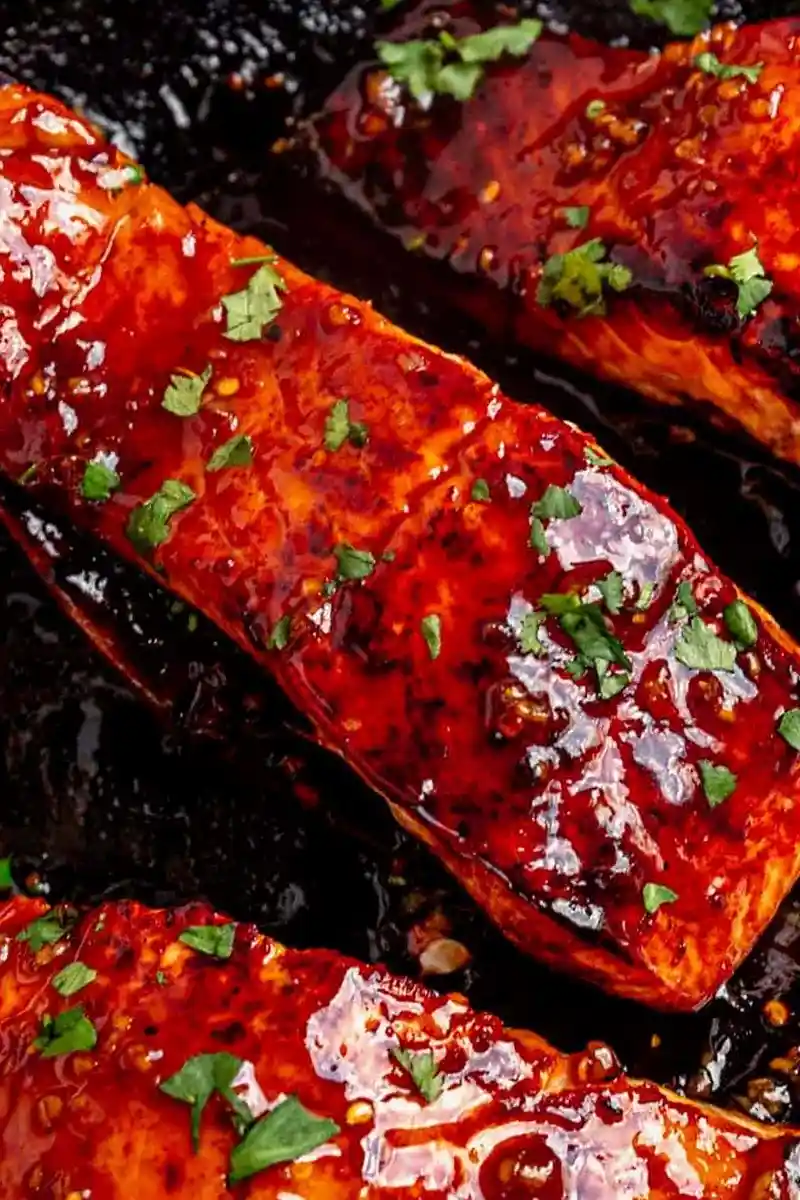
This honey garlic glazed salmon is an efficient, high-protein meal that delivers a sophisticated flavor profile in just 30 minutes. By combining a sweet and savory glaze with the gentle heat of the oven, you achieve perfectly flaky fish every time. It is a reliable choice for busy weeknights when you want a restaurant-quality dinner without spending hours in the kitchen.
List of ingredients
- 1/4 cup lime juice (juice from 1 lime)
- 3 Tablespoons honey
- 6 cloves garlic (minced)
- 1/3 cup coconut aminos
- 2 teaspoons cornstarch
- 4 (6-ounce) salmon filets
- 1 Tablespoon olive oil
- 1 teaspoon kosher salt
- 1/2 teaspoon smoked paprika
- Pinch of red pepper flakes
- Chopped green onion or parsley for serving (optional)
step-by-step instructions
- Preheat: Preheat the oven to 425°F and arrange the oven rack to the middle position. Line a large sheet pan with parchment paper.
- Make the glaze: Whisk the honey glaze ingredients in a large oven-safe skillet until the cornstarch is dissolved. Bring to a gentle boil over medium-high heat, stirring for 1-2 minutes until thickened. Transfer to a separate bowl.
- Season: Pat the salmon dry. Drizzle with 1 Tablespoon of olive oil and toss with salt, paprika, and red pepper flakes.
- Sear: Heat a drizzle of olive oil in the same pan over medium-high heat. Sear salmon flesh-side-down for 2-3 minutes.
- Glaze: Flip the salmon over and drizzle a small amount of the prepared glaze on top of each filet. Spread with the back of a spoon.
- Bake: Transfer the skillet to the oven and bake for 8-11 minutes, or until the internal temperature reaches 125-130°F.
- Serve: Brush the remaining glaze over the salmon and garnish with green onion or parsley before serving.
Practical Preparation Techniques
Ensuring Even Cooking Through Uniformity
Select salmon filets that are roughly the same thickness. If one piece is significantly thinner than the others, it will overcook before the rest of the batch is ready. If you cannot find uniform cuts, simply trim the thinner ends slightly or tuck the thin tail portion under the filet to create a more compact, even shape.
The Role of Dry Surfaces in Searing
Always pat your salmon very dry with paper towels before seasoning. Moisture on the surface creates steam rather than a crust, which prevents the fish from developing a nice golden-brown exterior. A dry surface ensures that the olive oil hits the pan properly and begins the browning process immediately upon contact.
Managing the Internal Temperature
Using a digital meat thermometer is the most reliable way to check for doneness. Aiming for 125°F to 130°F ensures the fish remains moist and tender rather than dry and chalky. If you prefer your fish cooked slightly more thoroughly, pull it out of the oven at 130°F, as carry-over heat will continue to raise the temperature once it is out of the pan.
Substitutions and Flavor Adaptations
Choosing Between Soy Sauce and Coconut Aminos
If you prefer a gluten-free option, coconut aminos serve as an excellent substitute for soy sauce. They offer a slightly sweeter, less salty profile that complements the honey beautifully. If you stick with soy sauce, always opt for a low-sodium variety to maintain control over the total salt content of your glaze.
Replacing Lemon for Acid Balance
While lemon juice is specified, you can use fresh lime juice for a slightly different aromatic profile. Lime works exceptionally well if you intend to serve the dish with cilantro and rice. Ensure that you are using freshly squeezed citrus rather than bottled, as bottled versions often contain additives that can interfere with the thickening properties of the cornstarch.
Adjusting the Heat Levels
The pinch of red pepper flakes is meant to provide a background warmth. If your household prefers a spicier profile, you can increase the amount of red pepper flakes or add a teaspoon of chili paste to the glaze mixture. Conversely, if you prefer a milder taste, simply omit the red pepper flakes entirely, as the garlic and honey provide plenty of depth.
Serving Ideas and Meal Planning
Selecting the Perfect Side Dishes
Because the glaze is sticky and savory, pairing it with neutral grains is the most effective way to balance the plate. Fluffy white rice, quinoa, or nutty brown rice act as a base to soak up any excess glaze from the pan. For those watching carbohydrate intake, cauliflower rice is an excellent, light alternative that pairs well with the ginger and garlic notes.
Incorporating Roasted Vegetable Medleys
Roasting vegetables on the same sheet pan or a separate rack while the salmon bakes is a great way to save time. Asparagus, broccoli florets, and carrots all roast beautifully at 425°F. You can lightly season these vegetables with olive oil and salt so they do not compete with the bold flavors of the salmon glaze.
Managing Storage and Reheating
Maintaining Quality in the Refrigerator
Store any leftover salmon in an airtight container to prevent the fish from absorbing other odors in the fridge. Properly sealed, the salmon will remain fresh for up to two days. Avoid leaving the fish out at room temperature for more than two hours after cooking to maintain food safety.
Reheating Without Drying Out
Reheating fish can be tricky, as high heat often leads to dryness. For the best texture, reheat the salmon in a skillet over low to medium-low heat with a tablespoon of water or a splash of broth. Cover the pan with a lid to steam the fish gently for 3-4 minutes. Alternatively, using a toaster oven at a low temperature can help restore the glaze without overcooking the delicate flesh.
Frequently Asked Questions
Can I prepare the glaze ahead of time?
Yes, you can make the glaze up to three days in advance. Keep it in a sealed jar in the refrigerator. Before cooking, give it a good shake or whisk, as the cornstarch may settle at the bottom during storage.
Should the salmon skin be left on or taken off?
It is entirely a matter of preference. Keeping the skin on can provide a protective layer between the salmon flesh and the hot pan, which helps prevent burning during the initial sear. It also helps the filet hold its shape when you transfer it from the skillet to the oven.
Why did my glaze burn in the oven?
Glaze burn typically happens if the oven rack is too high or if the glaze was not thickened enough before going into the oven. Ensure your oven rack is in the center position and that you have boiled the glaze for at least one to two minutes to ensure the cornstarch has properly activated and thickened the sauce.
Is this meal freezer-friendly?
While the salmon can be frozen, the texture is generally best when eaten fresh. If you must freeze it, do so after it has completely cooled down, and consume it within one month. Thaw the salmon in the refrigerator overnight before reheating gently in a pan.
What is the best way to avoid cross-contamination?
Always set aside a portion of the glaze to use for brushing onto the finished salmon before you begin prepping the raw fish. By designating the final glaze in a separate clean bowl, you ensure that no raw juices from the salmon interact with the sauce intended for your finished, cooked meal.
Print
Honey Garlic Glazed Salmon Bake
- Total Time: PT30M
- Yield: 4 salmon filets 1x
- Diet: Gluten-Free, Dairy-Free
Description
This honey glazed salmon recipe is baked in the oven and done in 30 minutes. The glaze is made with coconut aminos, garlic, lime juice, and honey, coating the salmon before baking it to flaky perfection. Perfect served with rice, quinoa, or roasted vegetables.
Ingredients
- 1/4 cup lime juice (juice from 1 lime)
- 3 Tablespoons honey
- 6 cloves garlic (minced)
- 1/3 cup coconut aminos
- 2 teaspoons cornstarch
- 4 (6-ounce) salmon filets
- 1 Tablespoon olive oil
- 1 teaspoon kosher salt
- 1/2 teaspoon smoked paprika
- Pinch of red pepper flakes
- Chopped green onion or parsley for serving (optional)
Instructions
- Preheat: Preheat the oven to 425°F and arrange the oven rack to the middle position. Line a large sheet pan with parchment paper.
- Make the glaze: Whisk the honey glaze ingredients in a large oven-safe skillet until the cornstarch is dissolved. Bring to a gentle boil over medium-high heat, stirring for 1-2 minutes until thickened. Transfer to a separate bowl.
- Season: Pat the salmon dry. Drizzle with 1 Tablespoon of olive oil and toss with salt, paprika, and red pepper flakes.
- Sear: Heat a drizzle of olive oil in the same pan over medium-high heat. Sear salmon flesh-side-down for 2-3 minutes.
- Glaze: Flip the salmon over and drizzle a small amount of the prepared glaze on top of each filet. Spread with the back of a spoon.
- Bake: Transfer the skillet to the oven and bake for 8-11 minutes, or until the internal temperature reaches 125-130°F.
- Serve: Brush the remaining glaze over the salmon and garnish with green onion or parsley before serving.
Notes
Salmon can be prepared skin-on or skin-off; keeping the skin on helps prevent the fish from drying out during the baking process. Store leftovers in an airtight container in the refrigerator for up to 2 days.
- Prep Time: PT10M
- Cook Time: PT20M
- Category: Dinner
- Method: Baking
- Cuisine: Chinese-inspired
Nutrition
- Serving Size: 1 salmon filet
- Calories: 316 kcal
- Sugar: 13 g
- Sodium: 1423 mg
- Fat: 11 g
- Saturated Fat: 2 g
- Unsaturated Fat: 8 g
- Trans Fat: 0 g
- Carbohydrates: 18 g
- Fiber: 0.4 g
- Protein: 36 g
- Cholesterol: 94 mg
Keywords: honey glazed salmon, baked salmon, healthy dinner, gluten-free dinner, honey garlic salmon