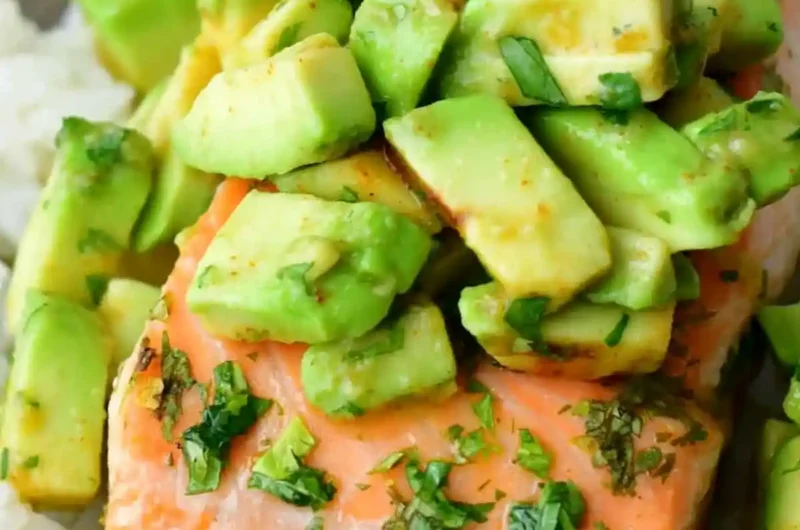
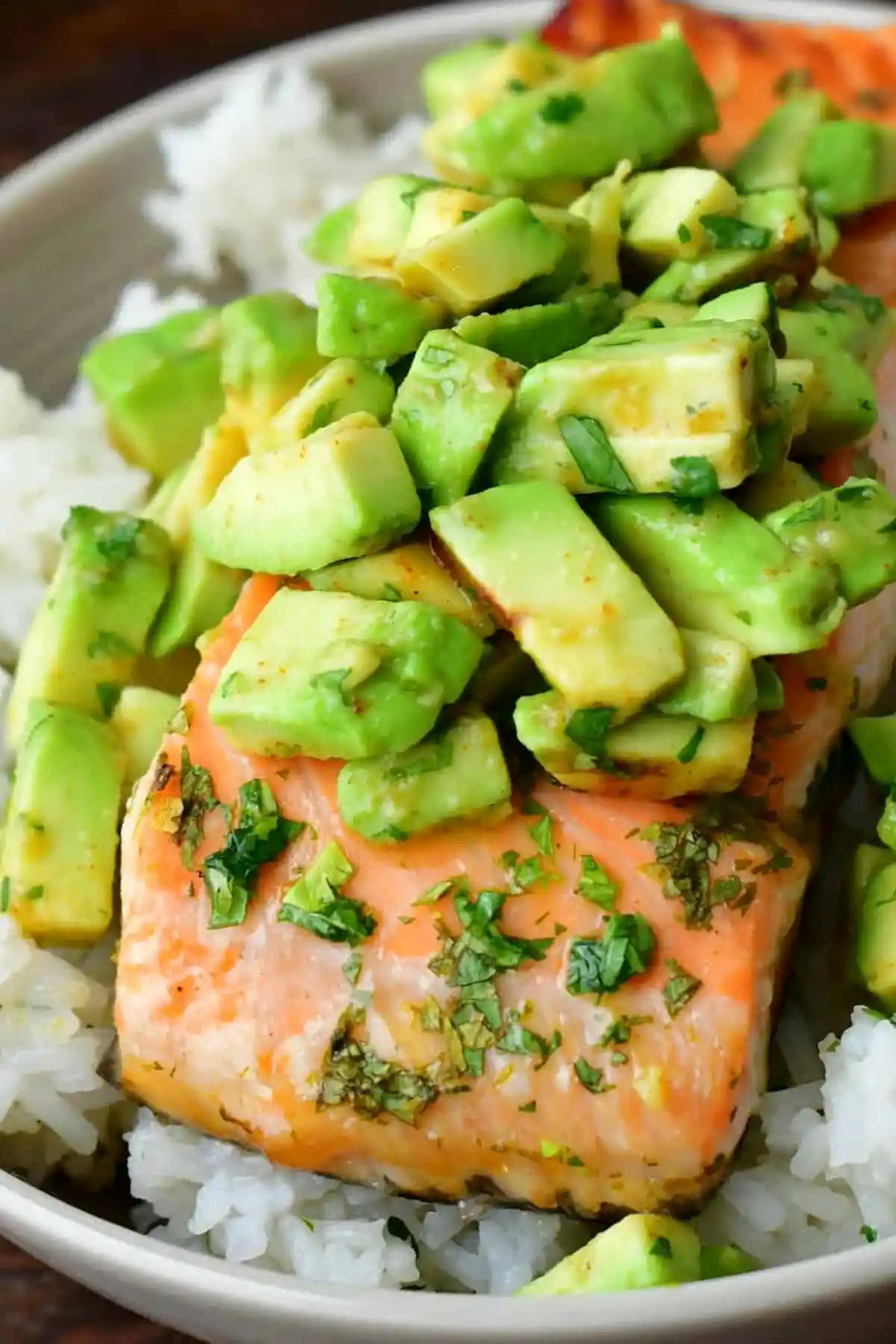
This nutrient-dense meal combines citrus-glazed baked salmon with zesty cilantro rice and a creamy avocado topping. It is a fast, balanced dinner that delivers a bright blend of honey and lime flavors in under 40 minutes.
List of ingredients
- 1 cup jasmine rice – for a fluffy, floral base.
- 1 1/2-2 cups water – as per package directions.
- Salt – to season the rice water.
- 1/2 lime, juice only – for the rice glaze.
- 2 Tbsp minced fresh cilantro – adds brightness to the rice.
- 1 Tbsp honey – balances the lime in the rice.
- 3 Tbsp chicken or vegetable stock – adds depth to the rice sauce.
- 1 lb salmon fillets (skin on) – provides essential omega-3s and structure.
- 1 Tbsp lime juice – for the salmon glaze.
- 1 Tbsp honey – creates a sweet caramelized crust on the fish.
- 2 Tbsp minced fresh cilantro – for aromatic salmon flavor.
- Salt – to taste for seasoning the fillets.
- 1 ripe avocado – for a creamy, healthy fat topping.
- 1 tbsp lime juice – prevents browning and adds tang to the avocado.
- 1 tbsp minced fresh cilantro – enhances the avocado mixture.
- 1/4-1/2 tsp chili powder – adds a mild kick to the topping.
- Salt – to taste for the avocado mix.
step-by-step instructions
- Prepare the Rice: Cook the jasmine rice in salted water according to the package instructions. Once the rice is fully cooked and tender, remove the pot from the heat.
- Simmer the Rice Glaze: Heat a medium pan over medium-high heat. Combine the stock, lime juice, honey, and cilantro in the pan and simmer for about one minute until the liquid reduces slightly.
- Finish the Rice: Pour the reduced honey-lime mixture over the cooked rice. Gently fold the sauce into the grains to ensure an even coat without mashing the rice.
- Prepare the Oven and Pan: Preheat your oven to 425°F. Line a rimmed baking sheet with parchment paper to prevent the salmon from sticking and to make cleanup easier.
- Season the Salmon: Lightly rub the salmon skin with oil. Place the fillets skin-side down on the parchment paper and season all exposed sides with salt.
- Apply the Glaze: Mix together the lime juice, honey, and cilantro. Spoon this mixture over the top of each fillet, allowing the glaze to drip down the sides.
- Bake the Fish: Bake for 12 to 18 minutes. The exact time depends on the thickness of your fillets; thinner cuts finish faster.
- Mix the Avocado Topping: While the salmon is baking, halve the avocado, remove the pit, and scoop out the flesh. Chop the avocado into chunks and place them in a small bowl.
- Season the Avocado: Stir in the lime juice, cilantro, chili powder, and salt. Mix gently to keep the avocado chunky rather than smooth.
- Assemble the Bowls: Divide the cilantro rice between two bowls. Place one salmon fillet on top of the rice and garnish with a generous portion of the avocado mixture.
Optimizing Salmon Selection and Baking
The Importance of Skin-On Fillets
Keeping the skin on during the baking process acts as a protective thermal barrier. This prevents the delicate flesh from overcooking and sticking to the baking sheet. The fatty layer between the skin and meat also retains more moisture and flavor.
Adjusting Bake Times for Fillet Thickness
Salmon thickness varies significantly between wild-caught and farmed cuts. Fillets under one inch thick typically cook in 12 minutes, while thicker cuts may require 18 minutes or more. Always check the thickest part of the fish to ensure it is cooked to your preference.
Using Parchment Paper for Easy Release
Parchment paper is superior to aluminum foil for this recipe because it is non-stick and doesn’t react with the acidity of the lime juice. It allows the skin to release easily from the pan after baking. This ensures the fillet remains intact during plating.
Rice Preparation and Texture Tips
Selecting the Best Rice Variety
Jasmine rice is recommended for its naturally aromatic scent and slightly sticky texture that holds the glaze well. If you prefer a nuttier flavor, brown rice is a great alternative. If you are avoiding grains, cauliflower rice provides a similar aesthetic and works well with the honey-lime sauce.
Reducing the Sauce to Prevent Sogginess
Simmering the stock, honey, and lime juice for one minute is a critical step. This reduction concentrates the flavors and thickens the consistency of the glaze. Pouring unreduced liquid into the rice can result in a mushy texture rather than a coated grain.
Maintaining Fluffy Grains
When folding the sauce into the cooked rice, use a fork or a rice paddle rather than a heavy spoon. Gentle folding prevents the grains from breaking. This keeps the rice light and airy, providing a better textural contrast to the salmon.
Perfecting the Avocado Topping
Choosing the Right Ripeness
An ideal avocado should yield gently to light pressure when squeezed in the palm of your hand. If the avocado is too firm, it will not blend with the lime and chili powder. If it is too soft, it will turn into guacamole rather than staying chunky.
Preventing Enzymatic Browning
The lime juice in the topping does more than add flavor; the citric acid inhibits the enzyme that causes avocados to turn brown. To keep the topping bright green, mix the lime juice in immediately after chopping. This is especially important if you are preparing the topping a few minutes before serving.
Customizing the Heat Level
Chili powder provides a warm, earthy heat that balances the sweetness of the honey. For a mild flavor, stick to 1/4 teaspoon. If you prefer a spicier bowl, increase the amount to 1/2 teaspoon or substitute with a pinch of cayenne pepper.
Determining Salmon Doneness
Using a Digital Instant-Read Thermometer
The most accurate way to check salmon is by measuring the internal temperature of the thickest part. For a medium texture, aim for 125°F to 135°F. For fully cooked salmon according to food safety standards, reach 145°F.
The Press and Feel Test
If you do not have a thermometer, press the center of the fillet with your finger. Done salmon will feel firm with a slight amount of give. If the meat feels squishy or resists the press with a raw texture, it needs a few more minutes in the oven.
Identifying the Flake Point
Cooked salmon naturally separates along the white lines of fat called connective tissue. Use a fork to gently push a piece of the fish; if it flakes easily along these lines, it is ready. If the layers stick together, it is undercooked.
Evaluating Color and Opacity
Raw salmon is translucent and deep pink. As it cooks, the proteins denature and the flesh becomes opaque. The exterior should be completely opaque, while the very center can maintain a slight shine for a more moist result.
Creative Serving and Variation Ideas
Adding Fresh Vegetable Crunch
To add more texture and nutrients, incorporate raw vegetables into the bowl. Thinly sliced cucumbers, halved cherry tomatoes, or shredded red cabbage provide a crisp contrast to the soft rice and salmon. These additions also add a pop of color to the presentation.
Alternative Grains for Different Diets
Quinoa is an excellent substitute for jasmine rice if you want a higher protein, gluten-free base. For a low-carb version, sautéed cauliflower rice works perfectly with the honey-lime reduction. Both options absorb the flavors of the cilantro and lime effectively.
Enhancing with Creamy Dressings
A drizzle of avocado lime dressing or a dollop of Greek yogurt can add extra creaminess. Some users enjoy a swirl of Sriracha mayo for a spicy, creamy finish. This complements the sweetness of the honey glaze on the salmon.
Storage and Reheating Guidelines
Component-Based Storage
For the best quality, store the salmon, rice, and avocado topping in separate airtight containers. The rice and salmon can stay fresh in the refrigerator for up to 3 days. Store the avocado topping separately to prevent the flavors from bleeding into the other components.
Properly Reheating Salmon and Rice
Overheating salmon can make it dry and rubbery. Reheat the salmon and rice in the microwave using short 30-second bursts on medium power. This allows the fish to warm through without cooking further.
Handling the Avocado Topping
The avocado topping should never be heated. Always add the fresh, chilled avocado mixture to the bowl after the salmon and rice have been reheated. This maintains the fresh taste and the creamy texture of the fruit.
Troubleshooting and FAQ
Can I use frozen salmon to make salmon rice bowl?
Yes, frozen salmon works well. Thaw the fillets completely in the refrigerator overnight. It is essential to pat the fillets dry with paper towels before seasoning, as excess moisture prevents the honey-lime glaze from sticking to the fish.
What is the white stuff coming out of my salmon?
The white substance is called albumin, a protein that is pushed out of the muscle fibers during cooking. It is completely harmless and common in salmon, especially those that were previously frozen. You can easily scrape it off before serving for a cleaner look.
Can I cook the salmon skin-side up instead?
While you can cook it skin-side up, it is not recommended for this baking method. Cooking skin-side down protects the flesh from the direct heat of the pan, keeping it more moist. If you prefer crispy skin, you would need to sear it in a pan before finishing it in the oven.
What if I dislike cilantro?
If you are not a fan of cilantro, fresh flat-leaf parsley is the best substitute. It provides a similar green color and a fresh, herby note without the soapy taste some people experience with cilantro. Use it in the same quantities for the rice, salmon, and avocado.
How do I stop the rice from sticking together?
Rinse your jasmine rice under cold water until the water runs clear before cooking. This removes excess surface starch that causes clumping. Additionally, avoid stirring the rice while it is simmering to keep the grains distinct.
Can I substitute honey with another sweetener?
Maple syrup is a great alternative to honey and provides a similar viscosity for the glaze. If you need a sugar-free option, a small amount of agave nectar or a monk fruit syrup can be used, though the caramelization in the oven may differ.
Print
Honey Lime Salmon Bowls with Avocado
- Total Time: 40 minutes
- Yield: 2 servings 1x
- Diet: Gluten Free
Description
Beautiful baked salmon with honey, lime, and cilantro flavors over a bed of fluffy cilantro rice and topped with flavorful avocado topping.
Ingredients
- 1 cup jasmine rice
- 1 1/2–2 cups water
- Salt
- 1/2 lime, juice only
- 2 Tbsp minced fresh cilantro
- 1 Tbsp honey
- 3 Tbsp vegetable stock
- 1 lb salmon fillets, skin on
- 1 Tbsp lime juice
- 1 Tbsp honey
- 2 Tbsp minced fresh cilantro
- Salt (to taste)
- 1 ripe avocado
- 1 tbsp lime juice
- 1 tbsp minced fresh cilantro
- 1/4–1/2 tsp chili powder
- Salt (to taste)
Instructions
- Cook Rice: Cook rice in salted water per package instructions and take off heat when done.
- Prepare Rice Sauce: Mix stock, lime juice, honey, and cilantro together in a pan and simmer over medium-high heat for about a minute to reduce.
- Finish Rice: Gently mix the reduced sauce into the cooked rice.
- Prepare Oven: Preheat oven to 425℉ and cover a rimmed baking sheet with parchment paper.
- Season Salmon: Rub salmon skin with oil, place fillets skin down on the baking sheet, and salt all three sides.
- Glaze Salmon: Mix lime juice, honey, and cilantro together and spread it all over the top of the fillets.
- Bake: Bake salmon for 12-18 minutes, depending on the thickness of the fillets.
- Make Topping: Chop avocado and mix in a small bowl with lime juice, cilantro, chili powder, and salt.
- Assemble: Divide rice among two bowls, top each with a salmon fillet, and add the avocado mixture.
Notes
Store salmon, rice, and avocado topping in separate airtight containers in the refrigerator for up to 3 days. Reheat salmon and rice in short 30-second microwave bursts to avoid drying out the fish.
- Prep Time: 10 minutes
- Cook Time: 30 minutes
- Category: Dinner, Main Course
- Method: Baking
- Cuisine: American, Asian, Mediterranean
Nutrition
- Serving Size: 1 bowl
- Calories: 897 kcal
- Sugar: 18 g
- Sodium: 135 mg
- Fat: 29 g
- Saturated Fat: 4 g
- Unsaturated Fat: 25 g
- Trans Fat: 0 g
- Carbohydrates: 103 g
- Fiber: 8 g
- Protein: 54 g
- Cholesterol: 124 mg
Keywords: avocado salmon rice bowl, baked salmon, honey lime salmon, cilantro rice, healthy dinner