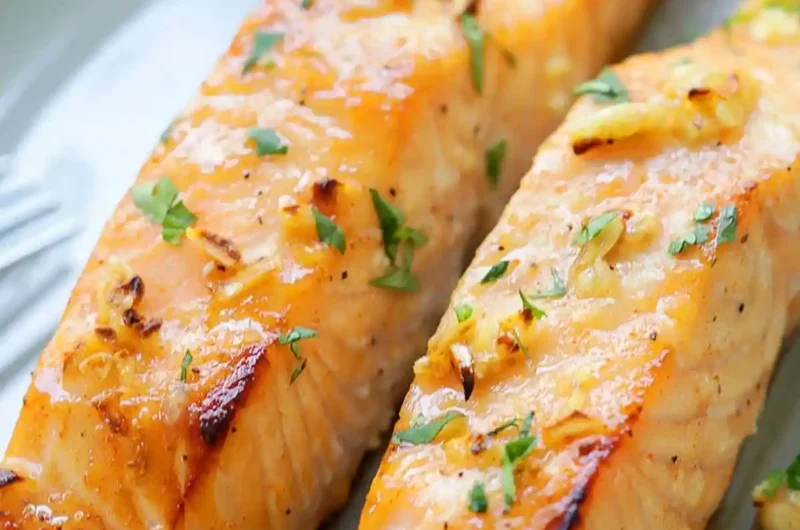
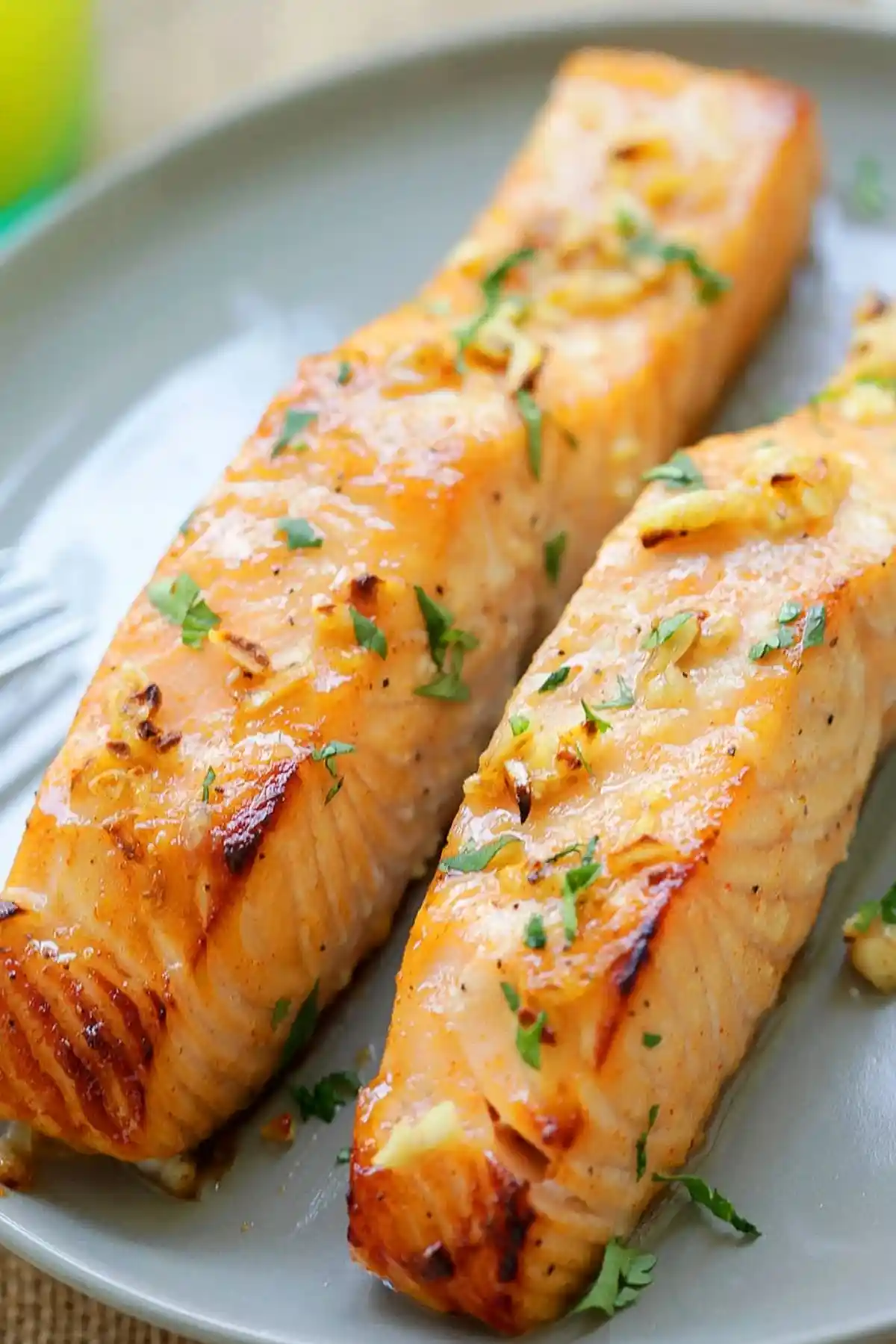
This honey mustard salmon is a fast and flavorful meal that balances sweet and savory notes perfectly. It requires minimal active preparation and delivers juicy, tender fillets every time.
List of ingredients
- 12 oz salmon, cut into two fillets – center-cut fillets ensure even cooking.
- 2 cloves garlic – minced finely for an aromatic base.
- 3 tablespoons honey – provides a sticky, glossy caramelization.
- 3 teaspoons Dijon mustard – adds a sharp, tangy contrast to the sweetness.
- 1 tablespoon lemon juice – cuts through the richness of the fish.
- 1/8 teaspoon salt – enhances all the other flavors.
- 3 dashes ground black pepper – adds a mild earthy spice.
- 1/8 teaspoon cayenne pepper – provides a subtle hint of heat.
- chopped parsley leaves – used for a fresh, colorful garnish.
step-by-step instructions
- Prepare the Oven and Glaze: Preheat your oven to 400°F (207°C). In a small mixing bowl, combine the garlic, honey, Dijon mustard, lemon juice, salt, black pepper, and cayenne pepper, then whisk until the mixture is smooth.
- Marinate the Salmon: Spread the honey mustard glaze generously over the salmon fillets, ensuring they are completely coated on all sides. Let the fillets sit and marinate for 15 minutes to allow the flavors to penetrate the meat.
- Bake the Fillets: Line a baking sheet with parchment paper or use a baking tray to prevent sticking. Place the salmon on the tray and pour any remaining glaze over the top of the fillets. Bake in the preheated oven for 12 minutes.
- Final Touch: Remove the tray from the oven. Carefully scoop up the pan juices and drizzle them over the salmon. Garnish with fresh chopped parsley and serve immediately.
Optimal Ingredient Selection
Choosing Wild-Caught vs Farmed Salmon
Wild-caught salmon typically has a deeper red color and a more intense flavor compared to farmed salmon. It is generally leaner and contains higher levels of certain nutrients. Farmed salmon is often milder in taste and has a higher fat content, which can make the fillets more forgiving during the baking process.
The Benefit of Center-Cut Fillets
Using center-cut fillets is recommended because the thickness is consistent from one end to the other. This uniformity prevents the thinner tail end from overcooking while the thick center remains raw. Consistent thickness ensures a juicy result throughout the entire piece of fish.
Selecting the Right Honey for Glazing
Pure, liquid honey is the best choice for this glaze because it blends seamlessly with the mustard and lemon juice. Avoid using whipped honey or crystallized honey, as these can create lumps in the sauce. Light clover or wildflower honey works best as they provide sweetness without overpowering the salmon.
Using Smooth Dijon Mustard for Texture
A smooth Dijon mustard is preferred over whole-grain varieties to ensure the glaze coats the salmon in an even, glossy layer. Smooth mustard emulsifies better with the honey and lemon juice, resulting in a sticky sauce that clings to the fish. This creates a consistent crust during the baking process.
Alternative Cooking Methods
Air Fryer Method for Faster Results
Preheat the air fryer to 375°F (190°C) and line the basket with parchment paper or lightly grease it. Place the glazed salmon fillets skin-side down and cook for approximately 6 minutes. This method produces a more caramelized top while keeping the interior moist.
Pan-Searing for a Richer Crust
Heat a nonstick skillet or cast iron pan over medium heat with a small amount of oil. Place the salmon skin-side down and sear for 3 to 4 minutes until the skin is crisp. Flip the fillets, spoon the remaining glaze over the top, and cook for another 3 to 4 minutes until cooked through.
Outdoor Grilling for Smoky Flavor
Preheat a grill or grill pan to medium-high heat and lightly oil the grates to prevent sticking. Grill the salmon skin-side down for 4 to 5 minutes. Flip the fillets, brush them with the remaining glaze, and grill for another 3 to 4 minutes to achieve charred edges.
Customizing the Flavor Profile
Substituting Maple Syrup for Honey
Maple syrup can be used as a one-to-one replacement for honey if you prefer a deeper, more autumnal flavor. Maple syrup has a distinct woody sweetness that pairs exceptionally well with the tang of Dijon mustard. The glaze will remain sticky, though the flavor will be slightly less floral than when using honey.
Adjusting the Heat Levels
The cayenne pepper provides a very subtle kick, but it can be adjusted based on preference. For those who prefer no heat, the cayenne can be omitted entirely without affecting the structure of the sauce. For a spicier version, increase the cayenne to 1/4 teaspoon or add a pinch of red chili flakes.
Adding Extra Aromatics
To increase the depth of the glaze, you can add a small amount of grated fresh ginger or a dash of smoked paprika. Ginger adds a zesty brightness that complements the lemon juice. Smoked paprika introduces a subtle wood-smoke aroma that mimics the flavor of grilled salmon.
Serving and Pairing Recommendations
Combining with Starchy Sides
This salmon pairs well with fluffy white rice, quinoa, or a side of buttered pasta. A bed of couscous also works well to soak up the extra honey mustard glaze from the pan. For a lower-carb option, cauliflower rice provides a neutral base that lets the glaze shine.
Pairing with Green Vegetables
Roasted asparagus, sautéed spinach, or steamed broccolini are excellent accompaniments. The bitterness of greens balances the sweetness of the honey glaze. Sautéing these vegetables in garlic and butter mirrors the flavor profile of the salmon.
Complementing with Fresh Salads
A crisp garden salad with a light vinaigrette provides a refreshing contrast to the rich, sticky glaze. Spinach salads with sliced apples, pecans, and a bit of feta cheese add textures and flavors that complement the savory salmon. A simple arugula salad with lemon juice also cleanses the palate between bites.
Storage and Preservation
Refrigerating Salmon Leftovers
Allow the cooked salmon to cool completely before placing it in an airtight container. Store it in the refrigerator for up to 3 days. To prevent the fish from drying out, pour any leftover glaze or pan juices over the fillets before sealing the container.
Freezing Cooked Fillets
Cooked salmon can be frozen for up to 2 months if wrapped tightly in plastic wrap or foil. Place the wrapped fillets inside a freezer-safe bag to prevent freezer burn. When ready to eat, thaw the salmon slowly in the refrigerator overnight to maintain the texture.
Thawing Methods for Quality
Avoid thawing frozen salmon at room temperature, as this can compromise food safety and texture. The best method is to move the fish from the freezer to the fridge 24 hours before use. For faster thawing, place the sealed bag in cold running water.
Reheating Instructions
Gentle Oven Reheating
Preheat the oven to 300°F (150°C). Place the salmon on a baking sheet and add a teaspoon of water or extra glaze to provide moisture. Heat for 8 to 10 minutes, or until the salmon is warmed through without overcooking the center.
Quick Microwave Reheating
Place the salmon on a microwave-safe plate and cover it with a damp paper towel or a lid. Heat in 30-second bursts, checking the temperature between intervals. This method is fastest but can easily overcook the fish if not monitored closely.
Using Glaze for Moisture Recovery
Since salmon tends to dry out when reheated, applying a fresh thin layer of honey mustard glaze before heating is helpful. This replaces lost moisture and refreshes the flavor of the crust. A final squeeze of fresh lemon juice after reheating also restores the brightness of the dish.
Troubleshooting Common Issues
Preventing the Glaze from Burning
Honey has a high sugar content and can burn if exposed to excessive heat for too long. If you notice the glaze darkening too quickly in the oven, lower the temperature by 25°F or cover the fillets loosely with aluminum foil. This protects the sugars while allowing the fish to finish cooking.
Avoiding Overcooked Salmon
Overcooked salmon becomes dry, chalky, and loses its flaky texture. Use a meat thermometer to check the internal temperature, aiming for 125°F (52°C) for a medium cook. Remember that carry-over cooking will raise the temperature slightly after the fish is removed from the heat.
Ensuring the Glaze Adheres
If the glaze slides off the salmon, it may be because the fish was too damp when the sauce was applied. Always pat the salmon fillets dry with paper towels before coating them. This allows the glaze to grip the surface of the meat and caramelize properly in the oven.
Frequently Asked Questions
Can I use frozen salmon for this recipe?
Yes, frozen salmon works perfectly. Ensure the fillets are completely thawed in the refrigerator and patted dry with paper towels before applying the glaze to ensure proper adhesion.
Can I substitute maple syrup for the honey?
Yes, maple syrup is a great substitute. Use the same quantity as the honey for a similar consistency, though the flavor will be more like caramel than floral sweetness.
Can I make this ahead of time?
You can marinate the salmon in the glaze for up to 12 hours in the refrigerator. This makes it an excellent option for meal prep; just bake the fillets when you are ready to serve.
How do I know when the salmon is done?
The salmon is done when it flakes easily with a fork and the center is opaque. An internal temperature of 125°F to 135°F is ideal for most preferences.
How many calories are in one serving?
This recipe contains approximately 352 calories per serving, making it a nutrient-dense and relatively low-calorie meal option.
Print
Honey Mustard Baked Salmon
- Total Time: 22 minutes
- Yield: 2 people 1x
- Diet: Low-carb, High-protein
Description
This honey mustard salmon is garlicky, sweet, and savory all at once. Tender salmon fillets are slathered in a sticky glaze made with honey, Dijon mustard, garlic, lemon juice, and a tiny kick of cayenne, then baked in just 12 minutes!
Ingredients
- 12 oz salmon (cut into two fillets)
- 2 cloves garlic
- 3 tablespoons honey
- 3 teaspoons Dijon mustard
- 1 tablespoon lemon juice
- ⅛ teaspoon salt
- 3 dashes ground black pepper
- ⅛ teaspoon cayenne pepper
- chopped parsley leaves (for garnishing)
Instructions
- Prepare: Preheat the oven to 400°F (207°C). Combine all the ingredients for the Honey Mustard Glaze together, whisk to combine well. Spread and coat the salmon with the glaze, set aside for 15 minutes.
- Bake: Arrange the salmon on a baking sheet lined with parchment paper or a baking tray. Add the remaining glaze to the top of the salmon fillets. Bake in the oven for 12 minutes.
- Finish: Remove from heat, scoop the juice and drizzle on top of the salmon. Garnish with the parsley and serve immediately.
Notes
Can be cooked in an air fryer at 375°F (190°C) for 6 minutes, pan fried for 3-4 minutes per side, or grilled for 4-5 minutes skin-side down and 3-4 minutes after flipping.
- Prep Time: 10 minutes
- Cook Time: 12 minutes
- Category: Salmon
- Method: Baking
- Cuisine: American
Nutrition
- Serving Size: 1 fillet
- Calories: 352 kcal
- Sugar: 26 g
- Sodium: 305 mg
- Fat: 11 g
- Saturated Fat: 2 g
- Unsaturated Fat: 8 g
- Trans Fat: 0 g
- Carbohydrates: 29 g
- Fiber: 1 g
- Protein: 35 g
- Cholesterol: 94 mg
Keywords: honey mustard salmon, baked salmon, easy dinner, healthy salmon, honey mustard glaze