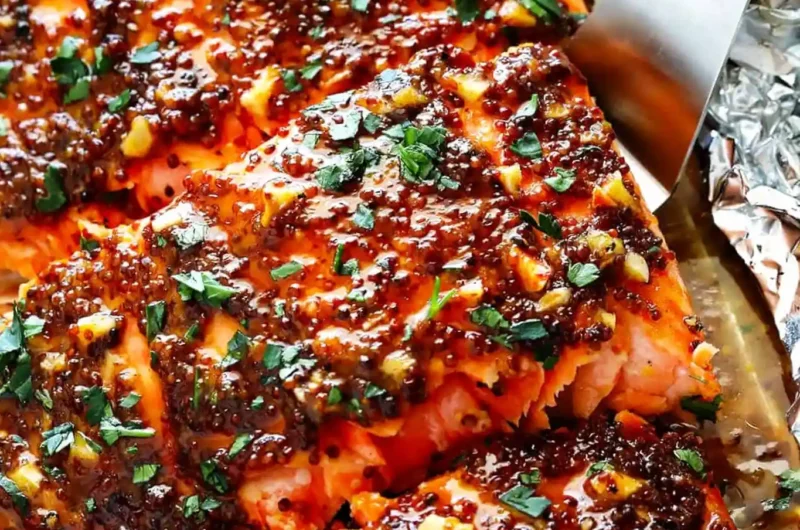
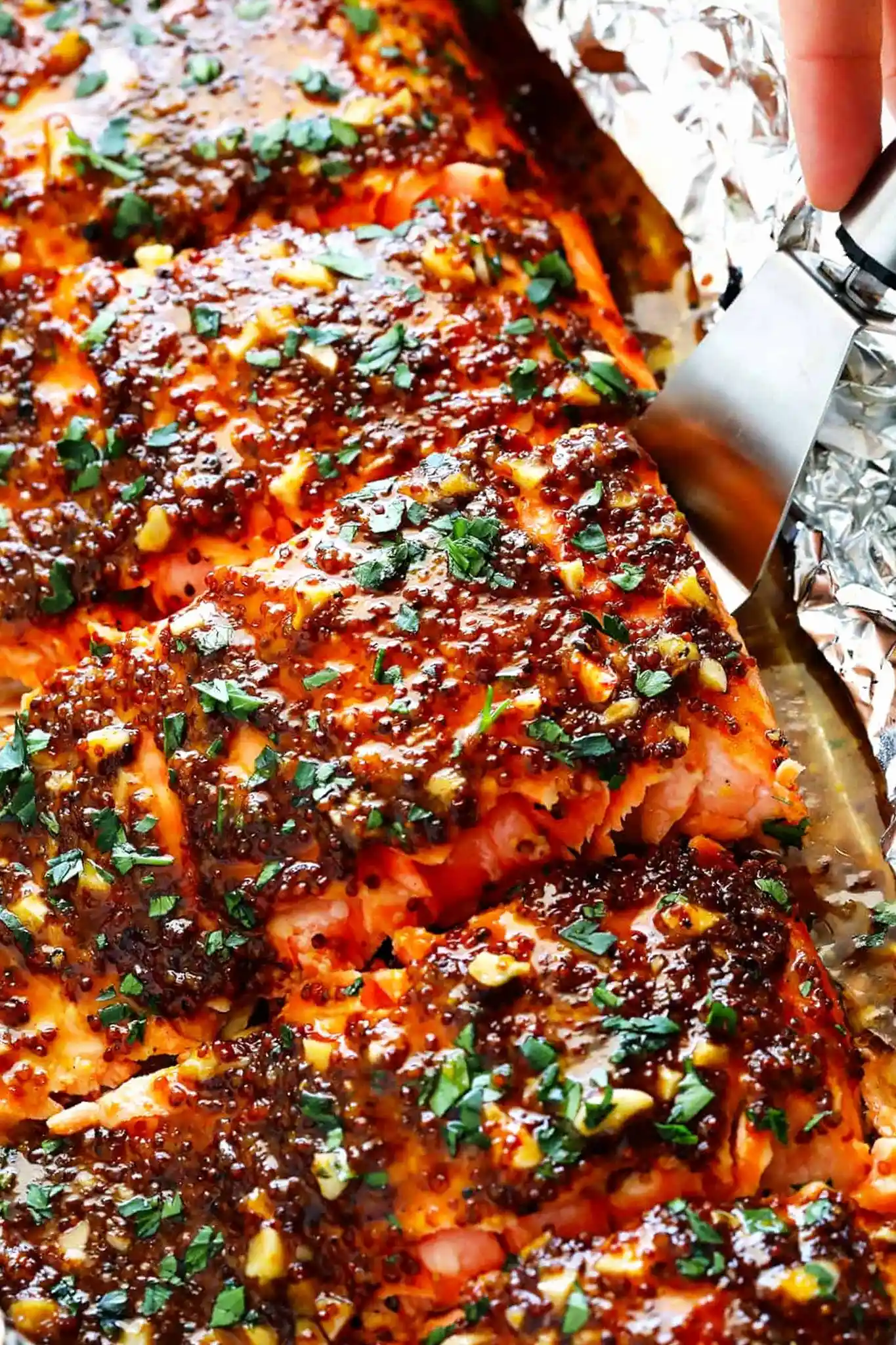
This efficient recipe delivers tender salmon fillets coated in a sweet and tangy glaze. Cooking the fish in aluminum foil locks in moisture and ensures a simple cleanup process.
List of ingredients
- 2 pound side of salmon, boneless and skinless – the main protein source.
- 1/3 cup whole grain mustard – provides a tangy, textured base for the sauce.
- 1/4 cup honey – adds a natural sweetness to balance the mustard.
- 4 cloves garlic, peeled and minced – adds aromatic depth and flavor.
- 2 tablespoons fresh lemon juice – provides necessary acidity and brightness.
- 1/4 teaspoon smoked paprika – gives a subtle woody and smoky undertone.
- 1/4 teaspoon Kosher salt – enhances all the other seasoning components.
- 1/8 teaspoon black pepper – adds a light, sharp spice.
- 1 tablespoon finely-chopped fresh parsley leaves – used for a fresh, colorful garnish.
step-by-step instructions
- Preheat the Heat: Set your oven to 375°F or prepare your grill for medium heat.
- Prepare the Glaze: In a small mixing bowl, whisk together the whole grain mustard, honey, minced garlic, lemon juice, smoked paprika, salt, and black pepper until the mixture is smooth.
- Set Up the Foil: Line a large baking sheet with a wide piece of aluminum foil. Mist the foil with cooking spray to prevent sticking, then place the salmon side in the center.
- Apply the Sauce: Spoon the prepared honey mustard sauce over the top of the salmon. Spread it evenly across the entire surface of the fish.
- Seal the Packet: Fold the sides of the aluminum foil up and over the salmon. Fold the edges tightly to create a completely enclosed, sealed packet. Use a second sheet of foil on top if the first one is not wide enough.
- Oven Cooking Method: Bake for 14-15 minutes until the salmon is almost cooked through. Carefully open the foil packet, releasing the steam, and set the oven to broil. Return the fish to the oven for 2-3 minutes until the top is toasted and bubbling.
- Grill Cooking Method: Transfer the sealed foil packet to the grill and cook for 12-14 minutes. Carefully open the foil to expose the top of the salmon and continue grilling for another 3-4 minutes until fully cooked.
- Finish and Serve: Remove the salmon from the heat source. Sprinkle the chopped fresh parsley evenly across the top and serve immediately.
Expert Tips for Perfect Results
Bring Salmon to Room Temperature
Allow the salmon to sit out for about 15 to 20 minutes before cooking. This ensures the fish cooks evenly from the center to the exterior. It prevents the outside from overcooking while the inside remains raw.
Use Heavy Duty Aluminum Foil
Opt for heavy-duty foil to avoid accidental tears during the sealing process. A stronger seal keeps the steam inside the packet, which is essential for maintaining the fish’s moisture. It also makes transporting the packet to the grill much safer.
Monitor Internal Temperature
Use a digital meat thermometer to check for doneness. Salmon is typically cooked through when it reaches an internal temperature of 145°F. Pulling it slightly early and letting it rest can prevent the fish from becoming dry.
Ingredient Substitutions
Swap Whole Grain for Dijon Mustard
If you prefer a smoother texture, replace the whole grain mustard with Dijon mustard. You will maintain the characteristic tang and spice but lose the seed texture. This is a great option for children or those who dislike grainy sauces.
Use Maple Syrup Instead of Honey
Maple syrup is an excellent alternative to honey for a more woody, autumnal flavor. Use an equal 1:1 ratio for the substitution. This version pairs exceptionally well with wild-caught salmon.
Substitute Fresh Garlic with Powder
If fresh garlic is unavailable, use 1/4 teaspoon of garlic powder. While the flavor is slightly more muted, it provides the necessary aromatic base. Ensure the powder is well-mixed into the sauce to avoid clumps.
Customizing Your Flavor Profile
Add a Spicy Kick
Incorporate a pinch of cayenne pepper or a teaspoon of Sriracha into the glaze. The heat balances the sweetness of the honey and adds complexity to the dish. This is ideal for those who enjoy a bolder, zesty flavor.
Try a Citrus Twist
Replace the lemon juice with lime juice or a mix of orange and lemon. This gives the salmon a brighter, more tropical profile. Citrus variations work especially well when cooking the salmon on a grill.
Incorporate Fresh Herbs
Add a teaspoon of dried dill or fresh thyme directly into the sauce. These herbs are classic pairings for salmon and enhance the overall freshness. Fresh parsley is used for garnish, but these herbs provide depth during the cooking process.
Optimal Side Dish Pairings
Roasted Root Vegetables
Pair this salmon with roasted carrots or parsnips. The natural sweetness of the root vegetables complements the honey mustard glaze. Roast them on a separate tray at the same oven temperature.
Light Grain-Based Sides
Serve the fish over a bed of quinoa, farro, or brown rice. These grains absorb the extra sauce from the foil packet, reducing waste. They provide a hearty base that balances the richness of the salmon.
Fresh Green Salads
A simple arugula or baby spinach salad with a lemon vinaigrette is a perfect match. The acidity of the greens cuts through the sweetness of the glaze. Add sliced cucumbers or radishes for extra crunch.
Storage and Preservation
Refrigeration Guidelines
Store leftover salmon in an airtight container in the refrigerator. It will remain fresh for up to three days. Allow the fish to cool completely before sealing the container to prevent excess moisture buildup.
Best Reheating Methods
Reheat the salmon in a low-temperature oven or a toaster oven. Adding a small splash of water or a pat of butter helps restore moisture. Avoid high-heat microwaving, which can make the fish rubbery.
Freezing Raw Marinated Salmon
You can prepare the salmon in the foil packet with the sauce and freeze it raw. Thaw the packet completely in the refrigerator overnight before cooking. This is an excellent method for meal prepping future dinners.
Common Troubleshooting Solutions
Preventing Fish from Sticking
Always mist the aluminum foil with a high-quality cooking spray before adding the salmon. If you do not have spray, a small amount of olive oil rubbed on the foil works well. Use a wide spatula to lift the fish gently after cooking.
Stopping the Sauce from Burning
When using the broiler, keep a very close eye on the salmon. The sugars in the honey can burn quickly if left unattended for even a minute too long. Keep the oven door slightly cracked if your broiler is exceptionally powerful.
Balancing Excessive Saltiness
Some brands of mustard are saltier than others. Taste your sauce before applying it to the fish. If it tastes too salty, add an extra tablespoon of honey or a squeeze of fresh lemon to balance the flavors.
Selecting High Quality Salmon
Wild vs Farmed Salmon
Wild salmon typically has a deeper red color and a leaner texture, which may require slightly shorter cooking times. Farmed salmon is usually lighter in color and has more fat, making it more forgiving during the cooking process.
Checking for Freshness
Fresh salmon should have a mild, clean scent reminiscent of the ocean. Avoid any fish that has a strong, fishy odor or a slimy surface. The flesh should spring back when lightly pressed.
Choosing the Right Cut
A boneless, skinless side is ideal for this recipe as it allows the glaze to penetrate evenly. If you use fillets, be aware that they may cook faster than a whole side. Adjust your timer accordingly for smaller pieces.
Required Kitchen Tools
Baking Sheet Selection
Use a rimmed baking sheet to hold the foil packets. The rim prevents the packets from sliding around and catches any accidental leaks. This ensures your oven remains clean during the baking process.
Foil Gauging
Use wide aluminum foil sheets that can fully wrap the salmon. If your foil is narrow, overlap two sheets to ensure the packet is completely sealed. This seal is what creates the steaming effect for the fish.
Digital Thermometers
An instant-read digital thermometer is the most reliable tool for checking doneness. Inserting the probe into the thickest part of the salmon removes the guesswork. It ensures the fish is safe to eat without being overcooked.
Frequently Asked Questions
Can I use individual fillets instead of a side?
Yes, you can use individual fillets. Simply wrap each fillet in its own smaller foil packet. Reduce the initial baking time by 3 to 5 minutes since smaller portions cook more quickly.
How do I know when the salmon is fully cooked?
The salmon should be opaque and flake easily with a fork. When you press the top of the fillet, it should feel firm but slightly springy. A thermometer reading of 145°F is the definitive indicator.
Is it okay to use frozen salmon?
You can use frozen salmon, but it must be thawed completely before cooking. Cooking from frozen introduces too much water into the packet, which will steam the fish too much and dilute the sauce.
Can this recipe be made without a broiler?
Yes, you can omit the broiling step if you prefer. The salmon will still be delicious and fully cooked. You will simply miss out on the caramelized, toasted top layer of the glaze.
What is the best way to prevent foil from tearing?
Avoid folding the foil too sharply at the corners. Use smooth, curving folds to enclose the fish. Using a higher gauge, heavy-duty foil is the most effective way to prevent punctures.
Can I add vegetables inside the foil packet?
Absolutely. You can place thin asparagus spears or sliced zucchini underneath the salmon. They will cook in the juices of the fish and the glaze, creating a complete one-pan meal.
Print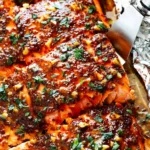
Honey Mustard Glazed Salmon Packets
- Total Time: 25 minutes
- Yield: 6–8 servings 1x
- Diet: General
Description
This Honey Mustard Salmon recipe features a homemade honey mustard sauce that is super delicious and easy to adapt. It can be cooked quickly and easily in the oven or on the grill.
Ingredients
- 2 pound side of salmon, boneless and skinless
- 1/3 cup whole grain mustard
- 1/4 cup honey
- 4 cloves garlic, peeled and minced
- 2 tablespoons fresh lemon juice
- 1/4 teaspoon smoked paprika
- 1/4 teaspoon Kosher salt
- 1/8 teaspoon black pepper
- 1 tablespoon finely-chopped fresh parsley leaves
Instructions
- Prepare: Heat oven to 375°F or heat a grill to medium heat.
- Sauce: Whisk together whole grain mustard, honey, garlic, lemon juice, smoked paprika, salt, and black pepper in a small bowl until combined.
- Setup: Line a large baking sheet with aluminum foil, mist with cooking spray, and lay out the salmon in the middle.
- Coat: Spoon the honey mustard sauce on top of the salmon and spread it around evenly.
- Seal: Fold the sides of the aluminum foil up and over the top of the salmon to form a sealed packet.
- Cook (Oven): Bake for 14-15 minutes, open the foil, and broil for 2-3 minutes until toasted.
- Cook (Grill): Grill for 12-14 minutes, open the foil, and continue cooking for 3-4 minutes until cooked through.
- Finish: Remove from heat, sprinkle the top with parsley, and serve immediately.
Notes
If you prefer a stronger mustard flavor, increase the mustard amount to 1/2 cup and reduce the honey.
- Prep Time: 7 minutes
- Cook Time: 18 minutes
- Category: Main Course
- Method: Baking/Grilling
- Cuisine: American
Nutrition
- Serving Size: 1 serving
- Calories: 340 kcal
- Sugar: 12 g
- Sodium: 480 mg
- Fat: 18 g
- Saturated Fat: 4 g
- Unsaturated Fat: 14 g
- Trans Fat: 0 g
- Carbohydrates: 14 g
- Fiber: 1 g
- Protein: 32 g
- Cholesterol: 85 mg
Keywords: honey mustard salmon, foil packet salmon, healthy dinner, baked salmon, grilled salmon