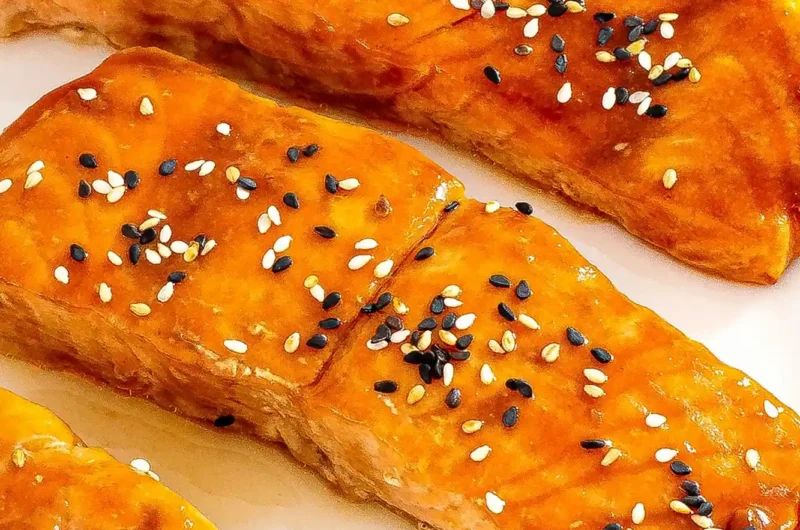
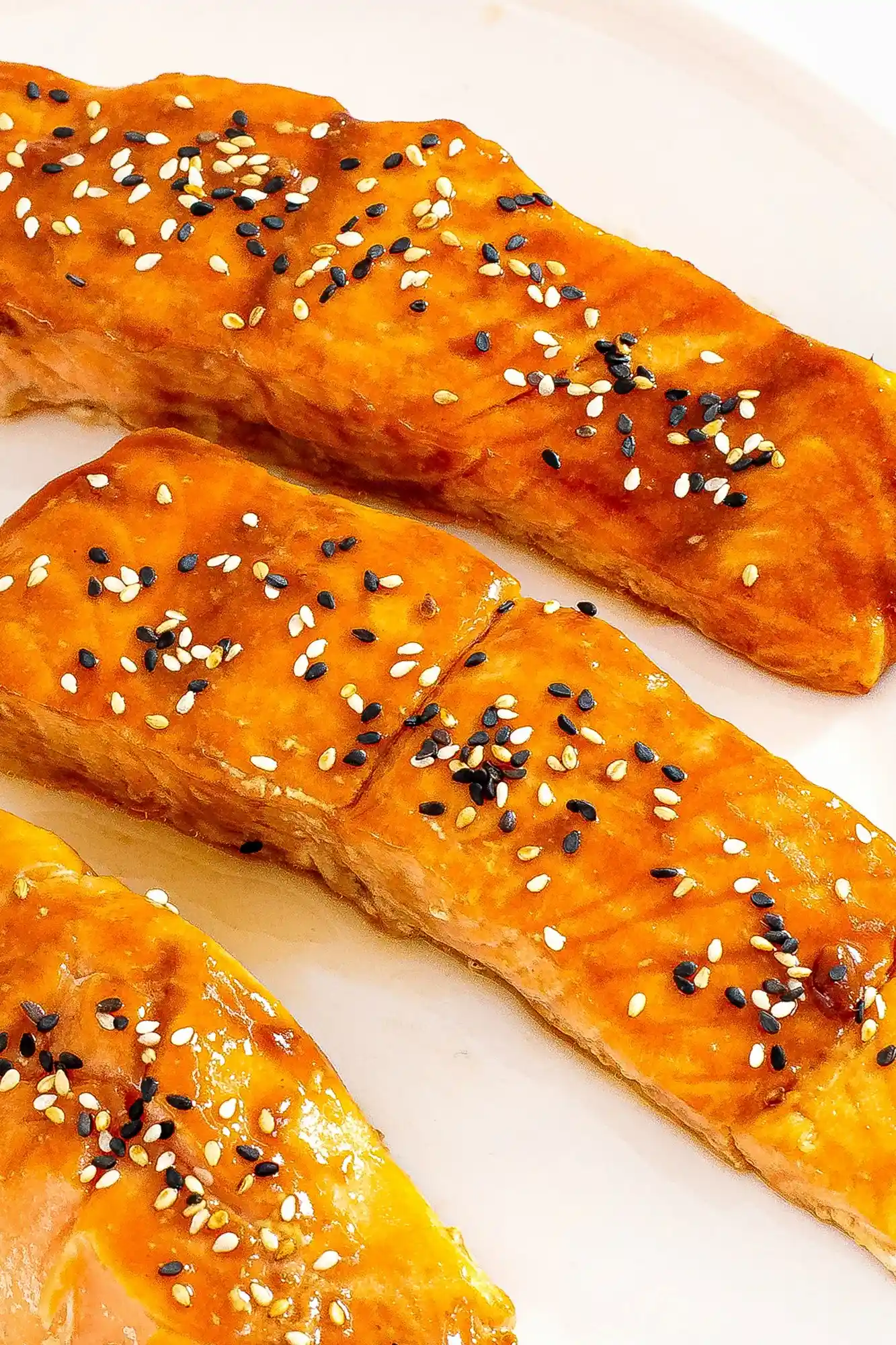
This meal combines a sweet and spicy glaze with tender salmon for a healthy, high-protein dinner. It is an efficient recipe that utilizes common pantry staples to create a restaurant-quality finish. Serve this dish with steamed vegetables and rice for a balanced meal.
List of ingredients
- 4 salmon filets, skin on – helps keep the fish moist during cooking.
- 1 garlic clove, minced – adds aromatic depth to the glaze.
- 3 tablespoons low sodium soy sauce – provides a salty, savory base.
- 2 tablespoons honey – creates a sweet glaze and aids caramelization.
- 2 tablespoons sriracha – adds a spicy kick and a hint of tanginess.
- 3 tablespoons water – thins the marinade for better penetration.
- 1/2 tablespoon olive oil – used specifically for the pan-frying method.
step-by-step instructions
- Combine Marinade: In a large ziplock bag, add the minced garlic, low sodium soy sauce, honey, sriracha, and water.
- Mix and Marinate: Add the salmon filets to the bag, seal it tightly, and shake well to ensure the fish is fully coated. Let the salmon sit in the refrigerator for one hour.
- Prepare for Cooking: Remove the salmon filets from the bag and discard the remaining marinade.
- Select Cooking Method: Choose either the oven method or the pan-fry method based on your preference for texture.
- Oven Method Prep: Preheat your oven to 425 degrees. Prepare a baking pan by spraying it with cooking spray or lining it with parchment paper.
- Oven Cooking: Place the salmon filets on the prepared pan. Bake for approximately 15 minutes or until the fish is cooked through, being careful not to overcook.
- Pan Fry Prep: Heat olive oil in a large skillet over medium-hot heat.
- Pan Fry Cooking: Place the salmon in the pan skin-side down. Cook for 4-5 minutes per side until the flesh becomes opaque.
- Finish and Peel: Remove the salmon from the heat. Once the fish has cooled enough to handle, carefully peel off the skin.
- Garnish and Serve: Serve the salmon immediately with a sprinkle of green onions and sesame seeds.
Optimal Fish Selection
Wild Caught vs Farmed Salmon
Wild caught salmon typically has a more intense flavor and a deeper red color due to their natural diet. Farmed salmon is often fattier, which can make it more forgiving during the cooking process as it is less likely to dry out. Both options work well with this honey sriracha glaze.
Identifying High Quality Fillets
Check that the salmon flesh is firm to the touch and springs back when pressed. Avoid fillets that have gaps in the muscle or a strong, fishy odor. The color should be consistent throughout the fillet without any brown or dull spots.
The Importance of Keeping the Skin
Cooking salmon with the skin on acts as a protective barrier against direct heat. This helps the meat retain its natural moisture and prevents the fillet from breaking apart. Even if you do not intend to eat the skin, keeping it during the cooking process is recommended.
Mastering the Cooking Process
Managing Internal Temperature
Use a meat thermometer to ensure the salmon is cooked to your preference. For medium-rare, aim for an internal temperature of 125 degrees Fahrenheit. For a fully cooked texture, remove the fish when it reaches 145 degrees Fahrenheit.
Preventing the White Albumin Protein
The white substance that sometimes appears on the surface of salmon is called albumin. It is caused by cooking the fish too quickly or at too high a temperature, which forces the protein out of the muscle. Lowering the heat slightly can reduce the appearance of albumin.
Achieving a Perfect Pan Sear
Wait until the oil in your skillet is shimmering before adding the fish to ensure a proper sear. Avoid moving the salmon frequently in the pan, as this prevents the development of a golden-brown crust. Press the fillets down gently for a few seconds when they first hit the pan.
Flavor Customizations and Substitutions
Adjusting the Heat Level
If sriracha is too spicy, replace half of it with a mild chili garlic sauce or a dash of paprika. For those who prefer more heat, add crushed red pepper flakes to the marinade. You can also increase the sriracha quantity by one tablespoon for a bolder kick.
Soy Sauce Alternatives
For a soy-free option, use coconut aminos, which provide a similar salty and sweet profile. Tamari is another excellent substitute, especially for those requiring a gluten-free alternative. Keep the quantity the same to maintain the balance of the glaze.
Replacing Honey for Different Sweeteners
Maple syrup can be used as a one-to-one replacement for honey, giving the salmon a slightly more earthy sweetness. Brown rice syrup is another option for a thicker, glossier glaze. Avoid using granulated sugar as it may not incorporate as smoothly into the marinade.
Pairing and Presentation
Best Grain Pairings
Jasmine rice is a classic choice because its floral aroma complements the sriracha heat. Brown rice or quinoa offers a nuttier flavor and more fiber for a healthier option. Cauliflower rice is an ideal choice for those following a low-carb or keto diet.
Complementary Vegetable Sides
Steamed broccoli or roasted cauliflower provides a neutral base that balances the sweetness of the honey. Sautéed bok choy or snap peas add a fresh, crunchy texture that pairs well with the glazed salmon. Asparagus roasted with a hint of lemon is another excellent pairing.
Using Fresh Herbs for Contrast
Freshly sliced green onions provide a sharp, clean contrast to the rich honey glaze. Toasted sesame seeds add a subtle nuttiness and a professional visual finish. A squeeze of fresh lime juice right before serving can brighten the overall flavor profile.
Storage and Food Safety
Proper Refrigeration Guidelines
Place leftover salmon in an airtight container to prevent the fish from absorbing other odors in the fridge. Store it in the coldest part of the refrigerator, away from the door. The salmon will remain fresh and safe to eat for up to three days.
Freezing Cooked Salmon
While cooked salmon is best eaten fresh, it can be frozen for up to two months. Wrap the fillets tightly in plastic wrap and then place them in a heavy-duty freezer bag to prevent freezer burn. Thaw slowly in the refrigerator overnight before reheating.
Safe Marinating Times
Do not marinate the salmon for more than 24 hours. Because soy sauce contains salt, extended marinating can begin to break down the proteins too much, resulting in a mushy texture. One to four hours is the ideal window for flavor penetration.
Effective Reheating Techniques
Low-Temperature Oven Reheating
Preheat the oven to 275 degrees Fahrenheit and wrap the salmon in aluminum foil with a teaspoon of water. Heat for 10-15 minutes until warmed through. This method prevents the salmon from drying out and preserves the honey glaze.
Microwave Quick Heating
Place the salmon on a microwave-safe plate and cover it with a damp paper towel. Heat on medium power in 30-second intervals to avoid overcooking the center. This is the fastest method, though it may slightly alter the texture of the skin.
Stovetop Refreshing
Place the fillets in a pan over low heat with a small amount of butter or oil. Cover the pan with a lid to trap the steam and heat the salmon evenly. This method is best for restoring a slight crispness to the exterior.
Advanced Preparation Tips
Room Temperature Tempering
Remove the salmon from the refrigerator about 15-20 minutes before cooking. Bringing the fish closer to room temperature ensures that it cooks more evenly from the edge to the center. This reduces the risk of the outside burning before the inside is done.
Preparing the Baking Sheet
Using parchment paper is superior to cooking spray for preventing the honey glaze from sticking. The glaze contains sugars that can caramelize and bond to the metal of the pan. Parchment allows for easy cleanup and a clean release of the fillets.
Managing the Glaze Consistency
If the marinade appears too thin, you can simmer it in a small saucepan for a few minutes to reduce it before applying it as a final glaze. If it is too thick, add a teaspoon of water or lime juice to thin it out. Consistency is key to an even coating.
Common Troubleshooting Solutions
Preventing the Honey from Burning
Honey has a low burn point, which can lead to charred spots if the heat is too high. If you notice the glaze darkening too quickly in the pan, lower the heat to medium-low immediately. In the oven, ensure the rack is in the center to avoid direct heat from the top element.
Fixing Overly Salty Salmon
If the soy sauce makes the dish too salty, serve the salmon with an unsalted side dish like plain steamed rice. You can also drizzle a small amount of fresh lemon juice over the fillet to neutralize the saltiness. Adding a dollop of Greek yogurt or sour cream on the side can also balance the flavor.
Dealing with Sticking Fillets
Salmon often sticks to the pan if it is added before the oil is hot enough. Ensure the oil is shimmering and the pan is fully preheated. If the fish sticks, wait another minute without moving it; usually, the salmon will naturally release once a proper sear has formed.
Frequently Asked Questions
Is the salmon skin edible?
Yes, the skin is edible and rich in omega-3 fatty acids. However, some prefer to remove it due to the texture or for calorie reduction. Peeling the skin off after cooking is the easiest way to handle this preference.
Can I use a different fish for this recipe?
This glaze works well with other fatty fish such as steelhead trout or Arctic char. While it can be used on white fish like cod or halibut, these fish cook faster and are more prone to drying out, so reduce the cooking time.
How do I know when the salmon is perfectly done?
The most reliable method is using a meat thermometer, but the fork-flake test is a good manual alternative. Gently press a fork into the thickest part of the fillet; if the meat separates easily along the white lines, it is ready.
Print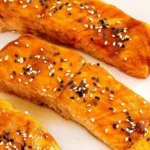
Honey Sriracha Salmon
- Total Time: 85 minutes
- Yield: 4 servings 1x
- Diet: General
Description
Sweet and Spicy Honey Sriracha Salmon. A super easy and healthy dinner. Serve with rice and veggies to make it a meal!
Ingredients
- 4 salmon filets (skin on)
- 1 garlic clove (minced)
- 3 tablespoons low sodium soy sauce
- 2 tablespoons honey
- 2 tablespoons sriracha
- 3 tablespoons water
- 1/2 tablespoon olive oil (for pan fry method)
Instructions
- Marinade: In a large ziplock bag add salmon, garlic, soy sauce, honey, sriracha and water. Close and shake to combine. Let sit for an hour. Take salmon out of the marinade and discard the marinade.
- Oven Method: Preheat oven to 425 degrees. Spray a baking pan with cooking spray or layer with parchment paper. Place salmon on the prepared pan. Place in the oven and cook for about 15 minutes or until the salmon is cooked through. When the salmon is cool enough to handle peel off the skin. Serve immediately with a sprinkle of green onions and sesame seeds for garnish.
- Pan Fry Method: Add olive oil to a large skillet. When the pan is hot add in salmon skin side down. Cook for about 4-5 minutes on each side until the salmon starts to turn opaque. Take off of the heat. When the salmon is cool enough to handle peel off the skin. Serve immediately with a sprinkle of green onions and sesame seeds for garnish.
Notes
Serve with white or brown rice, cauliflower rice, steamed vegetables, chow mein noodles, lo mein, fried rice, roasted cauliflower, or roasted broccoli.
- Prep Time: 70 minutes
- Cook Time: 15 minutes
- Category: Main Course
- Method: Baking or Pan-Frying
- Cuisine: American
Nutrition
- Serving Size: 1 filet
- Calories: 297 kcal
- Sugar: 9 g
- Sodium: 648 mg
- Fat: 13 g
- Saturated Fat: 2 g
- Unsaturated Fat: 11 g
- Trans Fat: 0 g
- Carbohydrates: 10 g
- Fiber: 1 g
- Protein: 34 g
- Cholesterol: 94 mg
Keywords: honey sriracha salmon, healthy dinner, easy salmon recipe, baked salmon, pan fried salmon