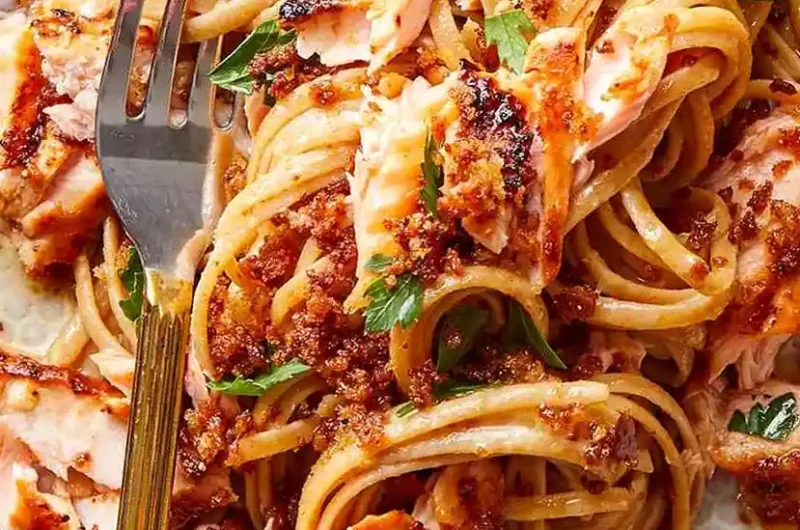
This quick dinner combines heart-healthy omega-3s and whole grains in a bright, citrusy sauce. It is an ideal way to repurpose cooked salmon into a satisfying meal in under 20 minutes.
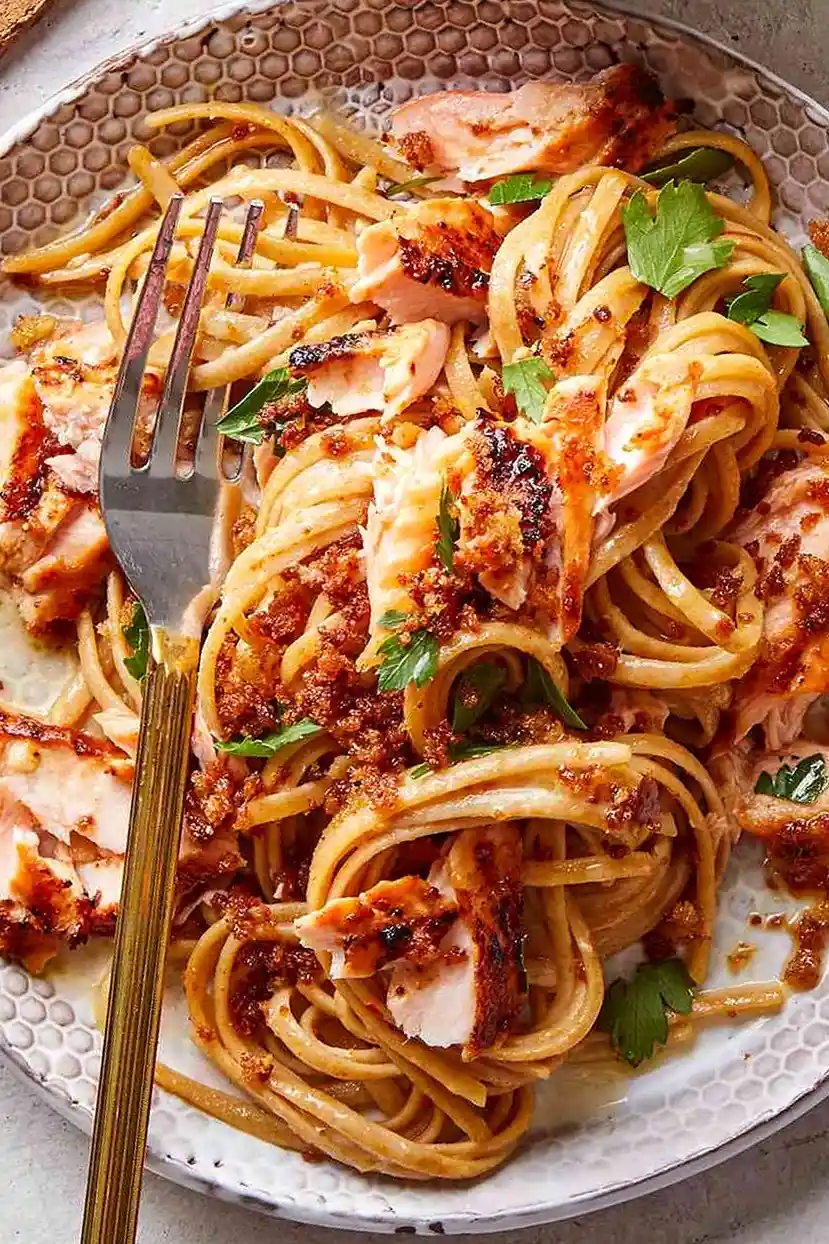
List of ingredients
- 8 ounces whole-wheat pasta – provides a hearty texture and essential fiber.
- 5 tablespoons extra-virgin olive oil – used for sautéing and as a base for the sauce.
- 5 cloves garlic, chopped – adds a pungent, savory depth to the dish.
- 1 teaspoon anchovy paste – provides a salty, umami foundation.
- 0.25 teaspoon crushed red pepper – adds a subtle heat to balance the lemon.
- Zest and juice of 1 lemon – provides acidity and a fresh citrus aroma.
- 1 1/2 cups flaked cooked salmon – the primary protein source, ideally leftover.
- 3 tablespoons chopped fresh parsley – adds a clean, herbal finish.
- 0.25 teaspoon salt – enhances all the individual flavors in the pasta.
- 2 tablespoons whole-wheat breadcrumbs, toasted – provides a crunchy contrast to the soft pasta.
step-by-step instructions
- Cook the pasta: Boil 8 ounces of pasta according to the package directions. Before draining, reserve 1/2 cup of the starchy cooking water to help emulsify the sauce.
- Sauté aromatics: In a large skillet, combine 5 tablespoons of olive oil, chopped garlic, 1 teaspoon of anchovy paste, 1/4 teaspoon of crushed red pepper, lemon zest, and lemon juice. Heat over medium-high heat for about 3 minutes until the mixture is sizzling.
- Combine ingredients: Stir in the reserved pasta water, the cooked pasta, 1 1/2 cups of flaked salmon, 3 tablespoons of parsley, and 1/4 teaspoon of salt. Cook while stirring for approximately 2 minutes until the sauce evenly coats the pasta.
- Final touch: Plate the pasta immediately and garnish with 2 tablespoons of toasted whole-wheat breadcrumbs for added texture.
Pasta Selection and Alternatives
Choosing Whole-Wheat Varieties
Whole-wheat pasta offers a nuttier flavor and a denser bite than refined white pasta. It contains significantly more dietary fiber and micronutrients, which help keep you feeling full longer. If you find the taste too strong, try a blend of whole-wheat and semolina pasta.
Gluten-Free Pasta Options
For those avoiding gluten, chickpea or lentil-based pastas are excellent substitutes because they provide additional protein. Brown rice pasta is another option, though it may require slightly more stirring to prevent sticking. Always check the package directions as cooking times vary significantly between gluten-free brands.
Selecting the Right Pasta Shape
Long noodles like linguine or spaghetti are traditional for this style of sauce, allowing the oil to coat the strands evenly. Short shapes like fusilli or penne are better for capturing the flaked salmon and breadcrumbs within their ridges. Choose the shape that best suits your preference for texture and ease of eating.
Salmon Preparation and Sourcing
Using Leftover Salmon
This recipe is designed to utilize previously grilled, roasted, or poached salmon. Ensure the salmon is cooled before flaking it into the pan to prevent it from overcooking and becoming dry. Gently break the fillets into bite-sized chunks using a fork.
Incorporating Canned Salmon
Canned salmon is a convenient and affordable alternative if you do not have leftovers. Select a boneless, skinless variety, preferably sockeye for a richer taste or pink salmon for a milder flavor. Drain the liquid thoroughly and choose reduced-sodium options to maintain control over the dish’s saltiness.
Preparing Fresh Salmon
If starting with raw fillets, sear them in a pan with a small amount of olive oil over medium-high heat. Cook for 4-5 minutes per side until the internal temperature reaches 145 degrees Fahrenheit. Let the fish rest for a few minutes before flaking it for the pasta.
Flavor Optimization Techniques
Managing the Heat Level
The crushed red pepper provides a gentle warmth, but it can be adjusted based on personal preference. For a milder version, replace the red pepper with a pinch of freshly cracked black pepper. If you prefer a spicier dish, increase the amount of red pepper or add a pinch of cayenne.
Enhancing the Citrus Profile
The combination of zest and juice provides a balanced acidity that cuts through the richness of the salmon. For a more intense lemon flavor, add a small amount of preserved lemon peel or a tiny splash of white grape juice for sweetness. Always zest the lemon before juicing to ensure you get the most aromatic oils.
Maximizing Umami with Anchovy Paste
Anchovy paste adds a deep, savory quality that mimics the taste of salt but with more complexity. It melts into the oil during the sauté process, meaning the fishy taste disappears, leaving only a rich base. If you are sensitive to strong flavors, start with a half-teaspoon and taste before adding more.
Complementary Side Dishes
Pairing with Green Vegetables
Steamed asparagus or sautéed broccolini provide a crisp texture and a bitter contrast to the citrusy pasta. Toss these vegetables in garlic and a touch of olive oil to mirror the flavors of the main course. Sautéing them in the same pan before adding the pasta can save time and cleanup.
Serving with Fresh Leafy Salads
A light arugula salad with a simple balsamic vinaigrette cleanses the palate between bites of the rich salmon. The peppery notes of arugula pair perfectly with the lemon-garlic sauce. Add sliced cucumbers or cherry tomatoes to the salad for extra hydration and crunch.
Adding Roasted Root Vegetables
Roasted carrots or parsnips add a natural sweetness that complements the salty anchovy paste. Toss the vegetables in olive oil and salt, then roast at 400 degrees Fahrenheit until caramelized. Serve them on the side or fold them directly into the pasta for a heartier meal.
Storage and Preservation
Refrigerator Storage Guidelines
Store leftover pasta in an airtight container in the refrigerator for up to three days. Ensure the container is sealed tightly to prevent the pasta from absorbing other odors in the fridge. Cooling the pasta quickly before sealing helps prevent excess moisture from forming.
Freezing Considerations
This dish is not recommended for freezing because the texture of the cooked salmon and pasta degrades significantly. Upon thawing, the pasta may become mushy and the salmon can become rubbery. It is best to enjoy this meal fresh or within the refrigerated window.
Maintaining Freshness
To keep the parsley from wilting, you can store the pasta and the fresh herbs separately. Stir the fresh parsley back into the dish just before reheating to maintain its bright color and flavor. Similarly, keep the toasted breadcrumbs in a separate dry container until serving.
Reheating Methods
Stovetop Reheating Process
The best way to reheat this pasta is in a skillet over low to medium heat. Add a tablespoon of water or olive oil to the pan to prevent the pasta from sticking. Stir gently to avoid breaking up the salmon flakes too much.
Microwave Reheating Tips
When using a microwave, place the pasta in a microwave-safe dish and cover it with a damp paper towel. This traps the steam and prevents the salmon from drying out. Heat in short 1-minute intervals, stirring in between to ensure even heating.
Restoring Sauce Texture
If the sauce has thickened too much in the fridge, add a splash of water or a small amount of vegetable broth during reheating. This re-emulsifies the olive oil and lemon juice, returning the sauce to its original silky consistency. Stir slowly to incorporate the liquid without overworking the fish.
Troubleshooting Common Issues
Preventing Burnt Garlic
Garlic can burn quickly over medium-high heat, resulting in a bitter taste. To prevent this, add the garlic to the oil just as it starts to shimmer, and keep the ingredients moving. If the garlic turns dark brown, it is best to start the sauce over for the best flavor profile.
Fixing a Thin Sauce
If the sauce feels too watery, simmer the mixture for an additional minute before adding the pasta. The key is the reserved pasta water; the starch it contains acts as a thickener. Ensure you are stirring constantly to help the oil and water bind together.
Avoiding Overcooked Salmon
Since the salmon is already cooked, it only needs to be warmed through. Adding it at the very end of the cooking process prevents the proteins from tightening and becoming dry. Stop cooking as soon as the salmon is heated through and coated in the sauce.
Frequently Asked Questions
How do I know when my salmon is done cooking?
When cooking fresh salmon at 400 degrees Fahrenheit, allow 8 to 10 minutes per inch of thickness. Use an instant-read thermometer to ensure the thickest part reaches 145 degrees Fahrenheit. The fish should be opaque and flake easily with a fork.
How do I make toasted whole-wheat breadcrumbs?
Toast slices of whole-wheat bread until golden brown, let them cool, and pulse them in a food processor. If you do not have a processor, place the toast in a zip-top bag and crush it with a rolling pin. Store any extra crumbs in an airtight container in the freezer.
Can I substitute the olive oil for butter?
You can use butter, but it will change the flavor profile from a light Mediterranean style to a richer, creamier taste. If using butter, lower the heat slightly to prevent the milk solids from burning. Keep in mind that olive oil provides heart-healthy monounsaturated fats.
What is the best way to flake salmon?
Use a fork or your fingers to gently pull the salmon apart along its natural muscle lines. This creates irregular, bite-sized chunks that hold onto the sauce better than uniform cubes. Avoid over-mixing the salmon to keep some texture in the dish.
Can I use a different type of lemon?
Meyer lemons are a great alternative as they are sweeter and more aromatic than standard Lisbon or Eureka lemons. If using Meyer lemons, you may want to add a tiny pinch of extra salt to balance the sweetness. Regardless of the variety, always use fresh juice rather than bottled.
Print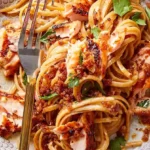
Lemon Garlic Pasta with Flaked Salmon
- Total Time: 15 minutes
- Yield: 4 servings 1x
- Diet: Heart-Healthy
Description
A heart-healthy dinner featuring omega-3-rich salmon and fiber-filled whole-wheat pasta infused with a lemony, garlicky olive oil sauce.
Ingredients
- 8 ounces whole-wheat pasta
- 5 tablespoons extra-virgin olive oil
- 5 cloves garlic, chopped
- 1 teaspoon anchovy paste
- 0.25 teaspoon crushed red pepper
- Zest and juice of 1 lemon
- 1 1/2 cups flaked cooked salmon
- 3 tablespoons chopped fresh parsley
- 0.25 teaspoon salt
- 2 tablespoons whole-wheat breadcrumbs, toasted
Instructions
- Step: Cook 8 ounces pasta according to package directions. Drain, reserving ½ cup cooking water.
- Step: Combine 5 tablespoons oil, garlic, 1 teaspoon anchovy paste, ¼ teaspoon crushed red pepper, lemon zest and lemon juice in a large skillet.
- Step: Heat over medium-high heat until sizzling, about 3 minutes.
- Step: Add the reserved water, the pasta, 1½ cups salmon, 3 tablespoons parsley and ¼ teaspoon salt.
- Step: Cook, stirring, until the sauce coats the pasta, about 2 minutes.
- Step: Serve topped with 2 tablespoons breadcrumbs.
Notes
Use leftover grilled or roasted salmon, or canned boneless, skinless sockeye for the richest flavor.
- Prep Time: 10 minutes
- Cook Time: 5 minutes
- Category: Dinner
- Method: Stovetop
- Cuisine: American
Nutrition
- Serving Size: 1 1/3 cup
- Calories: 473 kcal
- Sugar: 4 g
- Sodium: 395 mg
- Fat: 23 g
- Saturated Fat: 3 g
- Unsaturated Fat: 20 g
- Trans Fat: 0 g
- Carbohydrates: 49 g
- Fiber: 6 g
- Protein: 20 g
- Cholesterol: 26 mg
Keywords: lemon-garlic pasta, salmon, whole-wheat pasta, omega-3, heart-healthy dinner