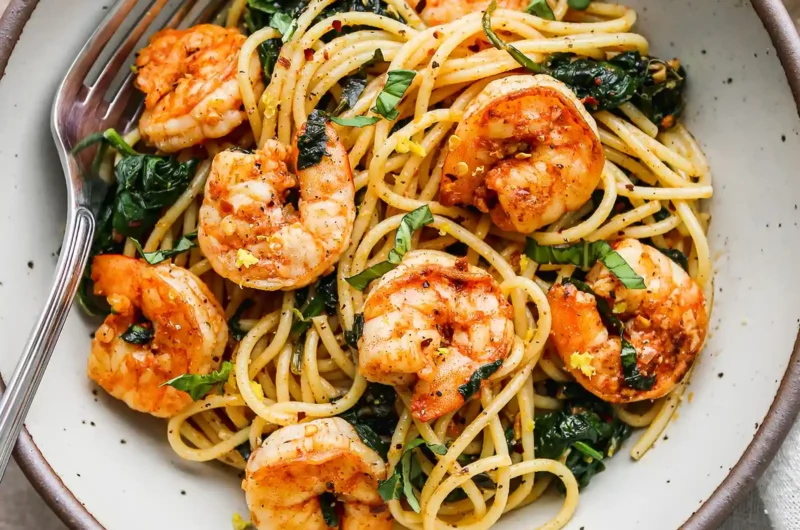
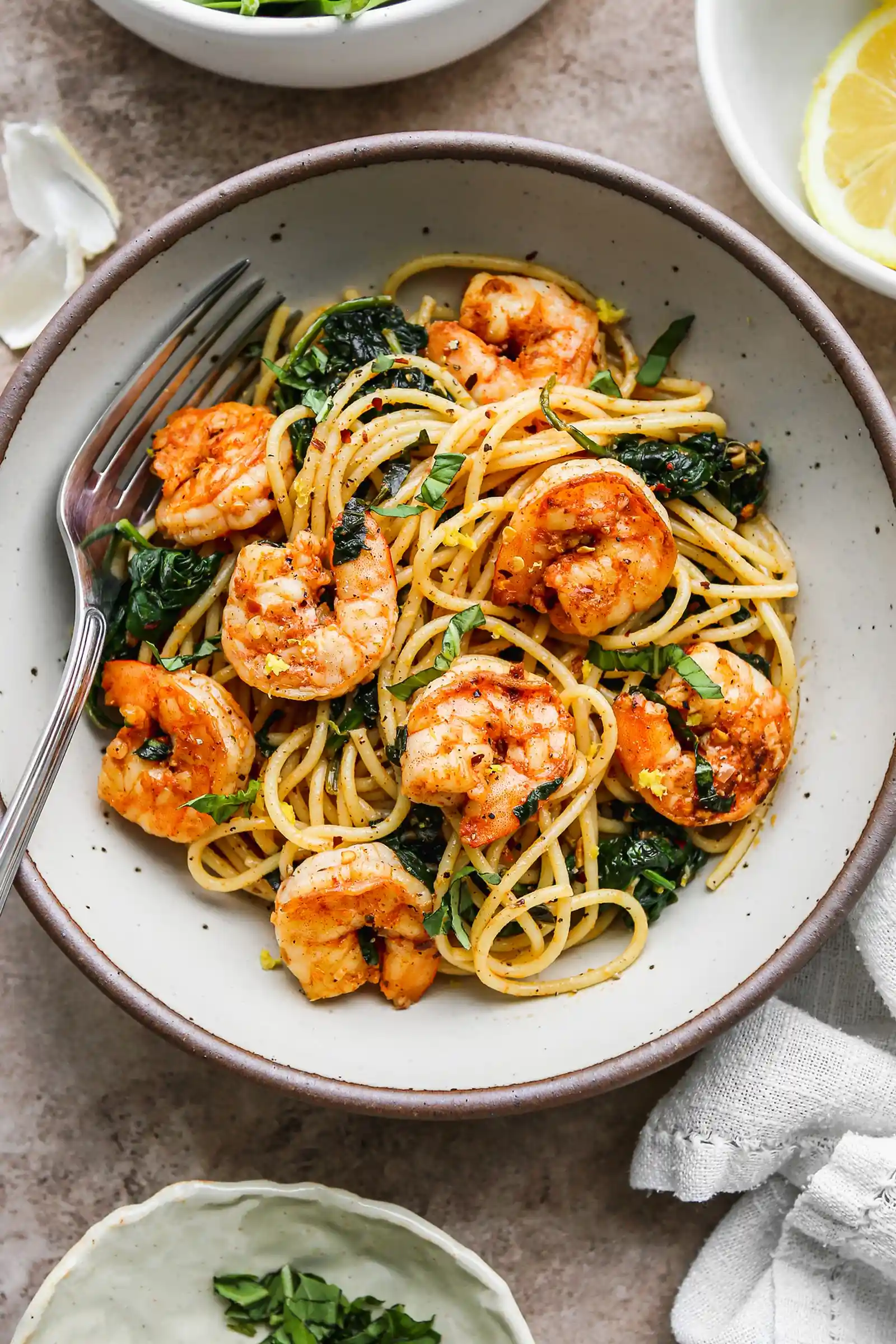
This high-protein dinner combines zesty lemon and aromatic garlic with tender shrimp and fresh spinach. It is a streamlined meal designed for busy weeknights that provides a balanced mix of nutrients in under an hour.
List of ingredients
- 1 pound shrimp, thawed and tails removed – peeled and deveined for ease of eating.
- 1 Tbsp olive oil – used for seasoning the shrimp.
- 1 tsp smoked paprika – adds a subtle depth and color.
- 1/2 tsp chili flakes – provides a mild heat.
- Salt and pepper, to taste – for basic seasoning.
- Approx. 5 ounces dry pasta (approx. 140 grams) – enough for two servings.
- 3 Tbsp olive oil, divided – used for sautéing garlic and finishing the sauce.
- 5 cloves garlic – minced finely for maximum flavor.
- 4 cups fresh spinach – added for color and nutrition.
- 1/2 a lemon, juice and zest – provides the primary acidity.
- 1/4 cup fresh basil or parsley, chopped – for a fresh herbal finish.
- Salt and pepper, to taste – for final seasoning.
- Optional: fresh parmesan – for an optional salty topping.
step-by-step instructions
- Prepare components: Thaw the shrimp and remove all tails and shells. Mince the garlic cloves, zest the lemon peel, and chop the fresh basil or parsley.
- Cook pasta: Bring a large pot of salted water to a boil. Cook the pasta according to the package directions, then drain it and return it to the pot.
- Season shrimp: Pat the shrimp dry using a paper towel to ensure a good sear. Place them in a mixing bowl and toss with 1 Tbsp of olive oil, smoked paprika, chili flakes, salt, and pepper.
- Sauté shrimp: Heat a large pan over medium-high heat. Working in batches to avoid overcrowding, add the shrimp to the pan. Cook for 1-2 minutes per side until they become opaque, then remove them to a clean bowl.
- Cook aromatics: Add 1 more tablespoon of olive oil to the same pan. Sauté the minced garlic for 2-3 minutes until it is lightly browned and fragrant.
- Wilt spinach: Add the fresh spinach to the pan. Stir continuously for 1-2 minutes until the leaves have wilted.
- Combine: Turn off the heat. Stir the cooked pasta into the pan along with the lemon zest, lemon juice, the remaining 2 Tbsp of olive oil, cooked shrimp, and chopped basil. Season with additional salt and pepper and toss everything together.
- Finish: Serve the pasta immediately while hot, topping each portion with freshly grated parmesan cheese if desired.
Pro Cooking Techniques for Best Results
Dry the Shrimp Thoroughly
Use paper towels to remove all surface moisture from the shrimp before seasoning. Excess water creates steam in the pan, which prevents the shrimp from searing and developing a golden-brown crust. A dry surface ensures the smoked paprika adheres better and the shrimp cooks quickly.
Manage the Pan Temperature
Keep the pan at medium-high heat to ensure the shrimp cook rapidly without becoming rubbery. If the pan is too cool, the shrimp will release juices and boil instead of searing. If it is too hot, the garlic may burn before the spinach wilts.
Prevent Garlic Burning
Add the garlic only after the shrimp have been removed from the pan. Garlic burns much faster than shrimp and can turn bitter if overcooked. Sauté it just until it becomes fragrant and light gold to maintain a sweet, nutty flavor.
Control the Pasta Texture
Cook the pasta until it is just under al dente. Since the pasta is tossed in the pan with the other ingredients at the end, it will continue to soften slightly from the residual heat. This prevents the noodles from becoming mushy during the final toss.
Ingredient Substitutions and Swaps
Alternative Leafy Greens
If spinach is unavailable, baby kale or Swiss chard are excellent replacements. Kale requires an extra minute of cooking time compared to spinach to soften the tougher fibers. Swiss chard adds a slightly earthier taste that pairs well with the lemon.
Pasta Shape Options
While spaghetti and linguine are traditional for seafood, any pasta shape works. Penne or fusilli are better for capturing the garlic and oil sauce in their ridges. Angel hair is a faster alternative but requires very careful timing to avoid overcooking.
Protein Alternatives
You can replace shrimp with scallops or chunks of firm white fish like cod. Scallops should be seared on high heat for about 2 minutes per side. Fish chunks should be handled gently to avoid breaking them apart during the tossing phase.
Herb Variations
Fresh parsley is a classic substitute for basil, offering a cleaner, more peppery taste. Fresh cilantro can be used for a more fusion-style flavor profile. If fresh herbs are unavailable, use a small amount of dried herbs, though they should be added earlier in the cooking process.
Recipe Variations for Different Tastes
Adding Extra Vegetables
Sautéed cherry tomatoes or zucchini slices add great texture and nutrition. Add these to the pan after the garlic but before the spinach. Cook them until they are slightly softened before adding the greens.
Creating a Creamier Sauce
For a richer finish, stir in two tablespoons of heavy cream or a dollop of mascarpone at the final step. This mellows the acidity of the lemon and creates a velvety coating on the pasta. Ensure the heat is off to prevent the cream from separating.
Adjusting the Heat Level
Increase the chili flakes to a full teaspoon if you prefer a spicier dish. Alternatively, add a pinch of cayenne pepper to the shrimp seasoning for a more intense, sharp heat. To reduce the heat, omit the chili flakes entirely.
Adding Umami Depth
Incorporate a teaspoon of capers or a few chopped anchovy fillets during the garlic sauté step. These ingredients melt into the oil and provide a salty, briny depth that complements the shrimp. Reduce the added salt in the final step to compensate.
Serving and Plating Ideas
Optimal Plating Methods
Use a carving fork to twirl the pasta into a high nest in the center of the plate. Arrange the shrimp and wilted spinach around the edges or on top. This presentation keeps the ingredients visible and makes the dish look professional.
Recommended Side Pairings
A crisp side salad with a light vinaigrette balances the richness of the olive oil. Roasted asparagus or steamed broccolini also pair well with the lemony flavors. A slice of toasted sourdough garlic bread is ideal for soaking up the remaining sauce.
Final Garnish Suggestions
Beyond parmesan, a sprinkle of toasted pine nuts or slivered almonds adds a necessary crunch. A final squeeze of fresh lemon juice right before serving brightens the flavors. Freshly cracked black pepper adds a sharp aromatic finish.
Storage and Reheating Guidelines
Refrigeration and Shelf Life
Store leftover pasta in an airtight glass container in the refrigerator. It will remain safe to eat for up to three days. Keep the pasta and shrimp together, but be aware that the spinach may release some moisture over time.
Best Reheating Methods
For the best texture, reheat the pasta in a skillet over medium heat with a splash of water or olive oil. Stir gently to avoid breaking the shrimp. Microwave reheating is faster, but cover the dish to trap steam and prevent the pasta from drying out.
Avoiding Overcooked Shrimp during Reheat
When reheating in a microwave, use medium power and heat in 30-second intervals. Overheating shrimp causes them to shrink and become tough. Stop heating as soon as the pasta is warm, even if the shrimp are not piping hot.
Freezing Considerations
This dish is not recommended for freezing due to the spinach and pasta. Frozen pasta often becomes mushy upon thawing, and the spinach loses its structure. If you must freeze it, undercook the pasta significantly before the initial assembly.
Make-Ahead Preparation Advice
Prepping Ingredients in Advance
Mince the garlic, zest the lemon, and chop the herbs up to 24 hours in advance. Store them in small separate containers in the fridge. This reduces the actual cooking time to about 20 minutes.
Pre-Seasoning the Shrimp
You can toss the shrimp in the oil and spices a few hours before cooking. Store them in a sealed container in the refrigerator. This allows the flavors to penetrate the shrimp more deeply.
Partial Cooking Strategy
Cook the pasta ahead of time and toss it with a small amount of olive oil to prevent sticking. Store it in the fridge and add it to the pan at the final step. This is useful for those who want to minimize active stovetop time.
Troubleshooting Common Issues
Dealing with Watery Spinach
If the spinach releases too much liquid, the sauce may become thin. To fix this, sauté the spinach on higher heat for a slightly longer duration to evaporate the excess moisture. Alternatively, drain any excess liquid from the pan before adding the pasta.
Fixing Over-Salted Pasta
If the dish tastes too salty, add an extra squeeze of lemon juice or a pinch of sugar. The acidity and sweetness help neutralize the saltiness. You can also add more fresh spinach or unsalted pasta to dilute the concentration.
Addressing Rubbery Shrimp
Rubbery shrimp are usually a result of overcooking. Ensure you remove the shrimp from the pan as soon as they turn opaque and form a ‘C’ shape. If they curl tightly into an ‘O’ shape, they are likely overcooked.
Correcting a Bland Flavor
If the dish lacks punch, increase the lemon zest or add a small amount of grated parmesan. The parmesan adds a salty, umami kick that can wake up the other flavors. Freshly cracked pepper can also add needed sharpness.
Frequently Asked Questions
Can I use frozen shrimp for this recipe?
Yes, frozen shrimp work perfectly as long as they are fully thawed and patted dry. Thawing them in a bowl of cold water is the fastest method. Ensure you remove the veins and tails before seasoning.
What is the best pasta to use?
Long, thin noodles like spaghetti or linguine are ideal because they tangle well with the shrimp and spinach. However, any shape that you enjoy will work, provided you follow the package cooking instructions.
How do I stop the garlic from burning?
Keep the heat at medium and stir the garlic constantly. If you see the garlic turning dark brown quickly, immediately add the spinach to lower the pan temperature and stop the browning process.
Can I make this recipe dairy-free?
This recipe is naturally dairy-free if you omit the optional parmesan cheese. To replace the salty flavor of the cheese, you can add a teaspoon of nutritional yeast or a few extra capers.
How do I know when the shrimp are done?
Shrimp are cooked when they change from translucent to opaque and a pearly white or pink color. They should form a gentle curve; once they curl into a tight circle, they are overcooked.
Print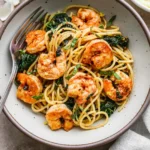
Lemon Garlic Shrimp Pasta with Spinach
- Total Time: 45 minutes
- Yield: 2 servings 1x
- Diet: Low Lactose
Description
This lemon garlic shrimp pasta is the perfect easy weeknight dinner! Made with spinach to get some veggies in, plus a hint of smoked paprika and chili flakes for a bit of a kick. Simple and healthy – this will quickly become a go-to meal.
Ingredients
- 1 pound shrimp, thawed and tails removed
- 1 Tbsp olive oil
- 1 tsp smoked paprika
- 1/2 tsp chili flakes
- Salt and pepper, to taste
- Approx. 5 ounces dry pasta
- 3 Tbsp olive oil, divided
- 5 cloves garlic, minced
- 4 cups spinach
- 1/2 a lemon, juice and zest
- 1/4 cup fresh basil or parsley, chopped
- Optional: fresh parmesan, to serve
Instructions
- Step: Thaw shrimp and remove tails and shells; mince garlic, zest lemon peel, and chop basil or parsley.
- Step: Bring a pot of water to boil, cook pasta according to package directions, then drain and return to pot.
- Step: Pat shrimp dry with a paper towel and toss in a bowl with 1 Tbsp olive oil, smoked paprika, chili flakes, salt, and pepper.
- Step: Heat a large pan over medium-high and cook shrimp in batches for 1-2 minutes per side until opaque, then remove to a clean bowl.
- Step: Add 1 Tbsp olive oil to the pan and cook minced garlic for 2-3 minutes until lightly browned and fragrant.
- Step: Add spinach and cook until wilted, about 1-2 minutes, stirring continuously.
- Step: Turn off heat and add cooked pasta, lemon zest, lemon juice, remaining 2 Tbsp olive oil, cooked shrimp, and fresh basil; season with salt and pepper and toss to combine.
- Step: Serve hot, topping with freshly grated parmesan if desired.
Notes
Servings: Approx 2 as a main meal, or 4 as a side. Leftovers: Store in airtight container in fridge for up to 3 days. Modifications: Use kale or Swiss chard instead of spinach, or add sautéed cherry tomatoes, broccoli, bell peppers, or zucchini. Use certified gluten-free pasta for gluten-free diets.
- Prep Time: 20 minutes
- Cook Time: 25 minutes
- Category: Main Course
- Method: Sautéing
- Cuisine: Italian, Mediterranean
Nutrition
- Serving Size: 1 serving
- Calories: 733 kcal
- Sugar: 2 g
- Sodium: 332 mg
- Fat: 31 g
- Saturated Fat: 4 g
- Unsaturated Fat: 27 g
- Trans Fat: 0 g
- Carbohydrates: 58 g
- Fiber: 4 g
- Protein: 57 g
- Cholesterol: 365 mg
Keywords: easy, healthy, lemon, pasta, shrimp, simple, spinach