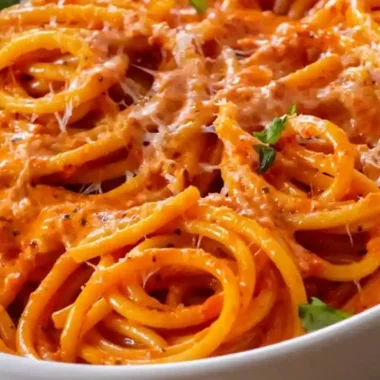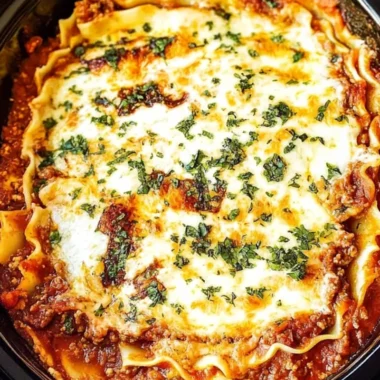
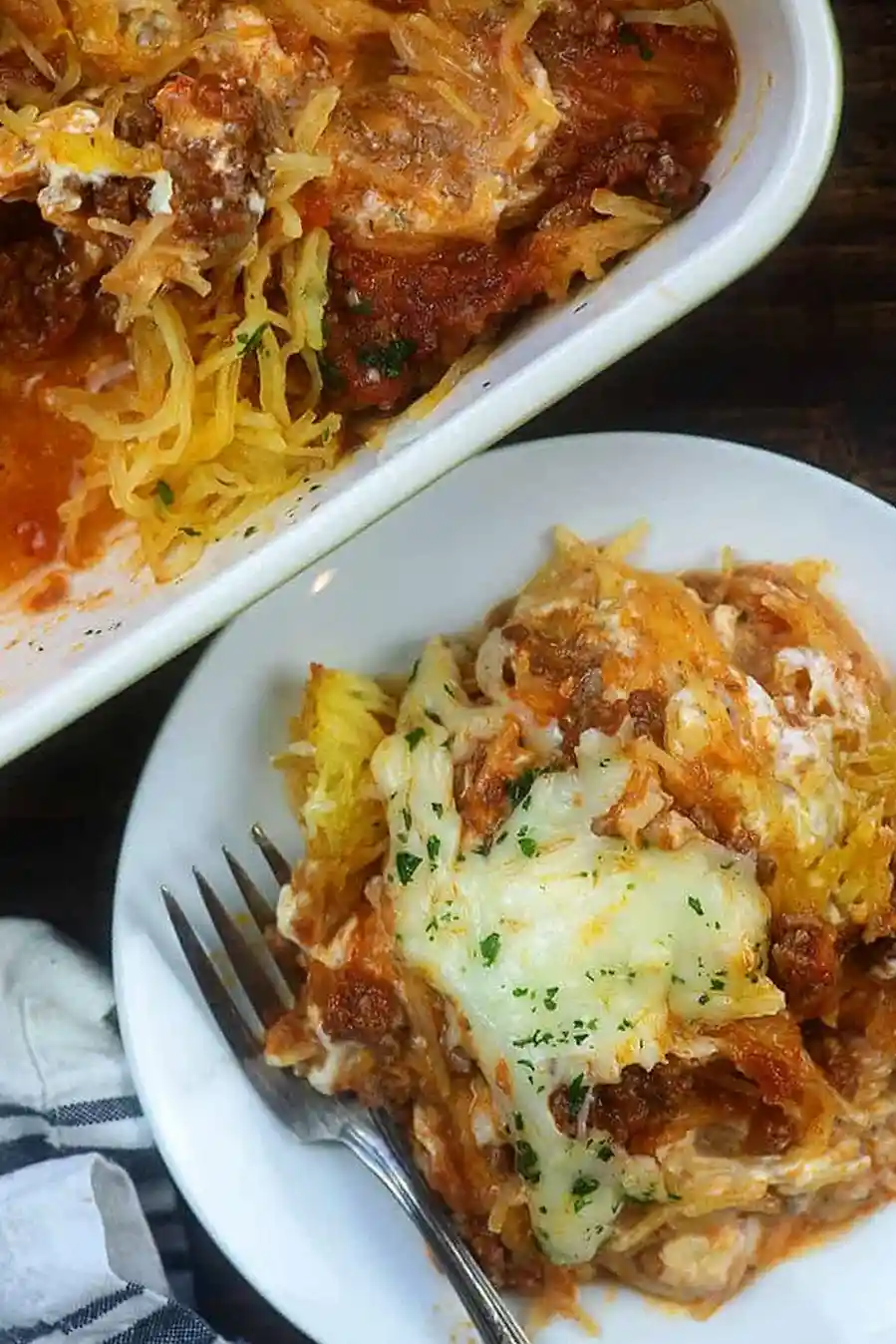
This creamy spaghetti squash casserole is a nutrient-dense, low-carb alternative to traditional pasta bakes. It features a rich layering of savory beef, zesty marinara, and a decadent cheese center that satisfies comfort food cravings.
List of ingredients
- 1 spaghetti squash (2-3 pounds) – choose a firm, golden-yellow one.
- 1 tablespoon olive oil – for roasting the squash.
- 1 teaspoon salt – to enhance the squash flavor.
- 1 pound ground beef – lean beef is recommended.
- 24 ounces marinara – store-bought or homemade, preferably no-sugar-added.
- 8 ounces cream cheese – softened to room temperature.
- ½ cup sour cream – adds tanginess and creaminess.
- 1 tablespoon chopped parsley – for fresh flavor and garnish.
- 2 cups shredded mozzarella – for a melted cheese topping.
step-by-step instructions
- Roast the squash: Preheat your oven to 400 degrees. Spray a rimmed baking sheet with non-stick spray, cut the spaghetti squash in half length-wise, and scoop out the seeds. Drizzle the inside with olive oil, sprinkle with salt, and place it flesh side down on the sheet; bake for 1 hour or until fork tender.
- Extract the strands: Once cooled enough to handle, use a fork to scrape out long strands of squash by scraping across the width of the squash.
- Prepare the meat sauce: Brown the ground beef over medium heat in a large skillet. Drain any excess grease, stir in the marinara, and cook for 5 minutes over low heat until thoroughly heated.
- Mix the creamy filling: In a small mixing bowl, combine the softened cream cheese, sour cream, and chopped parsley, stirring until the mixture is smooth.
- Layer the casserole: Preheat the oven to 350 degrees and spray a 9×13 baking dish with non-stick spray. Place half of the cooked spaghetti squash strands in the dish, top with half of the meat sauce, and spread the entire cream cheese mixture over the top.
- Finish and bake: Add the remaining spaghetti squash strands followed by the remaining meat sauce. Sprinkle the shredded mozzarella over the top and bake for 20 minutes until the cheese is melted and the casserole is hot.
Optimizing Your Squash Preparation
Selecting the Best Squash
Look for a spaghetti squash that feels heavy for its size and has a vibrant golden-yellow skin. Avoid squash with soft spots or bruises, as these indicate the produce is overripe or damaged. A firm exterior ensures the internal strands maintain a better texture after roasting.
Safe Cutting Techniques
Because the skin of the squash is very hard, start by slicing a small sliver off the bottom to create a flat, stable base. Use a very sharp chef’s knife and apply firm, steady pressure to cut through the center. Always keep your fingers away from the blade’s path to avoid slips.
Maximizing Strand Length
To get the longest, noodle-like strands, scrape your fork perpendicular to the length of the squash. If you scrape lengthwise, you will get shorter, chunkier pieces. This technique helps the squash mimic the look and feel of traditional spaghetti more closely.
Perfecting the Meat Sauce
Choosing the Right Ground Beef
Using lean ground beef, such as 90% lean, prevents the casserole from becoming overly greasy. If you use a higher fat percentage, ensure you drain the pan thoroughly after browning. This ensures the marinara clings to the meat rather than floating in oil.
Evaluating Marinara Ingredients
Select a marinara sauce that contains no added sugars to keep the recipe low-carb. Check the label for corn syrup or cane sugar, which can alter the savory profile of the dish. A simple sauce with crushed tomatoes, garlic, and basil works best.
Simmering for Depth
While the recipe calls for a quick 5-minute heat through, simmering the sauce for 15-20 minutes on low can deepen the flavor. This process reduces excess water in the store-bought sauce, preventing the final casserole from becoming watery during the baking phase.
Creating the Creamy Center
Softening Cream Cheese Properly
For a lump-free mixture, let the cream cheese sit at room temperature for at least an hour before mixing. If you are in a rush, you can microwave it in 10-second intervals. Overheating the cheese can cause it to separate, so use caution with the microwave.
Enhancing Texture with Sour Cream
Full-fat sour cream provides the best thickness and a slight acidic tang that cuts through the richness of the beef. For a thicker consistency, you can use strained Greek yogurt as a substitute. This maintains the creaminess while adding a bit more protein.
Using Fresh Parsley for Balance
Freshly chopped parsley adds a bright, herbaceous note that prevents the cheese layer from tasting too heavy. Finely mince the leaves and stems together for maximum flavor. Avoid using dried parsley in the mixture, as it lacks the same aromatic quality.
Assembly and Baking Tips
Preventing Watery Casseroles
Spaghetti squash can hold a lot of moisture. If the roasted strands seem too wet, place them in a colander or press them gently with a paper towel before adding them to the baking dish. This prevents the sauce from thinning out in the oven.
Ensuring Even Cheese Melting
Distribute the mozzarella evenly across the entire surface to create a consistent crust. If the cheese begins to brown too quickly before the center is hot, loosely cover the dish with aluminum foil. This traps heat and melts the cheese without burning the edges.
Determining Internal Doneness
The casserole is ready when the edges are bubbling and the cheese is fully melted and golden. Since the components are already cooked, the goal of the 20-minute bake is to unify the flavors and heat the center. Use a meat thermometer to ensure the center reaches 165 degrees Fahrenheit.
Ingredient Substitutions and Variations
Alternative Protein Options
While ground beef is traditional, you can use ground turkey or ground chicken for a leaner alternative. Ground bison is another excellent choice for a richer, more iron-dense flavor. Ensure you brown any substitute meat fully before adding the marinara.
Swapping the Topping Cheese
Mozzarella provides the best stretch, but you can substitute it with provolone or a blend of mozzarella and parmesan. Parmesan adds a saltier, nuttier flavor that complements the sweetness of the squash. Use a 50/50 split for a more complex taste.
Modifying for Dairy Restrictions
For a dairy-free version, replace the cream cheese and sour cream with cashew-based cream cheese and almond-based sour cream. Use a vegan mozzarella alternative for the topping. These substitutions maintain the creamy profile while removing animal-derived dairy.
Serving and Pairing Suggestions
Complementary Side Dishes
Pair this hearty casserole with a crisp arugula salad tossed in lemon vinaigrette. The bitterness of the greens balances the richness of the cheese and beef. Roasted asparagus or sautéed spinach are also excellent low-carb options.
Adding Vegetable Boosts
To add more nutrition, stir finely diced mushrooms or zucchini into the meat sauce. These vegetables blend in well with the marinara and increase the volume of the meal. Sauté them with the beef before adding the sauce.
Garnishing for Presentation
Finish the dish with a sprinkle of fresh basil leaves or a dusting of grated parmesan cheese. A drizzle of extra virgin olive oil over the melted cheese can add a professional touch. Serve in wide bowls to showcase the distinct layers of the casserole.
Storage and Reheating Guidelines
Refrigeration and Shelf Life
Store leftover casserole in an airtight glass container in the refrigerator. It will stay fresh and safe to eat for 3 to 4 days. Ensure the dish has cooled slightly before sealing to prevent excessive condensation from forming on the lid.
Best Reheating Methods
The oven is the best way to reheat this dish to maintain the cheese texture. Place a portion in an oven-safe dish and heat at 350 degrees Fahrenheit for 10-15 minutes. Avoid the microwave if possible, as it can make the squash strands rubbery.
Freezing Instructions
This casserole can be frozen before the final bake. Assemble the layers in a freezer-safe dish, cover tightly with foil, and freeze for up to 3 months. Thaw in the refrigerator overnight before baking according to the original instructions.
Common Troubleshooting
Solving Mushy Squash
If your squash comes out mushy, you may have overcooked it or used a squash with too much internal moisture. To prevent this, check the squash at the 45-minute mark during roasting. Use a fork to see if it is tender but still holds its shape.
Fixing a Thin Meat Sauce
If the marinara is too runny, simmer it on the stovetop without a lid to allow the liquid to evaporate. You can also stir in a tablespoon of tomato paste to thicken the sauce instantly. A thicker sauce prevents the layers from sliding apart.
Preventing Cheese Separation
If the cheese on top becomes oily or separates, it is often due to overheating or using pre-shredded cheese with anti-clumping agents. Shredding your own mozzarella from a block provides a better melt and a smoother finish.
Frequently Asked Questions
How to store spaghetti squash?
Store cooked spaghetti squash in an airtight container in the refrigerator for up to 4 days. For long-term storage, it can be frozen, though the texture may become slightly softer upon thawing.
How to cut spaghetti squash?
Carefully slice a thin piece off the bottom for stability, then use a sharp chef’s knife to cut lengthwise through the center. Always apply pressure carefully due to the hard skin of the squash.
How many carbs are in spaghetti squash?
Spaghetti squash is naturally low in carbohydrates. When prepared as this casserole, each serving contains approximately 8 net grams of carbs, making it a suitable option for low-carb diets.
What does spaghetti squash taste like?
It has a mild, slightly sweet, and earthy flavor similar to a cross between a zucchini and a butternut squash. Its neutral taste allows it to pair perfectly with savory sauces and cheeses.
Print
Million Dollar Spaghetti Squash Casserole
- Total Time: 100 minutes
- Yield: 6 servings 1x
- Diet: Keto
Description
Spaghetti squash casserole with a creamy cheesy filling!
Ingredients
- 1 spaghetti squash (2–3 pounds)
- 1 tablespoon olive oil
- 1 teaspoon salt
- 1 pound ground beef
- 24 ounces marinara
- 8 ounces cream cheese
- ½ cup sour cream
- 1 tablespoon chopped parsley
- 2 cups shredded mozzarella
Instructions
- For the squash: Preheat oven to 400 degrees. Spray a rimmed baking sheet with non-stick spray. Cut the spaghetti squash in half length-wise. Scoop out the seeds and discard. Drizzle the inside of the squash with olive oil and sprinkle with salt. Place spaghetti squash flesh side down on the prepared baking sheet at bake for 1 hour or until fork tender. Use a fork to scrape out long strands of squash, scraping across the width of the squash.
- For the meat sauce: Brown the ground beef over medium heat in a large skillet. Drain the grease and add the marinara to the pan. Cook for 5 minutes over low heat to heat through.
- For the cream cheese mixture: Add the cream cheese, sour cream, and parsley to a small mixing bowl and stir well to combine.
- To assemble: Preheat oven to 350 degrees. Spray a 9×13 baking dish with non-stick spray. Place half of the spaghetti squash in the prepared baking dish. Top the squash with half of the meat sauce and all of the cream cheese mixture. Add the remaining spaghetti squash followed by the remaining meat sauce. Sprinkle on the grated mozzarella. Bake for 20 minutes or until cheese is melted and casserole is hot. Serve immediately.
Notes
Scrape the spaghetti squash length-wise for short strands of squash or width-wise for long strands of squash. You can use any type of ground meat you prefer for the meat sauce.
- Prep Time: 20 minutes
- Cook Time: 80 minutes
- Category: Main Course
- Method: Baking
- Cuisine: American
Nutrition
- Serving Size: 1 serving
- Calories: 413 kcal
- Sugar: 4 g
- Sodium: 820 mg
- Fat: 35 g
- Saturated Fat: 19 g
- Unsaturated Fat: 16 g
- Trans Fat: 0 g
- Carbohydrates: 10 g
- Fiber: 2 g
- Protein: 21 g
- Cholesterol: 115 mg
Keywords: casserole, keto, low carb