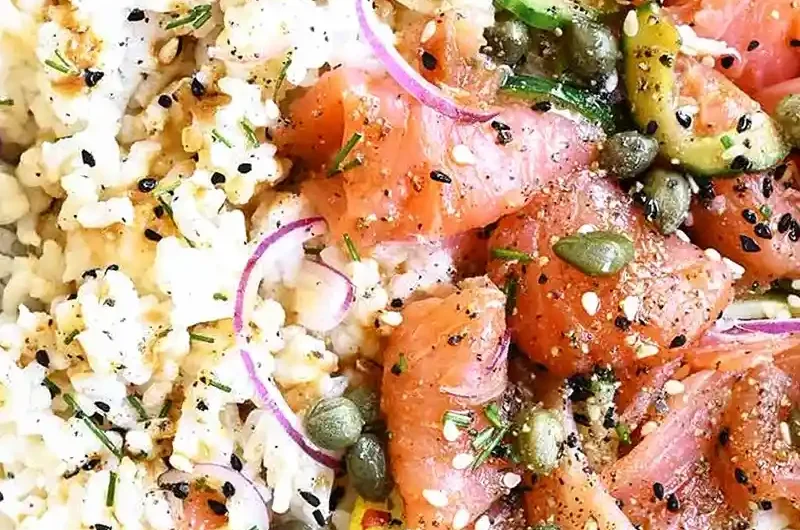
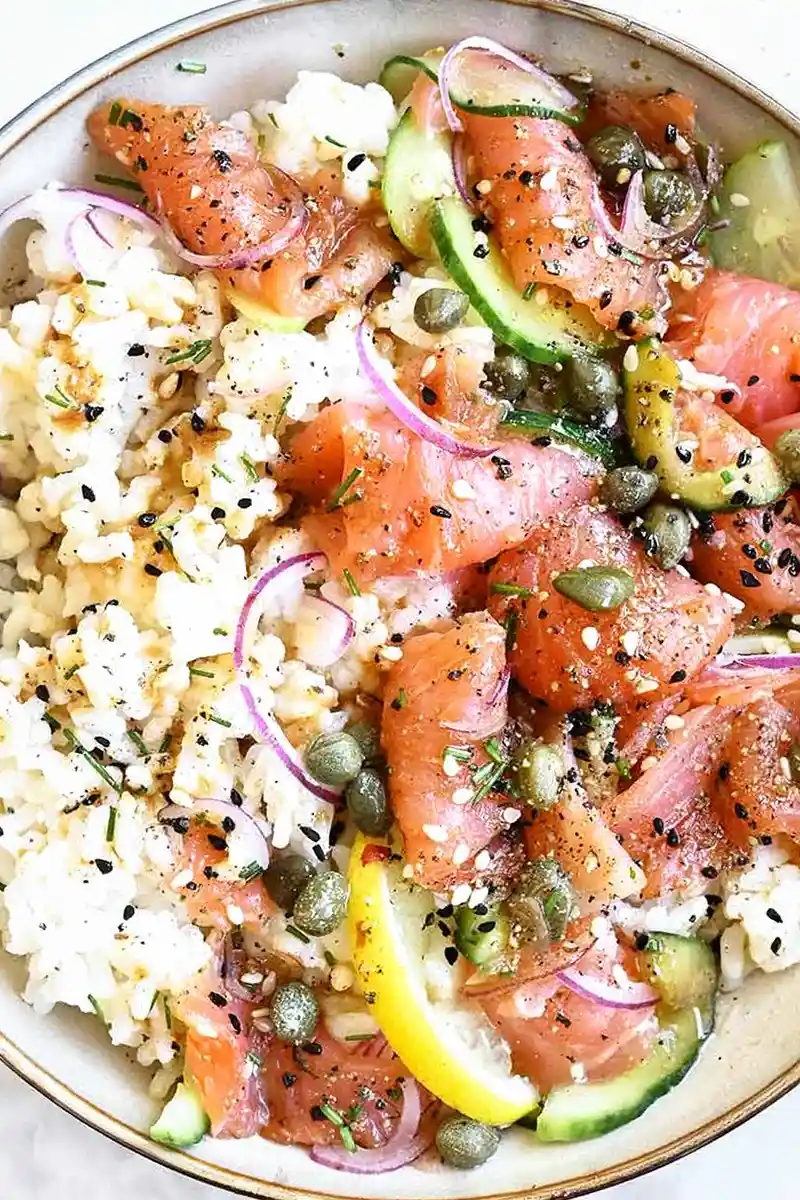
This fresh salmon bowl combines umami-rich miso with crisp vegetables for a light, nutrient-dense meal. It takes only 15 minutes to prepare and works perfectly as a sophisticated appetizer or a filling lunch. The balance of salty, acidic, and savory flavors makes it a versatile addition to any menu.
List of ingredients
- ½ pound sushi-grade salmon – ensure it is certified for raw consumption.
- 1 tbsp capers – adds a salty, briny pop of flavor.
- 1 red onion – thinly sliced into half-moons.
- ½ cucumber – thinly sliced for crunch.
- 1 tsp sesame seeds – toasted for extra aroma.
- 1 tsp chives – finely chopped for a mild onion flavor.
- flaky salt – used for final seasoning.
- black pepper – freshly cracked for a sharp bite.
- 2 tbsp olive oil – provides a neutral base for the dressing.
- 2 tbsp sesame oil – adds a deep, nutty toasted flavor.
- 1 tbsp soy sauce – provides essential salty umami.
- 1 tsp white miso – gives a creamy, salty fermented depth.
- 1 tbsp lemon juice – provides acidity to cut through the fish’s richness.
- ½ tsp brown sugar – balances the salt and acid with a hint of sweetness.
- ½ cup sushi rice – cooked according to package directions.
step-by-step instructions
- Prepare the dressing: Combine the olive oil, sesame oil, soy sauce, white miso, lemon juice, and brown sugar in a small bowl. Whisk thoroughly until the miso paste is fully dissolved and the mixture is emulsified.
- Slice the fish: Using a very sharp knife, slice the sushi-grade salmon against the grain into very thin slices. Arrange these slices in a bowl, overlapping them slightly to create a layered effect.
- Add toppings: Place the sliced cucumber, sesame seeds, chopped chives, and red onion on top of the salmon. Distribute them evenly to ensure every bite has a bit of each vegetable.
- Final touches: Drizzle the prepared miso dressing over the salmon and vegetables. Season lightly with flaky salt and black pepper, then scatter the capers on top. Serve immediately with fresh lemon wedges on the side, or serve over a bed of cooked sushi rice for a more substantial meal.
Expert Tips for Salmon Selection
Verify Sushi-Grade Certification
Always purchase salmon specifically labeled as sushi-grade or sashimi-grade. This ensures the fish has been flash-frozen at extremely low temperatures to kill any potential parasites. Never use standard fresh salmon intended for cooking when preparing raw dishes.
Assess the Scent and Color
Fresh sashimi-grade salmon should have a mild, clean scent like the ocean, without any strong fishy odor. The color should be a vibrant, consistent orange or deep red depending on the variety. Avoid fillets that show dull patches or brownish discoloration around the edges.
Check for Firm Texture
Press the fillet gently with your finger; the flesh should be firm and spring back immediately. If the indentation remains or the flesh feels mushy, the fish is not fresh enough for raw consumption. Ensure the fillet is cold to the touch throughout the entire piece.
Precision Slicing Techniques
Use a High-Carbon Steel Knife
A very sharp knife, such as a Yanagiba or a sharp chef’s knife, is essential for clean cuts. A dull blade will tear the delicate fish fibers, resulting in jagged edges and a less pleasant texture. Honing your knife immediately before slicing ensures the smoothest possible surface.
Cut Against the Muscle Grain
Identify the white lines of fat and muscle fibers running through the salmon. Slice perpendicular to these lines to break the connective tissue, which makes the sashimi melt in your mouth. Cutting with the grain can make the fish feel chewy or stringy.
Employ a Long Slicing Motion
Avoid pressing the knife straight down into the fish, as this crushes the cells. Instead, use a long, smooth drawing motion, pulling the knife toward you from the heel to the tip. This technique creates the thin, translucent slices required for high-quality sashimi.
Customizing the Flavor Profile
Swap White Miso for Red Miso
If you prefer a bolder, saltier, and more pungent taste, use red miso (aka miso) instead of white miso. Red miso is fermented longer, providing a deeper umami profile that stands up well to strong flavors. Adjust the amount of added salt, as red miso is typically saltier.
Replace Capers with Pickled Ginger
For a more traditional Japanese flavor, substitute the briny capers with thinly sliced gari (pickled ginger). The ginger provides a sharp, cleansing heat that cuts through the richness of the salmon. This is especially effective when serving the bowl over sushi rice.
Substitute Lemon with Rice Vinegar
If you do not have lemon juice, use unseasoned rice vinegar to provide the necessary acidity. Rice vinegar is slightly milder and more floral than lemon juice, which complements the miso dressing well. You may need to add a pinch more sugar to balance the tang.
Try Different Grains as a Base
While sushi rice is traditional, you can use quinoa or brown rice for a nuttier flavor and more fiber. If using quinoa, ensure it is cooked and cooled slightly before adding the raw fish. This prevents the heat from partially cooking the salmon.
Enhancing the Bowl with Additional Ingredients
Incorporate Avocado for Creaminess
Adding sliced or cubed avocado provides a buttery texture that complements the silkiness of the salmon. The healthy fats in avocado blend well with the sesame oil in the dressing. Place the avocado slices under the salmon for a stable base.
Add Heat with Fresh Jalapeños
For those who enjoy a spicy kick, add thinly sliced fresh jalapeños or serrano peppers. The sharp heat of the pepper balances the sweetness of the brown sugar in the dressing. Ensure the slices are very thin so they do not overpower the delicate fish.
Garnish with Microgreens or Radish
Adding microgreens or thinly sliced red radishes adds a peppery note and a professional visual appeal. Radishes provide an extra crunch that contrasts with the soft salmon. These additions make the bowl suitable for high-end appetizer presentations.
Serving and Presentation Ideas
Appetizer Style Plating
For a snack or starter, omit the rice and arrange the salmon on a flat ceramic platter. Arrange the vegetables in small, neat piles around the fish rather than on top. This allows guests to customize their bites with different toppings.
Full Meal Bowl Assembly
When serving as a lunch or dinner, place a warm bed of sushi rice at the bottom of a deep bowl. Layer the salmon on top of the rice, then add the vegetables and drizzle the dressing. The rice will absorb the excess dressing, ensuring no flavor is wasted.
Creating a Sashimi Platter
Arrange the sliced salmon in a circular pattern on a large platter for a shared experience. Place the cucumber and red onion in the center as a garnish. Serve the miso dressing in a small separate dipping bowl for a more interactive meal.
Storage and Food Safety Guidelines
Prioritize Immediate Consumption
Sashimi dishes should be served and eaten immediately after assembly. Raw fish begins to degrade and lose its texture once sliced and seasoned. The acidity in the lemon juice will eventually start to “cook” the fish, changing its texture from raw to cured.
Refrigeration Limits
If you must store leftovers, keep them in an airtight container in the coldest part of the refrigerator. Consume the leftovers within 24 hours to avoid spoilage. Be aware that the cucumber may release water over time, which can dilute the dressing.
Control Temperature Exposure
Keep the salmon chilled until the very moment you are ready to slice it. Use a chilled bowl or plate to keep the fish at a safe temperature during assembly. Avoid leaving the assembled bowl at room temperature for more than 30 minutes.
Troubleshooting Common Issues
Correcting Overly Salty Dressing
If the combination of miso and soy sauce makes the dressing too salty, add a teaspoon of water or a squeeze more lemon juice. A small amount of extra brown sugar can also mask excessive saltiness. Taste the dressing before drizzling it over the fish.
Preventing Salmon from Tearing
If the salmon is tearing during slicing, it may be too warm. Place the fillet in the freezer for 15 to 20 minutes to firm it up before cutting. This makes the flesh more rigid and allows for cleaner, thinner slices.
Reducing Onion Pungency
If the red onion flavor is too overpowering, soak the slices in a bowl of ice water for 10 minutes. This removes the harsh sulfuric compounds while keeping the onion crisp. Drain and pat them dry with a paper towel before adding to the bowl.
Frequently Asked Questions
Can I use frozen salmon for this recipe?
Only use frozen salmon if it was specifically sold as “sushi-grade” or “sashimi-grade”. Standard frozen fillets are not treated to eliminate parasites and are not safe to eat raw. Always check the packaging for the appropriate certification.
What is the best type of miso to use?
White miso (Shiro miso) is the best choice for this recipe because it is milder and slightly sweeter. Red miso is more intense and may overwhelm the delicate flavor of the raw salmon. If you only have red miso, reduce the quantity slightly.
How do I get the perfect sushi rice texture?
Rinse the sushi rice under cold water multiple times until the water runs clear to remove excess starch. This prevents the rice from becoming overly sticky or gummy. Follow the package instructions precisely and let the rice cool slightly before serving.
Can I make the dressing in advance?
Yes, the miso dressing can be made up to three days in advance and stored in a jar in the refrigerator. Shake well before using, as the oil and miso may separate over time. This makes the final assembly even faster.
Is it possible to make this vegan?
To make a vegan version, replace the salmon with thinly sliced marinated watermelon or king oyster mushrooms. Use a vegan-certified soy sauce or coconut aminos. The miso dressing is already plant-based and works well with these alternatives.
Print
Miso Soy Salmon Sashimi Bowl
- Total Time: 15 minutes
- Yield: 2 servings 1x
- Diet: Pescetarian
Description
Not just bursting with flavor, but also foolproof and ready in about 15 minutes. Ideal as an appetizer or snack. You can also serve it over sushi rice for a quick lunch. Incredibly versatile—just one recipe with countless delicious combinations, a double win!
Ingredients
- ½ pound sushi-grade salmon
- 1 tbsp capers
- 1 red onion, thinly sliced
- ½ cucumber, thinly sliced
- 1 tsp sesame seeds
- 1 tsp chives, finely chopped
- flaky salt
- black pepper
- 2 tbsp olive oil
- 2 tbsp sesame oil
- 1 tbsp soy sauce
- 1 tsp white miso
- 1 tbsp lemon juice
- ½ tsp brown sugar
- ½ cup cooked sushi rice
Instructions
- Step: Combine the ingredients for the miso dressing in a small bowl.
- Step: Using a sharp knife, slice the salmon against the grain into very thin slices. Arrange the slices on a bowl, overlapping them slightly.
- Step: Top with cucumber slices, sesame seeds, chives and red onion.
- Step: Drizzle with the miso dressing. Season lightly with salt and pepper. Scatter the capers on top and serve with lemon wedges. Serve immediately!
- Step: Or serve as a healthy lunch or light dinner over sushi rice. So good!
Notes
Tip: Double the dressing to drizzle over rice.
- Prep Time: 15 minutes
- Cook Time: 0 minutes
- Category: Main Course
- Method: Raw / Assembly
- Cuisine: Asian
Nutrition
- Serving Size: 1 serving
- Calories: 338 kcal
- Sugar: 3 g
- Sodium: 957 mg
- Fat: 31 g
- Saturated Fat: 5 g
- Unsaturated Fat: 26 g
- Trans Fat: 0 g
- Carbohydrates: 9 g
- Fiber: 2 g
- Protein: 8 g
- Cholesterol: 16 mg
Keywords: fish, miso, quick meals, rice, salmon, sauces, seafood, side dishes, soy sauce