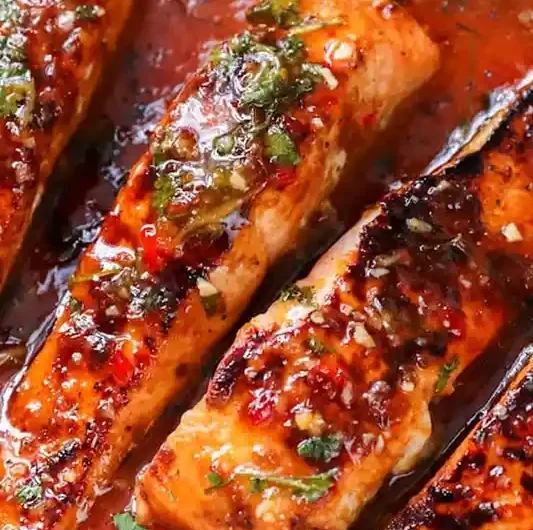
This pan-fried sweet chilli salmon takes only 20 minutes from start to finish. It is an ideal solution for busy weeknights when you need a high-protein meal with bold flavors.
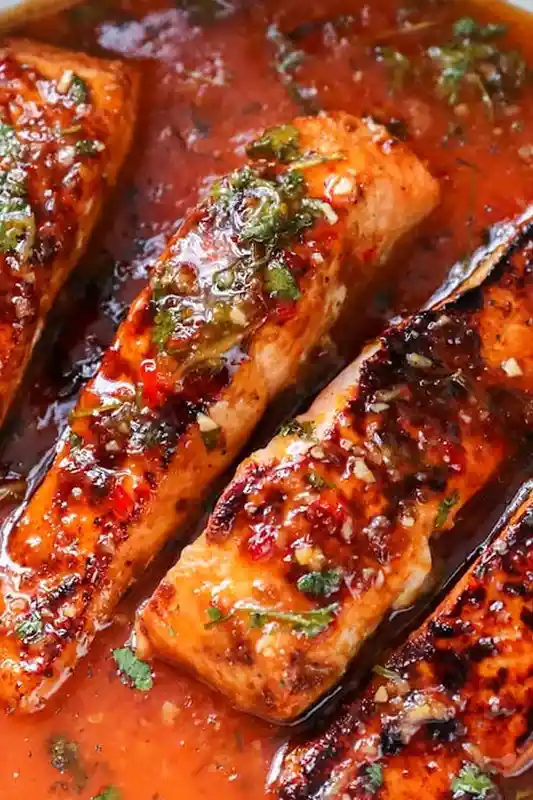
List of ingredients
- 4 Salmon Fillets – keep the skin on for extra texture or remove if preferred.
- 1 tsp Oil – used for the initial marinade to help spices stick.
- 1 tsp Black Pepper – provides a mild heat and basic seasoning.
- 1 tsp Dark Soy Sauce – adds a salty depth and a rich color to the fish.
- 1 tsp Onion Powder – enhances the savory profile of the marinade.
- 315 g Sweet Chilli Sauce – the primary base for the glaze.
- 1 tbsp Diced Garlic – fresh cloves for a pungent aromatic base.
- 1 tbsp Ginger – freshly diced for a sharp, zingy flavor.
- ½ Lime Juice (half of one lime) – adds acidity to balance the sweetness of the sauce.
- Coriander (handful or to taste) – freshly chopped for a herbal finish.
- 1 tbsp Oil – for searing the fillets in the pan.
step-by-step instructions
- Marinate the fish: Place the salmon fillets on a large plate, drizzle with oil, and season with black pepper, soy sauce, and onion powder. Gently rub the mixture all over the fillets to ensure even coverage.
- Sear the fillets: Heat 1 tablespoon of oil in a pan over medium to high heat. Once the oil is shimmering, add the salmon fillets and fry for 2 minutes on each side.
- Sauté the aromatics: Remove the salmon from the pan and set aside. Add the diced garlic and ginger to the remaining oil in the pan and stir for a few seconds until fragrant.
- Prepare the glaze: Add the sweet chilli sauce, diced coriander, and lime juice to the pan. Leave the mixture to simmer for 2 to 3 minutes, or until it reaches your desired thickness.
- Coat the salmon: Place the salmon fillets back into the pan. Use a spoon to pour the thickened sauce over the fish, coating it thoroughly before serving.
Optimizing Your Cooking Technique
Achieving a Perfect Pan Sear
To prevent the salmon from sticking, ensure the pan is fully heated before adding the oil. Pat the salmon fillets dry with a paper towel before marinating to remove excess moisture, which allows for a better crust. Avoid moving the fish too early; let it sear undisturbed for the full two minutes to create a golden-brown surface.
Managing Pan Temperature
Use a medium-high heat setting to ensure the exterior cooks quickly while the interior remains moist. If the oil begins to smoke excessively, reduce the heat slightly to avoid burning the marinade. A heavy-bottomed stainless steel or cast iron pan is recommended for the most consistent heat distribution.
Preventing Overcooked Salmon
Salmon continues to cook slightly after being removed from the heat due to carry-over cooking. Remove the fillets when they are just opaque on the outside and slightly translucent in the center. This ensures the fish stays succulent and flaky rather than becoming dry or rubbery.
Customizing the Flavor Profile
Increasing the Heat Level
For those who prefer a spicier dish, add finely diced bird’s eye chillies when sautéing the garlic and ginger. Alternatively, a pinch of red chilli flakes stirred into the simmering sauce provides a consistent heat throughout the glaze. You can also add a dash of Sriracha for a more complex, fermented heat.
Adjusting the Sweetness
If the sweet chilli sauce is too sugary for your taste, increase the amount of lime juice to add more acidity. A small splash of rice vinegar can also help cut through the sweetness. Reducing the amount of sauce and adding a tablespoon of water or vegetable broth can dilute the sugar concentration.
Alternative Aromatic Additions
While ginger and garlic are standard, adding a teaspoon of grated lemongrass can provide a more traditional Southeast Asian aroma. A pinch of ground cumin in the marinade can add an earthy undertone that complements the sweet glaze. Freshly grated turmeric can be added for both a vibrant color and a mild peppery flavor.
Serving and Pairing Ideas
Complementary Grain Choices
Steamed jasmine rice is the traditional accompaniment, as its neutral flavor and fragrance soak up the excess sweet chilli glaze. Brown rice or quinoa offer a nuttier taste and more fiber for a healthier alternative. Basmati rice also works well if you prefer a fluffier texture.
Best Vegetable Pairings
Stir-fried green vegetables like snap peas, mangetout, and pak choi provide a crisp contrast to the rich salmon. Broccoli or bok choy steamed with a touch of sesame oil and salt also pair perfectly. For a different texture, consider sautéed spinach or glazed carrots.
Light and Fresh Sides
A fresh cucumber salad with rice vinegar and sesame seeds balances the richness of the salmon. A slaw made from shredded cabbage, carrots, and a lime-based dressing adds a refreshing crunch. Mixed greens with a simple lemon vinaigrette also keep the meal light.
Storage and Preservation
Refrigeration Guidelines
Store any leftover salmon and sauce in a glass, airtight container to maintain freshness. Ensure the fish is completely cooled before sealing the lid to prevent excess condensation, which can make the fish soggy. Keep the container in the coldest part of the refrigerator, usually the back of the shelf.
Maximum Storage Duration
Cooked salmon is best consumed within 2 to 3 days when stored properly in the fridge. Beyond this window, the texture of the fish may deteriorate, and the risk of spoilage increases. If you do not plan to eat the leftovers within three days, it is better to freeze them immediately.
Identifying Spoiled Fish
Discard the salmon if you notice a strong, ammonia-like smell or a slimy texture on the surface. Any visible discoloration or mold in the sauce is a clear indicator that the dish is no longer safe for consumption. When in doubt, always prioritize safety and discard the food.
Reheating Instructions
Using a Stovetop Pan
The best way to reheat this dish is in a pan over low to medium heat. Add a teaspoon of water or oil to the pan to prevent the sauce from burning. Gently warm the salmon and sauce for 3-5 minutes, spooning the glaze over the fish to re-moisturize it.
Microwave Method
For a faster option, place the salmon and sauce on a microwave-safe plate and cover it with a damp paper towel. Heat on medium power in 30-second intervals to avoid overcooking the fish. Be careful not to overheat, as the sugars in the sauce can bubble and burn quickly.
Oven Reheating
Preheat your oven to 120°C (250°F) and place the salmon in a baking dish with the remaining sauce. Cover the dish tightly with foil to trap the steam and prevent the fish from drying out. Heat for about 10-15 minutes until the center is warmed through.
Make-Ahead Strategies
Pre-Marinating the Salmon
You can marinate the salmon fillets up to 6 hours in advance and keep them in the refrigerator. This allows the soy sauce and onion powder to penetrate deeper into the flesh for more flavor. Store them in a sealed bag or a covered dish to prevent the fish from absorbing other fridge odors.
Preparing the Sauce Base
The garlic, ginger, and lime juice mixture can be prepped and stored in a small jar. When you are ready to cook, simply add these aromatics to the pan before the sweet chilli sauce. This significantly reduces the active prep time during the dinner rush.
Batch Cooking for the Week
Cook multiple portions of salmon at once and store them in individual containers with the sauce. This makes for an easy, high-protein lunch throughout the work week. Pair the pre-cooked salmon with pre-steamed vegetables for a complete meal prep solution.
Troubleshooting Common Issues
Dealing with a Thick Sauce
Different brands of sweet chilli sauce have varying viscosities. If your sauce is too thick to coat the fish easily, whisk in a tablespoon of water or vegetable broth while simmering. This loosens the consistency without significantly altering the taste.
Handling a Runny Sauce
If the sauce is too thin, extend the simmering time by another 2-3 minutes on medium heat. The sugars will reduce and thicken naturally as the water evaporates. Avoid adding cornstarch unless necessary, as it can make the glaze taste artificial.
Preventing Salmon from Sticking
If the fish sticks to the pan, it is usually because it was added before the pan was hot enough or the fish was moved too soon. Use a non-stick pan if you are concerned about sticking, or ensure you are using a high-smoke point oil like canola or vegetable oil.
Frequently Asked Questions
Can I use frozen salmon fillets?
Yes, but you must thaw them completely in the refrigerator overnight before cooking. Pat them very dry with paper towels after thawing to ensure you get a proper sear. Cooking frozen fillets directly can lead to uneven cooking and a soggy texture.
Is the skin on the salmon edible?
Yes, the skin is edible and becomes very crispy and flavorful when pan-fried. If you prefer not to eat it, you can easily slide it off after cooking or purchase skinless fillets. The skin also helps protect the fish from overcooking during the searing process.
Can I substitute salmon with another fish?
This recipe works well with other firm-fleshed fish such as cod, halibut, or mahi-mahi. Be mindful that white fish usually cooks faster than salmon, so reduce the searing time slightly. The sweet chilli glaze complements most mild-flavored fish.
How do I stop the garlic from burning?
Add the garlic and ginger only after the salmon has been removed from the pan. If the pan is too hot, add a small splash of oil or water to lower the surface temperature before adding the aromatics. Stir them constantly for a few seconds until they are fragrant but not brown.
Print
Pan-Fried Sweet Chilli Salmon
- Total Time: 20 minutes
- Yield: 4 servings 1x
- Diet: General
Description
A quick and flavorful pan-fried sweet chilli salmon dish that can be prepared in just 20 minutes, making it perfect for busy weeknight dinners.
Ingredients
- 4 Salmon Fillets
- 1 tsp Oil
- 1 tsp Black Pepper
- 1 tsp Dark Soy Sauce
- 1 tsp Onion Powder
- 315 g Sweet Chilli Sauce
- 1 tbsp Diced Garlic
- 1 tbsp Ginger
- ½ Lime Juice
- Handful of Coriander
Instructions
- Marinate: Place the salmon fillets on a large plate, then drizzle with oil and season with black pepper, soy sauce, and onion powder. Gently rub the mixture all over the fillets.
- Sear: Heat oil (around 1 tbsp) in a pan over a medium to high heat. Once hot, add the salmon fillets and fry them for 2 minutes on both sides (front and back).
- Sauté: Remove the salmon from the pan. Then add garlic and ginger to the pan and stir for a few seconds.
- Simmer: Add the sweet chilli sauce, diced coriander and lime juice, and leave the mixture to simmer for 2 to 3 minutes or until it’s reached your desired thickness.
- Glaze: Place the salmon fillets back into the pan and use a spoon to coat it in the sauce.
Notes
Serve with stir-fried green veggies (green beans, mangetout, pak choi) and rice. If the sauce is too thick, add a little water to loosen the consistency.
- Prep Time: 5 minutes
- Cook Time: 15 minutes
- Category: Main Course
- Method: Pan-frying
- Cuisine: Thai
Nutrition
- Serving Size: 1 fillet
- Calories: 422 kcal
- Sugar: 38 g
- Sodium: 948 mg
- Fat: 12 g
- Saturated Fat: 2 g
- Unsaturated Fat: 9 g
- Trans Fat: 0.01 g
- Carbohydrates: 41 g
- Fiber: 1 g
- Protein: 35 g
- Cholesterol: 94 mg
Keywords: sweet chilli salmon, pan-fried salmon, quick dinner, Thai salmon, glazed salmon