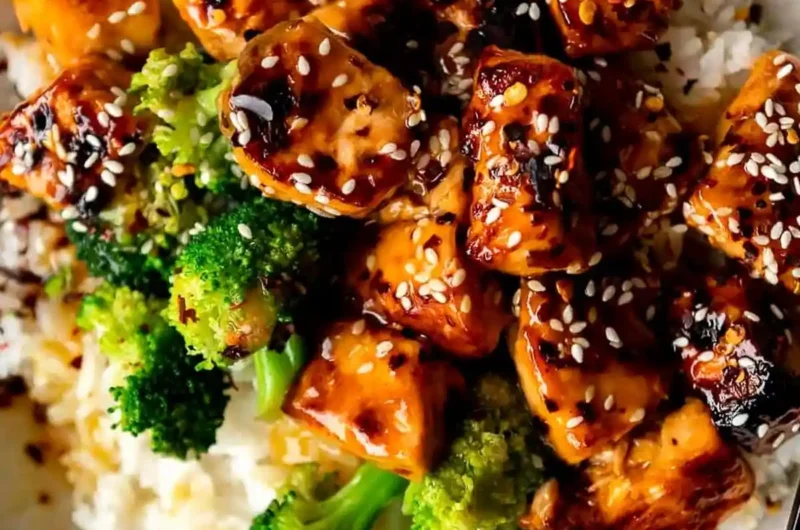
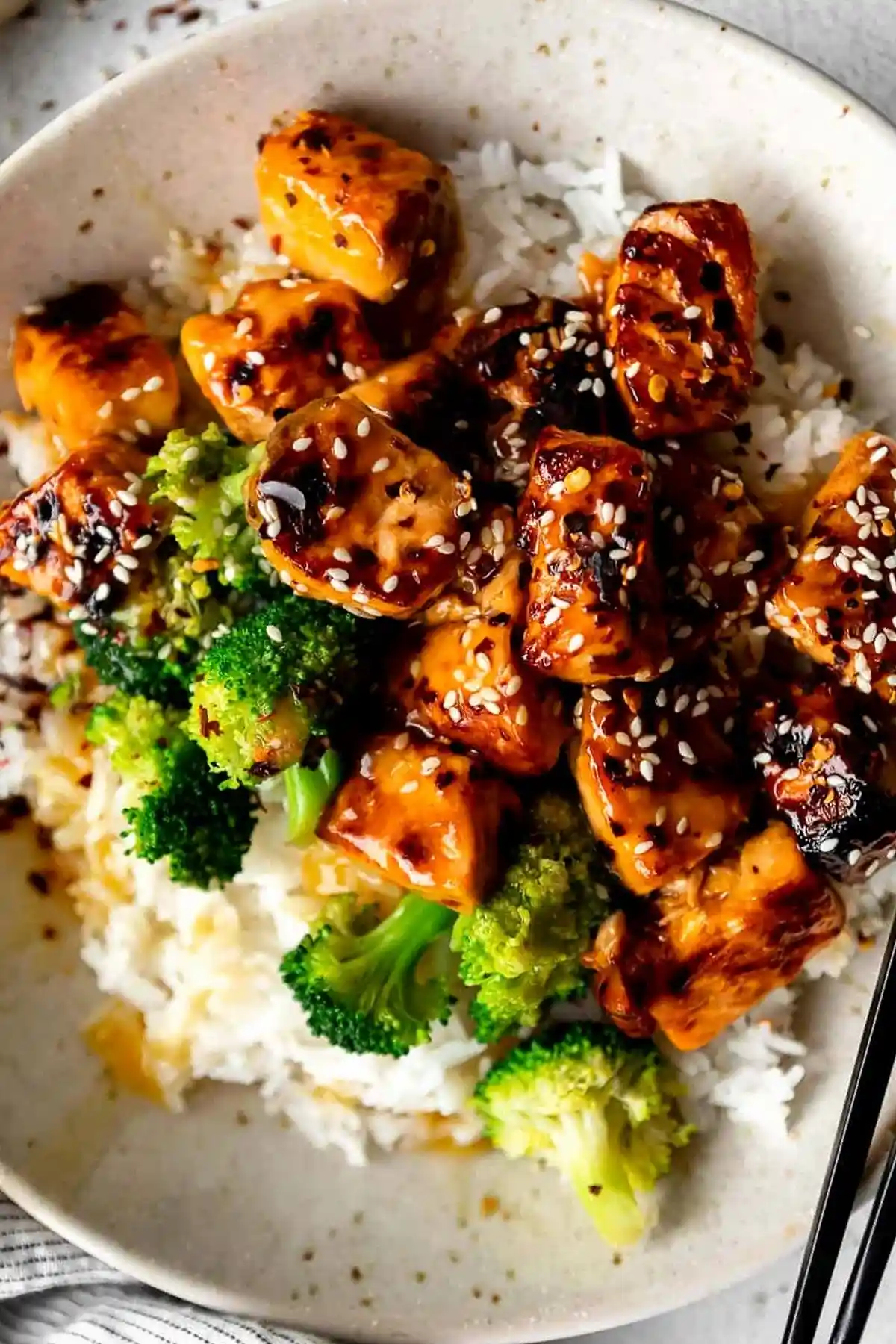
These vibrant orange salmon bowls are a fast dinner solution that combines citrusy sweetness with savory notes. They are naturally gluten-free and ready in about 30 minutes, making them ideal for busy weeknights.
List of ingredients
- 4, 6 ounce salmon fillets – cut into cubes, skin can be left on or removed
- 2 tablespoons oil – used for sautéing and searing
- 2 teaspoons minced garlic – for aromatic base
- 1 tablespoon fresh grated ginger – adds a zesty punch
- 3/4 cup fresh orange juice – provides the citrus base for the sauce
- 2-3 tablespoons honey – for a sticky, sweet glaze
- 1 tablespoon rice vinegar – adds a touch of acidity
- 3 tablespoons low sodium soy sauce or tamari – for salty depth
- 1-2 tablespoons orange zest – intensifies the orange flavor
- 1 tablespoon cornstarch – used as a thickener
- 1/2 teaspoon red pepper flakes – for a hint of heat
- 2 cups cooked white or brown rice – for the bowl base
- 2 cups cooked broccoli – steamed as a healthy side
step-by-step instructions
- Prepare the Marinade: Whisk together all the sauce ingredients in a medium bowl, making sure to leave out the cornstarch.
- Marinate the Salmon: Place the salmon cubes into the bowl with the sauce and let them marinate for 15 minutes.
- Sauté Aromatics: Heat oil in a pan over medium-low heat and sauté the minced garlic and grated ginger for approximately 2 minutes.
- Sear the Salmon: Use tongs to transfer the salmon cubes to the pan, reserving the remaining marinade. Cook each side for 3-4 minutes until the edges are golden brown and crispy.
- Heat the Sauce: While the salmon is cooking, pour the reserved marinade into a small saucepan and bring it to a very low boil.
- Thicken the Glaze: Whisk cornstarch with 2 tablespoons of water to create a slurry, then stir it into the simmering sauce. Continue to simmer and whisk occasionally until the sauce thickens.
- Combine and Glaze: Once the salmon is cooked through and the sauce is thick, pour about 3/4 of the sauce over the salmon in the pan. Let it simmer for a few minutes to allow the glaze to coat the fish.
- Optional Finishing Touch: For additional crispiness, you can place the glazed salmon under a broiler for 2-3 minutes.
- Assemble the Bowls: Scoop a base of rice into bowls, add the cooked broccoli, top with the orange salmon, and drizzle with the remaining sauce.
Optimizing Your Salmon Selection
Choosing Fresh Salmon Fillets
Look for fillets that have a vibrant, consistent color without any brown spots. The flesh should be firm to the touch and spring back immediately when pressed. Avoid any fish that has a strong, overly fishy odor.
Using Frozen Salmon Safely
If using frozen fillets, thaw them completely in the refrigerator overnight. Allow the thawed fish to sit at room temperature for 30 minutes before cooking to ensure an even sear. Avoid thawing in the microwave, as this can cook the edges prematurely.
Deciding Between Skin-On or Skinless
Skin-on salmon provides a crispier texture and helps the cubes hold together during searing. However, removing the skin allows the marinade to penetrate the flesh more effectively. Either option works well depending on your texture preference.
Perfecting the Orange Glaze
Using Freshly Squeezed Juice
Always use fresh orange juice rather than bottled concentrates for a brighter flavor. Fresh juice contains natural enzymes and acidity that balance the honey and soy sauce. This prevents the glaze from tasting overly processed or artificial.
Adjusting the Sweetness Level
The amount of honey can be adjusted based on your taste preference. Start with 2 tablespoons and add a third if you prefer a stickier, sweeter coating. The orange juice already provides natural sugars, so taste the sauce before adding more honey.
Managing the Heat with Red Pepper Flakes
The red pepper flakes provide a subtle warmth rather than intense heat. For a spicier bowl, increase the flakes to a full teaspoon. If you prefer a mild flavor, you can omit them entirely without affecting the sauce consistency.
Tamari for Gluten-Free Requirements
To keep this recipe gluten-free, ensure you use tamari instead of traditional soy sauce. Tamari is naturally gluten-free and offers a richer, deeper flavor profile. Most grocery stores carry tamari in the Asian food aisle.
Advanced Cooking Techniques
Achieving the Perfect Sear
Ensure the pan is hot before adding the salmon cubes to prevent sticking. Do not crowd the pan, as this lowers the temperature and causes the fish to steam instead of sear. Give each cube enough space to develop a golden crust.
Preventing Garlic from Burning
Sauté garlic and ginger over medium-low heat to avoid burning. Burnt garlic becomes bitter and can ruin the flavor of the entire dish. If the garlic browns too quickly, add a splash of water or oil to lower the heat.
The Role of the Cornstarch Slurry
Never add dry cornstarch directly into a boiling liquid, as it will create clumps. Always mix it with cold water first to create a smooth slurry. Stir it in slowly while whisking to achieve a glossy, professional glaze.
Broiling for Extra Crispiness
Broiling the salmon for 2-3 minutes after glazing caramelizes the sugars in the honey and orange juice. This creates a charred, sticky exterior similar to restaurant-style orange chicken. Watch the pan closely to prevent the glaze from burning.
Grain and Vegetable Variations
Alternative Rice Options
While jasmine or brown rice are classic, you can use quinoa for added protein. Cauliflower rice is an excellent low-carb alternative that pairs well with the citrus sauce. Simply steam or sauté the cauliflower rice just before serving.
Exploring Different Green Vegetables
Steamed broccoli is the standard choice, but sautéed snap peas or bok choy add a great crunch. Roasted Brussels sprouts also complement the orange glaze well. Ensure the vegetables are cooked separately to maintain their texture.
Adding Fresh Toppings
Garnish the final bowls with sliced green onions or toasted sesame seeds for added visual appeal. Fresh cilantro or mint leaves can provide a cooling contrast to the warm, sweet sauce. A squeeze of fresh lime over the top adds a final layer of acidity.
Meal Prep and Storage Advice
Refrigeration Guidelines
Store the salmon and rice in airtight containers in the refrigerator for up to 3 days. It is best to keep the extra sauce in a separate small container. This prevents the rice from absorbing all the moisture and becoming mushy.
The Best Reheating Methods
Avoid the microwave if possible, as it can make the salmon rubbery. Instead, use an air fryer at 350°F for a few minutes to restore the crispiness. Alternatively, reheat the salmon in a skillet over medium heat with a teaspoon of oil.
Preparing Components in Advance
You can cook the rice and steam the broccoli several days ahead of time. The orange marinade can also be whisked together and stored in the fridge for up to a week. This reduces the actual cooking time to just searing the fish.
Freezing the Finished Bowls
Salmon does not always freeze and thaw well, often becoming dry. However, you can freeze the cooked rice and vegetables. It is highly recommended to cook the salmon fresh for the best texture and flavor.
Troubleshooting Common Issues
What to Do if the Sauce is Too Thin
If the sauce has not thickened enough, mix an additional teaspoon of cornstarch with a bit of water. Stir it into the simmering sauce and cook for another minute. Be careful not to over-thicken, or the sauce will become gummy.
Dealing with Salmon Sticking to the Pan
If the salmon sticks, it usually means the pan wasn’t hot enough or the fish was added too early. Use a flexible spatula to gently lift the edges. Next time, wait for the oil to shimmer before adding the cubes.
Fixing Overcooked Salmon
Overcooked salmon becomes dry and flaky. To mitigate this, ensure you use a generous amount of the remaining orange sauce. The moisture from the glaze helps mask the dryness of slightly overdone fish.
Balancing a Sauce That is Too Sweet
If the honey makes the sauce too sweet, add an extra teaspoon of rice vinegar or a squeeze of lime. The acidity cuts through the sugar and restores balance. You can also add a pinch of extra salt or tamari.
Frequently Asked Questions
Can I use chicken instead of salmon?
Yes, you can use diced chicken breast or thighs. Follow the same marinating and searing process, but increase the cooking time to ensure the chicken is cooked through to 165°F.
How do I prevent the salmon from breaking apart?
Avoid stirring the salmon cubes too frequently in the pan. Let them sear undisturbed for 3-4 minutes on one side before flipping. Using a steady hand with tongs helps maintain the cube shape.
Can I use a different sweetener than honey?
Maple syrup or agave nectar are great alternatives. Maple syrup adds a slightly deeper, earthy sweetness, while agave is more neutral. Use the same measurements as the honey.
Is it okay to use bottled orange juice?
While fresh is best, 100% pure bottled orange juice without added sugar works in a pinch. Avoid orange-flavored drinks or cocktails, as they contain too much sugar and artificial flavorings.
Do I have to peel the ginger?
If you have a microplane or fine grater, you can grate the ginger skinless or with the skin. For the smoothest texture, peeling the ginger with a spoon first is the most effective method.
Print
Pan-Seared Orange Salmon Bowls
- Total Time: 35 minutes
- Yield: 4 servings 1x
- Diet: Gluten-Free, Paleo
Description
This Pan-Fried Orange Salmon is an easy to make dinner recipe that will be ready to eat in just about 30 minutes! It’s full of flavor, paleo friendly, naturally gluten free and delicious with steamed rice and broccoli.
Ingredients
- 4, 6 ounce salmon fillets, cut into cubes
- 2 tablespoons oil
- 2 teaspoons minced garlic
- 1 tablespoon fresh grated ginger
- 3/4 cup fresh orange juice
- 2–3 tablespoons honey
- 1 tablespoon rice vinegar
- 3 tablespoons low sodium soy sauce or tamari
- 1–2 tablespoons orange zest
- 1 tablespoon cornstarch
- 1/2 teaspoon red pepper flakes
- 2 cups cooked white or brown rice
- 2 cups cooked broccoli
Instructions
- Step: Whisk together all sauce ingredients aside from the cornstarch in a medium bowl.
- Step: Add the salmon cubes and marinate for 15 minutes.
- Step: Add the minced garlic, grated ginger and oil to a pan and saute over medium/low heat for about 2 minutes.
- Step: Use tongs to add in the salmon cubes (save the sauce but don’t add to the pan) and cook on each side for about 3-4 minutes or until golden brown and crispy.
- Step: Meanwhile, add the remaining sauce to a small sauce pan and bring to a very low boil.
- Step: Whisk together the cornstarch with 2 tablespoons of water and add to the sauce.
- Step: Simmer until thick, whisking occasionally.
- Step: Once the salmon has cooked and the sauce is thick, add about 3/4 of the sauce to the salmon and let simmer for a few minutes to combine.
- Step: You can serve exactly as is, or quickly broil the salmon for 2-3 minutes to crisp it up further.
- Step: Assemble your bowls with a base of rice, then add your veggies, salmon and drizzle with the remaining sauce.
Notes
You can swap the honey for any sweetener of choice. You can leave the skin on the salmon or remove it based on preference.
- Prep Time: 5 minutes
- Cook Time: 15 minutes
- Category: Dinner
- Method: Pan-Fried
- Cuisine: Chinese
Nutrition
- Serving Size: 1 serving
- Calories: 377 kcal
- Sugar: 10 g
- Sodium: 780 mg
- Fat: 18 g
- Saturated Fat: 4 g
- Unsaturated Fat: 14 g
- Trans Fat: 0 g
- Carbohydrates: 17 g
- Fiber: 4 g
- Protein: 36 g
- Cholesterol: 75 mg
Keywords: orange salmon, salmon bowls, gluten-free dinner, meal prep, paleo salmon, crispy salmon