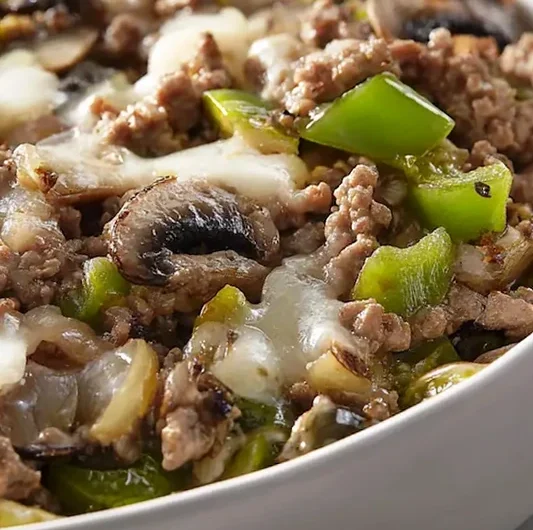
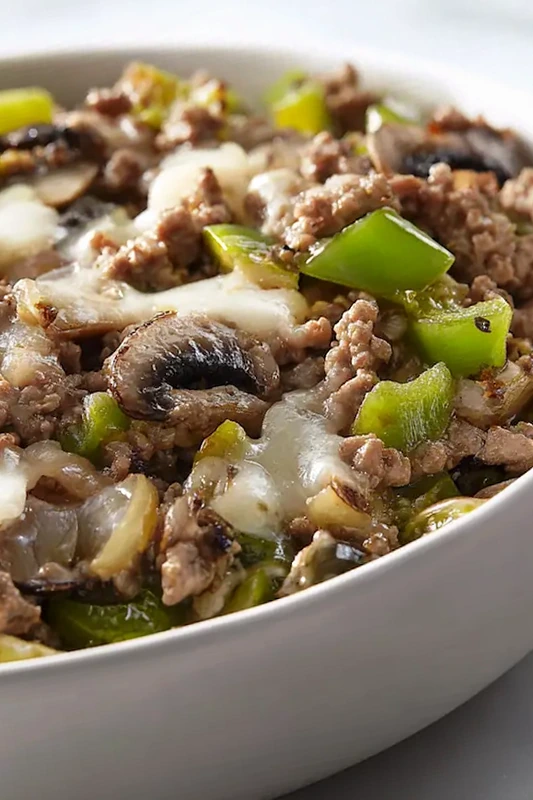
This high-protein Philly cheesesteak bowl combines savory ground beef with caramelized vegetables and melted provolone. It is a low-carb alternative to the traditional sandwich, perfect for quick weeknight dinners or meal prep.
List of ingredients
- 1 pound ground beef – use a lean variety for a healthier option.
- 1/2 cup beef broth – adds depth and moisture to the meat.
- 1 tablespoon Dijon mustard – provides a subtle tang and helps emulsify the sauce.
- Salt, to taste – use a fine sea salt for even seasoning.
- Black pepper, to taste – freshly cracked pepper is recommended.
- 2 teaspoons olive oil – used for sautéing the vegetables.
- 1 medium onion, diced – provides a sweet, savory base.
- 2 green bell peppers, diced – adds a classic pepper flavor.
- 8 mushrooms, diced – adds earthy richness and volume.
- 4 slices provolone cheese – the traditional choice for a smooth melt.
- Optional: sliced jalapeños – for those who prefer a spicy kick.
- Optional: red bell peppers – for added sweetness and color.
- Optional: chopped fresh parsley – for a bright, fresh finish.
step-by-step instructions
- Sauté the Vegetables: Heat olive oil in a wide skillet over medium heat. Add diced onion, green bell peppers, and mushrooms, then sauté for 8 to 10 minutes until softened and lightly caramelized. Remove from skillet and set aside.
- Brown the Beef: Add ground beef to the same skillet, season with salt and pepper, and cook over medium heat until browned, breaking it apart as it cooks.
- Combine Ingredients: Return the sautéed vegetables to the skillet with the beef.
- Simmer the Sauce: Stir in beef broth and Dijon mustard, then simmer uncovered for 3 to 5 minutes until slightly reduced.
- Add Cheese: Turn off the heat and lay provolone slices over the hot beef mixture.
- Melt: Cover the skillet for 1 to 2 minutes to allow the cheese to melt from residual heat.
- Serve: Spoon into bowls and serve immediately.
Ways to Customize the Flavor
Integrating Red Bell Peppers
Adding red bell peppers alongside the green ones introduces a subtle sweetness to the bowl. This balances the savory nature of the beef and broth. Dice them to the same size as the green peppers for uniform cooking.
Incorporating Spicy Jalapeños
For a spicy version, add sliced jalapeños during the final simmering stage or as a garnish. Fresh jalapeños provide a crisp heat, while pickled ones add a vinegary tang. Adjust the quantity based on your heat tolerance.
Finishing with Fresh Parsley
Sprinkling chopped fresh parsley over the finished bowl adds a layer of brightness. The fresh herb cuts through the richness of the melted provolone and beef. It also provides a professional, colorful presentation.
Optimal Cheese Selections
Provolone for Traditional Taste
Provolone is the standard choice for this recipe because it melts smoothly without becoming too oily. It has a mild, slightly nutty flavor that complements the beef and mushrooms. Ensure you use a variety that is specifically designed for melting.
Mozzarella for a Better Stretch
If you prefer a cheese with more stretch, substitute provolone with mozzarella. Mozzarella has a milder taste and creates the classic cheese pull effect. It is a great option for those who prefer a softer flavor profile.
White American for Creaminess
White American cheese provides the creamiest melt of all the options. It creates a more cohesive sauce-like consistency when it blends with the beef broth. This is the best choice for a rich, indulgent experience.
Meat Substitutions and Modifications
Choosing the Right Ground Beef
Select a lean ground beef, such as 90/10 or 93/7, to prevent the bowl from becoming too greasy. If you use a higher fat percentage, be sure to drain the excess grease before adding the beef broth. This keeps the final sauce clean and savory.
Substituting with Ground Turkey
Ground turkey is an excellent lean alternative that significantly lowers the saturated fat content. Because turkey is leaner, you may want to add an extra teaspoon of olive oil to the skillet. Season the turkey slightly more aggressively with salt and pepper to match the beef’s richness.
Using Sliced Ribeye Steak
For a more traditional texture, replace the ground beef with thinly sliced ribeye. Sauté the steak quickly over high heat in batches to ensure it browns rather than steams. Follow the remaining steps for vegetables and sauce as described in the original recipe.
Meal Prep and Storage Guidelines
Refrigeration Best Practices
Store leftover cheesesteak bowls in airtight containers to maintain freshness. Ensure the food has cooled slightly before sealing the lid to prevent excess condensation. These bowls will stay fresh in the refrigerator for 3 to 4 days.
Portioning for Macro Tracking
When prepping for the week, divide the beef and vegetable mixture evenly into four separate containers. If you are tracking macros, weigh the beef portion first before adding the vegetables. This ensures each meal has a consistent protein count.
Freezing for Long Term Storage
You can freeze the beef and vegetable mixture without the cheese for up to two months. Store in freezer-safe bags or containers and remove air to prevent freezer burn. Thaw overnight in the fridge before reheating on the stovetop.
Professional Reheating Methods
Microwave Heating Tips
Heat the bowls in 30-second intervals, stirring between each session. This prevents the edges from overcooking while the center remains cold. If the meat seems dry, add a teaspoon of water or beef broth before heating.
Stovetop Reheating Process
For the best texture, reheat the mixture in a small skillet over low to medium heat. Add a splash of beef broth to restore the sauce’s glossiness. Cover the pan for a minute to let the heat penetrate the center of the beef.
Adding Fresh Cheese During Reheat
If you stored the beef and cheese separately, add a fresh slice of provolone during the final minute of reheating. This ensures the cheese is perfectly melted and stretchy. It prevents the cheese from becoming rubbery, which can happen during repeated microwave heating.
Cooking Techniques for Maximum Flavor
Avoiding Pan Overcrowding
Use a wide skillet when sautéing the onions, peppers, and mushrooms. If the pan is too small, the vegetables will release moisture and steam instead of browning. This prevents the caramelization that is essential for the cheesesteak flavor.
Browning the Meat Properly
Cook the ground beef over medium heat, allowing it to sear before breaking it apart. This creates a brown crust on the meat, which adds a deep, savory flavor. Avoid using high heat, which can toughen the beef and cause it to shrink rapidly.
Reducing the Sauce Naturally
Simmer the beef broth and Dijon mustard mixture without a lid. This allows the liquid to evaporate, concentrating the flavors and thickening the sauce. The sauce is ready when it is slightly glossy and clings to the beef and vegetables.
Creative Serving Suggestions
Serving Over Cauliflower Rice
To keep the meal low-carb while adding volume, serve the mixture over steamed cauliflower rice. The rice absorbs the savory beef broth and Dijon sauce. This turns the bowl into a more filling meal without adding significant calories.
Pairing with a Fresh Side Salad
Balance the richness of the cheesesteak with a crisp side salad. Use baby spinach or arugula with a light lemon vinaigrette. The acidity of the dressing cuts through the fat of the cheese and beef, refreshing the palate.
Adding Roasted Broccoli
Adding a side of roasted broccoli provides a healthy dose of fiber and vitamins. Toss the broccoli in olive oil and salt, then roast at 400°F until the edges are charred. The charred flavor of the broccoli pairs perfectly with the caramelized onions.
Troubleshooting Common Issues
Preventing Dry Ground Beef
Avoid overcooking the beef during the browning phase; it should be just cooked through. The addition of beef broth in the later step is designed to re-moisturize the meat. If the beef still feels dry, increase the simmering time with the broth slightly.
Fixing Watery Vegetables
If your vegetables release too much water, increase the heat slightly to evaporate the liquid. Ensure the oil is hot before adding the vegetables to sear them immediately. Sautéing them separately before adding the beef prevents the meat from boiling in vegetable juices.
Ensuring an Even Cheese Melt
Always turn off the heat before adding the cheese slices. Using residual heat prevents the cheese from burning or separating into oil. Covering the pan creates a small oven effect, melting the cheese evenly across the entire surface.
Frequently Asked Questions
How do you make a Philly cheesesteak bowl low carb?
The low-carb nature of this dish comes from removing the traditional hoagie roll. By focusing on high-protein ground beef and low-carb vegetables like peppers and mushrooms, the meal remains naturally low in carbohydrates while staying satisfying.
Can I use ground beef instead of sliced steak?
Yes, ground beef is a practical substitute that cooks faster and is more budget-friendly. It absorbs the flavors of the beef broth and Dijon mustard more efficiently than sliced steak. It also makes the bowl easier to eat and portion.
How do I thicken the sauce in a cheesesteak bowl?
The best way to thicken the sauce is to simmer the mixture uncovered for several minutes. This natural reduction concentrates the liquids and creates a glaze. Avoid adding flour or cornstarch, as the reduction method preserves the clean, bold flavors.
How long do leftover cheesesteak bowls last in the fridge?
When stored in an airtight container, these bowls last for 3 to 4 days. To maintain the best quality, keep the beef and vegetable mixture separate from any fresh garnishes. Reheat gently to avoid overcooking the meat.
Can I substitute provolone with mozzarella or white American?
Yes, all three cheeses work well. Provolone is traditional and mild, mozzarella offers a better stretch, and white American provides a creamier, richer melt. Choose based on your preference for texture and flavor intensity.
What is the best way to reheat without drying out the beef?
Reheat using low heat on the stovetop or short intervals in the microwave. Adding a tablespoon of beef broth or water before heating restores the moisture. Stirring frequently ensures the heat is distributed evenly throughout the meat.
Print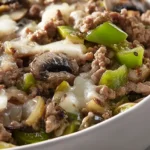
Philly Cheesesteak Bowls (High Protein, Low Carb)
- Total Time: 30 minutes
- Yield: 4 servings 1x
- Diet: Low Carb
Description
These Philly Cheesesteak Bowls are a high protein, low carb dinner made with seasoned ground beef, sautéed peppers, onions, mushrooms, and melty provolone cheese, all cooked in one skillet for an easy weeknight meal.
Ingredients
- 1 pound ground beef
- 1/2 cup beef broth
- 1 tablespoon Dijon mustard
- Salt, to taste
- Black pepper, to taste
- 2 teaspoons olive oil
- 1 medium onion, diced
- 2 green bell peppers, diced
- 8 mushrooms, diced
- 4 slices provolone cheese
Instructions
- Step: Heat olive oil in a wide skillet over medium heat.
- Step: Add diced onion, green bell peppers, and mushrooms, then sauté for 8 to 10 minutes until softened and lightly caramelized. Remove from skillet and set aside.
- Step: Add ground beef to the same skillet, season with salt and pepper, and cook over medium heat until browned, breaking it apart as it cooks.
- Step: Return the sautéed vegetables to the skillet with the beef.
- Step: Stir in beef broth and Dijon mustard, then simmer uncovered for 3 to 5 minutes until slightly reduced.
- Step: Turn off the heat and lay provolone slices over the hot beef mixture.
- Step: Cover the skillet for 1 to 2 minutes to allow the cheese to melt from residual heat.
- Step: Spoon into bowls and serve immediately.
Notes
Do not overcrowd the skillet when sautéing vegetables to ensure proper browning. Simmer uncovered to naturally thicken the sauce. Melt the cheese off the heat to keep the beef juicy.
- Prep Time: 10 minutes
- Cook Time: 20 minutes
- Category: Dinner
- Method: Stovetop
- Cuisine: American
Nutrition
- Serving Size: 1 bowl
- Calories: 420 kcal
- Sugar: 6 g
- Sodium: 720 mg
- Fat: 28 g
- Saturated Fat: 11 g
- Unsaturated Fat: 15 g
- Trans Fat: 0 g
- Carbohydrates: 10 g
- Fiber: 2 g
- Protein: 32 g
- Cholesterol: 95 mg
Keywords: Philly cheesesteak bowl, high protein, low carb, ground beef, skillet meal